Reviewed · TOURS
Prague: WWII Tour with Local Historian SMALL GROUP
Prague’s WWII story becomes most powerful when you connect it to ordinary streets. This 2.5-hour walk follows the assassination of Reinhard Heydrich, the Nazi official known as the Butcher of Prague, and the brave paratroopers who carried out Operation Anthropoid.
I like the seven-person limit, which gives local historians Gerry or Jiri room to answer questions and tell the story in a personal way. I also like that the price includes public transport and entry to the church where the resistance fighters made their last stand. The main drawback is that this is a serious, walking-focused tour, and the age and mobility limits may rule it out for some visitors.
Key points at a glance
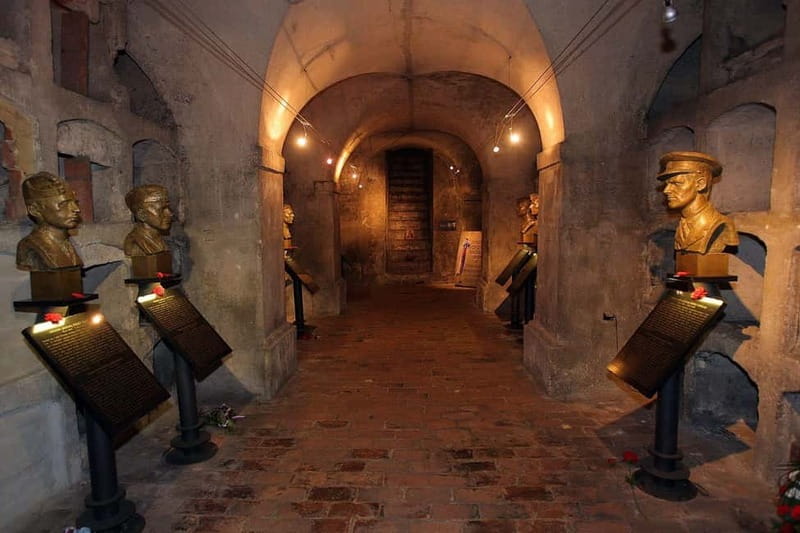
- Operation Anthropoid takes center stage: Follow the story of Heydrich’s killing and visit the church tied to the final resistance battle.
- A true small-group format: The group is limited to seven people, allowing for a more direct exchange with the historian.
- Several lesser-known chapters appear: Learn about Prague’s 1945 uprising, the city’s bombing, the former Gestapo headquarters, and Nicholas Winton’s rescue work.
- Two named local historians lead the experience: Gerry and Jiri are both described as passionate storytellers with a strong connection to Czech wartime history.
- The $61 fee covers useful extras: Public transport, church admission, taxes, and water are included.
- Check the physical details carefully: The tour is not suitable for children under 10, pregnant women, people with mobility impairments, or wheelchair users.
Why Operation Anthropoid gives this walk its focus
Many WWII tours begin with a broad account of occupation and end with a list of dates. This one has a stronger central thread: the 1942 killing of Reinhard Heydrich.
Heydrich was one of the highest-ranking Nazi officials killed during World War II. He helped design the Nazi system of mass murder and served as the leading Nazi figure in occupied Bohemia and Moravia. In Prague, his rule brought fear, arrests, and executions.
The tour places his death within the story of Operation Anthropoid, the daring mission carried out by Czech and Slovak paratroopers. You are not only hearing about a political event. You are following the choices, risks, and consequences that made the operation one of the best-known acts of wartime resistance.
That focus gives the walk emotional shape. You begin with the machinery of occupation, then move toward resistance, sacrifice, and the cost paid by those who helped the fighters. A local historian can explain the Czech setting in a way that a general city tour usually cannot.
Other Prague days worth booking alongside this:
- Prague: 50-Minute Sightseeing Evening Cruise
★ 4.2 · 33,780 reviews - Prague: Medieval Dinner with Unlimited Drinks
★ 4.4 · 19,847 reviews - Prague: Skip-the-line Castle Ticket and Optional AudioGuide
★ 4.3 · 11,121 reviews
Meeting at Saint Wenceslas Square
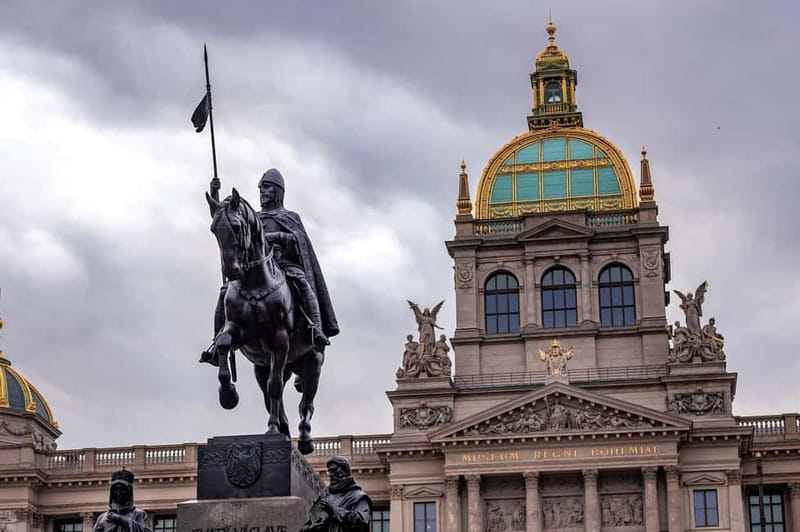
The tour starts at the statue of Saint Wenceslas in Wenceslas Square, directly in front of the National Museum. A McDonald’s nearby is given as an easy landmark, so this should be a simple place to find.
Wenceslas Square is a useful starting point because it sits at the heart of modern Prague. It is also a place where major Czech political events have unfolded, making it a fitting location for a walk about occupation, resistance, and national action.
Arrive with comfortable shoes and a little time to spare. The experience lasts 2.5 hours, and the route includes more than standing in one spot listening. The included Prague public transport ticket helps the guide connect sites that are not all within a short walk of one another.
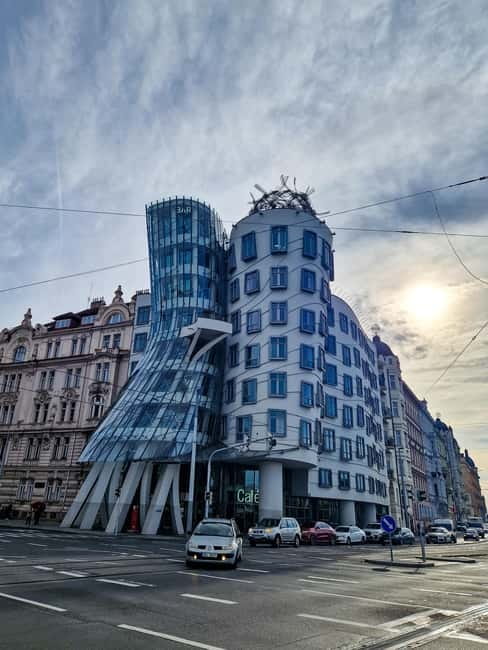
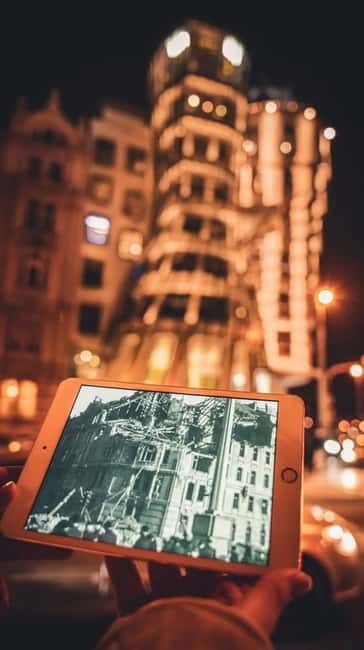
The exact route and order of stops can depend on the day’s arrangements. The stated finish is the Dancing House, while the meeting information also says the activity ends back at the meeting point. Confirm the final drop-off location when you book, especially if you have a restaurant reservation or train to catch.
The paratroopers’ church and the final stand
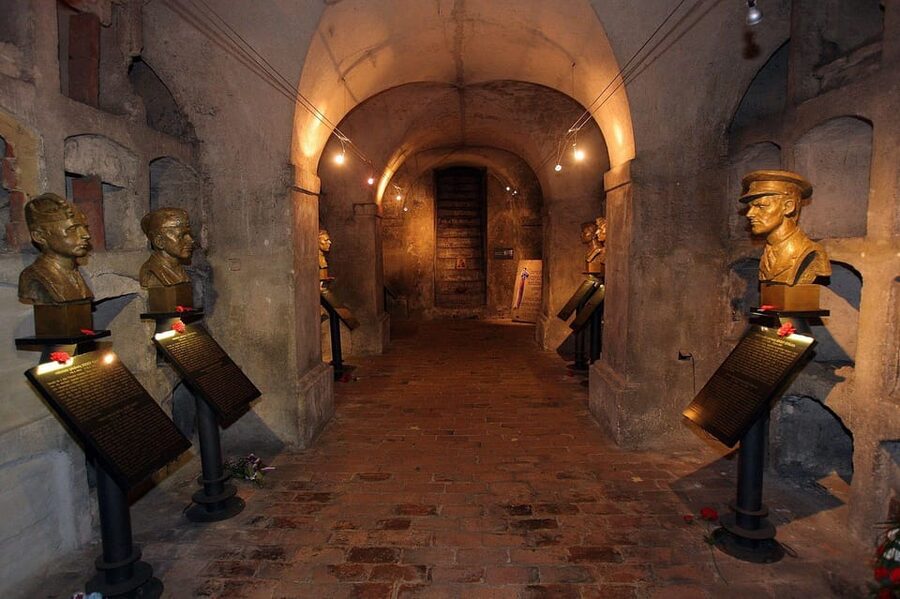
The church is the emotional center of the tour. Entry is included, so you do not need to pay an extra admission charge for this part of the experience.
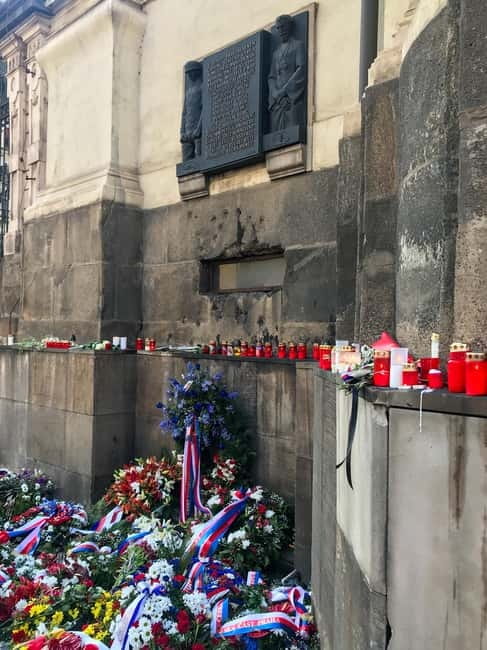
Here, the story of Operation Anthropoid becomes physical. You can see the setting connected with the paratroopers’ last resistance, including distinctive bullet holes. These marks are not abstract evidence in a museum display. They show where the conflict reached Prague’s streets and religious spaces.
The church visit also gives the historian a chance to explain the wider network behind the assassination. Military agents did not operate alone. Local helpers, religious figures, and ordinary people faced grave danger by offering shelter or assistance.
This is likely to be the most intense stop of the afternoon. If you prefer light sightseeing, the subject may feel heavy. That is also the point. The tour does not soften the violence of occupation or turn the resistance into a tidy heroic tale.
From Heydrich’s rule to the killing that changed the story
The guide’s account of Heydrich is one of the main reasons to choose this tour instead of a standard Prague orientation walk. You hear about his role as a leading Nazi official and the terror associated with his time in Prague.
The assassination itself is presented as a turning point. The operation showed that Nazi leaders could be reached, even in occupied territory. It also brought terrible retaliation and placed the helpers and resistance fighters in extreme danger.
A strong guide will help you keep track of the people involved, since the story includes military planners, parachutists, resistance supporters, and Nazi authorities. Gerry and Jiri are both described as natural storytellers who make the city and its sights feel personal. That matters on a subject with many names and dates.
The experience is conducted in English. The small group makes it easier to pause when you need clarification, rather than losing a question in a crowd of 20 or 30 people.
Same country, a completely different kind of day:
- Prague: Castle Tour with Local Guide and Entry Ticket
★ 4.6 · 10,422 reviews - Prague Castle 2.5-Hour Tour Including Admission Ticket
★ 4.7 · 8,927 reviews - Prague: Oldtown, Medieval Underground & Dungeon History Tour
★ 4.2 · 8,244 reviews - Prague: Vltava River Night Cruise with Buffet
★ 4.3 · 7,338 reviews
Nicholas Winton and the children who escaped
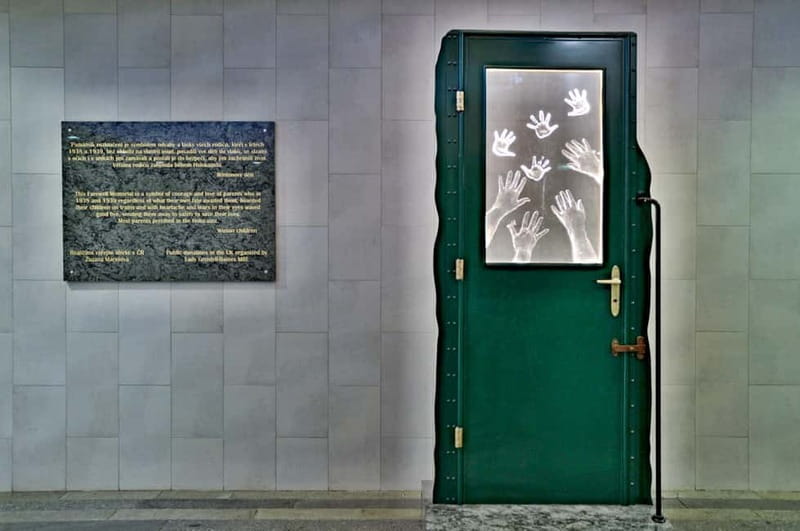
The tour also shifts from armed resistance to a different kind of courage. You hear about Nicholas Winton, who helped save 669 Jewish children through the Kindertransports.
This part broadens the experience beyond Prague’s military history. It shows how rescue could depend on paperwork, organization, contacts, and persistence, not only on people carrying weapons. The story also connects Prague to the wider European crisis facing Jewish families under Nazi rule.
Many visitors know Winton through the film One Life. The tour offers a chance to place that story within the Czech setting and the wider events of the period. It is an important counterpoint to the account of Heydrich and the resistance fighters.
Expect the tone to shift here. The church and assassination story focus on direct confrontation. Winton’s story is about children, separation, and rescue. Together, the subjects give you a wider view of how people responded to Nazi persecution.
Prague’s 1945 uprising and the American bombing
The tour does not stop in 1942. It moves into the closing phase of the war, including the Czech national uprising in 1945.
This chapter helps explain that liberation was not simply something that arrived from outside. Prague also saw local action and conflict as the war drew to a close. The uprising adds another layer to the city’s wartime story, with residents and resistance forces taking part during a dangerous final period.
You also hear about the American bombing of Prague in 1945. This is a useful reminder that even cities away from the most famous battlefronts were not untouched by wartime destruction. The subject may challenge the easy image of Prague as a city that passed through the war without major damage.
The historian’s role is especially valuable here. These events can be hard to understand from plaques or buildings alone. You need the sequence: occupation, resistance, retaliation, uprising, bombing, and the war’s end.
The former Gestapo headquarters
Another stop concerns the former Gestapo headquarters, a place tied to interrogation, imprisonment, and Nazi control.
The appeal of this stop is not architectural. It is the chance to understand how the occupation worked on a daily level. The assassination of Heydrich is dramatic, but institutions such as the Gestapo shaped the lives of far more people through surveillance and fear.
The site also connects the individual stories on the tour. Resistance fighters needed secrecy because the Gestapo hunted them. Families who helped Jewish children or hid members of the resistance risked arrest. The headquarters represents the system that made each act of courage so dangerous.
Do not expect a polished museum-style presentation at every location. Much of the value comes from what the historian explains while you are standing in the city, linking visible places to events that are not always obvious.
What the seven-person limit changes
The group limit is one of the strongest practical reasons to book this experience. With no more than seven participants, you can usually hear the guide clearly and ask about details that interest you.
A small group also suits this subject. The church and the accounts of persecution and death call for a quieter, more thoughtful atmosphere. A large tour can make serious history feel rushed or impersonal. Here, the guide can adjust the pace and spend more time on a question if the group wants it.
The named historians, Gerry and Jiri, are described as passionate educators who have gathered stories from war survivors. That gives the tour a valuable human link. Survivor accounts can show how occupation felt at street level, not just how it appears in a timeline.
The trade-off is that small-group dates may sell out faster than large tours. You also have less anonymity. If you prefer to listen quietly and move on without discussion, the personal format may feel more involved than a standard audio-guided visit.
Is $61 a fair price?
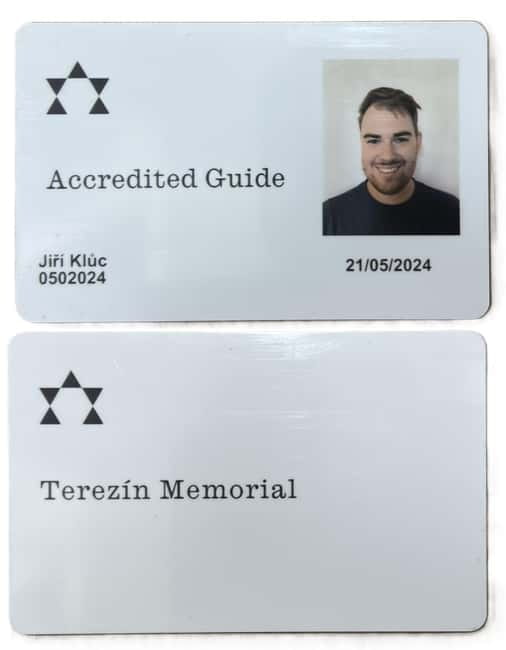
At $61 per person, this is not the cheapest way to spend a morning or afternoon in Prague. The value comes from the specialist subject and the small group, rather than from the number of attractions packed into the schedule.
Your fee includes the historian, public transport, entrance to the paratroopers’ church, taxes, and water. You are paying for a focused interpretation of Prague’s WWII story, not a general city tour that happens to mention the war.
I consider the price reasonable if you want context and conversation. A group capped at seven can offer much more access to the guide than a large walking tour. The included transport and church admission also remove a few small extra costs.
It is less useful if you only want a quick overview of Prague or have already studied Operation Anthropoid in detail. In that case, you may find the tour’s strong focus on Heydrich and the resistance more specific than you need.
Who will get the most from this experience?
This tour suits adults and older teenagers with a serious interest in WWII, the Holocaust, Czech resistance, or modern European history. It is also a good choice if you want to understand Prague through local stories rather than only see its famous buildings.
You will get the most from it if you are comfortable walking, listening for 2.5 hours, and engaging with difficult material. The group is not designed for children under 10, and the subject matter may be too grim for younger visitors even if they meet the age requirement.
The activity is listed as not suitable for pregnant women, people with mobility impairments, or wheelchair users. It is also described elsewhere as wheelchair accessible, so the information is inconsistent. If access needs affect your decision, contact the provider before booking and ask about the current route, transport, church access, and walking demands.
The tour is available in English only. That makes it a straightforward choice for English-speaking visitors, but not for anyone seeking a Czech-language experience.
Book it or choose another Prague tour?
Book this tour if you want Prague’s WWII story told through real places, with special attention to Operation Anthropoid, Heydrich, the paratroopers’ church, Nicholas Winton, and the 1945 uprising. The seven-person limit and local historian format are the main advantages.
Choose another tour if you want a lighter introduction to Prague, a broad sightseeing route, or an activity suitable for young children or visitors with mobility concerns. Also confirm the end point, since the information gives both the Dancing House and the original meeting point.
For history-minded visitors, this is a focused and worthwhile use of 2.5 hours. It gives you stories to carry into the rest of your time in Prague, and it does so without turning the city’s wartime past into a quick list of dates.
FAQ
How long does the WWII tour last?
The tour lasts 2.5 hours.
Where does the tour start?
It starts at the statue of Saint Wenceslas in Wenceslas Square, in front of the National Museum.
What landmark is near the meeting point?
A McDonald’s is close to the statue and can help you find the meeting location.
Where does the tour finish?
The route information gives the Dancing House as the finish point. The meeting information also says the activity ends back at the meeting point, so confirm the final location when booking.
What language is the tour conducted in?
The live tour guide speaks English, and English is the listed tour language.
How many people are in the group?
The group is limited to seven participants.
Is entrance to the paratroopers’ church included?
Yes. Entrance to the paratroopers’ church is included in the price.
Is public transport included?
Yes. A Prague public transport ticket is included.
Is the tour suitable for children under 10?
No. The activity is not suitable for children under 10.
Can I cancel for a full refund?
Yes. You can cancel up to 24 hours in advance for a full refund. You can also reserve now and pay later.
Just added around Prague
- WWII and Communism History in Prague’s Old Town Private Tour★ 5.0 · 4 reviews
- Prague: Historical Walking Tour with Focus on World War 2★ 4.3 · 12 reviews
- World War II 4WD Tour from Prague with Lunch★ 4.4 · 3 reviews
- Walking tour of Prague in French : Nové Město★ 4.9 · 16 reviews
- Walking tour of Prague in french: Old Town & Charles Bridge★ 4.9 · 62 reviews
- Ultimate Unlimited Beer Pong with Czech Beer★ 4.6 · 5 reviews
- Prague Sightseeing Tour with Lunch★ 5.0 · 5 reviews
- Prague: Modern Private Spa with Jacuzzi and Sauna★ 4.8 · 62 reviews
Tours, compared.
Castle Tour with Local Guide and Entry Ticket
Read our review →
Prague Castle 2.5-Hour Tour Including Admission Ticket
Read our review →
Oldtown, Medieval Underground & Dungeon History Tour
Read our review →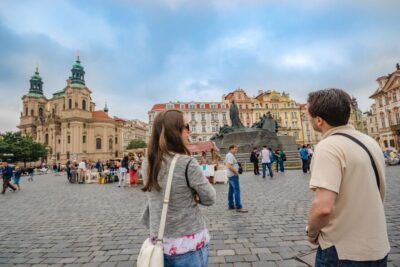
3-Hour Walking Tour of Old Town & Prague Castle
Read our review →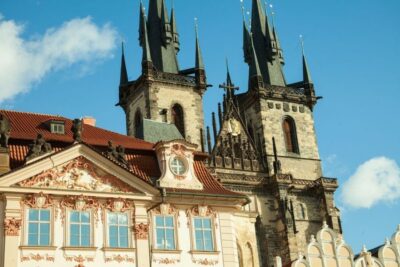
3-Hour Old Town and Prague Castle Tour in German
Read our review →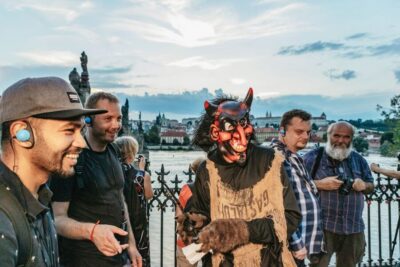
Ghost Walking Tour Where Legends Come To Life
Read our review →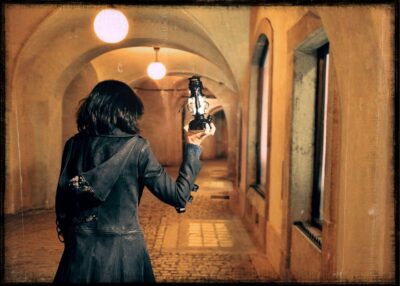
Ghosts, Legends, Medieval Underground & Dungeon Tour
Read our review →