
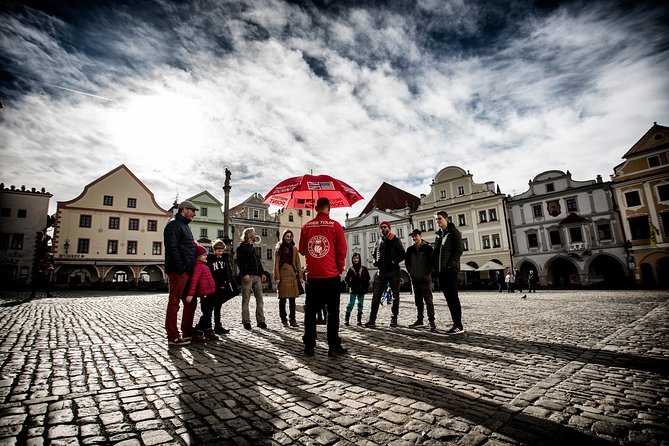
Reviewed · CESKY KRUMLOV DAY TRIPS
Český Krumlov 20th century tour
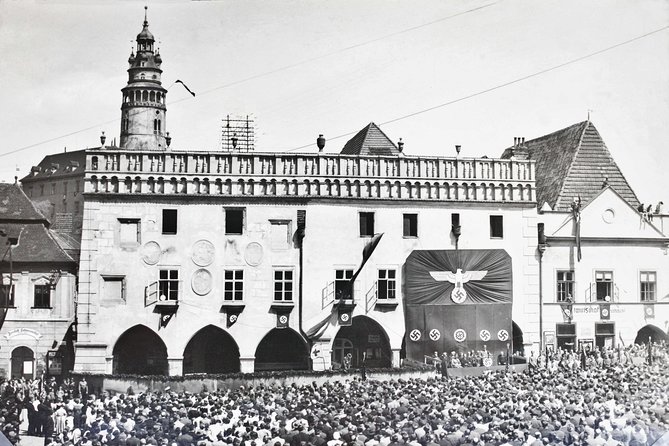
Český Krumlov is famous for its castle, river bends, and storybook streets. This private walking tour shows you the less polished side of town: Jewish life, Nazi rule, Adolf Hitler’s arrival, the 1938 battle, and the Soviet invasion of 1968. The black-and-white photographs help you picture events that are easy to miss behind the pretty facades.
I like two things especially. The subject is unusual, since most visits focus on medieval and Renaissance Český Krumlov. I also like the private format, which lets your own group ask questions and gives Jan, the guide, room to adjust the discussion. The main consideration is that this is a history walk, not a standard castle tour, and the content can be somber.
Key points to know before booking
- A rare focus on the 20th century: The tour covers Nazi rule, Jewish history, 1938 conflict, and the 1968 Soviet invasion.
- Jan uses old photographs: Black-and-white images help you compare modern Český Krumlov with scenes from wartime and earlier decades.
- Five central stops: You visit the historic center, synagogue, Hitler-related sites, castle, and Budějovická Gate.
- Private for up to 15 people: Your group participates alone, which is useful for questions and a flexible pace.
- A short two-hour route: The walk fits well into a day visit, but it moves through serious material at a brisk pace.
- The walk ends at Budějovická Gate: You finish near Latrán rather than returning to the starting point.
Why Český Krumlov’s recent past deserves a closer look
The town’s beauty can hide how much changed here during the last century. Medieval lanes and grand buildings often make Český Krumlov feel untouched, yet the 20th century brought political pressure, war, persecution, changing borders, and Soviet control.
That contrast gives this tour its purpose. You are not simply looking at a synagogue or castle as an old building. You are hearing how different groups experienced the town: Jews, nobles, Nazis, and ordinary residents caught between larger powers.
The tour also helps correct a common travel habit. Many visitors photograph the castle tower and move on, but the political story of Český Krumlov is just as important as its architecture. I like experiences that make a familiar place more readable, and this one gives you that extra layer without taking a full day.
More Cesky Krumlov Day Trips in Cesky Krumlov
- Český Krumlov: Wooden Raft River Cruise
★ 4.9 · 450 reviews - Český Krumlov Free Tour
★ 5.0 · 260 reviews - Český Krumlov: 2 Hour Private Walking Tour with Guide
★ 4.8 · 182 reviews
Starting in the historic center for 40 minutes
The walk begins at the Info Czech Krumlov office on náměstí Svornosti 2. The first section lasts about 40 minutes and sets the scene for modern Český Krumlov.
This is likely the most useful part for getting the timeline straight. Instead of hearing isolated stories, you can connect the town’s 20th-century events to the streets and squares around you. The guide discusses the modern history of Český Krumlov while using photographs to show how the town looked during important moments.
The visual material matters here. A historic photograph can reveal uniforms, flags, crowds, damaged buildings, or altered streets in a way that a spoken date cannot. You will still need to listen closely, but the images give you something concrete to compare with the present-day town.
The stop is free to enter, since the experience takes place outdoors in the historic center. Wear shoes suitable for old paving stones, and remember that a two-hour walking tour may feel longer if you are not used to uneven streets.
The synagogue and the story of Jewish Český Krumlov
The synagogue stop lasts about 15 minutes. It focuses on the Jewish presence in Český Krumlov, a part of the town’s past that can easily be overlooked when the main sightseeing focus is the castle.
This is an important pause because it shifts attention away from rulers and military events. The tour includes photographs of the local synagogue, helping you see the building and its place in the town’s story rather than treating it as a footnote.
The short time here means you should not expect a full museum visit or an extended study of Jewish life in the region. Instead, the stop works as part of a broader route. It gives you a human and social context before the tour moves into the darker political events surrounding the Nazi period.
For me, this is one of the most valuable parts of the experience because it reminds you that Český Krumlov’s story belongs to more than its noble families and famous buildings. The town had different communities, and their experiences did not follow the same path.
Following the story of Hitler’s arrival
The next section lasts about 10 minutes and deals with Adolf Hitler’s arrival in Český Krumlov before the Second World War. The subject is brief but significant, since it connects the town directly to the political force reshaping Central Europe.
You will hear about the circumstances surrounding Hitler’s visit and its meaning for Český Krumlov. The guide also uses images to connect the event with the physical town. That approach can make a difficult historical subject easier to understand, since you are not hearing about it in an abstract classroom setting.
This stop is not presented as a celebration of the visit. It is part of the town’s record, and the value comes from understanding how local places became tied to wider political events.
The 10-minute format also keeps the story from overwhelming the rest of the walk. Still, if you have a strong interest in Nazi history, you may want to ask Jan questions while you have him to yourself. The private setup is especially useful here, since your group can request clarification instead of simply moving along with a large crowd.
Same country, a completely different kind of day:
- Cesky Krumlov: Private 2-Hour City Walking Tour
★ 4.8 · 96 reviews - Český Krumlov: Night Walking Tour with a Professional Guide
★ 4.8 · 43 reviews - Cesky Krumlov Tour 4 hours
★ 5.0 · 31 reviews - Prague: Cesky Krumlov Private Day Tour
★ 4.8 · 31 reviews
Český Krumlov Castle and the last lord
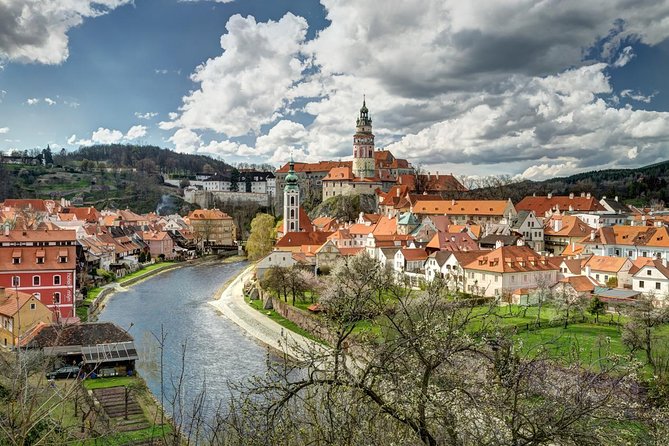
The castle section takes about 20 minutes. Český Krumlov Castle is one of the major sights in town and is described as the second biggest castle in the Czech Republic, so this is an important setting even if the tour does not function as a full castle admission visit.
The story here centers on the last lord of the town and his struggle against the Nazis. That focus gives the castle a political edge. You are not only looking at an impressive residence, but also considering how noble power, local loyalty, and Nazi demands collided.
This is a good example of how the tour differs from a standard sightseeing walk. A regular castle visit may concentrate on rooms, art, family lines, and design. This experience uses the castle as a place where 20th-century decisions had consequences.
Check the wording carefully when booking if you expect interior castle access. The stop is listed without a separate admission charge, and the advertised experience is a walking tour through the town. The supplied details do not promise entry into the castle rooms, so you should treat this as a historical stop and exterior context rather than a replacement for a formal castle tour.
Budějovická Gate and the 1938 battle
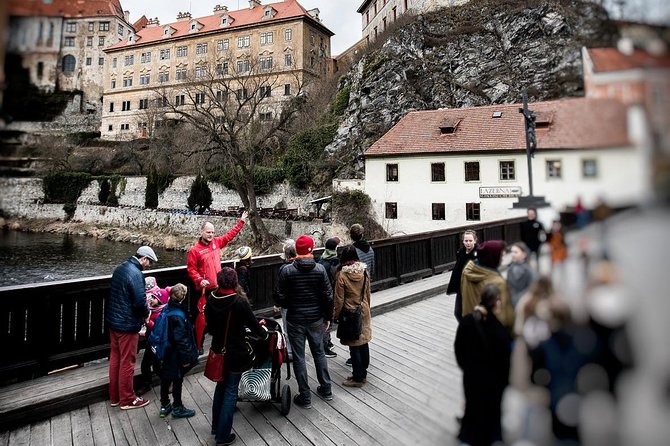
The final stop is Budějovická Gate, also called the Budweiser Gate, on Latrán. This section lasts about 15 minutes and covers Český Krumlov during the Second World War and the battle of Český Krumlov in 1938.
Ending here gives the route a clear geographic finish. You begin in the central square, move through the synagogue and castle area, and finish at one of the town’s historic entrances. The gate becomes more than a photogenic landmark. It helps frame the military and political events that affected Český Krumlov.
The date 1938 is important because it marks the crisis before the war fully began. The stop connects local events with the larger breakdown of peace in the region. If you know little about the period, Jan’s explanations can help you understand why a border town and its residents were caught in such a tense situation.
Since the tour ends at the gate, plan your next move before you start. The end point is at Latrán 106, not at the original meeting place. That is convenient if you want to continue toward the northern side of the old town, but you will need to walk back if your car, accommodation, or other activity is near náměstí Svornosti.
How the photographs change the walk
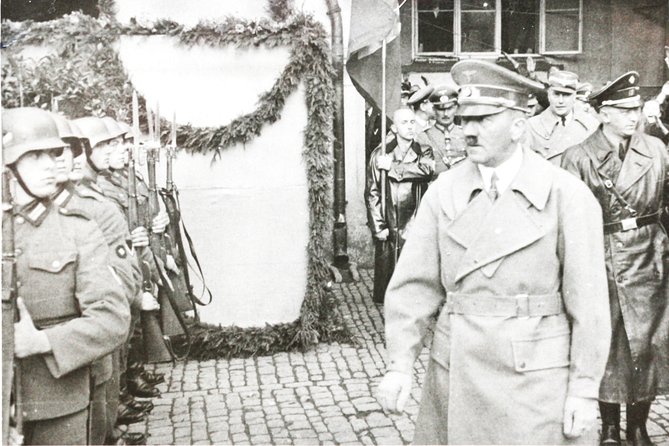
The old photographs are one of the strongest features of this experience. They give you a visual reference for events that would otherwise be difficult to picture while standing among restored buildings.
You may see how streets appeared during wartime, how public spaces were used, or how people gathered during important political moments. The supplied information does not list every photograph, so I would not expect a formal slideshow or a large exhibition. Instead, Jan shows images during the walk and explains what you are seeing.
This format works best when you hold the image beside the present-day view. Look at the building lines, street corners, and open spaces. Even when the architecture looks unchanged, the people, symbols, and mood in the photograph can tell a very different story.
The visual material also makes the tour more accessible for people who do not normally read much military or political history. You are not asked to remember a long list of dates. You can connect the facts to places in front of you.
Jan’s guiding style and the private format
Jan is the named guide associated with this experience. The available feedback describes him as someone who spent serious time researching the subject and who can handle a broad range of questions connected to Český Krumlov. It also points to his ability to explain historical importance while responding to questions during the walk.
That matters because the topic covers several groups and periods. You move from Jewish history to Hitler, Nazi pressure on the nobility, the 1938 battle, World War II, and the Soviet invasion of 1968. A guide needs to keep those threads understandable, and the private format gives you a better chance to pause when a connection is unclear.
Your group can include up to 15 people, but only your own booking group participates. For two people, a family, or a small circle of friends, this can feel much more personal than a large public walk.
The price is $90.76 per group, not per person. That makes the value strongest for a group of several people. A party of 10 to 15 pays a very modest amount per person for two hours with a private guide. For one person or a couple, the cost is less of a bargain, but the private setting and specialized subject may still justify it if modern history is a main reason for your visit.
Timing, walking conditions, and who will enjoy it
The advertised duration is about two hours. The listed stop times add up to 100 minutes, leaving roughly 20 minutes for walking between locations, transitions, and questions. That is a useful way to picture the pace: steady, but not an all-day historical seminar.
Most people can participate, and the tour is near public transportation. Service animals are allowed. The details do not provide a specific accessibility route or promise step-free access, so anyone with mobility concerns should ask the operator before booking, especially because Český Krumlov’s historic center includes old streets and paving.
Good weather is required. If poor weather causes cancellation, you are offered another date or a full refund. You can also cancel for a full refund up to 24 hours before the start time. Changes or cancellations inside that 24-hour window are not accepted for a refund.
I would choose an early or mid-visit time if possible. The walk gives you background that can improve later sightseeing, especially at the castle and synagogue. The information is also easier to absorb when you are not rushing to catch a train or meet a dinner reservation.
Who should book this Český Krumlov walk?
I would recommend it to anyone who has already seen the basic medieval sights and wants to understand what happened here during the last century. It also suits visitors with an interest in World War II, Jewish history, Nazi rule, noble families, or the Soviet era.
Families with older children may find the photographs helpful, though the subject is serious. History students, photographers, and repeat visitors to Český Krumlov should get particularly good value from the route because it shows familiar locations in a new way.
I would hesitate only if you want a light, entertaining introduction to the town or a full interior tour of Český Krumlov Castle. This walk deals with war, persecution, political power, and occupation. It is a serious experience, even though the town around you looks picturesque.
Should you book it?
Book this tour if you want the part of Český Krumlov that guidebooks often leave out. The strongest reasons are the unusual 20th-century focus, Jan’s research-based presentation, the black-and-white photographs, and the chance to ask questions in a private group.
The $90.76 group price makes the experience especially appealing for families and small groups. Just keep your expectations clear: you are buying a two-hour historical walking tour, not a full castle interior visit or a general overview of every period in the town’s past.
If those limits suit you, this is a smart way to give Český Krumlov more depth. You leave with more than attractive photographs. You understand how a beautiful Czech town was pulled into the conflicts and political changes of the 20th century.
FAQ
How long does the Český Krumlov 20th century tour last?
The tour lasts approximately two hours. It includes five stops, with time for walking between them and questions.
What locations does the tour visit?
The route includes the historic center of Český Krumlov, the local synagogue, sites connected with Adolf Hitler’s arrival, Český Krumlov Castle, and Budějovická Gate.
Is this a private tour?
Yes. Only your own group participates, with a maximum group size of 15 people.
What is the price?
The price is $90.76 per group of up to 15 people.
Where does the tour begin and end?
It begins at Info Czech Krumlov, náměstí Svornosti 2. It ends at Budějovická Gate, also called Budweiser Gate, at Latrán 106.
Can I cancel the booking?
You can cancel up to 24 hours before the start time for a full refund. Poor weather or failure to meet the minimum number of participants may also lead to an alternative date or a full refund.
Just added around Cesky Krumlov
- Private one way transfer from Cesky Krumlov to Vienna★ 5.0 · 3 reviews
- Private Romantic Whispers of Český Krumlov★ 5.0 · 3 reviews
- Walking private guided tour in Cesky Krumlov with local certified guide★ 5.0 · 3 reviews
- One day trips in the surroundings of Cesky Krumlov★ 5.0 · 5 reviews
- Private evening tour Cesky Krumlov Old Town and Castle area★ 5.0 · 8 reviews
- Cesky Krumlov Old Town Private Walking Tour★ 5.0 · 27 reviews
- Český Krumlov Private Walking Tour★ 5.0 · 7 reviews
- Private Night tour of Český Krumlov★ 5.0 · 4 reviews
Cesky Krumlov Day Trips, compared.
Cesky Krumlov Full day tour from Prague and back
Read our review →
UNESCO Cesky Krumlov from Prague with Guided Tour and Transfer
Read our review →
Browse the lists this tour appears in