
Reviewed · WALKING TOURS
Back to Communism Walking Tour
The most powerful part of this Prague walk is the human perspective. You are not just looking at old buildings and dates. You are hearing how communism felt from people who lived under it, including guides such as Petr, Marek, and Daniel, who explain the period with personal insight and plenty of room for questions.
I like the small maximum group of 15, which makes a serious subject easier to discuss. I also like that the route uses real places in central Prague, especially the former secret police headquarters and the streets tied to the Velvet Revolution. The main drawback is that this is an outdoor walking tour with only about two hours, so the experience offers sharp glimpses rather than a full course in Czech history.
Key points to know
- Personal memories matter: Guides explain communism through lived experience, not just textbook facts.
- Three meaningful central Prague stops: The route visits Bartolomějská, Wenceslas Square, and Národní třída.
- Small-group format: The tour allows more direct questions than a large coach excursion.
- Mostly outdoor history: You will examine public places and memorials rather than tour a major indoor museum.
- Strong Cold War focus: Expect discussion of surveillance, Soviet influence, repression, and the Velvet Revolution.
- Plan for a full two hours on foot: Comfortable shoes and weather-appropriate clothing will make a difference.
Why this walk matters in Prague
Prague can make recent history look deceptively neat. Medieval lanes, ornate facades, and grand squares often draw your eye toward older centuries. This tour shifts your attention to the last few generations, when daily life was shaped by a communist government and close Soviet influence.
That recent setting gives the experience its force. The streets are not distant archaeological sites. Wenceslas Square was part of events that people still remember, and Národní třída carries the memory of the demonstrations that helped bring communist rule to an end in Czechoslovakia.
I find this kind of walking tour useful because it connects political history with ordinary urban space. You learn not only what happened, but where it happened and why a particular street or building still matters.
The tour is offered in English and lasts about two hours. With a maximum of 15 people, the group should be small enough for a more personal exchange. That matters here. A subject built around memory and difficult questions works better when you can ask the guide to pause, clarify a point, or explain how an event affected daily life.
A few more Prague trips to weigh up
- Prague: 3-Hour Walking Tour of Old Town & Prague Castle
★ 4.7 · 5,696 reviews - Prague: Ghost Walking Tour Where Legends Come To Life
★ 4.4 · 5,253 reviews - Prague: Jewish Quarter Walking Tour with Admission Tickets
★ 4.7 · 3,729 reviews
Bartolomějská and the former secret police headquarters
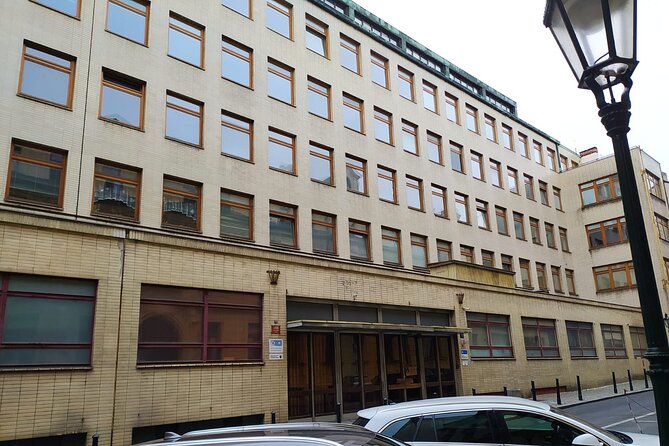
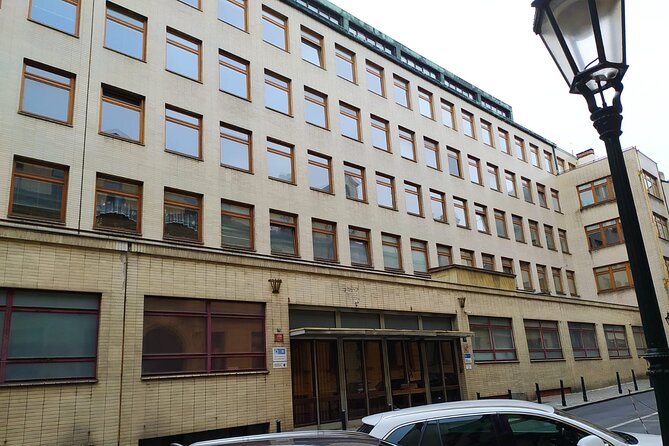
The first stop is Bartolomějská, where the former headquarters of the Czechoslovak Secret Police once operated. Admission is free because the stop is viewed from the public area, but the lack of an entry ticket does not make it insignificant.
This is where the tour begins to put the machinery of the former state into physical form. Instead of talking about surveillance as an abstract idea, your guide can point to a real location associated with the secret police and explain its role within communist Czechoslovakia.
The stop is brief, about five minutes. That is enough to establish the subject, but not enough for a full exploration of the building or the security services. I would treat it as an opening chapter rather than the main event.
The short visit also shows the shape of the tour. You are moving through central Prague, using the city itself as the setting. If you prefer long indoor visits with documents, exhibits, and artifacts, this experience may feel too light. If you want context before visiting a museum on the communist era, it gives you a useful starting point.
Wenceslas Square and the memories of a changing nation
Wenceslas Square receives about 15 minutes, making it the longest listed stop. That makes sense. This enormous central space has played a major role in modern Czech events, and it provides room for the guide to explain how public gatherings, political power, and popular protest came together.
The value of the stop depends heavily on the guide. A bare look at the square tells you little. A strong explanation helps you picture the place during the communist period and understand why it became such an important stage for public action.
This is also where the personal angle can become most useful. The guides do not present communism only as a set of political terms. Their accounts include what the period was like for people living through it, and the personal connection helps link national events with everyday experience.
You should expect a serious discussion rather than a light sightseeing commentary. The tone can be unsettling. Accounts connected with the Cold War, state pressure, and the end of communist rule are not easy material, and the guides appear willing to discuss the warning signs that can be drawn from that period for the present and future.
I appreciate that the tour does not try to make the past comfortable. At the same time, you should know that this is a guided interpretation, not a debate forum or a full academic history seminar. Ask questions, listen carefully, and allow room for different personal experiences.
Národní třída and the Velvet Revolution memorial
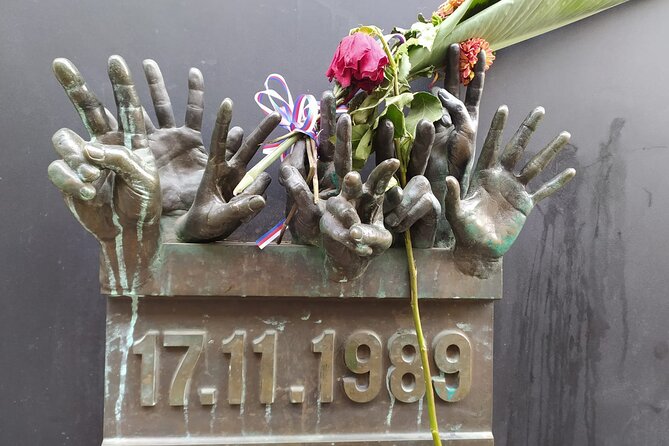
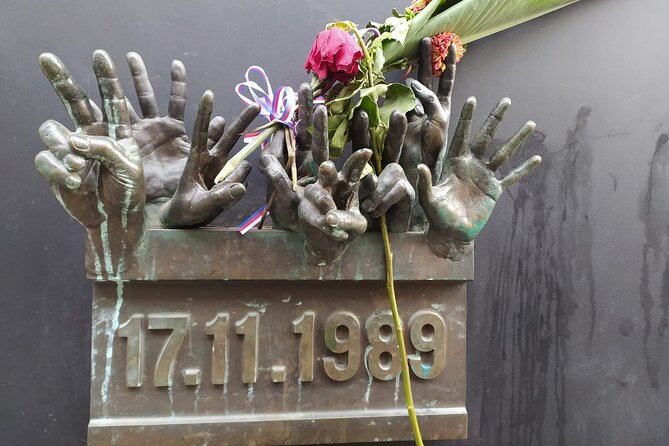
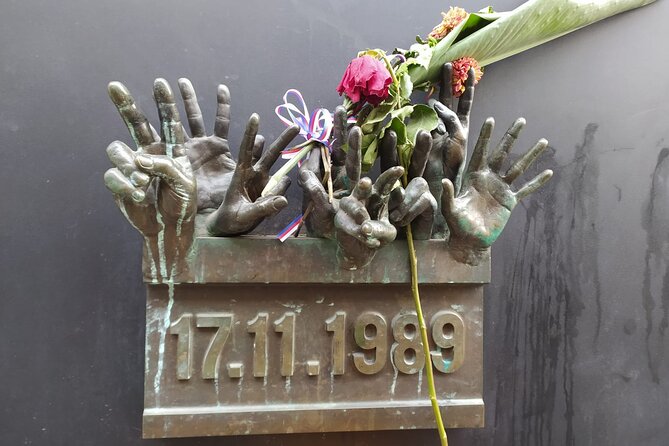
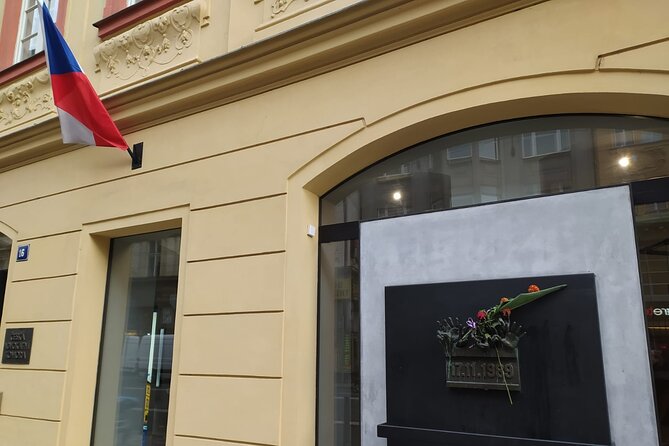
The third stop is on Národní třída, where hands reaching from a wall form a memorial to the victims of the Velvet Revolution. You spend about 10 minutes here, hearing how the events unfolded and why this moment remains central to modern Czech history.
The memorial gives you something concrete to study. Rather than ending at a broad square with only spoken explanation, the walk finishes with a physical reminder of the people affected by the demonstrations. The image of hands reaching out of the wall is easy to recognize, but the story behind it gives the piece its weight.
This section is likely to be the emotional peak of the walk. The guides describe the Velvet Revolution as one of the strongest moments in Czech modern history, and their accounts can feel chilling, particularly when they connect the events to details that are not widely known.
One especially useful feature is the chance to examine traces of the period in the city itself. Accounts from the tour include references to scratches left by Soviet bullets, details that can make the Cold War feel far less remote. You should not expect a large collection of preserved evidence at this stop, but the guide’s explanation helps you notice how political violence can leave small marks in an ordinary street.
Same country, a completely different kind of day:
- Prague: 50-Minute Sightseeing Evening Cruise
★ 4.2 · 33,780 reviews - Prague: Medieval Dinner with Unlimited Drinks
★ 4.4 · 19,847 reviews - Prague: Skip-the-line Castle Ticket and Optional AudioGuide
★ 4.3 · 11,121 reviews - Prague: Castle Tour with Local Guide and Entry Ticket
★ 4.6 · 10,422 reviews
What the guides add to the experience
The guide is the heart of this tour. The route is compact, and none of the stops requires an entrance ticket. What you are paying for is the explanation, the connections between places, and the chance to ask a person who understands the period.
Petr is described as giving detailed explanations and speaking very good German. Marek is described as having lived through part of the communist period and explaining it with strong subject knowledge. Daniel is noted for sharing lesser-known facts and having personal experience of the era. These details suggest that the experience can vary somewhat with the individual guide, but the common thread is clear: the guides are well prepared and personally connected to the subject.
I especially value the difference between knowing dates and knowing what those dates meant. A guide who lived through part of the period can explain the gap between official statements and ordinary life. That kind of context rarely comes from a plaque.
The personal approach also means you may hear views shaped by memory. That is not a flaw, but it is worth recognizing. Recent history can be politically sensitive, and different people remember the same era in different ways. The best use of the tour is to listen, ask precise questions, and treat personal testimony as an important part of the picture rather than the entire picture.
Group size, walking pace, and practical comfort
The group is limited to 15 people. That is a useful middle ground. You get more contact with the guide than on a large city tour, while still having enough people for a shared discussion.
This is an active walking experience, though the supplied details do not give the total distance or exact walking time between stops. The route begins and ends at Na Příkopě 864/28 in Prague 1, and the activity returns to that same meeting point.
All three named stops are in central Prague and are visited without an admission charge. The tour therefore spends its time on streets and public spaces, not inside ticketed attractions. Wear comfortable shoes, and check the weather before you leave. The accounts of the experience repeatedly use the word freezing in both the emotional and literal sense, so warm clothing is a sensible choice in colder months.
Children must be accompanied by an adult. Service animals are allowed, and the tour is near public transportation. Most people can take part, although anyone who finds two hours of walking difficult should consider that before booking.
The mobile ticket is practical for a short city visit. You receive confirmation when booking, so you can keep the details on your phone rather than carrying printed paperwork.
Is $44.22 a fair price?
At $44.22 per person, this is not the cheapest way to spend two hours in Prague. You can walk through Wenceslas Square or Národní třída on your own for nothing. The price needs to be judged against the guide’s role, not the cost of entering the sights.
I think the price can make sense if you want historical interpretation and a chance to ask questions. The tour turns ordinary public places into a connected story about secret police surveillance, public protest, Soviet influence, and political change. For someone with little background in Czechoslovak history, that added context may be worth more than an unguided stroll.
The value is less clear if you already know the subject well or plan to spend several hours in a museum dedicated to communism and the Cold War. You may find more documents and visual material in an indoor collection. This walk is strongest as a focused introduction or as a way to give meaning to places you would otherwise pass without noticing.
The advance demand also deserves attention. It is booked, on average, 78 days before the experience. That does not guarantee every date will sell out, but it suggests you should not leave it until the last minute if the schedule matters to you.
Who should book the Back to Communism Walking Tour?
I would recommend this tour to you if you want recent Prague history explained by a local guide with personal links to the period. It suits active visitors who prefer streets, public spaces, and conversation to a formal museum visit.
It is also a good fit if you are curious about life under communism in Europe but do not know where to begin. The compact route gives you three anchors, and the guide fills in the political and human context.
You may want to skip it if you need a highly detailed chronological study, extensive indoor exhibits, or a tour with many stops. The first stop is only five minutes, and the whole experience lasts about two hours. Its strength is focus and personal explanation, not sheer volume.
The free cancellation policy gives you flexibility, provided you cancel at least 24 hours before the local start time. Changes or cancellations made less than 24 hours before the start are not accepted for a refund.
Should you book it?
Book this walk if you want to understand why central Prague still carries the marks of the communist era and the Velvet Revolution. The best reasons are the small group, the personal stories, and the chance to ask direct questions at places tied to surveillance and protest.
I would book it early, especially if you have fixed dates, since the tour is often reserved well ahead. Bring comfortable shoes, dress for the weather, and arrive ready for a serious conversation rather than a conventional sightseeing circuit.
At $44.22, you are paying for the guide’s insight, not admission to attractions. For that reason, this is a good value for curious first-time visitors and history-minded walkers, but a less obvious choice for anyone seeking a museum-style examination of the period.
FAQ
How long does the Back to Communism Walking Tour last?
The tour lasts approximately two hours.
Where does the tour begin?
It begins at Na Příkopě 864/28, Nové Město, 110 00 Praha, Prague 1, Czech Republic.
Where does the tour end?
The activity ends back at the same meeting point where it begins.
What language is the tour offered in?
The tour is offered in English.
What places does the tour visit?
The route includes Bartolomějská, the former headquarters of the Czechoslovak Secret Police, Wenceslas Square, and the memorial of hands reaching from the wall on Národní třída.
Is admission to the stops included?
The listed stops have no admission charge. This is a walking tour through public places.
How many people can join the tour?
The maximum group size is 15 travelers.
Are children allowed to join?
Yes. Children must be accompanied by an adult.
Can I cancel for a full refund?
Yes, if you cancel at least 24 hours before the experience start time. Cancellations made less than 24 hours before the start are not refunded, and changes during that period are not accepted.
Just added around Prague
- WWII and Communism History in Prague’s Old Town Private Tour★ 5.0 · 4 reviews
- Prague: Historical Walking Tour with Focus on World War 2★ 4.3 · 12 reviews
- World War II 4WD Tour from Prague with Lunch★ 4.4 · 3 reviews
- Ultimate Unlimited Beer Pong with Czech Beer★ 4.6 · 5 reviews
- Walking tour of Prague in French : Nové Město★ 4.9 · 16 reviews
- Walking tour of Prague in french: Old Town & Charles Bridge★ 4.9 · 62 reviews
- Prague Sightseeing Tour with Lunch★ 5.0 · 5 reviews
- Prague: Modern Private Spa with Jacuzzi and Sauna★ 4.8 · 62 reviews
Walking Tours, compared.
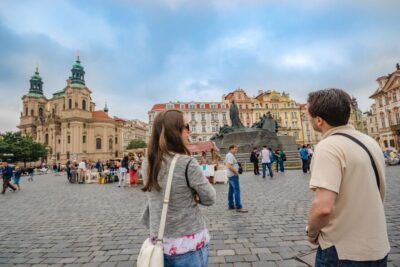
3-Hour Walking Tour of Old Town & Prague Castle
Read our review →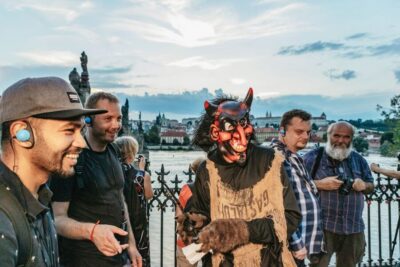
Ghost Walking Tour Where Legends Come To Life
Read our review →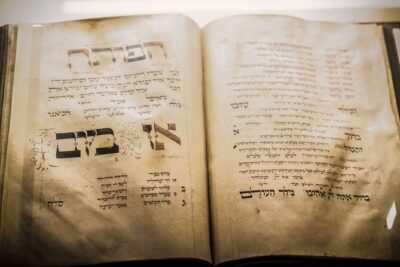
Jewish Quarter Walking Tour with Admission Tickets
Read our review →
Prague Guided Walking Tour and Cruise with Authentic Czech Lunch
Read our review →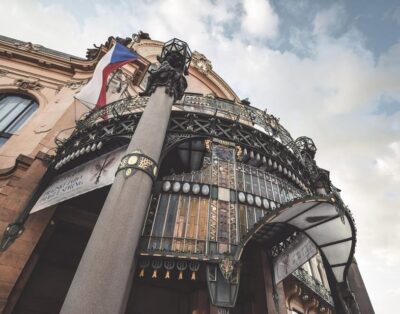
Old Town and Jewish Quarter Guided Walking Tour
Read our review →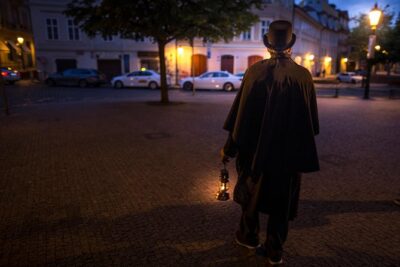
Prague Ghost and Legend of Old Town Walking Tour
Read our review →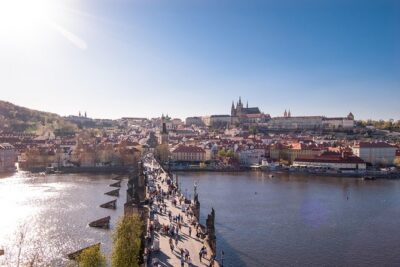
Prague 3-hour Afternoon Walking Tour including Prague Castle
Read our review →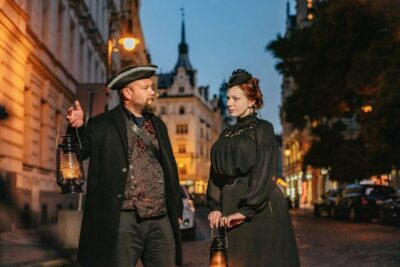
Ghosts and Legends Nighttime Guided Walking Tour
Read our review →Browse the lists this tour appears in