
Reviewed · MUSEUMS
Museum Story of Prague
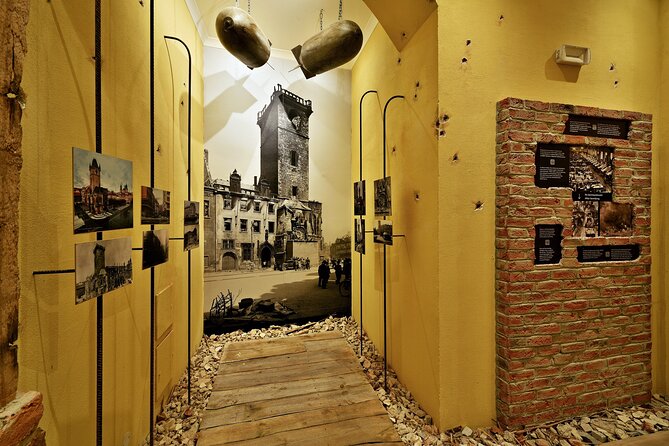
Prague’s past comes alive through film, sound, and mixed reality at Story of Prague, rather than through rows of dusty glass cases. You move from medieval kings and Hussite warriors to Nazi occupation, Soviet rule, and the Velvet Revolution, with the silent figure of the Golem watching from the dim halls.
I like the broad timeline and the way the museum links major events to physical sights such as the Old Town Hall and Astronomical Clock. I also like the balance of serious history and theatrical touches, especially the Golem, the hidden room, and exhibits designed to make you stop and look.
The main drawback is the number of QR codes. They add information, but scanning one after another can interrupt the flow. You can enjoy the museum without chasing every code, and that may be the better choice if you want a smooth 90-minute visit.
Key points to know before you go
- A full Prague timeline: Follow the city from knights, kings, and Jan Žižka to the Hussites, Nazi occupation, Soviet rule, and the Velvet Revolution.
- More than traditional displays: Film installations, audio elements, interactive features, and mixed reality keep the visit active.
- A memorable Golem exhibit: The towering figure appears in the dimly lit medieval section, linking Prague’s past with its old folklore.
- About 90 minutes inside: The museum gives you a focused introduction to Prague without taking up a full morning or afternoon.
- QR codes add detail, but require restraint: You can scan them for extra material, though trying to use all of them may become tiring.
- Practical entry: The experience includes admission, uses a mobile ticket, starts at 10:00 a.m., and is close to public transportation.
Prague’s story begins with a theatrical touch
Story of Prague is built for people who want a quick, lively introduction to the city. Instead of asking you to remember a long list of dates, it places historical moments beside visual effects, recorded material, and interactive displays.
That approach works well in Prague, where the past is often layered directly onto the streets. A medieval church, a political square, and a modern café can sit within a short walk of one another. The museum gives you a framework for understanding those layers before or after you explore the city outside.
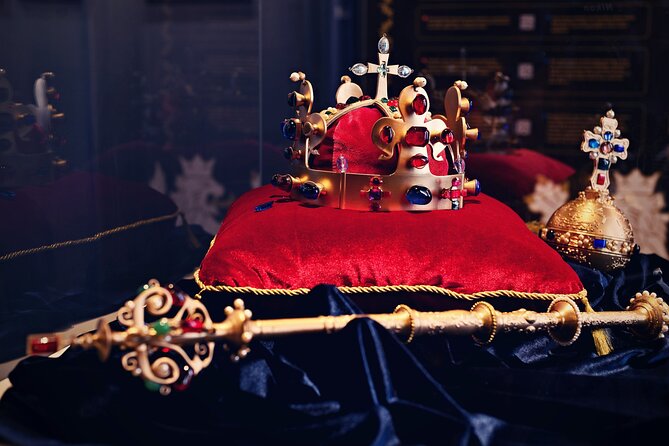
The first section takes you into the age of knights and kings. It also introduces Jan Žižka and the Hussites, a key part of Czech history that can be easy to miss if your Prague visit focuses only on the castle, Charles Bridge, and the Astronomical Clock.
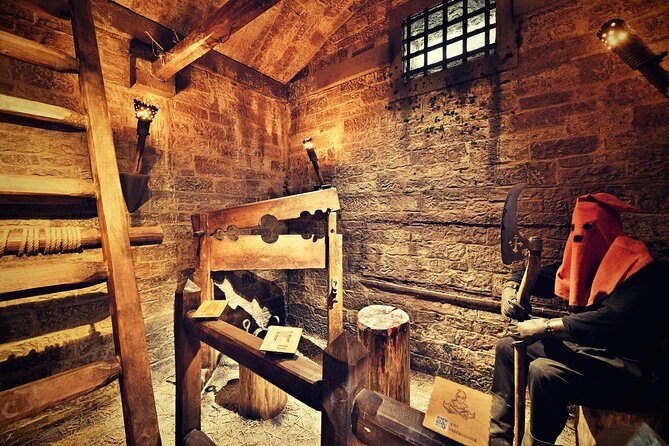
You will also encounter medieval torture, presented without practical demonstrations. That distinction matters. The subject is treated as part of the period’s hard reality, but the museum does not turn it into a live spectacle.
Then comes the construction of the Old Town Hall and Astronomical Clock. These are among Prague’s most familiar sights, so seeing their development in a museum setting can give your later walks more meaning. When you reach Old Town Square, you may have a better sense that the clock is not just a popular photo stop, but part of a much longer civic story.
A few more Prague trips to weigh up
- Prague: Museum of Fantastic Illusions Entry Ticket
★ 4.3 · 4,337 reviews - IAM Illusion Art Museum Entry Ticket
★ 4.2 · 1,664 reviews - Prague: Museum of Senses Admission Ticket
★ 4.0 · 1,445 reviews
The Golem gives the medieval halls a strong visual focus
In the dimly lit halls, a towering Golem recalls Prague’s old mystical traditions. The figure is one of the museum’s most distinctive visual moments, and it helps break up the historical material with something that feels almost like a stage set.
The Golem is tied to Prague folklore and Jewish tradition, though the supplied information does not provide a detailed interpretation of the legend. You should therefore treat the exhibit as an atmospheric symbol of the city’s older imagination, not as a complete lesson on the subject.
This is one reason I would not rush through the first floor. The exhibits are not all equal in scale or mood. Some explain major events, while others create a strong sense of place. The Golem belongs to the second group, and it is likely to be one of the displays you remember later.
The first floor also introduces the museum’s use of audio and film installations. These features can help if you prefer hearing and seeing a story instead of reading long panels. They also give the visit a more active rhythm, though anyone who prefers quiet, object-based museums may find the presentation busy.
The second floor faces Prague’s hardest decades
The second floor moves into the Nazi occupation, the bombing of Prague, and the Soviet occupation. This change in tone is important. The museum does not present Prague as a city frozen in royal pageantry. It also deals with periods of fear, destruction, and political control.
You will find a different kind of historical weight here. The medieval displays can feel legendary and dramatic, while the twentieth-century material points to events that are much closer to living memory. The shift may be sobering, but it gives the museum a more honest shape.
The bombing of Prague is included as part of the city’s wartime experience. The supplied details do not specify which individual buildings or objects are used to explain it, so you should expect the museum to present the event through its broader interactive format rather than assume a particular artifact or reconstruction.
The Nazi and Soviet sections also matter because they show that Prague’s story did not end with its famous old center. The city’s identity was shaped by modern political forces as much as by medieval rulers. If you have only a short stay in Prague, this floor helps prevent a one-sided view of the capital.
The darker material may not suit very young children or anyone seeking a light entertainment stop. There is no suggestion of practical torture demonstrations, but the subjects themselves are serious. You can decide how long to spend with each display.
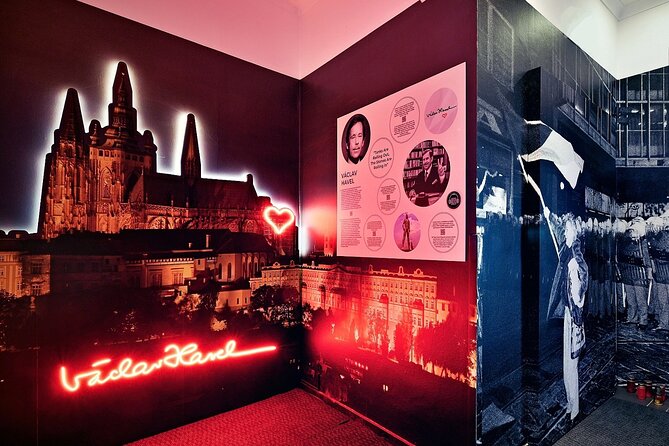
The third floor reaches the Velvet Revolution
The final floor celebrates the Velvet Revolution and Czech achievements around the world. This gives the museum a clear forward movement, from medieval rule through occupation and Soviet control to a modern Czech identity.
The Velvet Revolution is especially useful context for a first-time visit. It helps explain why Prague’s recent history still matters in public squares, monuments, museums, and everyday civic life. The experience does not stop at old legends or royal construction projects.
The phrase Czech global achievements covers a wide field, but no specific people or accomplishments are identified in the supplied details. You should see this part as a closing celebration of Czech contributions, rather than expect a complete survey of every famous Czech figure.
This last section also gives the visit a more hopeful finish. After the difficult material on the second floor, the museum turns toward change and accomplishment. That structure makes the 90-minute experience feel like a complete arc rather than a collection of unrelated rooms.
Same country, a completely different kind of day:
- Prague: 50-Minute Sightseeing Evening Cruise
★ 4.2 · 33,780 reviews - Prague: Medieval Dinner with Unlimited Drinks
★ 4.4 · 19,847 reviews - Prague: Skip-the-line Castle Ticket and Optional AudioGuide
★ 4.3 · 11,121 reviews - Prague: Castle Tour with Local Guide and Entry Ticket
★ 4.6 · 10,422 reviews
Interactive features keep the visit moving
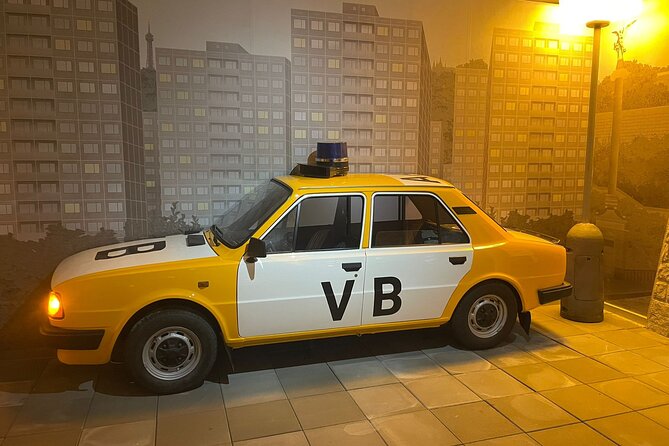
The museum’s central idea is simple: history should involve more than reading. You will encounter interactive displays, mixed reality, films, and audio elements that place you closer to the story.
The benefit is clear. If dates and political shifts blur together in a standard museum, the changing media can help you stay oriented. A visual installation may show an event more clearly than a paragraph of text, while audio can add tone and atmosphere.
The tradeoff is that interactive museums ask more from you. You may need to watch a screen, listen to a recording, scan a code, and move through a room before you can take in the next display. For some people, that feels lively. For others, it can feel like too much input in a short period.
One practical tip is to choose your level of participation. You do not have to scan every QR code. One person who rated the experience four out of five found the timeline and exhibit mix very interesting, but stopped scanning after the first floor because the codes became excessive.
That is useful advice. Use the QR codes when a subject catches your attention, not as a checklist. You will probably get more from the museum by looking closely at the main displays and choosing a few extra items than by trying to collect every digital detail.
Look for the hidden room and unusual displays
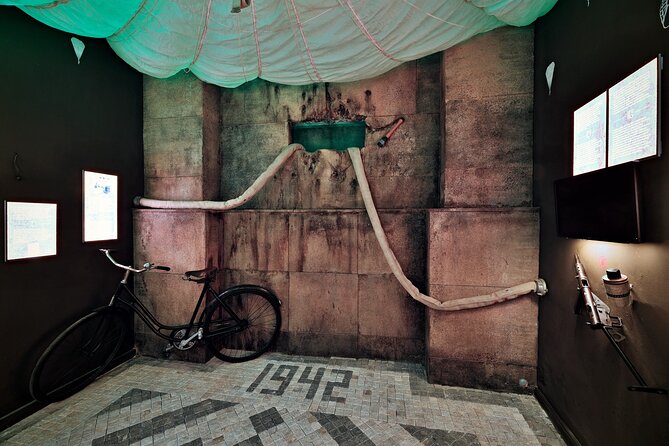
Story of Prague includes a hidden room and exhibits that are not shown in photographs. That means the online preview cannot tell you everything you will encounter inside.
This is a small but meaningful advantage. When a museum reveals every display online, the visit can feel like checking off familiar images. A hidden room gives you a reason to pay attention to the physical layout and explore beyond the most obvious route.
The museum does not provide details about what is inside the room, so I would not promise a specific object or scene. Think of it as an extra discovery built into the visit, not as a guaranteed headline attraction.
The unusual exhibits also support the museum’s wider aim. Story of Prague wants you to feel placed inside the city’s story, not simply handed a sequence of labels. That works best if you slow down around displays that make you curious.
How the 90-minute format affects your visit
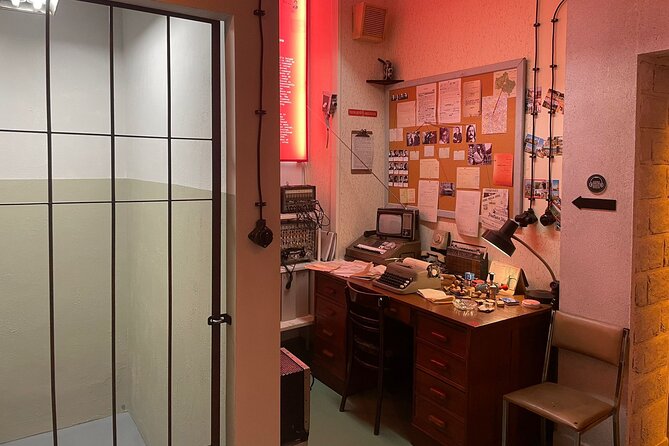
The stated duration is about one hour and 30 minutes. That is long enough to cover all three floors at a sensible pace, but short enough to fit between major Prague sights.
I see this as one of the museum’s strongest practical features. You can pair it with time in the Old Town area without giving up half a day. It also works well on a day when weather makes outdoor sightseeing less pleasant.
The exact pace depends on how much time you spend with the films, audio, interactive features, and QR codes. If you scan everything and stop for each installation, you may need longer. If you move briskly, you may finish sooner.
The 10:00 a.m. start time gives you a clear morning option. You can visit early, then continue with Prague sightseeing afterward. The museum is near public transportation, so it is not an isolated detour, although no specific station or meeting point is supplied.
The experience uses a mobile ticket, and admission is included. Keep the ticket available on your phone when you arrive. Confirmation is provided at booking, and the activity is considered suitable for most people.
Is $19.27 a fair price?
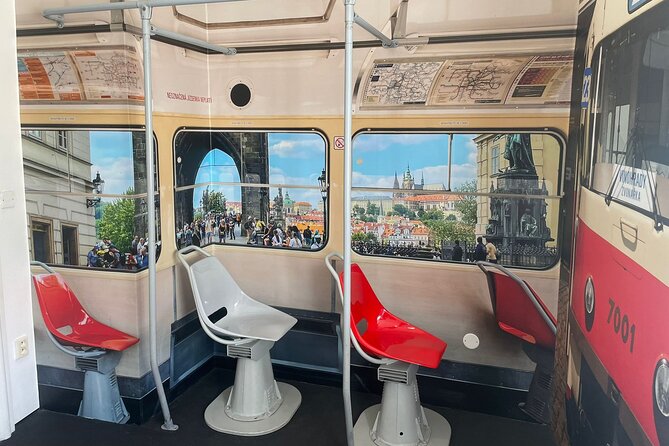
At $19.27 per person, Story of Prague is not the cheapest way to spend 90 minutes in the city, but the price is reasonable if you value presentation and structure.
You are paying for admission to a purpose-built experience that combines several kinds of media. If you want original paintings, rare documents, or a large collection of historic objects, this may not be the best use of your money. The attraction is the way it tells the story, not the size of its artifact collection.
I think the value is strongest for a first visit. Prague can feel visually overwhelming, and the museum gives you a quick orientation to the city’s major turning points. The Old Town Hall and Astronomical Clock section may also add useful context before you see those landmarks in person.
The value is less certain for a repeat visitor who already knows Prague’s political and medieval history and prefers traditional museums. In that case, the interactive style may feel familiar, and the QR codes may add more screen time than insight.
The published rating is 4.4 from 11 reviews, which suggests a generally positive response but is still a small sample. I would treat that score as a helpful signal, not a guarantee that every visitor will prefer the presentation style.
Who will enjoy Story of Prague most?
I would recommend this experience to first-time visitors who want a compact introduction to Prague. It is also a good fit if you learn better from images, sound, and staged environments than from long written panels.
Families may appreciate the interactive format, though the themes of torture, occupation, bombing, and political oppression are worth considering before you go with young children. Most people can participate, according to the available information.
The museum also suits anyone who wants a break from outdoor sightseeing. Prague’s streets are rewarding, but they can be tiring, especially when you are covering the Old Town, Charles Bridge, and castle areas in the same day.
You may want to skip it if you dislike digital displays or want a quiet museum filled mainly with original artifacts. The experience is designed around engagement and storytelling, so the technology is not a minor extra. It is central to the visit.
Booking, timing, and cancellation details
The experience is booked about 12 days in advance on average, so it is sensible to reserve before your Prague trip if the 10:00 a.m. time fits your plans.
Free cancellation is available if you cancel at least 24 hours before the local start time. Cancellations made less than 24 hours ahead are not refunded, and changes inside that same period are not accepted.
The provider is Fun in Prague, s.r.o. Your confirmation arrives at booking, admission is included, and the mobile ticket makes this easy to add to a phone-based sightseeing plan.
Should you book Story of Prague?
Book it if you want a well-paced, multimedia introduction to Prague that covers far more than the postcard sights. The Golem, hidden room, film installations, and three-floor timeline give the visit a clear identity.
Think twice if you want a traditional collection museum or dislike scanning codes and interacting with screens. You can limit the QR codes, but you cannot remove the museum’s digital and theatrical style.
For most first-time visitors, the $19.27 price is fair for a focused 90-minute history stop, especially on a rainy morning or before exploring the Old Town. I would book it early in the day, use the QR codes selectively, and leave enough time afterward to see the places the museum has introduced.
FAQ
Where is Story of Prague?
Story of Prague is in Prague, Czech Republic. It is near public transportation, but the specific address and transit stop are not provided in the available details.
How long does the museum experience take?
The visit lasts approximately one hour and 30 minutes. Your exact time may vary depending on how many interactive displays, films, audio elements, and QR codes you use.
What time does the experience start?
The stated start time is 10:00 a.m.
Is admission included?
Yes. Admission to Story of Prague is included with the experience.
How do I enter the museum?
The experience uses a mobile ticket. Confirmation is received at the time of booking.
What historical periods does the museum cover?
The museum covers knights and kings, Jan Žižka and the Hussites, medieval torture, the construction of the Old Town Hall and Astronomical Clock, the Nazi occupation, the bombing of Prague, the Soviet occupation, the Velvet Revolution, and Czech achievements around the world.
Is the museum suitable for most people?
Yes. The available information states that most people can participate. The museum includes serious subjects such as torture, occupation, bombing, and political oppression.
Can I cancel for a full refund?
Yes, if you cancel at least 24 hours before the experience’s local start time. Cancellations made less than 24 hours before the start are not refunded, and changes within that period are not accepted.
Just added around Prague
- WWII and Communism History in Prague’s Old Town Private Tour★ 5.0 · 4 reviews
- Prague: Historical Walking Tour with Focus on World War 2★ 4.3 · 12 reviews
- World War II 4WD Tour from Prague with Lunch★ 4.4 · 3 reviews
- Ultimate Unlimited Beer Pong with Czech Beer★ 4.6 · 5 reviews
- Walking tour of Prague in French : Nové Město★ 4.9 · 16 reviews
- Walking tour of Prague in french: Old Town & Charles Bridge★ 4.9 · 62 reviews
- Prague Sightseeing Tour with Lunch★ 5.0 · 5 reviews
- Prague: Modern Private Spa with Jacuzzi and Sauna★ 4.8 · 62 reviews
Museums, compared.
IAM Illusion Art Museum Prague Fast Pass Ticket
Read our review →

Ticket to Audiovisual Light Art at Lumia Gallery
Read our review →
Browse the lists this tour appears in