
Reviewed · CITY TOURS
Prague City Tour with Virtual Reality
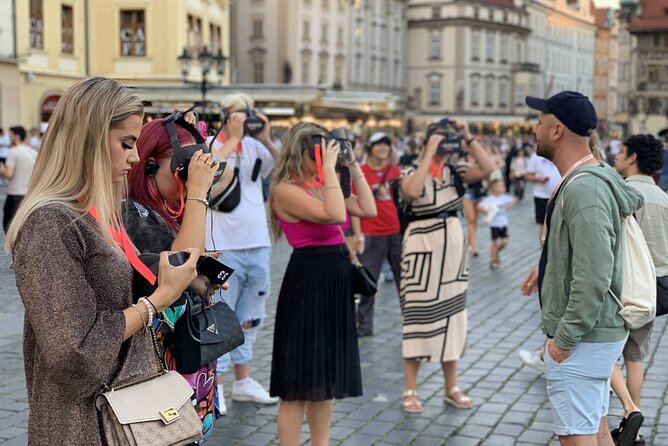
Prague’s past becomes easier to picture when you can see it layered over the city in front of you. This two-hour walking tour uses virtual reality glasses at Old Square and the square facing the National Museum, showing Prague as it looked around 1900 and helping explain the Prague Spring.
I like the small group of no more than 15 people, since you have a better chance to ask questions without losing the guide in a crowd. I also like the unusual route, which mixes famous sights with less routine stories, including the parachutists who hid in Prague during a major wartime episode.
The main consideration is pace. You cover several central locations in about two hours, so this is a brisk introduction rather than a slow, detailed tour of every monument. The experience also requires good weather, and the guide may speak and translate for a mixed-language group.
Key points at a glance
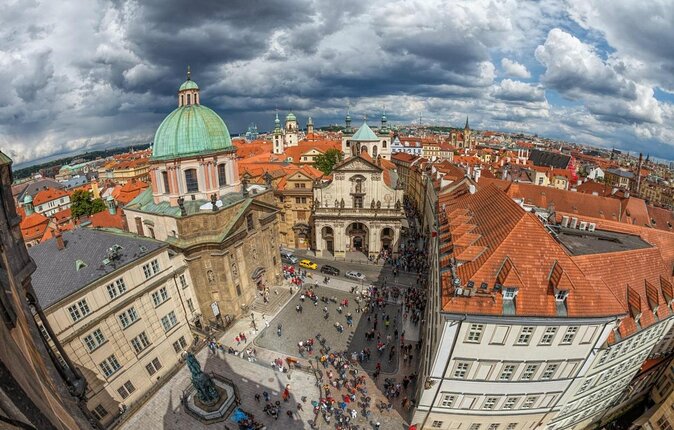
- VR views of Old Square in 1900: Put on the glasses and compare the present-day square with its earlier appearance.
- Prague Spring brought to life: Use virtual reality near the National Museum to understand a major event in modern Czech history.
- A compact central route: See the astronomical clock, a Gothic and Baroque church, Kafka’s Head, Old Town Hall, and the Dancing House.
- Guide-led and small-group: The group is limited to 15 people, leaving room for questions and conversation.
- Several European audio languages: Language support is available beyond English, with the guide able to help a mixed-language group.
- A useful ending point: The tour finishes at the Dancing House, with views toward Prague Castle and one of the city’s best-known modern buildings.
Seeing Prague in two time periods
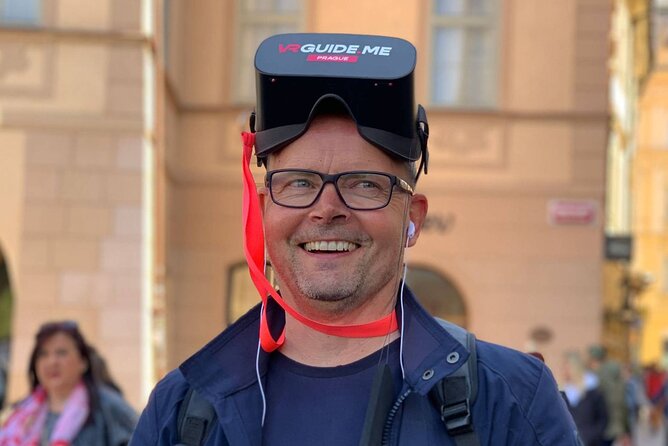
I find VR most useful when it answers a simple question: what am I looking at, and what changed? That is the point of the glasses here. Rather than treating technology as a flashy extra, the tour uses it to connect present-day streets with important moments from Prague’s past.
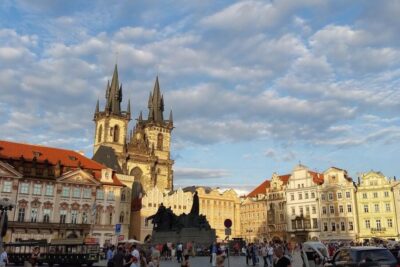
At Old Square, you look at the city as it is now, then use the glasses to see the square in 1900. That change of view can help you notice how buildings, public spaces, and city life have shifted over time.
This is especially helpful if you are new to Prague. Old Square can feel like a grand stage full of towers, façades, statues, cafés, and passing crowds. A VR view gives your eyes a second version of the same place, making the explanation easier to follow than a list of dates.
You should expect to remove and put on the glasses during selected stops, not wear them for the entire walk. The tour remains a walking tour first, with virtual reality used at key points.
A few more Prague trips to weigh up
- Prague: Historic City Center Bus Tour with Top Sights
★ 4.4 · 2,360 reviews - Grand city tour on Scrooser in Prague
★ 5.0 · 1,910 reviews - Prague: City Highlights By Bus, Boat, and on Foot
★ 4.5 · 1,596 reviews
Starting near Panská Street at 10:30 am
The meeting point is Rafidein s.r.o., at Panská 892 in Nové Město, Prague 1. The start time is 10:30 am, and the location is near public transportation, which makes it practical if you are staying outside the central area.
I would arrive a little early. The group has a maximum of 15 people, and finding the meeting point without a rush gives you time to get settled before the walking begins.
The route crosses central Prague and ends at the Dancing House, so you are not returned to the starting point. That matters when planning the rest of your day. You may want to schedule lunch, a river walk, or another activity near the final stop rather than near Panská Street.
The tour lasts about two hours. Since the route includes several stops, you should expect regular movement between sights rather than long periods inside one attraction.
Old Square and the astronomical clock
The first major stop is Prague’s Old Square, where the guide sets up the first VR comparison. Seeing the square in 1900 gives the opening section a clear purpose: you are not simply hearing that the city has changed, you are shown another version of the place beneath the modern view.
The guide also tells the famous story of Prague’s astronomical clock. This is a good pairing. The square provides the setting, while the clock supplies one of Prague’s best-known legends and landmarks.
I like this early combination because it gives you both a broad look and a close point of focus. You get a sense of the city center as a whole, then turn your attention to the details and story attached to the clock.
The limitation is that the Old Square is one of Prague’s most popular places. You may have to share the space with other people, and the guide’s explanation can compete with the noise of the city. A small group helps, but this is still a public square, not a private viewing room.
The square and the Prague Spring
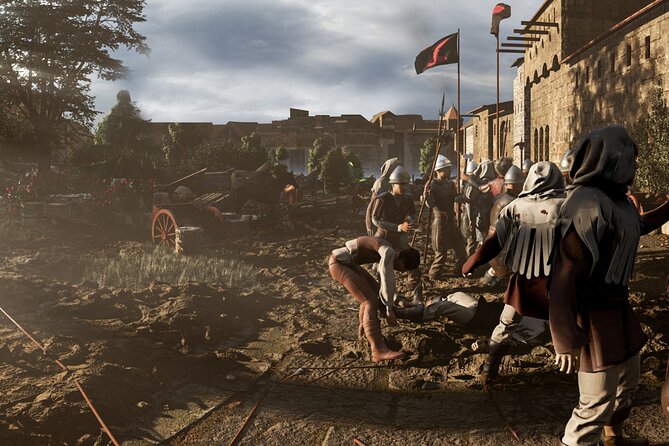
The next major VR section takes place at the country’s main square, with views toward the National Museum. Here, the glasses help explain what happened during the Prague Spring.
This stop shifts the tour from older city history to the events of modern Prague. That change is important. Many first-time walks focus on medieval buildings and royal stories, but this experience also looks at the political past that shaped the Czech capital in the 20th century.
The VR element is well suited to this subject because public spaces often carry the memory of events that are difficult to understand from a present-day view alone. You can look at the square today, then use the visual material to place the Prague Spring in its setting.
I would pay close attention here, especially if you do not know much about Czech history. The tour description does not promise a long lecture, and the full subject cannot be covered in great detail during a short city walk. Still, this stop gives you useful context and may help you decide what you want to study later.
Same country, a completely different kind of day:
- Prague: 50-Minute Sightseeing Evening Cruise
★ 4.2 · 33,780 reviews - Prague: Medieval Dinner with Unlimited Drinks
★ 4.4 · 19,847 reviews - Prague: Skip-the-line Castle Ticket and Optional AudioGuide
★ 4.3 · 11,121 reviews - Prague: Castle Tour with Local Guide and Entry Ticket
★ 4.6 · 10,422 reviews
A Gothic and Baroque church
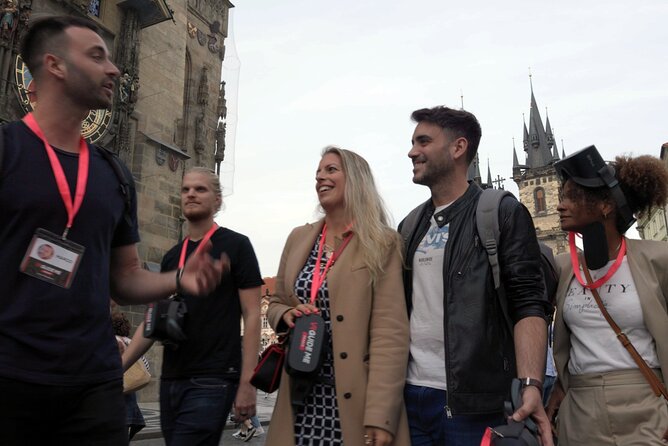
The route includes entry to a beautiful church with both Gothic and Baroque elements. The emphasis is on the building’s height and interior beauty.
This offers a welcome change from outdoor street views. After the VR presentations and public squares, you step into a space where the architecture does the talking. Look up as soon as you enter. The height is one of the features specifically highlighted, and it is easy to miss the full effect if you focus only on the lower walls and furnishings.
The church is not identified in the available tour details, so I would not book this expecting a named church visit or a long specialist discussion of its art. Think of it as a carefully chosen interior stop that adds architectural variety to the route.
For many people, this will be one of the calmer moments of the morning. You can take in the scale of the building while the guide explains what makes its Gothic and Baroque character notable.
Kafka’s Head and Prague’s modern side
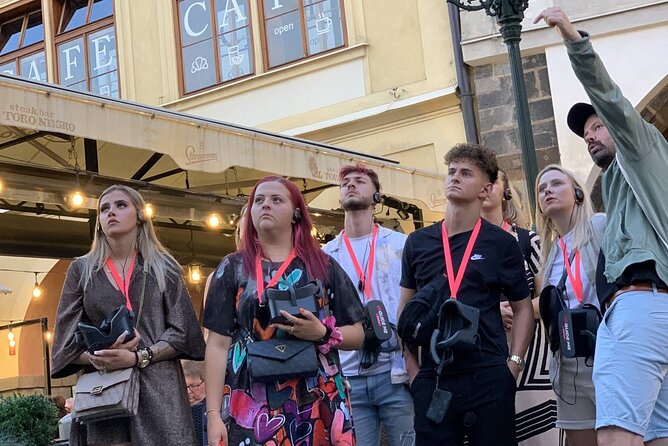
The stop at Kafka’s Head brings the tour into modern public art. This well-known sculpture is a sharp contrast to the old square, the astronomical clock, and the church interior.
I like this change of tone. Prague is not only a city of historic façades and church towers. The Kafka sculpture reminds you that the capital also makes room for large, contemporary works that can be strange, playful, and open to interpretation.
The stop is designed to let you enjoy the modern art rather than turn the entire tour into an art lecture. If you already know Kafka’s work, you may appreciate the connection more fully. If you do not, the sculpture still gives the route a memorable visual break.
The tour does not state how long you stay at the sculpture, so keep your expectations sensible. You will see it as part of a walking route, not as a dedicated museum visit.
Old Town Hall and the city’s darker stories
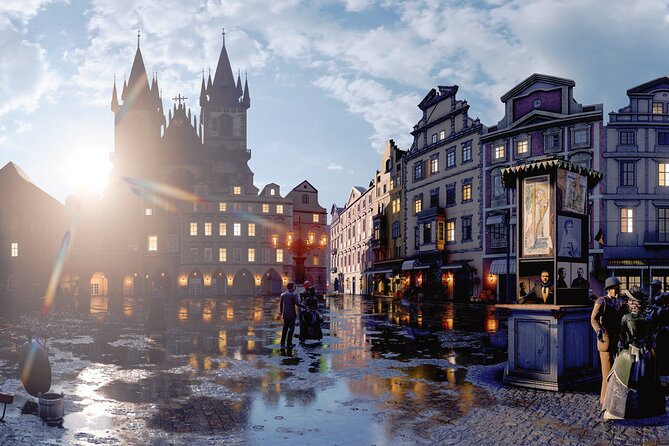
The route then reaches the old town hall, where the guide explains what happened there. The wording suggests a story-based stop, and it fits the tour’s larger aim: showing you that Prague’s famous buildings often have difficult or surprising chapters behind their attractive fronts.
This is one reason a guide adds value. You can photograph a building on your own, but a short explanation can change the way you see it for the rest of your stay. I would use this stop to ask questions, especially if the story raises connections to the clock, the square, or Prague’s political past.
The tour also tells the story of the so-called butcher of Prague and the parachutists who hid in the city during one of its most striking historical episodes. The details provided for the tour do not name the exact location or explain the entire event, so the guide’s explanation will matter here.
That story adds a darker note to the morning. It is not a tour made only for pretty views. You should be ready for wartime history and for accounts that may be more serious than the opening stops.
Views toward Prague Castle and the Dancing House
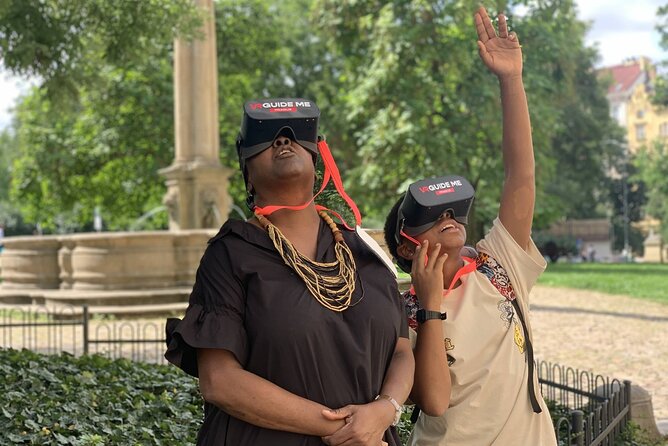
The walk finishes with views of Prague Castle and the Dancing House. The end point is Jiráskovo náměstí, at the Dancing House in Nové Město.
This is a satisfying finish because it brings together two very different images of Prague. The castle represents the city’s older skyline, while the Dancing House is one of its most recognizable modern buildings.
You can use the final stop to get your bearings for the rest of the day. The tour does not include a visit inside Prague Castle, and the Dancing House is the ending point rather than a separate guided attraction. Still, the views give you a useful final picture of Prague’s architecture across time.
I also like the practical location. Since you finish at a major landmark, you can continue exploring from there instead of retracing the route to the starting point.
Marco, languages, and the small-group format
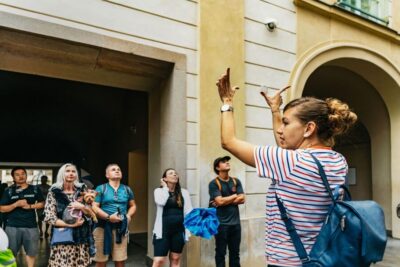
One guide named in the available information is Marco. His role includes explaining the city’s history and helping a mixed-language group follow along. An account of the tour describes him as patient and professional while handling translation for people speaking different languages.
The tour is offered in English, and audio guides are available in several European languages. That combination may suit couples or small groups who do not all have the same first language, though you should expect some shared explanations when the group is mixed.
The maximum group size is 15. That is not a private tour, but it is small enough to make questions realistic. I would take advantage of that rather than waiting until the end. Ask about the VR scenes, the historical episodes, or the buildings you pass between official stops.
A mixed-language format can also affect the rhythm. Explanations may take a little longer when the guide repeats or translates key points. For most people, that is a fair trade for making the tour accessible to more of the group.
Is $43.14 a fair price?
At $43.14 per person, this tour costs more than a basic free walk, but it includes something a standard stroll does not: guided VR scenes tied to specific places and events.
I see the strongest value in the combination of central sights and interpretation. You are not paying only to walk through Old Town. You are paying for a guide, a small group, historical storytelling, access to a church, audio language support, and the chance to see Old Square around 1900 and the Prague Spring through virtual reality.
The value is better if you are visiting Prague for a short stay and want a broad orientation in two hours. It is also a good fit if you enjoy history but find ordinary lectures hard to picture.
The value is weaker if you prefer a slow walk with plenty of time at each building, or if you already know central Prague very well. The tour covers a lot of ground, and the VR sections cannot replace a full museum visit or a specialist history tour.
Who should book this Prague VR tour?
I would suggest this experience to first-time visitors, families with older children, and anyone who wants a clear introduction to Prague without spending half a day on one subject. The visual element can make historical events easier to grasp, especially for people who learn better by seeing places rather than hearing dates.
It also suits visitors who want a route beyond the usual Old Town checklist. You still see major sights, but you also hear about modern political history, wartime events, and contemporary art.
You may want to choose another tour if you need step-free details, a private guide, or a very slow pace. The information confirms that most people can participate and that the tour is near public transportation, but it does not provide a full mobility assessment for every street or interior.
You can wear glasses under the VR equipment. That simple detail matters if you rely on prescription lenses.
The experience requires good weather. If poor weather cancels it, you are offered another date or a full refund. It also requires a minimum number of participants, with the same general choice of another date, another experience, or a refund if that minimum is not reached.
Free cancellation is available up to 24 hours before the start time. Changes or cancellations made less than 24 hours before the 10:30 am start are not accepted for a refund.
My booking advice
Book this tour if you want Prague’s sights explained through both real views and virtual reconstructions. The strongest features are the Old Square scene from 1900, the Prague Spring presentation, Marco’s patient help with a multi-language group, and the compact finish at the Dancing House.
I would not book it solely for the promise of seeing every major monument in depth. Two hours is enough for a lively overview, not a complete study of Prague.
For the best fit, arrive early at Panská Street, wear comfortable shoes, and plan your next activity near the Dancing House. If you want a practical first look at Prague that mixes old buildings, modern art, political history, and a little technology, the $43.14 price is reasonable.
FAQ
How long does the Prague City Tour with Virtual Reality last?
The tour lasts approximately two hours.
How much does the tour cost?
The listed price is $43.14 per person.
What time does the tour start?
The tour starts at 10:30 am.
Where does the tour begin?
It begins at Rafidein s.r.o., Panská 892, Nové Město, 110 00 Praha, Prague 1, Czechia.
Where does the tour finish?
The tour ends at the Dancing House, Jiráskovo náměstí 1981/6, 120 00 Praha 2-Nové Město, Czechia.
Is the tour offered in English?
Yes. The experience is offered in English, and audio guides are available in several European languages.
How many people can join the tour?
The maximum group size is 15 people.
Can I wear prescription glasses with the VR equipment?
Yes. The tour information states that you can use the VR equipment while wearing glasses.
Can I cancel for a full refund?
Yes. You can cancel at least 24 hours before the start time for a full refund. Cancellations or changes made less than 24 hours before the start are not accepted for a refund. The tour may also be rescheduled or refunded if poor weather or an insufficient number of participants causes cancellation.
Just added around Prague
- WWII and Communism History in Prague’s Old Town Private Tour★ 5.0 · 4 reviews
- Prague: Historical Walking Tour with Focus on World War 2★ 4.3 · 12 reviews
- World War II 4WD Tour from Prague with Lunch★ 4.4 · 3 reviews
- Walking tour of Prague in French : Nové Město★ 4.9 · 16 reviews
- Walking tour of Prague in french: Old Town & Charles Bridge★ 4.9 · 62 reviews
- Ultimate Unlimited Beer Pong with Czech Beer★ 4.6 · 5 reviews
- Prague Sightseeing Tour with Lunch★ 5.0 · 5 reviews
- Prague: Modern Private Spa with Jacuzzi and Sauna★ 4.8 · 62 reviews
City Tours, compared.
Historic City Center Bus Tour with Top Sights
Read our review →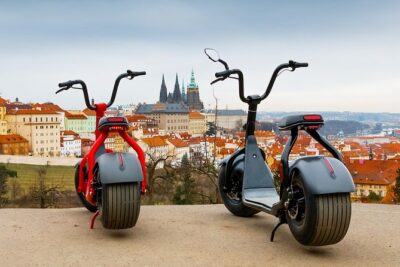
City Sightseeing HOHO Bus Tour & Optional Boat Tour
Read our review →

Browse the lists this tour appears in