Reviewed · TOURS
WWII in Prague Tour & The Crypt of Operation Anthropoid
Prague’s WWII story reaches its most powerful moment in the dim crypt beneath St Cyril and St Methodius Cathedral. Here, the parachutists of Operation Anthropoid made their final stand, and the bullet-marked walls and narrow underground rooms bring a human scale to events that can feel distant in a textbook.
I like the mix of walking, tram travel, photographs, and original artifacts, which keeps the tour from becoming a long lecture. I also like the small-group format, with a maximum of 20 people, and guides such as Hanna, Pavel, Paul, and George who bring clear personal interest to the subject. The main caution is time: the tour is advertised at two to three hours, but it can run closer to three and a half, with plenty of walking and limited opportunities for a bathroom stop.
Key points at a glance
- The final crypt visit carries the emotional weight: Enter the underground memorial beneath St Cyril and St Methodius Cathedral, the site of the parachutists’ last battle.
- The story begins before Operation Anthropoid: You’ll get background on the creation of Czechoslovakia, the Nazi period, the resistance, and the Prague uprising.
- Photos and artifacts make the past easier to picture: Guides use archive images and a private WWII collection to connect today’s streets with wartime Prague.
- Public transit is part of the route: Included tram or public transit tickets reduce hassle, but check that you receive yours at the start.
- This is a serious history tour: It suits people who want detail and context more than a quick sightseeing walk.
- Expect a brisk outing: Comfortable shoes matter, and the tour may last longer than the shortest advertised estimate.
Starting at the Powder Tower with Prague’s story
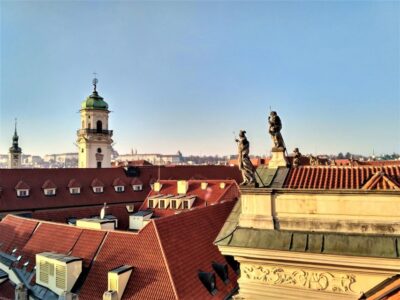
The meeting point is in front of the Powder Tower, a useful central landmark near Prague’s Old Town. It is also a noisy place to begin. Crowds, traffic, and city sounds can make it hard to hear the guide, so I’d arrive a few minutes early and stand close to the person leading the group.
The opening talk sets up the story of Czechoslovakia and explains the country’s position before and during WWII. This early section matters because Operation Anthropoid did not happen in isolation. The tour links national events, Nazi rule, resistance activity, and the lives of ordinary people who helped or suffered during the period.
You may hear more detail here than you expect from a standard city walk. That is good news if you already know the broad outline of WWII and want the Czech side of the story. If you are looking for a light introduction with only a few dates, the amount of information may feel heavy.
The guides use humor at times, but the subject remains serious. Hanna is described as a native of Prague with a strong command of local history, while Pavel, Paul, and George are also praised for their clear explanations and personal interest in the topic. Guide quality can vary from one departure to another, but the experience depends heavily on how well the guide manages the group and speaks over city noise.
Other Prague days worth booking alongside this:
- Prague: 50-Minute Sightseeing Evening Cruise
★ 4.2 · 33,780 reviews - Prague: Medieval Dinner with Unlimited Drinks
★ 4.4 · 19,847 reviews - Prague: Skip-the-line Castle Ticket and Optional AudioGuide
★ 4.3 · 11,121 reviews
From resistance stories to vanished wartime Prague
The route moves through central Prague to places tied to the Czech resistance. One stop concerns a secret resistance flat. It is not simply a photo opportunity. The point is to show how resistance work depended on hiding places, trusted contacts, and quiet decisions made inside normal city buildings.
You’ll also see memorials connected with the Prague uprising. These stops help shift the focus from military operations to the people of the city. Prague’s wartime story includes public resistance, fear, retaliation, and the difficult period after the war. The guide uses the streets themselves as a map, pointing out places that are easy to pass without noticing.
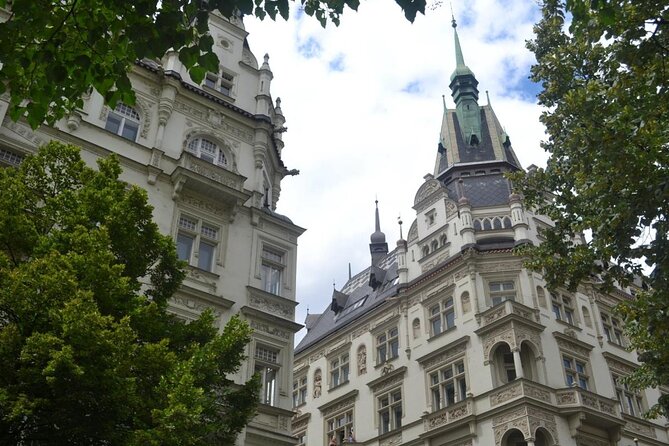
The walk also passes the former NSDAP headquarters. You do not enter it, so this is a brief exterior stop rather than a full museum visit. Still, it adds useful physical context. You can see how the Nazi presence was woven into the city rather than confined to a distant battlefield.
The Jewish quarter forms another part of the route. The supplied details do not promise a dedicated museum visit or an extended stop inside a synagogue, so think of this as part of the wider wartime story rather than a separate Jewish heritage tour. If that is your main interest, you’ll need additional time elsewhere in Prague.
Archive photographs and the city that changed
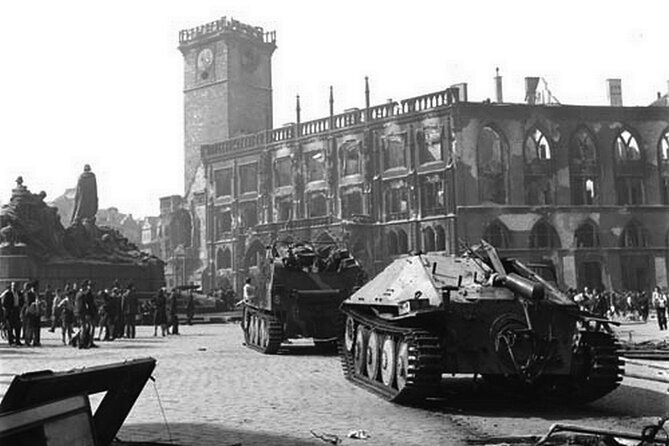
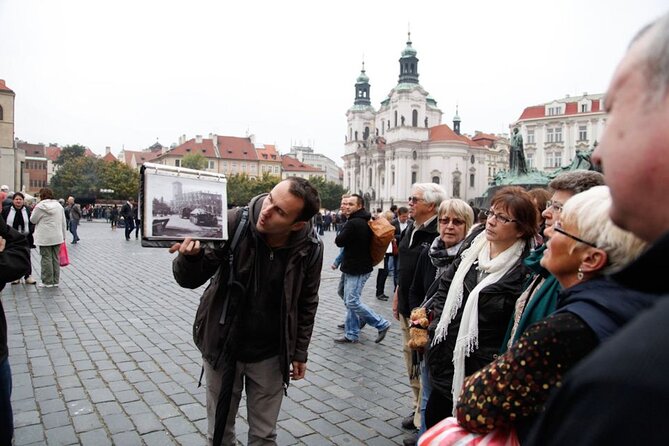
One of the more unusual elements is the use of archive photographs to show halls, clocks, and buildings in ruins. This gives you a before-and-after view of Prague, rather than asking you to imagine wartime damage from a modern street corner.
I like this approach because it makes the tour less about collecting addresses and more about comparing the city you see with the city that existed during the war. A photograph held up beside a surviving building can do more than another list of dates.
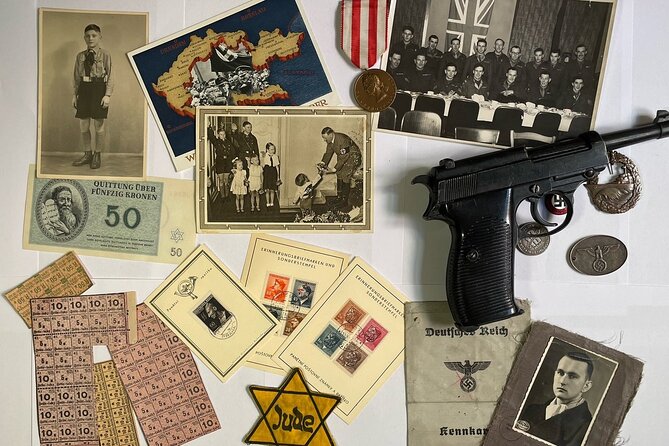
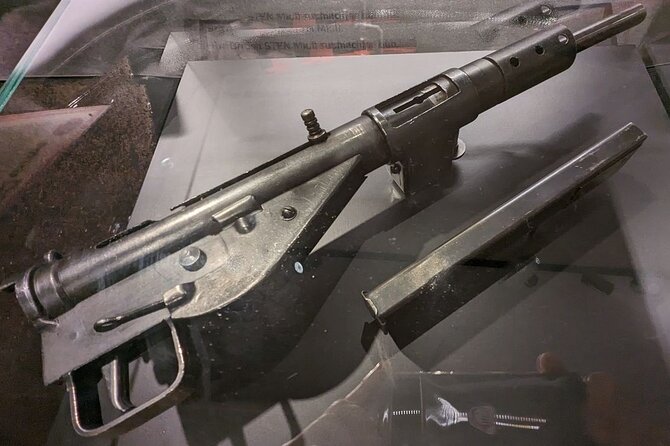
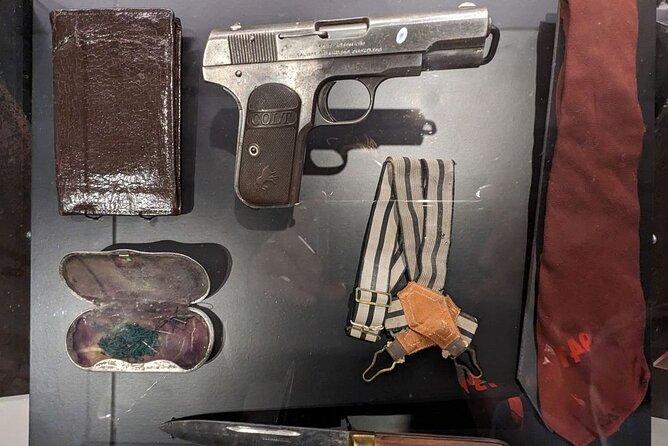
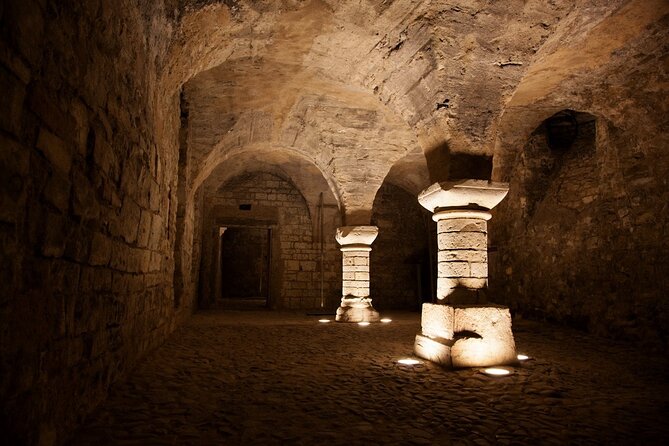
The guide also brings photographs and WWII artifacts to the group. These objects provide a closer look at the period and give the explanations a physical anchor. At Dům pánů z Kunštátu a Poděbrad, you visit medieval underground rooms that were used as an air raid shelter during the 1944 bombing of Prague. The stop lasts about 20 minutes, and admission is included.
This basement is valuable for two reasons. First, it shows how older parts of Prague were put to wartime use. Second, a private collection of WWII artifacts adds material detail to the broader story. The underground setting also changes the pace of the tour. After walking through public streets, you move into a confined space where the threat of bombing feels easier to picture.
Do not expect a large museum visit. The stop is short, and the collection is described as private rather than as a major public institution. Its strength is the way it supports the guide’s story.
Riding public transit without losing the thread
The tour uses included public transit tickets as part of the route. This is practical. Prague is easy to cross by tram, but a guided ride saves you from figuring out which ticket to buy and where to go next.
The tram section also gives your feet a break. The route involves a good deal of walking, some stairs, and several stops, so a short ride helps keep the pace manageable. The guide continues the story as the group moves between locations, tying the city’s geography to the events being discussed.
There is one detail worth checking at the beginning: make sure you receive your public transit ticket. One group had to arrange its own ride back after a member did not get a ticket. That sounds like a simple administrative mistake, but it can disrupt a small group and add an unexpected taxi or rideshare cost.
The group limit is 20 people, which is small enough for questions but not necessarily intimate. Stay near the guide, especially during the first explanation at the Powder Tower and while crossing busy streets. Some people have found it difficult to hear when the guide walks and talks at the same time.
Same country, a completely different kind of day:
- Prague: Castle Tour with Local Guide and Entry Ticket
★ 4.6 · 10,422 reviews - Prague Castle 2.5-Hour Tour Including Admission Ticket
★ 4.7 · 8,927 reviews - Prague: Oldtown, Medieval Underground & Dungeon History Tour
★ 4.2 · 8,244 reviews - Prague: Vltava River Night Cruise with Buffet
★ 4.3 · 7,338 reviews
St Cyril and St Methodius Cathedral
The route ends at St Cyril and St Methodius Cathedral, also called the Cathedral of Saints Cyril and Methodius. The church itself is an important part of the experience because it is directly tied to the fate of the parachutists involved in Operation Anthropoid.
The cathedral visit lasts about 10 minutes and admission is free. That makes it more of a focused historical stop than a full church tour. Your attention is directed toward the wartime events and the people connected with them.
The transition from the busy city to the church feels important. You have spent the earlier part of the tour learning names, places, and political background. Here, the story becomes more concentrated. The building is no longer just another Prague landmark. It is the setting for the final chapter.
The guide may use photographs and maps to explain how the events unfolded. The best guides, including those praised for their storytelling and ability to answer questions, make this part clear without turning it into a string of disconnected facts.
Entering the Crypt of Operation Anthropoid
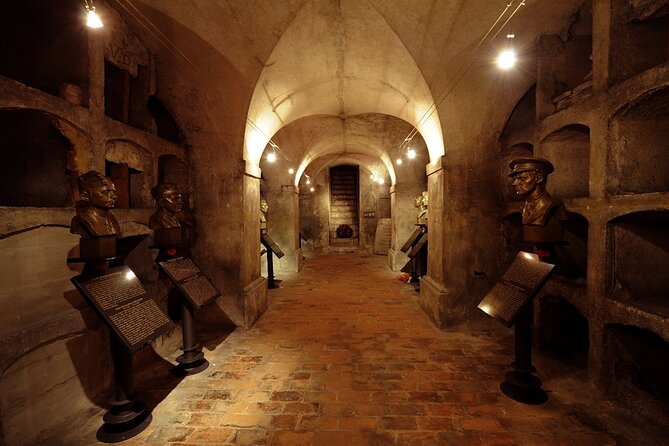
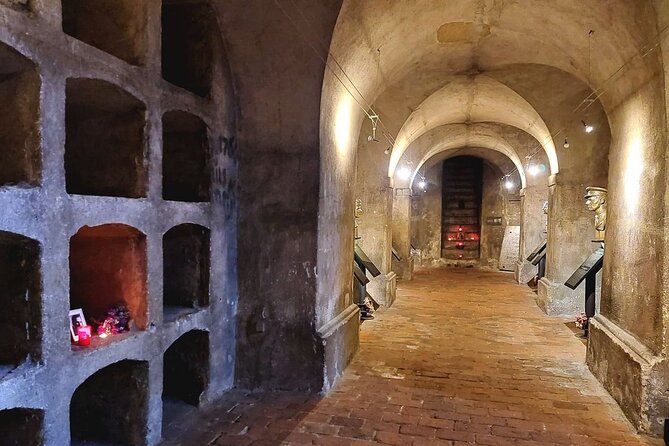
The National Memorial to the Heroes of the Heydrich Terror is beneath the cathedral. You enter the crypt and the Operation Anthropoid museum, where the parachutists made their final stand.
This is the tour’s strongest stop. The crypt is small, plain, and emotionally difficult. You may see bullet holes in the walls and the narrow passage the men tried to dig through. Those details are more affecting than grand displays because they show the physical limits of the space and the desperate nature of the final battle.
The museum adds information below the church, while the crypt itself carries the atmosphere. I would not rush this section. Give yourself time to look, listen, and let the guide finish the explanation.
The subject includes courage, sacrifice, and the danger faced by Czech families who helped the resistance. It also covers the brutal consequences that followed. This is not a cheerful sightseeing stop, and the guide’s tone matters. The strongest guides treat the material with respect rather than turning it into dramatic entertainment.
You can choose not to enter the crypt if the subject or confined space feels too difficult. That option is useful for families or mixed groups, since not everyone has the same tolerance for wartime violence and memorial sites.
How long the tour really takes
The official duration is approximately two to three hours. In practice, you should allow up to three and a half hours, depending on the guide, group size, questions, walking speed, and time spent with the photographs and artifacts.
The walking is manageable for most people, but it is not a relaxed café-to-café stroll. You’ll move between several central locations, use public transit, climb or descend stairs, and spend time standing while the guide explains each place.
There may not be a bathroom break until late in the tour. Plan ahead before meeting at the Powder Tower, especially if you are traveling with children or anyone who needs regular stops.
The small group helps with questions, but it can also make the tour feel slower when several people want detailed answers. Guides such as Pavel and George are praised for responding well to questions, while some departures have been less easy to follow because of English pronunciation, volume, or long explanations.
Is $43.53 a fair price?
At $43.53 per person, the value comes from the guide, the included public transit, the underground shelter, the artifact collection, and entry to the memorial crypt. You are not paying only for transportation or admission. You are paying for someone to connect scattered sites into one understandable story.
That price makes sense if you have a real interest in WWII, Czech resistance, or Operation Anthropoid. A self-guided visit to the cathedral and memorial would cost less, but it would not provide the same route-wide context or the collection of archive images and objects.
The value is less clear if you want a broad overview of Prague. Much of the tour is devoted to one difficult period, and the guide may offer more detail than you want. You also need to account for the time. A tour that runs beyond three hours can affect lunch plans, museum bookings, or an afternoon train.
The tour is often booked about 24 days ahead, so it is sensible to reserve early if your Prague dates are fixed. Free cancellation is available until 24 hours before the start time. After that point, the payment is not refunded, and late changes are not accepted.
Who should book this Prague WWII tour?
I would choose this tour if you want the Czech story of WWII placed on the actual streets where events unfolded. It is especially suited to history buffs, readers who already know the basic war timeline, and anyone who wants more than a list of famous Prague sights.
You should also book it if you value a guide who can answer questions and use personal insight. Several guides are praised for passion, clear English, and strong storytelling, though communication can be uneven. Stay near the guide and speak up early if you cannot hear.
I would skip it if you want a short, easy walk with plenty of free time. The subject is heavy, the pace can be demanding, and the crypt is emotionally tough. It is also not the best choice if Jewish Prague is your main focus, since that part of the route is only one element of a wider WWII program.
Should you book it?
Book this tour if the crypt beneath St Cyril and St Methodius Cathedral is high on your Prague list and you want the background that makes the visit meaningful. The shelter, photographs, resistance sites, tram ride, and memorials create a useful path from national history to one stark final location.
Before booking, plan for three hours or more, wear comfortable shoes, eat beforehand, and confirm your transit ticket at the start. If you can accept a serious subject and a guide-led format with lots of detail, the $43.53 price is reasonable. If you prefer a quick overview, visit the memorial on your own and spend the saved time elsewhere.
FAQ
Where does the WWII in Prague tour begin?
The tour begins in front of the Powder Tower at Powder Gate, 110 00 Praha 1, Prague.
Where does the tour end?
It ends at Resslova 9, Prague 2, at the National Memorial to the Heroes of the Heydrich Terror beneath St Cyril and St Methodius Cathedral.
How long does the experience last?
The listed duration is approximately two to three hours. Some departures may take longer, with one reported duration reaching three and a half hours.
Are public transit tickets included?
Yes. Public transit tickets are included as part of the tour. Check at the beginning that you have received yours.
What is the maximum group size?
The tour has a maximum of 20 participants.
Can I cancel for a full refund?
Yes, if you cancel at least 24 hours before the experience start time. Cancellations or changes made less than 24 hours before the start are not accepted for a refund.
Just added around Prague
- WWII and Communism History in Prague’s Old Town Private Tour★ 5.0 · 4 reviews
- Prague: Historical Walking Tour with Focus on World War 2★ 4.3 · 12 reviews
- World War II 4WD Tour from Prague with Lunch★ 4.4 · 3 reviews
- Walking tour of Prague in french: Old Town & Charles Bridge★ 4.9 · 62 reviews
- Ultimate Unlimited Beer Pong with Czech Beer★ 4.6 · 5 reviews
- Walking tour of Prague in French : Nové Město★ 4.9 · 16 reviews
- Prague Sightseeing Tour with Lunch★ 5.0 · 5 reviews
- Prague: Modern Private Spa with Jacuzzi and Sauna★ 4.8 · 62 reviews
Tours, compared.
Castle Tour with Local Guide and Entry Ticket
Read our review →
Prague Castle 2.5-Hour Tour Including Admission Ticket
Read our review →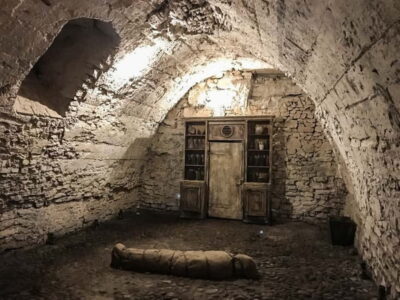
Oldtown, Medieval Underground & Dungeon History Tour
Read our review →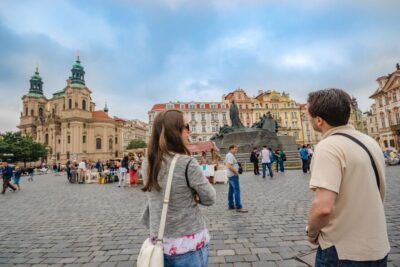
3-Hour Walking Tour of Old Town & Prague Castle
Read our review →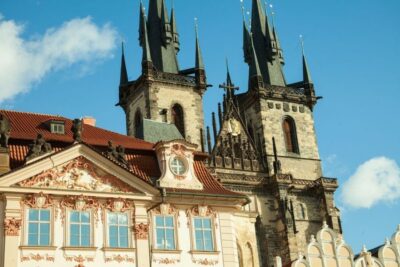
3-Hour Old Town and Prague Castle Tour in German
Read our review →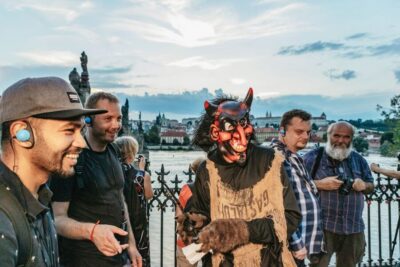
Ghost Walking Tour Where Legends Come To Life
Read our review →
Ghosts, Legends, Medieval Underground & Dungeon Tour
Read our review →