
Reviewed · WALKING TOURS
Prague: 2-Hour Back to Communism Walking Tour
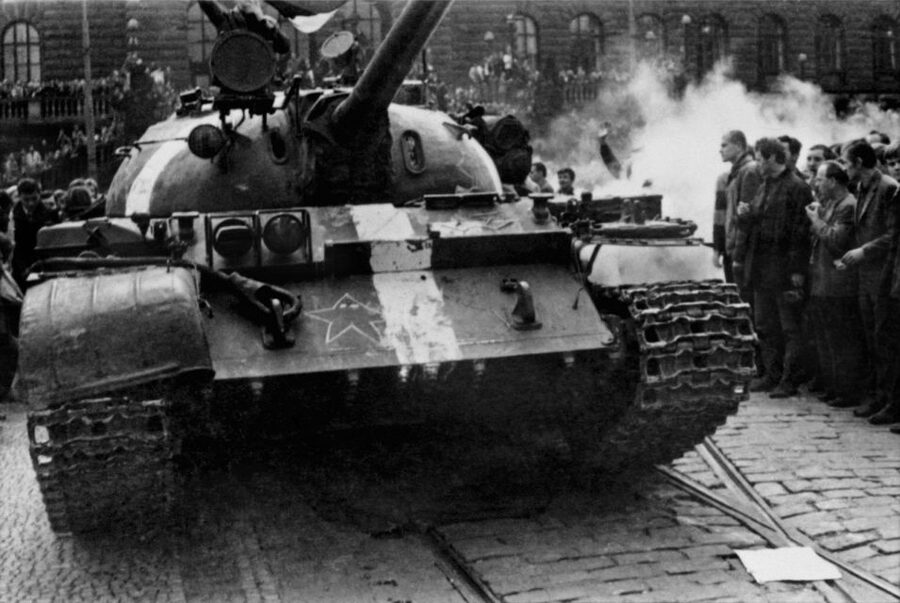
Prague’s communist past is easiest to understand when you connect big political events with ordinary streets. This walking tour takes you to the former secret police headquarters, the former site of Stalin’s statue, Communist Party locations, and places tied to protests, rebellion, revolution, and Soviet occupation. The guide also explains what daily life felt like for people who lived through it.
I like the firsthand viewpoint and the chance to ask questions instead of simply reading dates from a plaque. I also like the clear focus: in about two hours, you get a useful introduction to socialism, communism, the Cold War, and Czechoslovakia without giving up half a day. The main caution is guide consistency. One German-language booking received criticism for language ability, and one guide spent too much time handling phone messages during the walk.
Key points at a glance
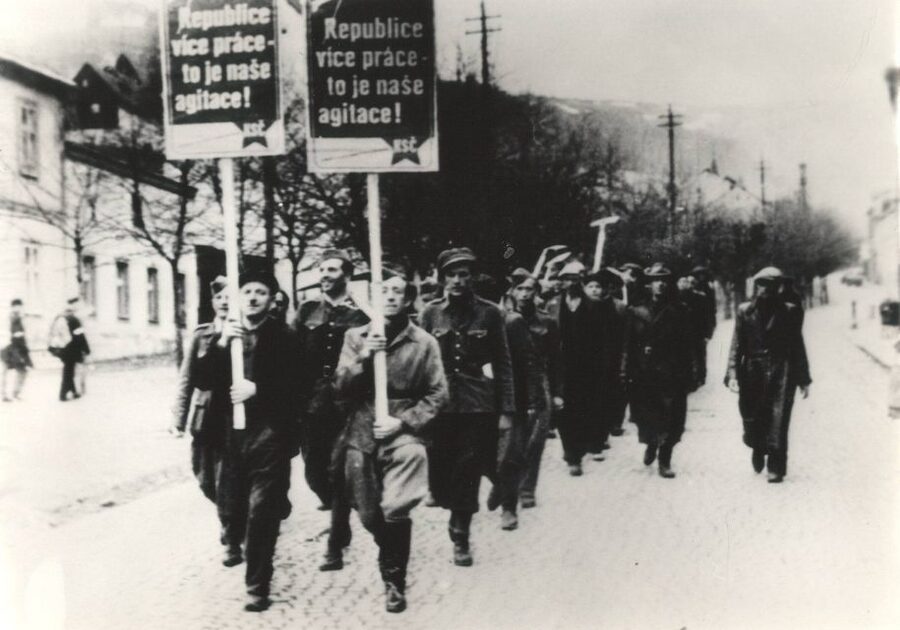
- Former secret police headquarters: See a place linked to the machinery of communist control in Prague.
- A local guide who lived through the era: Hear about daily life from someone with personal experience of Cold War Czechoslovakia.
- Stalin’s former Prague location: Learn how Soviet influence shaped the city and its public spaces.
- Protests, occupation, and revolution: The walk connects streets and sites with moments of public resistance.
- About two hours on foot: A compact choice for visitors who want political history without a full-day commitment.
- Private group option: A private walk can give you more room for questions, though the regular booking may also operate with a small group or no other participants.
Prague’s communist past is told through ordinary streets
This is not a general sightseeing stroll with a few political facts added at the end. The entire route is built around the years when Czechoslovakia was governed under a communist system and closely tied to the Soviet Union.
You begin with an explanation of socialism and communism, including their rise in the 19th century and their spread into Central and Eastern Europe. That opening matters because it gives you the basic vocabulary for the rest of the walk. You will hear about political ideas, party control, Soviet influence, and the difference between theory and lived experience before moving through Prague’s streets.
I appreciate that the tour promises both the advantages and disadvantages of the system. That approach is useful because the subject is not handled as a simple good-versus-bad story. You can ask about work, housing, public life, restrictions, shortages, political loyalty, and the effect of the state on ordinary families, as long as your questions stay connected to the tour’s subject.
The guide is a local professional and a survivor of the Cold War period. No individual guide names are provided, so your experience will depend on who leads your departure. The available languages are Czech, English, and German.
A few more Prague trips to weigh up
- Prague: 3-Hour Walking Tour of Old Town & Prague Castle
★ 4.7 · 5,696 reviews - Prague: Ghost Walking Tour Where Legends Come To Life
★ 4.4 · 5,253 reviews - Prague: Jewish Quarter Walking Tour with Admission Tickets
★ 4.7 · 3,729 reviews
Starting at Na Příkopě 28
There are two possible starting arrangements at Na Příkopě 28, listed as Na Příkopě 864. Check the exact meeting point attached to your booking rather than assuming both options use the same spot.
Na Příkopě is a practical place to begin because it is in central Prague and easy to connect with during a day of city sightseeing. You should arrive with your hands free and your directions checked in advance. Large bags and luggage are not allowed, so this is not a sensible activity to schedule while moving between hotels or arriving directly from a train with a suitcase.
Bring a passport or identity card. That requirement is easy to overlook on a city walk, especially if you usually leave your passport in a hotel safe. The walk is listed as wheelchair accessible, but the route details are not supplied, so you may want to confirm the exact conditions when booking if you need specific assistance.
The opening lesson: socialism, communism, and Soviet influence
The opening section gives you a broad political frame before the route turns to Prague itself. You will learn how socialist and communist ideas developed in the 19th century and how they spread across Central and Eastern Europe.
This is the most classroom-like part of the experience. If you already know the difference between socialism and communism, you may find some of this familiar. Still, it gives the guide a chance to explain how the political system took root in Czechoslovakia and why Prague became an important center of power.
The key value here is connection. Later, when you see a former government office or a site linked to protest, you will have a better idea of what that place meant within the larger system. You are not just looking at an old building. You are considering who had authority there, how the party operated, and how state power affected public life.
The tour also deals with the Soviet Union’s influence after World War II. That focus will suit you if you want to understand Prague as part of the wider Soviet-controlled bloc, rather than studying Czech communism in isolation.
The former secret police headquarters
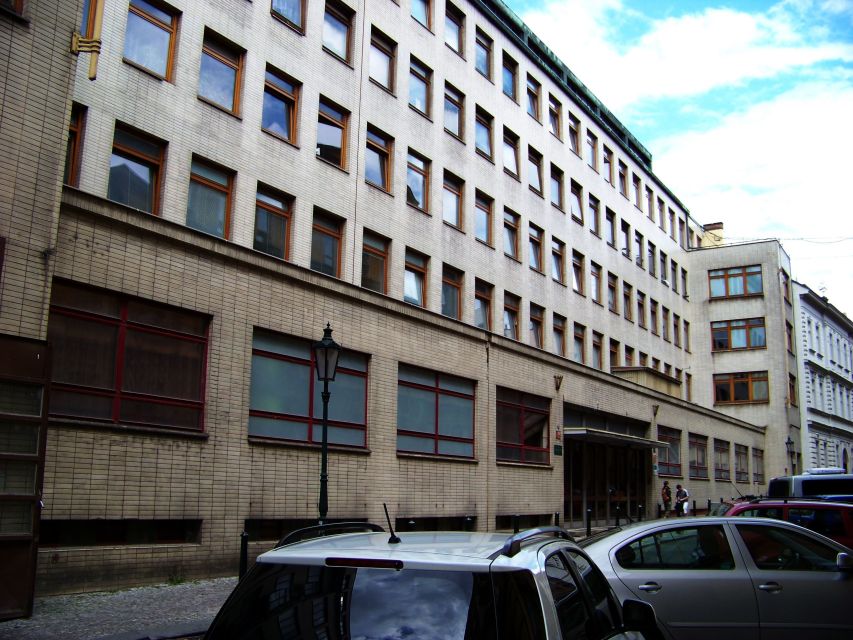
One of the strongest stops is the former headquarters of the communist secret police. The building itself may not look dramatic, but its importance comes from what happened inside and what it represented.
This is where the tour moves from political theory to control and surveillance. The guide explains the role of the secret police and places the institution within the wider system of pressure, monitoring, and fear. You may find this stop sobering because the subject is tied to real people, real interrogations, and the limits placed on private and public life.
Do not expect an interior museum visit unless your booking specifically says so. The supplied details describe a walking tour that takes you to important locations, not a ticketed visit inside every building. The value is in the explanation and the setting.
Same country, a completely different kind of day:
- Prague: 50-Minute Sightseeing Evening Cruise
★ 4.2 · 33,780 reviews - Prague: Medieval Dinner with Unlimited Drinks
★ 4.4 · 19,847 reviews - Prague: Skip-the-line Castle Ticket and Optional AudioGuide
★ 4.3 · 11,121 reviews - Prague: Castle Tour with Local Guide and Entry Ticket
★ 4.6 · 10,422 reviews
The former Stalin statue site
The former spot of Prague’s Stalin statue offers another clear way to see the city’s relationship with Soviet power. A statue is more than a piece of public art in this setting. It tells you how leaders wanted the city and its citizens to understand authority, loyalty, and the Soviet connection.
The guide uses the site to discuss Stalin-era influence and the changing public mood that followed. You will learn about the statue’s place in Prague and why the site matters even though the monument is gone.
This is one of the tour’s useful habits: it takes you to locations where the visible evidence may have changed. The guide helps you read the absence, the altered use of a place, and the layers of political memory. If you expect every stop to have a large monument or preserved interior, adjust your expectations. Much of the experience depends on listening closely.
Communist Party offices and the machinery of power
The route also includes the current and former seats of the Communist Party. These locations help explain how political authority worked in practice, not just in speeches or textbooks.
You will hear about important personalities, dates, and turning points connected with the party. The guide also discusses how a one-party political system shaped daily decisions and public behavior. The precise amount of detail may vary with the guide and with your questions, but this section should help you connect Prague’s buildings to the institutions that controlled the country.
I would pay attention to the contrast between official power and ordinary life. A party headquarters can look like a standard office building, yet its decisions could affect jobs, education, travel, public speech, and family prospects. That contrast is often more revealing than a grand monument.
Protest sites, rebellion, revolution, and occupation
The walk continues through places linked with demonstrations, rebellions, protests, and revolution. Here, Prague’s streets become a record of public resistance.
The guide explains the events and personalities behind these moments, along with the Soviet occupation and its effect on Czechoslovakia. The route gives you a way to picture how public spaces change when people gather, challenge authority, or face military force.
You should expect a spoken account rather than a staged reenactment. There may not be signs at every stop explaining what happened, which makes the guide especially important. A strong guide can show you why a particular street or square mattered, then tie it to the wider political crisis.
Some locations still carry a gloomy atmosphere, according to the tour description. That mood is not presented as a theme-park effect. It comes from the events connected with the places and the memories attached to them. The subject can be heavy, so this may not be the right choice if you want a light walk centered on architecture and coffee stops.
Daily life behind the political slogans
The most useful part for many people will be the discussion of everyday life. The Cold War-era guides explain how ordinary people lived, not only what leaders announced.
You may learn about the gap between official promises and personal experience, as well as the benefits and costs people associated with the system. The tour specifically aims to cover both sides. That does not mean every claim will feel equally persuasive to you, but it gives the conversation room to move beyond slogans.
This is also where questions matter most. Ask about work, family life, travel, religion, education, shopping, housing, or public speech if those subjects come up within the guide’s knowledge and route. The format allows discussion, and the tour encourages questions.
One practical point: the quality of this section depends heavily on the guide’s communication. The strongest available feedback praises guides for detailed stories, personal perspective, and unusual anecdotes. A German-language experience received a request for better German skills, while another booking reported that the guide’s frequent phone use and a bad cough hurt the presentation. If you need German, confirm that the guide assigned to your departure can explain complex political topics clearly.
What the price means at $50
At $50 per person, this is not the cheapest way to spend two hours in Prague. You are paying for a specialized subject, a local guide, and a route that interprets sites you could otherwise pass without understanding.
I think the price makes sense if you are genuinely interested in 20th-century Central European history. A good guide can turn several ordinary-looking locations into a connected lesson about power, surveillance, public resistance, and memory. That is difficult to reproduce with a standard city map.
The value is less convincing if you want a large number of major monuments, interior visits, or a broad introduction to Prague. This is a focused political walk, not a complete city tour. You will also want to remember that the stated duration varies from one to two hours, with the main description pointing to approximately two hours. Check the available start time and expected length before you plan another activity immediately afterward.
There is an interesting possibility with group size. A booking intended as a group tour may sometimes become a very small or effectively private experience. That can mean more direct conversation at no extra group-tour price, though it also means the experience may feel more like a personal lesson than a lively group walk.
Language, guide style, and group expectations
The tour operates in Czech, English, and German. The quality of the explanation is central here, so select your language with care and make sure it is the language in which you can follow political detail and ask questions comfortably.
The strongest feedback praises clear storytelling, unusual anecdotes, punctual arrival, and easy-to-follow meeting instructions. One Italian-speaking participant described the guide as engaging and especially good at explaining history from several angles. Another English-language booking called the experience informative and unique.
The lower scores point to practical risks rather than a problem with the subject itself. One guide was repeatedly occupied with phone messages, and another had a persistent cough. A separate German-language booking found the language ability insufficient. These comments suggest that the assigned guide can make a large difference.
A private group is available. Choose it if you want to set the pace, ask many questions, or discuss family and national memories in more detail. If you prefer a social group atmosphere, confirm that other participants are expected, because a group booking may not always fill.
Who will get the most from this walk
I would choose this tour if you want to understand how communism affected Prague beyond the familiar story of the 1989 revolution. It suits visitors who enjoy political history, oral accounts, and places that require explanation rather than obvious visual attractions.
It is also a good fit after you have seen Prague’s major sights. Once you know the city’s main streets and squares, you can give more attention to what changed under communist rule and how residents experienced the period.
You may want another activity instead if you dislike lectures, prefer indoor museums, or want a tour focused on medieval Prague, architecture, food, or art. The route is built around history and discussion, and some parts may feel serious or abstract.
Families with older children or teenagers may find the subject useful, especially if they are studying the Cold War. Younger children may struggle with the political detail, particularly during the opening explanation. The tour is wheelchair accessible, but no route surface details are provided, so confirm what that means for your needs.
Booking details worth checking before you go
The activity allows free cancellation up to 24 hours before the start, and you can reserve now and pay later. That gives you some useful flexibility while arranging a Prague itinerary.
Check the exact meeting point because it can vary by booking option. Bring your passport or ID card, leave luggage and large bags behind, and allow enough time to find Na Příkopě 28 or the address shown for your option.
The overall rating is 3.8 from 26 ratings. I read that as a worthwhile but guide-dependent experience, not a guaranteed polished performance. The subject, route, and local perspective are strong reasons to book, while language ability, phone distractions, and group size deserve a quick check before you commit.
Should you book the Back to Communism walk?
Book it if you want a focused, human account of Prague under communism and Soviet influence. The former secret police headquarters, Stalin’s former location, party offices, protest sites, and occupation landmarks give the two-hour route a clear purpose.
I would especially recommend it to history-minded visitors who want to ask questions and hear about daily life from someone who lived through the period. At $50, it is fair value when the guide is engaged and the language match is good.
Skip it if you want a relaxed sightseeing walk, a museum-heavy experience, or a broad tour of Prague’s famous landmarks. Before paying, confirm your language, meeting point, expected duration, and whether a private group suits you. Those small checks could make the difference between a sharp, memorable lesson and a disappointing afternoon.
FAQ
How long does the walking tour last?
The activity is listed as lasting one to two hours, with the main description describing approximately two hours. Check the available start times and duration for your chosen date.
Where does the tour start?
There are two possible starting options at Na Příkopě 28, also listed as Na Příkopě 864. The exact meeting point may vary depending on the option you book.
Which languages are available?
The tour is offered in Czech, English, and German.
Is the tour wheelchair accessible?
Yes, the activity is listed as wheelchair accessible. Specific route details are not provided, so contact the provider if you need information about particular access conditions.
Can I book a private group?
Yes, a private group option is available. A group booking may also sometimes have very few participants, so check the arrangement connected with your selected option.
What should I bring, and what is not allowed?
Bring a passport or identity card. Luggage and large bags are not allowed on the tour.
Just added around Prague
- WWII and Communism History in Prague’s Old Town Private Tour★ 5.0 · 4 reviews
- Prague: Historical Walking Tour with Focus on World War 2★ 4.3 · 12 reviews
- World War II 4WD Tour from Prague with Lunch★ 4.4 · 3 reviews
- Walking tour of Prague in french: Old Town & Charles Bridge★ 4.9 · 62 reviews
- Ultimate Unlimited Beer Pong with Czech Beer★ 4.6 · 5 reviews
- Walking tour of Prague in French : Nové Město★ 4.9 · 16 reviews
- Prague Sightseeing Tour with Lunch★ 5.0 · 5 reviews
- Prague: Modern Private Spa with Jacuzzi and Sauna★ 4.8 · 62 reviews
Walking Tours, compared.
3-Hour Walking Tour of Old Town & Prague Castle
Read our review →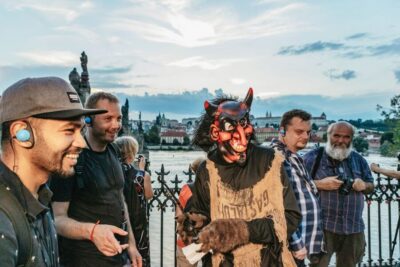
Ghost Walking Tour Where Legends Come To Life
Read our review →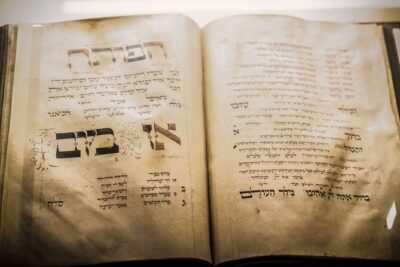
Jewish Quarter Walking Tour with Admission Tickets
Read our review →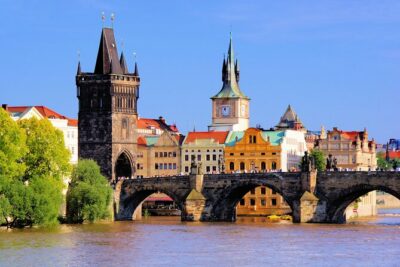
Prague Guided Walking Tour and Cruise with Authentic Czech Lunch
Read our review →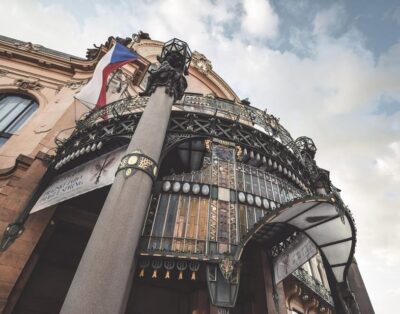
Old Town and Jewish Quarter Guided Walking Tour
Read our review →
Prague Ghost and Legend of Old Town Walking Tour
Read our review →
Prague 3-hour Afternoon Walking Tour including Prague Castle
Read our review →
Ghosts and Legends Nighttime Guided Walking Tour
Read our review →Browse the lists this tour appears in