
Reviewed · WALKING TOURS
Prague Renaissance and Baroque Gardens Walking Tour
Prague’s grand gardens tell a surprising story: the city’s first palace grounds were shaped by Italian gardeners hired by Emperor Ferdinand I, while figs, oranges, lemons, and almonds were coaxed into growing far north of the Mediterranean. This three-hour walk connects those courtly experiments with fountains, statues, grottoes, and some of Prague’s best city views.
I like the way the tour links plants and architecture to politics, religion, and noble ambition. I also like the variety, from the Belvedere’s delicate Renaissance design and its singing fountain to Wallenstein’s theatrical statues and white peacocks. The main drawback is the route itself: steep, narrow, and sometimes awkward stairs make this a poor fit for anyone who needs an easy, level walk.
Key points at a glance
- Hear Ferdinand I’s Italian plan: Learn why Prague’s palace gardens changed so sharply in the 1500s.
- See the Singing Fountain: Water drops into a bell-bronze bowl, creating the fountain’s unusual tone.
- Visit the Fig House and Orangery: These structures mark some of the earliest growing of Mediterranean fruit in Central Europe.
- Watch for Wallenstein’s white peacocks: The garden also features Mannerist statues, mythical fountains, and a grotto wall.
- Climb through Vrtba Garden: The final courtyard has a marine-themed grotto and fine views over Prague.
- Choose a private version if needed: A private guide can adjust the route for your pace and mobility.
Why Prague’s gardens are worth three hours
Most first visits to Prague focus on churches, bridges, towers, and grand squares. That is sensible, but it can leave out one of the city’s most revealing subjects: its gardens.
Gardens show how rulers wanted to be seen. A medieval cloister garden was practical, with herbs for cooking and medicine. A Renaissance palace garden announced a ruler’s education, wealth, and links with Italy. A Baroque garden used theatrical views, statues, fountains, and hidden corners to create movement and surprise.
This walk gives you that framework before taking you through several very different places. You are not simply stopping to admire flowers. You are learning why a garden was built, who paid for it, and what its design said about power.
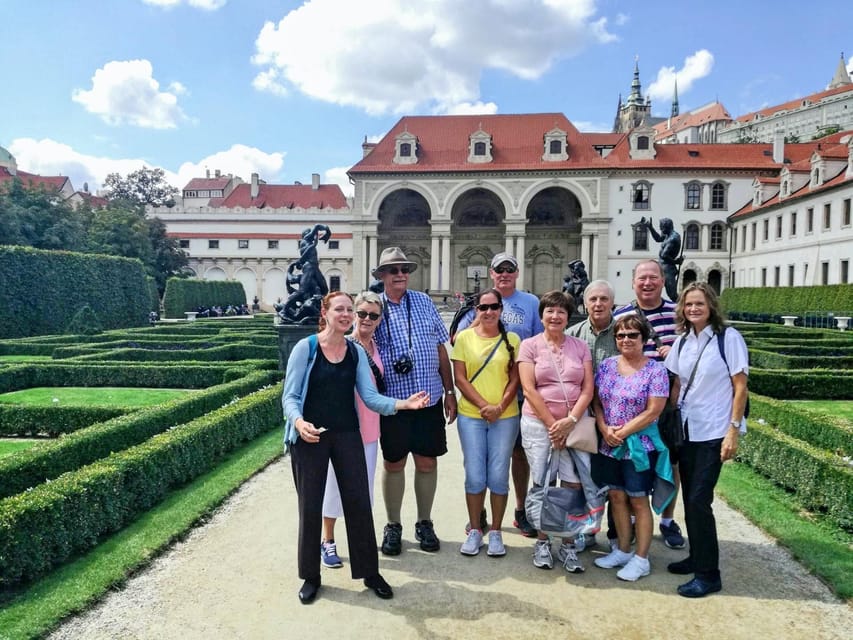
The tour lasts three hours and is conducted in English by a historian guide. Guides have included Miriam and Bonita, and the experience is available as a private tour or in a small group. At $123 per person, it is not a budget stroll. Its value depends on whether you want interpretation rather than a quick look at pretty courtyards.
Entrance fees to the gardens are not included, so allow extra money beyond the tour price. Still, the route covers several separate sites and places them in a clear historical sequence. For a visitor curious about Prague beyond its postcard views, that can make the cost worthwhile.
A few more Prague trips to weigh up
- Prague: 3-Hour Walking Tour of Old Town & Prague Castle
★ 4.7 · 5,696 reviews - Prague: Ghost Walking Tour Where Legends Come To Life
★ 4.4 · 5,253 reviews - Prague: Jewish Quarter Walking Tour with Admission Tickets
★ 4.7 · 3,729 reviews
Ferdinand I and the Italian idea of a palace garden
The story begins with a change in taste. Before the 1500s, gardens in Prague were generally practical spaces, especially within monasteries. Vineyards on the hills around the city are even older, dating to before the reign of Charles IV.
The idea of a large pleasure garden attached to a royal residence arrived later. Emperor Ferdinand I favored the ordered forms of the Italian Renaissance and brought Italian architects and gardeners to Bohemia. Their work introduced a new kind of outdoor space north of the Alps.
That context matters as you walk. The gardens were not designed as casual parks. They were carefully arranged settings for court life, display, and leisure. Straight lines, terraces, fountains, imported plants, and classical decoration all helped create an image of control.
Your guide’s role is especially important here. Without explanation, many of the gardens can look like attractive green spaces with old buildings. With the historical background, you can read them as political statements and as evidence of Prague’s close ties with Italy.
The Belvedere and its unfinished royal romance
The Prague Castle Gardens offer the first major set of sights. One of the highlights is the Belvedere Summer Palace, commissioned by Ferdinand I as a gift for his wife, Queen Anne.
The palace is linked to a sad detail. Queen Anne died before the building was finished, so the present she was meant to enjoy never fully served its purpose. A relief shows Ferdinand presenting his wife with a flower from the Royal Gardens, giving the building a personal touch beyond its formal design.
The Belvedere is often described as one of the finest Renaissance buildings outside Italy. The tour does not ask you to accept that judgment blindly. Instead, you get the chance to look at its proportions, decorative details, and Italian character while understanding why it was so unusual in Prague.
In front of the palace is a small pleasure garden called the Giardinetto. Here you will see the Singing Fountain, cast in bell bronze in 1564. Water falling into its basin causes the bowl to resonate, producing the fountain’s famous sound.
This is a good example of what makes the walk more rewarding than a standard photo stop. The fountain is not only decorative. Its sound was part of the experience, adding a small mechanical wonder to a formal garden. Take a moment to listen rather than simply photograph it.
The Fig House, Orangery, and Prague’s early citrus experiments
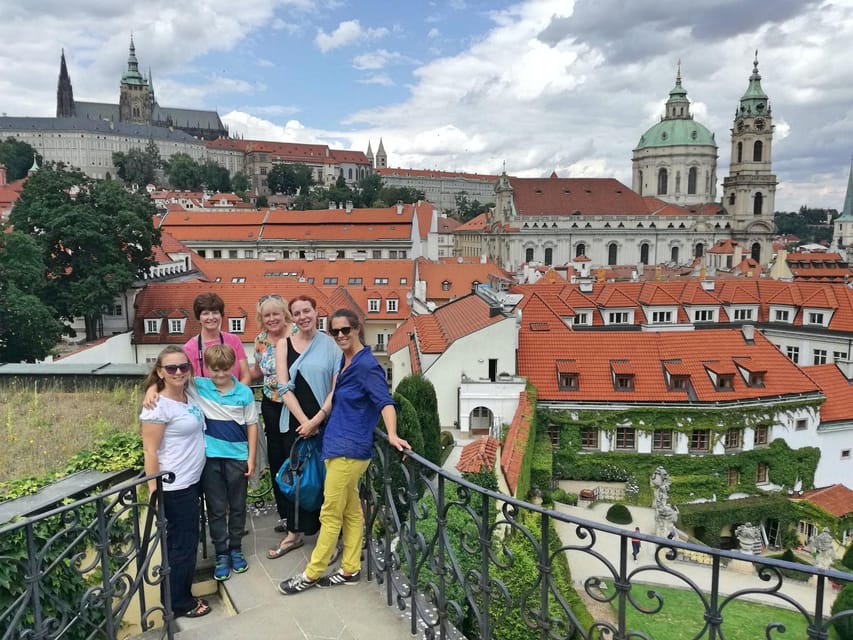
The next section turns from royal architecture to horticultural ambition. At the Fig House and Orangery, you hear how figs, almonds, oranges, and lemons were grown in Central Europe for the first time.
These plants were not ordinary garden choices in Prague’s climate. Growing them required planning, protection, and a willingness to spend money on things that were both useful and exotic. They also gave the court access to foods and plants associated with warmer Mediterranean regions.
I find this stop useful because it makes the Renaissance feel practical. The period was not only about paintings, marble, and classical columns. It was also about moving plants, techniques, and tastes across borders.
The Orangery and Fig House may appeal most to people interested in gardens, food history, or the daily life of royal courts. If you are mainly seeking grand interiors, this portion may feel quieter. Its value comes from the explanation and the connection to wider European trade and culture.
Same country, a completely different kind of day:
- Prague: 50-Minute Sightseeing Evening Cruise
★ 4.2 · 33,780 reviews - Prague: Medieval Dinner with Unlimited Drinks
★ 4.4 · 19,847 reviews - Prague: Skip-the-line Castle Ticket and Optional AudioGuide
★ 4.3 · 11,121 reviews - Prague: Castle Tour with Local Guide and Entry Ticket
★ 4.6 · 10,422 reviews
Tulips, the stag moat, and the route below the castle
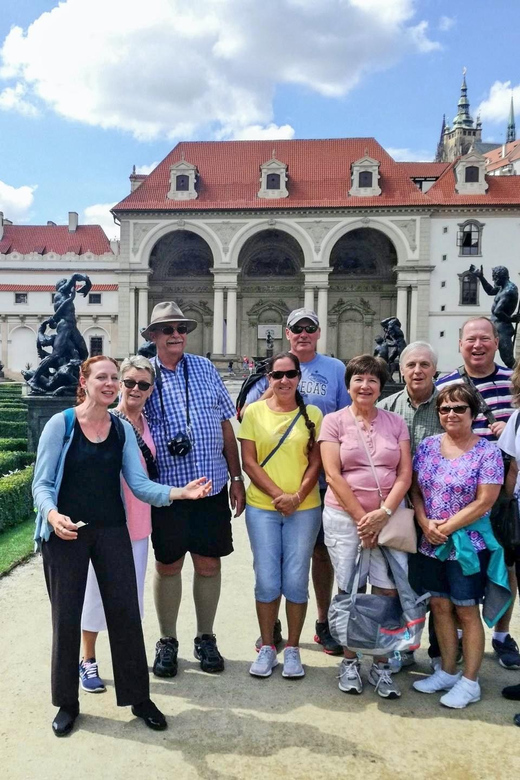
As you approach the western end of the gardens, the guide explains how tulips reached the Royal Gardens as an exotic gift from the Sultan of Constantinople. The detail helps show how royal gardens functioned as showcases for rare imports.
A plant could carry diplomatic meaning. It might signal access to distant courts, expensive trade routes, and a ruler’s interest in the wider world. You do not need to be a horticultural specialist to appreciate the point. The garden becomes a record of contacts between cultures.
The route then takes you toward the stag moat before crossing a castle courtyard. You descend the Bull Stairs to the South Gardens, including the Garden of Paradise and the Garden on the Bulwark.
This is where you should pay attention to footwear and pace. The walk includes stairs that can be narrow or steep, and the route repeatedly changes level. Those descents help connect the upper castle grounds with the terraced gardens below, but they also make the experience physically demanding.
If stairs are a concern, book the private option and explain your limits before the tour begins. The route can then be adjusted, with some sites left out and more time given to others. That flexibility is much more useful than trying to force yourself through every stop.
Terraced gardens beneath Prague Castle
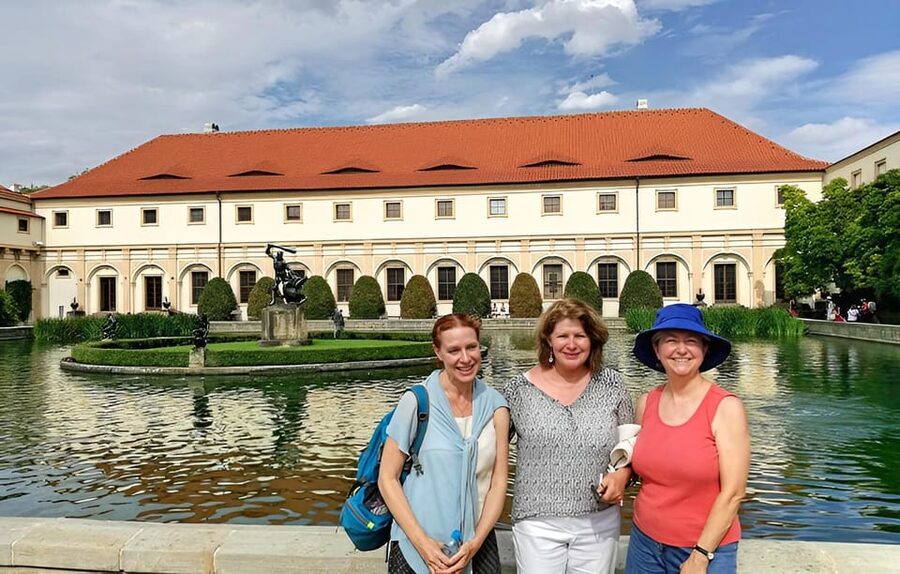
Below the castle, the walk passes through a series of lovely terraced gardens. Their position on the hillside gives them a different feel from the formal spaces near the Belvedere.
Here, the relationship between garden and city becomes clearer. You are moving downward through designed spaces while Prague opens out around you. The terraces also show how steep ground could be turned into a sequence of rooms, paths, and viewpoints.
The gardens below the castle are a good place to think about the practical side of noble design. A hillside that might have been difficult to use became an ornamental setting connected to the residences above. The arrangement offered both privacy and carefully controlled views.
Do not expect a leisurely park walk with wide, flat paths. This is a walking tour through historic grounds, not a relaxed botanical garden visit. The reward is variety, but the route asks you to stay alert on stairs and changes in surface.
Wallenstein Garden and the theater of Baroque power
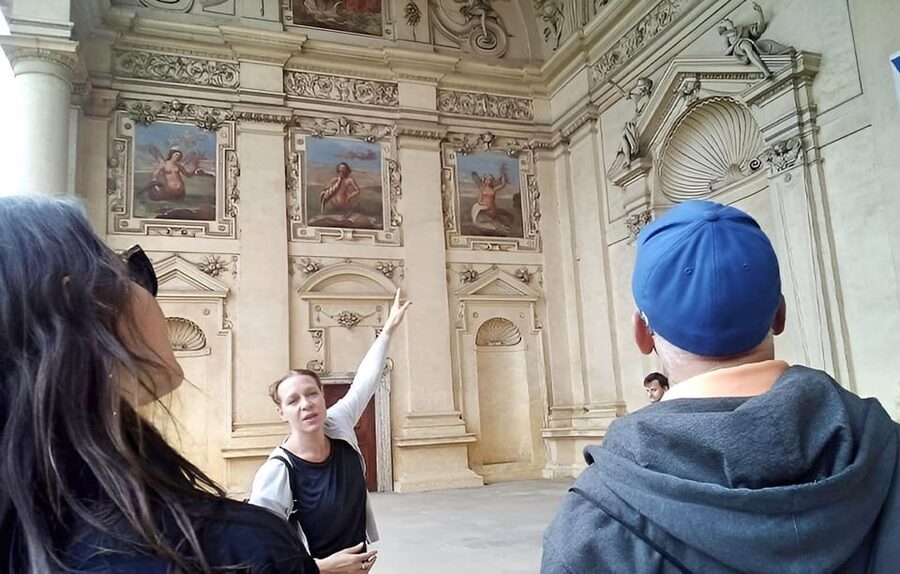
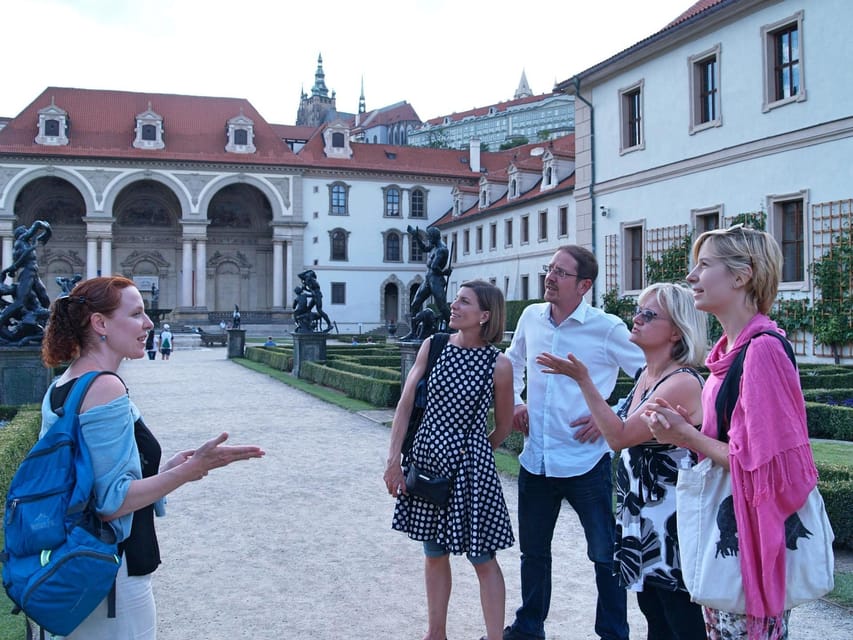
At the bottom of the hill, the tour reaches Wallenstein Garden, one of its most dramatic stops. The garden was commissioned by Albrecht von Wallenstein, a powerful and controversial figure whose ambition shaped both his career and his building projects.
The garden marks the shift from Renaissance classicism toward Baroque ideas. Renaissance design favored order and measured classical forms. Baroque design was more theatrical. It aimed to surprise you, direct your gaze, and create a sense of movement and drama.
Wallenstein Garden does this with Mannerist statues, mythical fountains, and a grotto wall. The grotto wall uses irregular stonework and artificial caves to suggest a wilder world within a carefully controlled court garden. It is a striking contrast to the more balanced appearance of the Belvedere grounds.
The albino peacocks add an odd and memorable touch. They are not the historical reason to visit, but they give the garden a little life and make the formal setting less solemn.
Your guide also explains Wallenstein’s dramatic life and the personal ambition behind the garden. That story gives the statues and fountains more force. You are looking at an outdoor display of rank, wealth, and authority, not just an attractive enclosure.
Wallenstein Garden may be the easiest place on the route to enjoy without studying every detail. The setting is visually strong, but the historical explanation keeps it from becoming a simple sightseeing stop. The Mannerist decoration, grotto wall, and fountains also make this section especially good for visitors who enjoy art and theatrical architecture.
Vrtba Garden and the final climb for Prague views

The last major stop is Vrtba Garden in Mala Strana, a Baroque walled garden dating from 1720. It is less obvious from the main streets than Prague’s major monuments, so it offers a more private glimpse into 18th-century noble life.
Its compact, enclosed design is part of its appeal. Baroque gardens did not need to cover vast areas to make an impression. They could use terraces, stairs, sculpture, walls, and carefully framed views to create a rich sequence in a small space.
The climb through Vrtba Garden leads to a top courtyard with a marine-themed grotto. From there, you are rewarded with views across Prague’s rooftops and city center.
This final ascent is both a high point and another physical test. If you have already found the castle stairs tiring, the climb may feel like work. If you enjoy viewpoints, the reward helps justify the effort.
Vrtba Garden also gives the tour a useful ending. You have seen royal Renaissance design, working garden structures, grand Baroque display, and a compact noble garden. The final view lets you look back over the city and consider how these gardens fit into Prague’s built setting.
The admission charge for Vrtba Garden is separate, as is admission to the gardens under Prague Castle. Check the total cost before booking so the $123 price does not catch you off guard.
What the guide adds to the experience
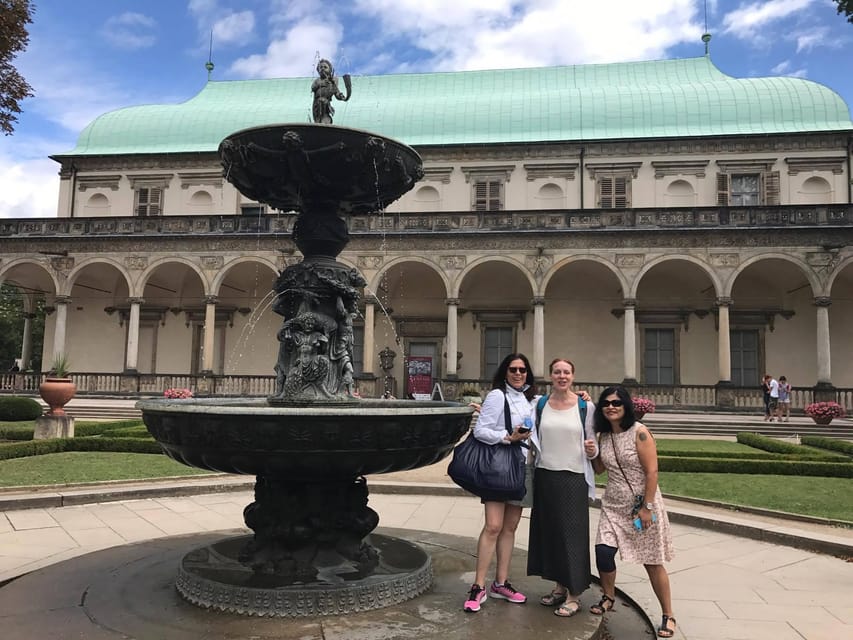
This tour depends heavily on the guide. The sites are attractive on their own, but the real benefit comes from understanding the changes between periods and the people behind them.
A strong guide helps you notice details you could easily pass without seeing: the relief of Ferdinand offering a flower to Queen Anne, the bell-bronze sound of the Singing Fountain, the reason Mediterranean plants mattered, and the way Wallenstein’s garden uses spectacle.
The English-language format suits visitors who want a history walk rather than a general orientation tour. Past guide feedback has specifically praised Miriam for an informative, relaxed approach, and Bonita has also been singled out as an excellent guide. Since guides can vary, a private booking gives you the most control over pace and emphasis.
I would choose the small-group format if you want the lower-stress feel of a guided visit without paying for a fully private experience. Choose private if you have mobility limits, a strong interest in garden design, or specific questions about Prague’s royal and noble families.
Price, pace, and who should book
At $123 per person, this is a premium walking tour. The price does not include admission to the Prague Castle Gardens or Vrtba Garden, so it is important to count those fees separately.
The value is strongest for you if you appreciate expert interpretation and want to see several gardens in one organized route. It would be harder to justify if you only want a quick look at flowers or are happy to explore gardens independently.
The three-hour length is well chosen for the subject. A shorter walk would likely rush the castle gardens and leave little time for Wallenstein and Vrtba. A longer tour might become tiring, especially with the stairs.
The route suits:
- Visitors who have already seen Prague’s major churches and squares
- People interested in architecture, garden design, royal life, and art
- Anyone who enjoys unusual details, such as historic citrus growing and the Singing Fountain
- Couples and small groups looking for a focused cultural walk
- Visitors willing to pay more for a historian guide
It is less suitable for anyone needing level access or frequent sitting breaks. The tour regularly goes up and down stairs, some narrow and steep. A private version is the sensible choice if you need the route altered.
Free cancellation up to 24 hours before the tour and the reserve-now, pay-later option make planning easier, especially when your Prague schedule is still changing. The meeting point is at the door of Bagel Lounge Malostranska, so allow time to find the exact entrance before the start.
Should you book this Prague gardens tour?
Book it if you want Prague to make sense as a meeting point of Italian Renaissance taste, Central European court life, Baroque theater, and hillside city planning. The Singing Fountain, Fig House, albino peacocks, Wallenstein’s grotto wall, and Vrtba’s rooftop view give the walk plenty of memorable stops.
Skip it if stairs are a serious problem and you do not want a private route, or if your main goal is a low-cost stroll through public parks. For everyone else, especially visitors who enjoy stories behind buildings and gardens, this is a focused and unusual way to see Prague.
FAQ
How long is the Prague Renaissance and Baroque Gardens Walking Tour?
The guided walk lasts three hours.
What language is the tour conducted in?
The live tour guide speaks English.
Where does the tour meet?
Meet at the door of Bagel Lounge Malostranska.
Is the tour private or shared?
Private and small-group options are available.
Does the price include garden admission?
No. Admission to the gardens under Prague Castle and admission to Vrtba Garden are not included.
Which gardens are visited?
The route includes Prague Castle Gardens, the Fig House, the Orangery, the South Gardens, Wallenstein Garden, and Vrtba Garden.
Does the tour involve stairs?
Yes. The regular route includes stairs that can be narrow, steep, and difficult for people with mobility issues.
Can the route be adjusted for mobility needs?
A private tour can be tailored to your limits and pace. Some sites can be left out while the guide focuses on other areas.
What is the cancellation policy?
You can cancel up to 24 hours in advance for a full refund. You can also reserve the tour and pay later.
Just added around Prague
- WWII and Communism History in Prague’s Old Town Private Tour★ 5.0 · 4 reviews
- Prague: Historical Walking Tour with Focus on World War 2★ 4.3 · 12 reviews
- World War II 4WD Tour from Prague with Lunch★ 4.4 · 3 reviews
- Ultimate Unlimited Beer Pong with Czech Beer★ 4.6 · 5 reviews
- Walking tour of Prague in French : Nové Město★ 4.9 · 16 reviews
- Walking tour of Prague in french: Old Town & Charles Bridge★ 4.9 · 62 reviews
- Prague Sightseeing Tour with Lunch★ 5.0 · 5 reviews
- Prague: Modern Private Spa with Jacuzzi and Sauna★ 4.8 · 62 reviews
Walking Tours, compared.

3-Hour Walking Tour of Old Town & Prague Castle
Read our review →
Ghost Walking Tour Where Legends Come To Life
Read our review →
Jewish Quarter Walking Tour with Admission Tickets
Read our review →
Prague Guided Walking Tour and Cruise with Authentic Czech Lunch
Read our review →
Old Town and Jewish Quarter Guided Walking Tour
Read our review →
Prague Ghost and Legend of Old Town Walking Tour
Read our review →
Prague 3-hour Afternoon Walking Tour including Prague Castle
Read our review →
Ghosts and Legends Nighttime Guided Walking Tour
Read our review →Browse the lists this tour appears in