Reviewed · PRIVATE
Communism and its fall Prague private tour
Prague’s modern history comes alive when you walk the streets where the Velvet Revolution began. This private tour connects theaters, cafés, monuments, and protest sites with the fall of communism in 1989. Its strongest feature is guide Jana Neubergova, who took part in the demonstrations and later worked in Vaclav Havel’s office.
I like the small private format, since you can ask direct questions instead of following a large group. I also like the route’s focus on real city spaces, from Narodni Street to Wenceslas Square, rather than a distant museum lecture.
The main consideration is pace. Two hours goes quickly, and this is a walking tour with no private vehicle. You should be comfortable on foot and ready to concentrate, since several stops cover major political events in a short time.
Key points to know before booking
- Jana’s personal connection: Jana participated in the November 1989 demonstrations and later worked in Vaclav Havel’s office.
- A focused two-hour walk: The route covers five main stops, with time for the key sites and their political meaning.
- Prague’s protest center: Narodni Street and Wenceslas Square show where public pressure helped bring communist rule to an end.
- Private attention: Only your own group takes part, making it easier to ask about Czech politics, daily life, and the revolution.
- Hotel pickup on foot: Pickup from all Prague hotels is offered, but there is no private transportation.
- Good value for history-minded visitors: At $85 per person, the price makes the most sense for a private guide and a group that wants context rather than a general city walk.
Why this Prague history walk feels different
Many Prague sightseeing walks focus on medieval buildings, royal rulers, and famous bridges. This tour looks at a much newer past, one that still shapes Czech public life. Its subject is communism, the pressure that built against it, and the rapid events that brought it down in 1989.
The route also gives you a useful sense of place. You are not simply hearing about the Velvet Revolution in a classroom. You are moving through streets and squares where students, artists, workers, and ordinary citizens gathered, marched, argued, and demanded change.
Jana is central to that experience. She speaks English and brings first-hand memories of the demonstrations against communism. Her background is unusually suited to this subject: she was an active participant in the Velvet Revolution and later had the honor of working for Czech president Vaclav Havel.
That personal connection does not replace historical context, but it can make the story easier to grasp. You hear how public events affected people who were there, not only how later textbooks describe them. If you want a guide who can discuss both political events and personal experience, this is a major reason to choose this walk.
The format is private, so your group can set the tone. You can ask about the demonstrations, Havel, communist-era life, or the meaning of each monument. With only two hours, you will need to keep moving, but a private tour usually gives you more freedom to follow the subjects that matter most to you.
A few more Prague trips to weigh up
- Prague Old Town: Private Tour
★ 5.0 · 1,223 reviews - Prague Airport Private Arrival Transfer
★ 4.5 · 991 reviews - Prague Airport Private Departure Transfer
★ 4.5 · 780 reviews
From the National Theater to the road to change
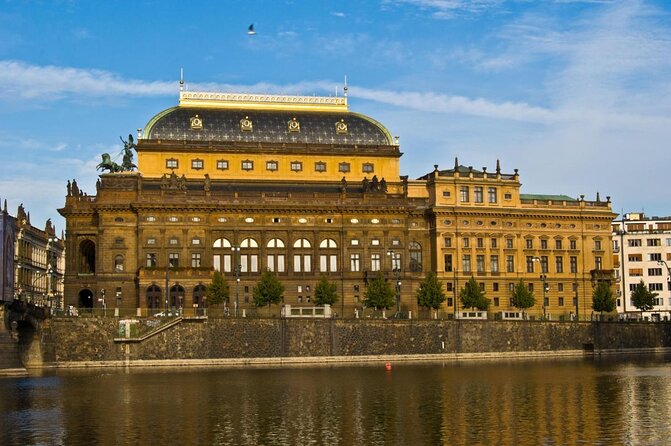
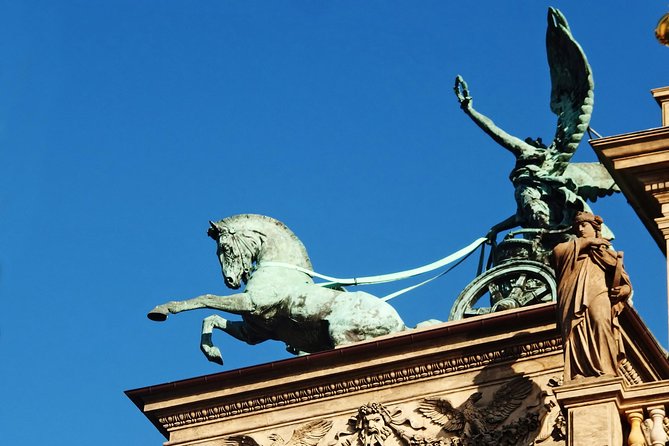
The tour begins at the meeting point of Czech intellectuals and then reaches the National Theater, where you spend about 10 minutes. The theater played an important role in Czech history, and its place on the route helps show the link between culture and national identity.
This is a useful opening stop because the story of political change in Czechoslovakia was not only about party leaders and government offices. Writers, artists, actors, students, and other intellectuals were important voices in public life. The theater offers a way to discuss that wider cultural setting before the walk moves to specific revolution sites.
Admission is not included, and the tour information does not promise an interior visit. Plan on this as a historical stop connected with the building and its role, not as a full theater tour. The 10-minute visit is brief, so you will get the main points rather than an extended architectural talk.
For you, the value here is the connection between the arts and public debate. It gives the tour a broader beginning than a simple list of protest locations.
Narodni Street and the start of the Velvet Revolution
The next stop is Narodni Street, where the Velvet Revolution began. You spend about 15 minutes here, making it one of the most important parts of the route.
This is where the broad subject of communism becomes immediate. You can picture the street as a place of public action and confrontation, then connect it with the demonstrations that spread across Prague in November 1989. The revolution’s name reflects its largely peaceful character, but that should not make the events sound easy or automatic. Public courage and sustained pressure mattered.
Jana’s memories are especially valuable at this point. She experienced the November demonstrations and was one of the active participants in the movement. That gives her the chance to add details from personal experience, rather than offering only a standard timeline.
The stop is short, so ask your most important questions here. If you are especially interested in how the protests began, how people responded, or what it felt like to take part, Narodni Street is the place to make use of the private format.
There is no admission ticket included, and the experience is designed as a walking stop in the city. Wear practical shoes and keep your attention on the guide, since the tour moves between public locations rather than settling into one enclosed site.
Lucerna Arcade and the Havel family connection
Lucerna Arcade receives about 10 minutes. This historic passage is linked with the Havel family and was an important cultural and social center. Its inclusion adds a more personal and civic layer to the tour.
The name Vaclav Havel is often associated with the presidency and the revolution, but his family also had a connection to Prague’s cultural life. Lucerna helps explain that setting. It is not just a place to pass through on the way to a larger square. It gives you a glimpse of the social world around the Havel family and the role that public venues can play in a city’s life.
This short stop may appeal most to visitors who want more than a political timeline. It connects architecture, culture, family background, and public life. Jana’s own work in Havel’s office makes this part of the route particularly relevant.
Again, admission is not included. The tour details do not state that a special interior ticket is part of the visit, so you should treat Lucerna as a stop along the walking route rather than expect a separately ticketed attraction. The brief timing means you will likely hear why the arcade matters and then continue.
Same country, a completely different kind of day:
- Prague: 50-Minute Sightseeing Evening Cruise
★ 4.2 · 33,780 reviews - Prague: Medieval Dinner with Unlimited Drinks
★ 4.4 · 19,847 reviews - Prague: Skip-the-line Castle Ticket and Optional AudioGuide
★ 4.3 · 11,121 reviews - Prague: Castle Tour with Local Guide and Entry Ticket
★ 4.6 · 10,422 reviews
Wenceslas Square, the heart of public protest
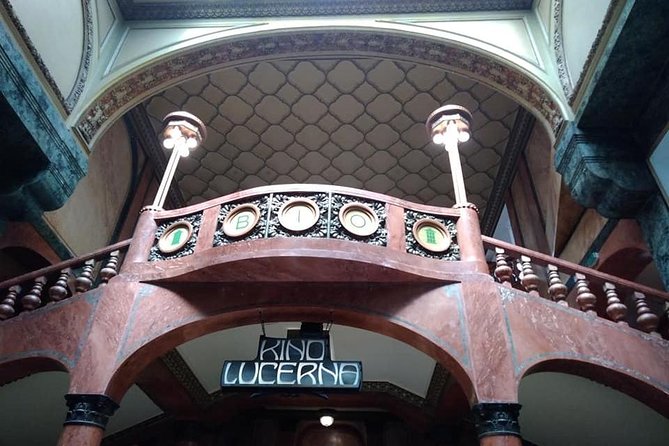
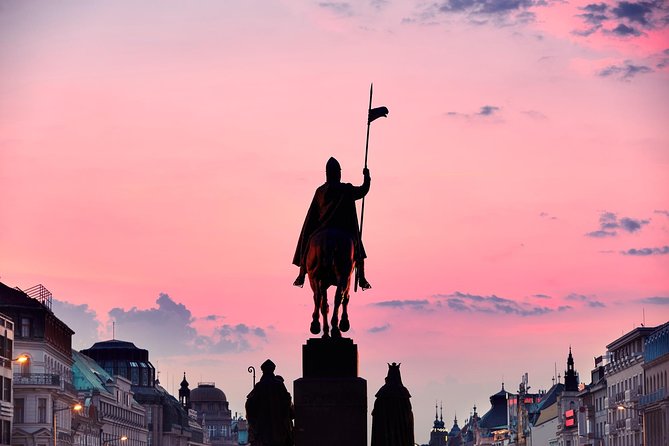
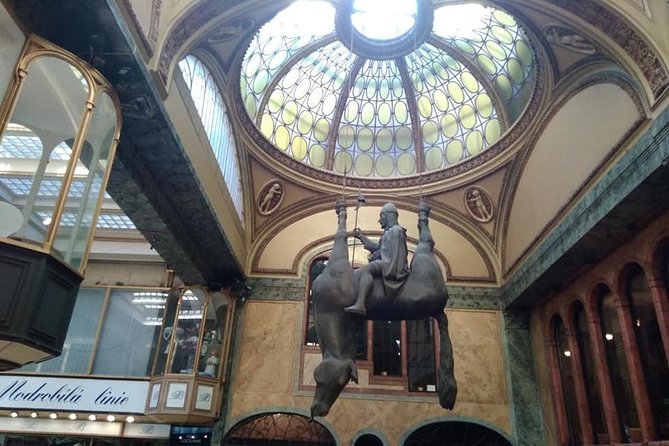
The longest scheduled stop is Wenceslas Monument, with about 20 minutes at Wenceslas Square. This is the heart of the tour and the place where many of Prague’s major demonstrations have taken place.
The monument depicts the Czech patron saint, Saint Wenceslas, and sits at the head of the square. The location has long served as a gathering place for public demonstrations, giving the square a powerful political role. Here, the guide can connect the physical setting with the events of 1989 and with the continuing importance of public assembly in Czech life.
Wenceslas Square is also a good place to pull the whole story together. The National Theater introduces the cultural side of Czech identity. Narodni Street takes you to the beginning of the revolution. Lucerna links the story with the Havel family and Prague’s social world. At Wenceslas Square, those threads meet in a large public space built for crowds and public statements.
The 20-minute stop gives you more time than the earlier locations. Use it to ask about the revolution’s wider effects and about Havel’s role. Jana’s experience gives this section particular weight, since she was involved in the demonstrations and later worked in Havel’s office.
The square is a central urban location, so the experience here is about place and explanation rather than a formal attraction with an entry hall. That is good for a tour focused on civic history, but less suitable if you want a long indoor visit or many museum displays.
The Memorial to the Victims of Communism
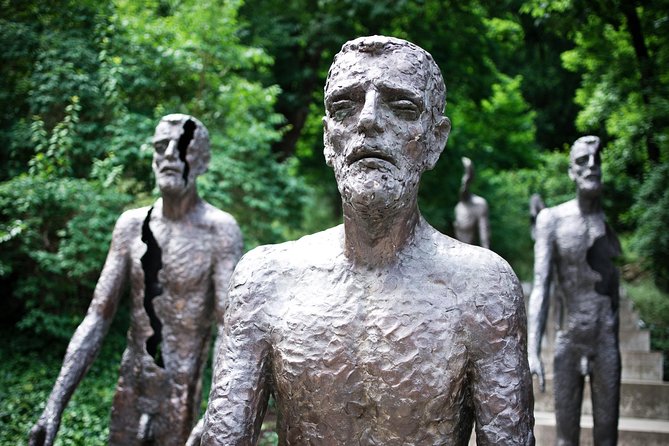
The final listed stop is the Memorial to the Victims of Communism, created by sculptor Olbram Zoubek. You spend about 15 minutes here, and admission is free.
This is the most direct memorial stop on the route. After hearing about political repression, protest, and the fall of communist rule, you reach a work made to remember those who suffered under the system. The memorial gives the tour a quiet closing point and a chance to consider the human cost behind political labels.
Olbram Zoubek was one of the most notable Czech artists, and his work adds an artistic language to the subject. You can look at the memorial not only as a historical marker but also as a public statement about memory and loss.
The stop is free, so there is no extra ticket cost to plan for. Its 15-minute timing is long enough for an explanation and a little reflection, though the tour remains a compact overview rather than a full study of communist-era history.
This ending also keeps the focus from becoming too celebratory. The fall of communism is a major political turning point, but it followed years of restrictions and suffering. A memorial to victims gives the story a needed human balance.
What you really receive for $85
The price is $85 per person. That is not the cost of a basic group walk, and you should judge it as the price of a private, guide-led history experience.
The most important value comes from Jana’s role. She is not simply providing dates and names. She took part in the Velvet Revolution, experienced the demonstrations in November 1989, and later worked in Vaclav Havel’s office. Those details give the tour a level of access and personal perspective that a general sightseeing guide may not provide.
Your admission costs are limited because the main route uses public places. The National Theater and Lucerna Arcade do not include admission tickets, and the memorial is free. You are paying mainly for the guide’s time, the private format, the route, and the interpretation.
The value improves if you are sharing the experience with several people, since only your group participates and group discounts may be available. For one person, $85 is a larger outlay for two hours, but the private attention may be worth it if this subject is a main reason for your Prague visit.
A free Prague map is included. That is a small extra, but useful if you want to continue exploring the city after the tour or mark the places connected with the story.
Timing, pickup, and the walking effort
The tour lasts about two hours and is offered daily between 9:00 a.m. and 6:00 p.m. The exact time you choose will affect the feel of the walk, but the route is built around public city spaces rather than a long indoor program.
Pickup on foot from all Prague hotels is offered. This means you can begin from your accommodation without arranging a separate meeting journey, but it does not mean a vehicle will collect you. Private transportation is not included.
You should plan for moderate physical fitness. The experience requires walking between several stops, and there may be normal city pavement, crossings, and time spent standing. Comfortable shoes matter more than formal clothing.
A mobile ticket is available, and the tour is offered in English. Service animals are allowed, and the route is near public transportation. Confirmation is normally sent at booking, although a booking made within one day of travel may require confirmation as soon as possible, depending on availability.
The cancellation terms are friendly if your plans are still taking shape. You can receive a full refund if you cancel at least 24 hours before the start time. Changes or cancellations made less than 24 hours before the tour are not accepted for a refund.
Who will get the most from this tour
I would choose this tour for anyone who wants to understand Prague beyond its old-town façades. It suits history students, politically curious visitors, and people with a family or personal connection to the Cold War period.
It is also a strong choice if you want a guide who can discuss Vaclav Havel from close experience. Jana’s work in his office and participation in the revolution make her background unusually relevant to the route.
You may enjoy it less if you want a broad introduction to all of Prague, a museum-heavy outing, or a relaxed sightseeing walk with little political discussion. The subject is focused, and two hours leaves limited time for unrelated landmarks.
Families with older children and teenagers may find the public locations easier to understand than a long lecture, though the topic requires enough interest to hold their attention. Since the tour is private, you can ask the guide to explain terms or events at your group’s pace.
Should you book this Prague communism tour?
Book it if you want a short, serious look at Prague’s communist past and the Velvet Revolution, especially if Jana’s first-hand experience appeals to you. The route is compact, the private format is practical, and the stops show how culture, public squares, political protest, and remembrance fit together.
Skip it if your main goal is a general Prague highlights tour or an indoor museum experience. At $85 per person, the price is easiest to justify when you value personal guidance and focused historical context. For the right audience, Jana’s connection to the 1989 demonstrations and Havel’s office is the feature that makes this two-hour walk memorable.
FAQ
How long does the Communism and its Fall Prague private tour last?
The tour lasts approximately two hours.
What language is the tour offered in?
The tour is offered in English.
Is this a private tour?
Yes. Only your group participates in the activity.
Does the tour include hotel pickup?
Yes. Pickup on foot from all Prague hotels is offered.
Is private transportation included?
No. Private transportation is not included.
What locations does the tour visit?
The route includes the National Theater, Narodni Street, Lucerna Arcade, the Wenceslas Monument in Wenceslas Square, and the Memorial to the Victims of Communism. It also begins at a meeting point connected with Czech intellectuals.
Is admission to attractions included?
Admission tickets are not included for the National Theater, Narodni Street, or Lucerna Arcade. Admission to the Memorial to the Victims of Communism is free.
Just added around Prague
- WWII and Communism History in Prague’s Old Town Private Tour★ 5.0 · 4 reviews
- Prague: Historical Walking Tour with Focus on World War 2★ 4.3 · 12 reviews
- World War II 4WD Tour from Prague with Lunch★ 4.4 · 3 reviews
- Ultimate Unlimited Beer Pong with Czech Beer★ 4.6 · 5 reviews
- Walking tour of Prague in French : Nové Město★ 4.9 · 16 reviews
- Walking tour of Prague in french: Old Town & Charles Bridge★ 4.9 · 62 reviews
- Prague Sightseeing Tour with Lunch★ 5.0 · 5 reviews
- Prague: Modern Private Spa with Jacuzzi and Sauna★ 4.8 · 62 reviews
Private, compared.


Shared Group/Private Segway Tour with Hotel Transfer
Read our review →
Winter Charm of Prague – private tour with PERSONAL PRAGUE GUIDE
Read our review →