
Reviewed · PRAGUE JEWISH QUARTER TOURS
Jewish Prague With a Local Historian
Prague’s Jewish story is not confined to one museum. This three-hour walk connects Josefov’s synagogues and cemetery with Holocaust memorials, Franz Kafka, the rescue work of Nicolas Winton, and the Jerusalem Synagogue. With historian Jiří, you move through several parts of the city instead of treating Jewish Prague as a single old quarter.
I like the small group size, capped at six, and the fact that public transport is included. I also like the guide’s measured pace. Jiří is a PhD historian, and his patient, complete answers make this a good choice if you want context rather than a quick list of dates. The main consideration is that the Jewish Museum is not part of the standard walk, although a museum visit can be arranged, and the tour requires decent weather.
Key points to know before booking
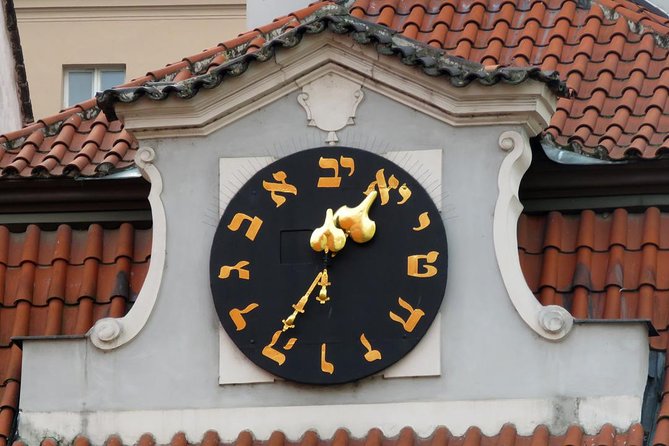
- Josefov comes first: Spend about 90 minutes walking past synagogues, the Jewish Cemetery, and less obvious places in Prague’s former Jewish Quarter.
- The tour reaches beyond Josefov: New Town, Bubny, the main railway station, and Jerusalem Synagogue give the subject a wider frame.
- Jiří leads the walk: He is identified as a PhD historian and answers questions patiently and fully.
- The Holocaust is treated directly: Bubny marks the departure point of Czech Jews sent to concentration camps.
- Nicolas Winton gets a dedicated stop: At Prague’s main railway station, you hear how he helped save 669 Jewish children.
- Small and practical: The tour lasts about three hours, accepts up to six people, and includes water plus a Prague public transport ticket.
Why this Jewish Prague walk feels different
Many Prague sightseeing walks stay inside the postcard center. This one follows a more serious thread. You begin near Franz Kafka Square, walk through Josefov, then use public transport to reach places tied to Jewish life, deportation, rescue, and worship.
That wider route matters. Josefov shows you the physical center of Prague’s Jewish past, but the later stops show how that past connects to the modern city. You are not simply looking at old buildings. You are following a story that moves from medieval settlement and religious life to Nazi persecution, remembrance, and survival.
The tour also has the advantage of a historian at the front of the group. Jiří’s academic background is useful here because the subject can become crowded with names and dates. A guide who can stop, explain, and answer a question properly is more valuable than one who rushes everyone from one façade to the next.
The group limit of six should help keep the walk personal. It also gives you a better chance to ask about details that catch your attention. This is not the format for disappearing into a large crowd with a flag waving overhead.
More Prague Jewish Quarter Tours in Prague:
- Prague: Jewish Quarter Walking Tour with Admission Tickets
★ 4.7 · 3,729 reviews - Prague: Old Town and Jewish Quarter Guided Tour in German
★ 4.8 · 3,143 reviews - Prague: Old Town and Jewish Quarter Guided Walking Tour
★ 4.6 · 2,847 reviews
Josefov, where the walk begins
The first section lasts about 90 minutes and takes place in Josefov, Prague’s Jewish Quarter. The area dates to the 13th century, when it was Europe’s largest Jewish ghetto. That fact gives the neighborhood weight, but the walk is not only about a distant medieval past.
You pass several synagogues, including the Klausen Synagogue, and see the Jewish Cemetery. The cemetery is one of the important sights in this part of the city because it helps you understand the limits placed on the Jewish community over the centuries. The space is closely tied to the long life of the quarter, its traditions, and the pressures that shaped it.
The route also includes less obvious corners and places that can be difficult to notice on your own. That is one of the better reasons to take this tour with a local historian. Prague rewards wandering, but its Jewish story is not always easy to read from the street. A doorway, a former boundary, or a small memorial may mean little without someone to explain it.
The standard walk does not include admission to the Jewish Museum. That is an important distinction. You see and discuss the quarter from the streets, but museum interiors are not automatically part of the experience. If you want the museum’s synagogues, displays, and collections included, the guide can arrange a visit together. Ask about this before booking if museum admission is central to your plans.
The first section is likely to be the most traditional part of the walk, and also the part with the most concentrated sightseeing. It may suit you best if you want to set aside serious time for Josefov rather than squeeze it between shopping and a river cruise.
New Town and three less obvious Jewish sites
After Josefov, the tour spends about 30 minutes in Nove Mesto, or New Town. The title can sound surprising at first. Why leave the Jewish Quarter during a Jewish heritage walk?
The answer is that Jewish history in Prague is not limited to Josefov. This section covers three lesser-known Jewish places, including the oldest known Jewish cemetery in Prague. The point is not to collect another famous building. It is to show how Jewish life and memory appear in parts of the city that many people pass without noticing.
This stop is short, so expect a focused explanation rather than a long visit at each location. That can be a strength. You get a change of setting and a reminder that communities leave traces across a city, not only inside an officially marked quarter.
It is also where a small private group has a real advantage. If you want to ask why a site matters, how it relates to Josefov, or what changed over time, Jiří can give the answer in the moment. In a large group, a brief stop like this can feel rushed or easy to miss.
Bubny and the route to the concentration camps
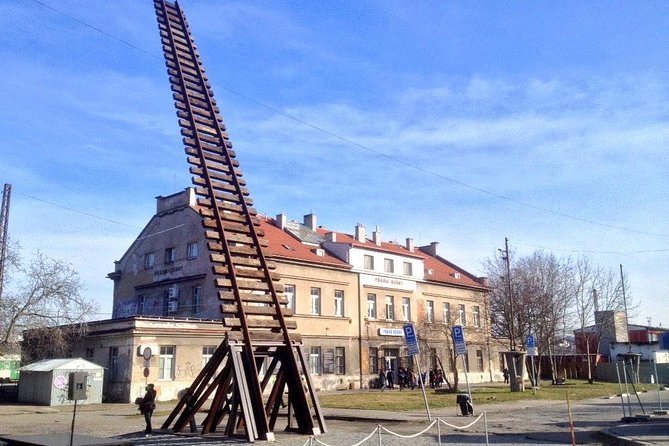
The Bubny section lasts about 30 minutes and centers on the Holocaust Memorial. Bubny was the departure place for Czech Jews sent to concentration camps, so this is the tour’s clearest point of contact with deportation and Nazi persecution.
This part is not presented as a vague lesson about World War II. It is tied to a real Prague location and to the people who were forced to leave from there. That makes the subject more direct. You are asked to connect the city’s streets with the machinery of persecution, rather than treating the Holocaust as something that happened only at distant camp sites.
The tone here will naturally be more sobering than in the opening section. That is appropriate, though you should know this is not a light sightseeing walk. The tour deals openly with persecution, deportation, and concentration camps. Families and younger participants may need to decide if that subject fits their plans for the day.
The half-hour timing gives the guide room to explain the memorial and its meaning without turning the entire afternoon into a lecture. Still, the subject deserves your attention. If you prefer only architectural sightseeing, this tour may feel heavier than expected.
Same country, a completely different kind of day:
- Prague: 50-Minute Sightseeing Evening Cruise
★ 4.2 · 33,780 reviews - Prague: Medieval Dinner with Unlimited Drinks
★ 4.4 · 19,847 reviews - Prague: Skip-the-line Castle Ticket and Optional AudioGuide
★ 4.3 · 11,121 reviews - Prague: Castle Tour with Local Guide and Entry Ticket
★ 4.6 · 10,422 reviews
Prague main railway station and Nicolas Winton
The next stop is Praha hlavni nadrazi, Prague’s main railway station. You spend about 15 minutes hearing the story of Nicolas Winton, who helped save 669 Jewish children.
This is a striking change in emphasis. Bubny focuses on deportation and loss. The railway station stop focuses on rescue and individual action. The two locations together give the tour a more complete human scale. You hear not only what happened to Czech Jews, but also how one person helped children escape.
The stop is brief, but the story carries considerable weight. Since the tour is private or limited to no more than six people, you can ask questions rather than simply receive a fast announcement before moving on. If the story of the Kindertransport and Winton is especially important to you, tell Jiří early in the walk so you can make the most of this short section.
Because this is a working railway station, the setting is different from Josefov. You are not standing in a quiet historical compound. You are in an active transport hub, which can make the connection between past and present feel especially clear, but may also make the stop less calm.
Jerusalem Synagogue, the final stop
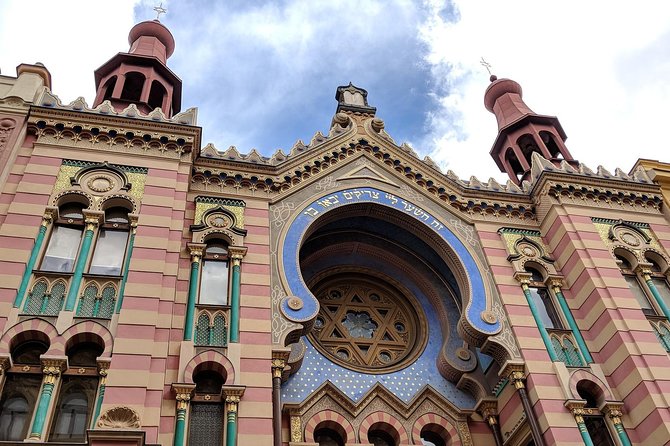
The tour ends at Jerusalem Synagogue in New Town. The final stop lasts about 15 minutes, and admission is not included in the tour price.
Ending here gives the walk a different visual and religious note after the cemetery and Holocaust memorial. The synagogue is a destination in its own right, not just a place mentioned in passing. Since entry is excluded, check the arrangements and opening conditions if you hope to go inside.
The end point is on Jeruzalemska, in New Town, rather than back at the opening meeting point. That is useful if you plan to continue sightseeing near the main railway station or central Prague. It also means you should not assume the walk returns you to Josefov.
A practical tip: keep your afternoon flexible after the tour if you want to visit the synagogue interior or continue exploring nearby. The listed experience ends at the synagogue, but your own visit may require separate admission.
What the $64 price really buys you
At $64 per person, this is not the cheapest way to walk around Josefov. You can see many Prague streets for free. The value comes from the structure and the historian, not from a large number of included admissions.
The price includes all fees and taxes, bottled water, and a Prague public transport ticket. More important, it gives you about three hours with a PhD historian in a group of no more than six. If Jiří’s answers and explanations are the main reason you are considering the tour, the cost is easier to justify.
You should compare it with your own plans. If you already intend to visit the Jewish Museum independently and only want entry to the major synagogues, paying for this walk may not be necessary. If you want a connected story that links Josefov to New Town, Bubny, the railway station, and Jerusalem Synagogue, the fee buys a useful framework.
The tour is also a good value for people who dislike large groups. A group limit of six means the guide can adjust the explanation and respond to questions. That personal attention is especially useful with a subject that involves complex religious, political, and historical context.
The tour is offered in the morning or afternoon. Choose based on your energy and museum plans. If you want to visit the Jewish Museum separately, the morning walk may leave time afterward, but the exact fit depends on your schedule and the museum’s arrangements.
Pace, transport, and practical comfort
The walking pace is one of the strongest features here. Jiří is described as walking at a good speed, not too fast, and answering questions patiently and completely. That is exactly what you want in a tour spread across several districts.
The route is not one continuous walk through Josefov. It includes public transport, and your ticket is provided. This saves you the small but irritating task of figuring out a ticket during the tour. It also makes the itinerary possible within three hours.
You should still expect a fair amount of time on your feet. The experience moves through five stops and covers several parts of central Prague. Wear comfortable shoes and allow room for changes in weather. The activity requires good weather, so a cancellation or change may occur if conditions are poor.
The meeting point is Náměstí Franze Kafky 24/3 in Staré Město. That location fits the Kafka thread and places you near Josefov. The tour ends at Jeruzalémska in New Town, at Jerusalem Synagogue. Check both points before setting out, since the finish is not the same as the start.
Most people can participate, and the meeting points are near public transportation. The tour is not described as wheelchair-specific, so if you have mobility needs, contact the provider before booking and ask about the route.
Franz Kafka and the personal side of Prague’s Jewish story
Kafka is part of the setting from the moment you meet near Franz Kafka Square. The tour does not treat him as a separate literary walking tour, but his life and writings are included in the wider story of Prague’s Jewish community.
That approach makes sense. Kafka is one of the city’s best-known Jewish writers, but he lived in a Prague shaped by language, religion, ethnicity, and social boundaries. Learning about him alongside synagogues, cemeteries, and the changing Jewish Quarter gives you a better sense of the city behind the famous name.
If you are coming mainly for Kafka, confirm how much time will be devoted to his life and writing. The advertised route has a broad focus, with substantial attention to Jewish history, the Holocaust, and rescue efforts. Kafka is an important thread, but he is not the whole tour.
Who should book this experience
I would choose this tour if you want a serious introduction to Jewish Prague and prefer conversation to a recorded audio guide. It is especially suitable for:
- You want to connect architecture with the lives and events behind it.
- You plan to see Josefov but do not know which less obvious sites matter.
- You want a small group and the chance to ask detailed questions.
- You are interested in Holocaust history and the story of Nicolas Winton.
- You like walking at a steady pace rather than being hurried between stops.
- You want public transport handled as part of the route.
I would think twice if your main goal is extensive museum access. The Jewish Museum is not included by default, and Jerusalem Synagogue admission is also separate. You may prefer to arrange the museum on your own, or ask in advance to add it to this private experience.
This is also not the right pick if you want a cheerful, surface-level introduction to Prague. The material includes persecution, deportation, concentration camps, and the Holocaust. The subject is handled as a central part of the city’s story, not as a brief footnote.
Booking and cancellation details
Confirmation is sent within 48 hours, subject to availability. The tour is usually booked about 25 days ahead, so reserve early if you need a specific morning or afternoon time, especially because the group is limited to six.
You can cancel for a full refund up to 24 hours before the local start time. Changes or cancellations inside that 24-hour window are not accepted for a refund. The experience may also be canceled if the weather is poor or if the minimum number of participants is not reached. In either case, you are offered another date or experience, or a full refund.
Should you book Jewish Prague With a Local Historian?
Book it if you want a focused, thoughtful walk led by Jiří, with Josefov as the starting point and the Holocaust, Nicolas Winton, Kafka, and Jerusalem Synagogue added to the picture. The small group, steady pace, included transport, and chance to ask a PhD historian direct questions make the $64 price reasonable for a personal introduction.
Skip it if you mainly want museum admission or a short sightseeing loop in Josefov. For everyone else, this is a strong choice for understanding how Jewish Prague reaches beyond its most famous quarter and into the city’s difficult, moving modern story.
FAQ
How long does Jewish Prague With a Local Historian last?
The experience lasts approximately three hours.
Where does the tour begin?
It begins at Náměstí Franze Kafky 24/3 in Staré Město, Prague 1.
Where does the tour end?
The tour ends at Jerusalem Synagogue on Jeruzalémská in New Town.
Is the Jewish Museum included?
No. The standard route does not include a visit to the Jewish Museum, but a visit can be arranged together.
Is admission to Jerusalem Synagogue included?
No. Admission to Jerusalem Synagogue is not included in the tour price.
What is included in the price?
All fees and taxes, bottled water, and a Prague public transport ticket are included.
How many people can join the tour?
The experience has a maximum of six participants.
Who leads the tour?
The tour is led by Jiří, a local historian identified as a PhD historian.
Can I cancel for a full refund?
Yes. You can cancel at least 24 hours before the local start time for a full refund. Cancellations or changes made less than 24 hours before the start are not refunded.
Just added around Prague
- WWII and Communism History in Prague’s Old Town Private Tour★ 5.0 · 4 reviews
- Prague: Historical Walking Tour with Focus on World War 2★ 4.3 · 12 reviews
- World War II 4WD Tour from Prague with Lunch★ 4.4 · 3 reviews
- Ultimate Unlimited Beer Pong with Czech Beer★ 4.6 · 5 reviews
- Walking tour of Prague in French : Nové Město★ 4.9 · 16 reviews
- Walking tour of Prague in french: Old Town & Charles Bridge★ 4.9 · 62 reviews
- Prague Sightseeing Tour with Lunch★ 5.0 · 5 reviews
- Prague: Modern Private Spa with Jacuzzi and Sauna★ 4.8 · 62 reviews
Prague Jewish Quarter Tours, compared.
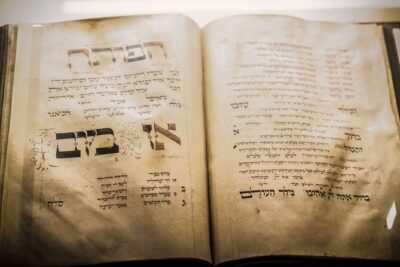
Jewish Quarter Walking Tour with Admission Tickets
Read our review →
Old Town and Jewish Quarter Guided Tour in German
Read our review →
Old Town and Jewish Quarter Guided Walking Tour
Read our review →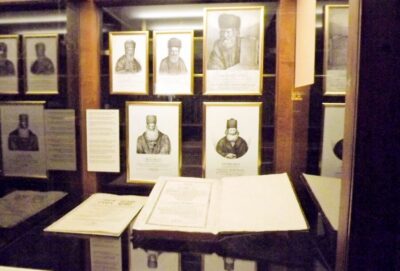
Jewish Quarter Ticket with optional Audio Guide
Read our review →
Prague’s TOP Sights – Old Town, Jewish Quarter, Charles Bridge (Tip-based tour)
Read our review →
Prague Old Town New Town and Jewish Quarter Morning Tour
Read our review →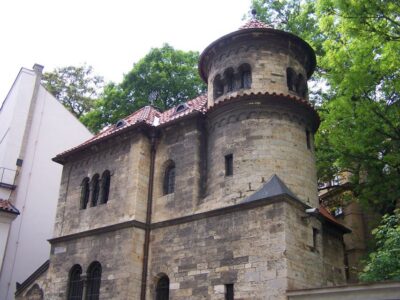
Old Town, Jewish Quarter & Astro Clock Walking Tour
Read our review →
Prague Essential Tour Old Town and Jewish Quarter
Read our review →Browse the lists this tour appears in