
Reviewed · MUSEUMS
Lobkowicz Palace Museum Entrance Ticket in Prague
Lobkowicz Palace gives you a rare look at Prague through one family’s eyes. Inside Prague Castle, its 22 galleries hold paintings by Brueghel the Elder, Canaletto, Cranach, and Velázquez, along with original music by Mozart and Beethoven. The collection reaches from medieval Europe into the 20th century.
I like the self-guided format, since you can pause at the pieces that catch your eye and move on when a display is not your thing. I also like the audio guide’s clear focus on the family story, which ties paintings, weapons, music, and royal portraits into six centuries of European life.
The drawback is simple: this is a museum visit, not a live guided tour, and the audio guide is offered in English only. If you have limited time in Prague or prefer grand interiors and city views to objects in display cases, you may find the roughly two-hour visit less rewarding.
Key points to know before you go
- Twenty-two galleries cover six centuries: The collection moves from paintings and portraits to porcelain, decorative arts, firearms, musical instruments, and manuscripts.
- Original music gives the museum extra weight: You can see scores and manuscripts connected with Beethoven and Mozart, including Beethoven’s Fourth and Fifth Symphonies.
- The audio guide keeps the visit flexible: You set the pace and can focus on the works that interest you most.
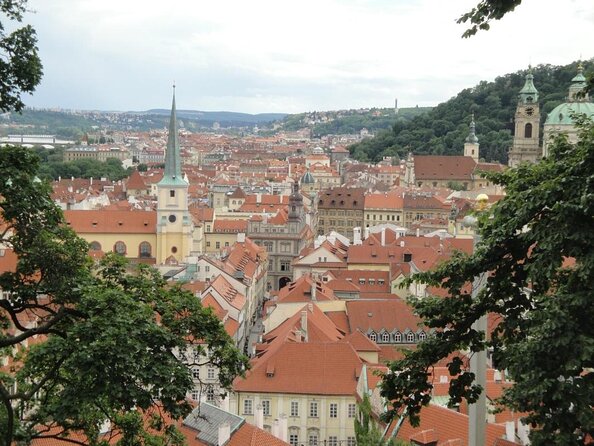
- The palace sits inside Prague Castle: This makes it easy to pair with other castle sights, though the experience itself is indoors.
- The price is modest for a major private collection: At $18.02, the ticket can be good value if you enjoy art, music, or European history.
- Plan on about two hours: Add more time only if you read and listen closely in every gallery.
Why Lobkowicz Palace feels different from a standard Prague museum
Many Prague museums present a national story through state collections. Lobkowicz Palace takes a more personal route. You follow the fortunes of the Lobkowicz family through objects they owned, commissioned, collected, preserved, and recovered over many generations.
That family viewpoint changes the way you read the rooms. A portrait is not just a portrait. A musical manuscript is not simply a famous composer’s handwriting. Each object forms part of a long record of family life, European politics, changing tastes, and cultural connections.
The palace is home to The Lobkowicz Collections, described as the oldest and largest private collection in the Czech Republic. That claim matters less as a slogan than as a guide to what you will see: this is not a small house museum with a handful of heirlooms. The displays cover fine art, royal and family portraits, arms, music, ceramics, and decorative objects across a broad span of time.
You should expect variety rather than one tightly focused subject. I see that as a strength if you like to change subjects every few rooms. It can be less satisfying if you want a museum devoted only to painting, classical music, or Prague’s medieval past.
A few more Prague trips to weigh up
- Prague: Museum of Fantastic Illusions Entry Ticket
★ 4.3 · 4,337 reviews - IAM Illusion Art Museum Entry Ticket
★ 4.2 · 1,664 reviews - Prague: Museum of Senses Admission Ticket
★ 4.0 · 1,445 reviews
Starting at Prague Castle and finding your pace
The palace is located at Prague Castle, so it fits naturally into a day built around the castle complex. The ticket covers admission to Lobkowicz Palace itself. Hotel pickup and drop-off are not included, so you need to make your own way there.
Once inside, the audio guide becomes your main companion. No live guide is named or provided for this experience. Instead, you move through the galleries independently, listening in English and deciding how much time to give each section.
That format works well for an afternoon visit. You are not tied to a group’s walking speed, and you can stop to study a painting or skip ahead if a display does not hold your attention. One practical strength is the ability to see the main highlights and keep moving, rather than feeling obliged to spend equal time in every room.
The stated duration is about two hours. That is a sensible target for a steady visit, but your actual time will depend on how closely you listen to the audio guide and how many objects you study. If you want only the major works, you can likely keep the visit brisk. If you enjoy reading labels and comparing decorative details, allow extra room in your day.
A Panorama Tour is also included, though the available details do not explain its exact format or what it covers. Treat that as an added part of the ticket, not the main reason to book.
The paintings by Brueghel, Canaletto, Cranach, and Velázquez
The painting collection supplies the palace with its most recognizable names. Brueghel the Elder, Canaletto, Cranach, and Velázquez each offer a different reason to slow down.
Brueghel gives you a window into Northern European art and its careful attention to people, activity, and detail. Canaletto is known for city views, so his work connects naturally with the grand architectural world of Venice and the wider European taste for precise urban scenes.
Cranach brings an earlier German Renaissance voice, while Velázquez adds the prestige of Spain’s royal court. You do not need to arrive with a degree in art history to appreciate the contrast. The audio guide is useful here because it can explain why these names matter and how their work fits into the collection.
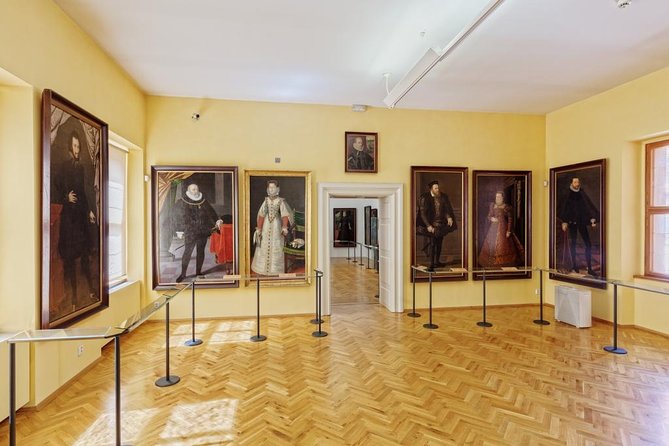
The palace also displays family and royal portraits. These paintings help connect art to status and power. You see how the Lobkowicz family presented itself, which royal circles it moved through, and how a private collection could preserve both personal memories and political connections.
I would not approach this as a museum where every room delivers a famous masterpiece. The appeal comes from the range and the way the pieces sit within a family collection. You are looking at major art, but you are also seeing the objects that made a noble household function as a center of taste, ceremony, and influence.
Mozart, Beethoven, and the sound of the collection
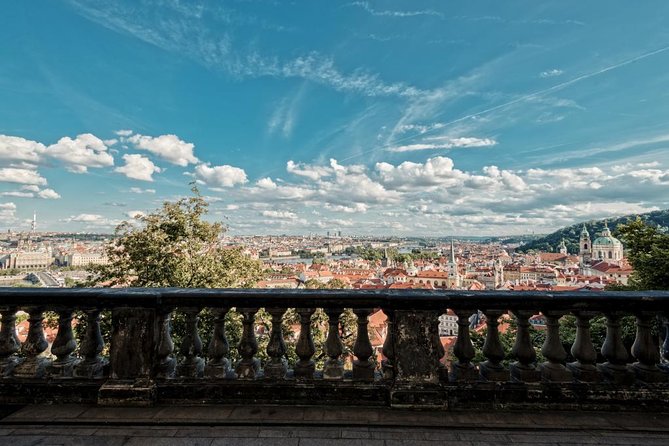
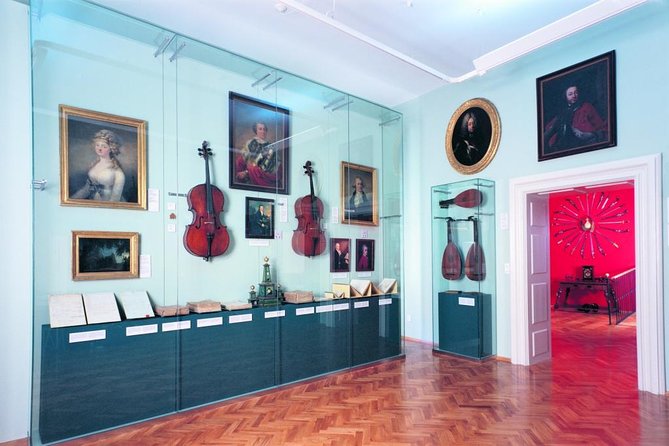
The musical material is one of the palace’s most distinctive features. You can see original scores and manuscripts by Mozart and Beethoven, including Beethoven’s Fourth and Fifth Symphonies and Mozart’s re-orchestration of Handel’s Messiah.
For many people, these pages will be the emotional center of the visit. A painting can show you a person or a place. An original score gives you a direct physical link to the act of composition, with the marks and structure of the music preserved on paper.
The collection also includes musical instruments. That makes the music displays feel less like an isolated cabinet of manuscripts and more like part of a working cultural world. The palace helps you see music as something performed, collected, commissioned, and passed through families, not simply as recordings heard in concert halls.
You should keep your expectations measured. The ticket does not promise a live concert or performance. The value lies in seeing the documents and instruments themselves, then using the audio guide to understand their place in European culture.
If you already know Beethoven’s Fourth and Fifth Symphonies or Handel’s Messiah, these references may add a strong personal connection. If the names are less familiar, the audio guide can still give you a useful introduction without requiring previous music knowledge.
Same country, a completely different kind of day:
- Prague: 50-Minute Sightseeing Evening Cruise
★ 4.2 · 33,780 reviews - Prague: Medieval Dinner with Unlimited Drinks
★ 4.4 · 19,847 reviews - Prague: Skip-the-line Castle Ticket and Optional AudioGuide
★ 4.3 · 11,121 reviews - Prague: Castle Tour with Local Guide and Entry Ticket
★ 4.6 · 10,422 reviews
Porcelain, ceramics, arms, and decorative arts
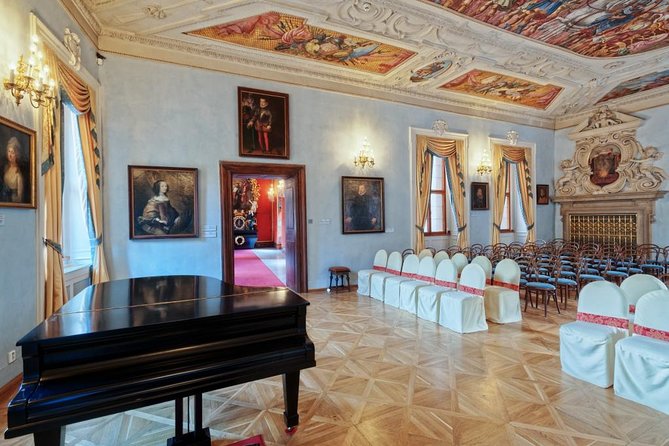
The palace does not ask you to choose between high art and household objects. Its decorative arts collection includes porcelain and ceramics, with examples dating from the 13th through the 20th centuries. The material also includes 16th-century porcelain and Bohemian decorative arts.
These displays reward close looking. Ceramics can reveal changing tastes, trade links, manufacturing skill, and ideas about luxury. They also show how people used objects in daily life and formal settings, giving the collection a more physical feel than a sequence of paintings alone.
The Bohemian material adds local context. You are not only looking at imported European fashions. You are also seeing objects tied to the region that became the Czech lands, presented within the history of a family that lived through major changes in Central Europe.
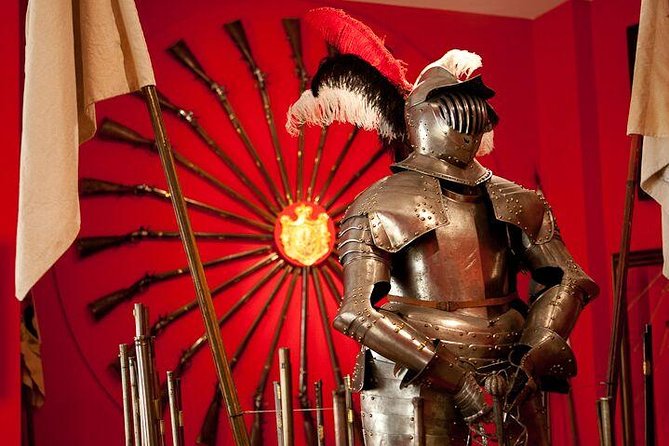
The military and sporting rifle collection offers another sharp change of subject. The palace holds an extensive group of rifles from the 16th to 18th centuries. These objects show craftsmanship and status, but they also point to the ways noble families spent time, displayed power, and took part in military and sporting traditions.
That variety is useful for mixed-interest groups. One person can linger over the portraits while another studies the arms. Someone interested in design may prefer the porcelain, while a music lover heads straight for the manuscripts. The tradeoff is that the experience can feel broad rather than tightly organized around one theme.
Six centuries told through one family
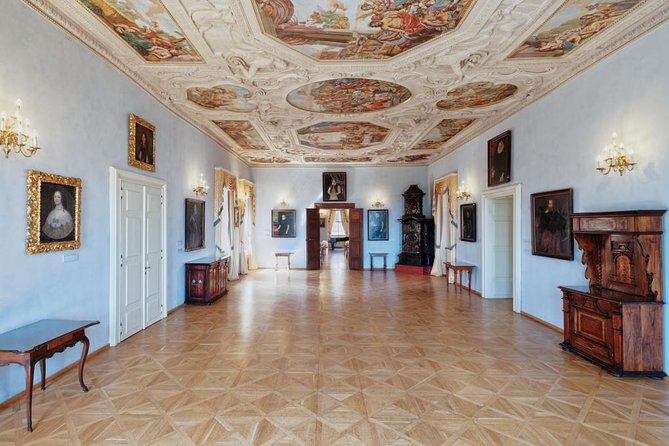
The Lobkowicz story is the thread that keeps the collection from becoming a random parade of valuable objects. Across six centuries, family possessions reflect shifts in politics, religion, art, technology, and social life.
A private collection also raises useful questions. Who had the money to acquire these objects? What did noble families consider worth preserving? How did European tastes change? Which pieces were meant for display, and which were used in ordinary household or musical settings?
You may find that the family perspective makes the past feel more immediate. Instead of treating history as a list of dates, you can connect it to portraits, instruments, manuscripts, weapons, and objects that survived because someone decided they mattered.
The approach is not neutral in the same way as a national museum. The palace presents history through one aristocratic family, so the story naturally emphasizes its experiences and possessions. That is not a reason to avoid it. It is a reason to understand what you are seeing: a focused view of Europe, not the entire social history of the region.
I find that focus especially useful after seeing Prague Castle’s grand public spaces. The castle shows institutional power. Lobkowicz Palace adds a more intimate record of how one prominent family lived within that world.
Is $18.02 good value for two hours?
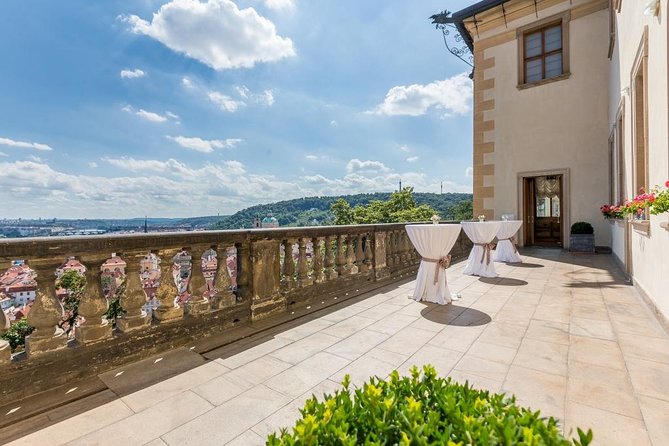
At $18.02 per person, this is a reasonably priced museum ticket for Prague, especially if you plan to spend close to two hours inside. Admission includes the audio guide and the Panorama Tour, so you are paying for more than a quick look at a single room.
The value depends on your interests. Art lovers get major European painters. Music lovers get original Beethoven and Mozart material. History-minded visitors get six centuries of family connections. Anyone interested in design can spend time with porcelain, ceramics, and decorative arts.
The ticket is less compelling if you want a live performance, a personal guide, or a short highlight visit. The experience is self-guided, and no food, drinks, or transportation are included. You also need to be comfortable with a moderate level of physical activity, since the visit takes place across 22 galleries.
Because the experience is booked an average of 34 days in advance, it is sensible to reserve ahead if it is important to your Prague plan. The ticket has free cancellation up to 24 hours before the start time, which gives you some flexibility. Cancellations or changes inside that window are not refundable or accepted.
Who will enjoy this palace visit most?
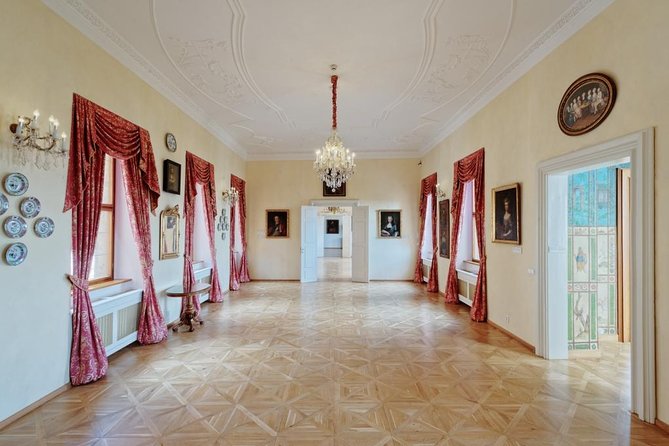
I would recommend Lobkowicz Palace to you if you like museums that mix subjects rather than keeping to one art form. The changing displays can keep a two-hour visit lively, especially for couples or families with different interests.
It is also a good choice for:
- Classical music fans who want to see original scores and manuscripts
- Art lovers interested in Brueghel, Canaletto, Cranach, or Velázquez
- History-minded visitors who enjoy following one family across centuries
- Design fans drawn to porcelain, ceramics, and decorative arts
- Independent museumgoers who prefer setting their own pace
- Prague Castle visitors looking for an indoor stop to add to the castle day
You may want to skip it if you strongly prefer live guides, interactive exhibits, or outdoor sights. The collection is broad, but the experience depends on listening, looking, and making your own way through the rooms.
Service animals are allowed. The stated requirement is a moderate level of physical fitness, so consider that when planning a full day at Prague Castle.
Should you book Lobkowicz Palace?
Book it if you want an affordable, flexible museum visit with genuine depth. The combination of major European art, original Mozart and Beethoven material, arms, ceramics, portraits, and family history gives you plenty to work with for about two hours.
I especially like this ticket for an afternoon when you want culture without committing to a long guided tour. You can focus on the must-see pieces, move on when you are ready, and let the audio guide shape the visit.
Skip it if your Prague schedule is already packed with top sights and you are not interested in art, music, or aristocratic history. For everyone else, $18.02 is a fair price for a varied collection inside Prague Castle, with enough unusual material to make the palace more than just another grand room.
FAQ
Where is Lobkowicz Palace Museum located?
Lobkowicz Palace Museum is located at Prague Castle in Prague, Czech Republic.
How long does the visit take?
The visit takes approximately two hours.
Is an audio guide included?
Yes. An audio guide is included, and the experience is offered in English.
How many galleries are open to explore?
The museum visit covers 22 galleries.
What major artists and composers are represented?
The collection includes works by Brueghel the Elder, Canaletto, Cranach, and Velázquez. It also includes original scores and manuscripts by Beethoven and Mozart.
Can I cancel for a full refund?
Yes. You can cancel at least 24 hours before the experience start time for a full refund. Cancellations or changes made less than 24 hours before the start time are not refunded or accepted.
Just added around Prague
- WWII and Communism History in Prague’s Old Town Private Tour★ 5.0 · 4 reviews
- Prague: Historical Walking Tour with Focus on World War 2★ 4.3 · 12 reviews
- World War II 4WD Tour from Prague with Lunch★ 4.4 · 3 reviews
- Ultimate Unlimited Beer Pong with Czech Beer★ 4.6 · 5 reviews
- Walking tour of Prague in French : Nové Město★ 4.9 · 16 reviews
- Walking tour of Prague in french: Old Town & Charles Bridge★ 4.9 · 62 reviews
- Prague Sightseeing Tour with Lunch★ 5.0 · 5 reviews
- Prague: Modern Private Spa with Jacuzzi and Sauna★ 4.8 · 62 reviews
Museums, compared.
IAM Illusion Art Museum Prague Fast Pass Ticket
Read our review →

Ticket to Audiovisual Light Art at Lumia Gallery
Read our review →
Browse the lists this tour appears in