Reviewed · AUDIO TOURS
Prague: Clam-Gallas Palace Entry Ticket with Audio Guide
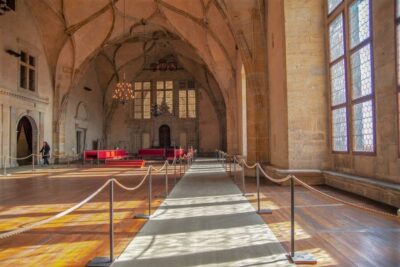
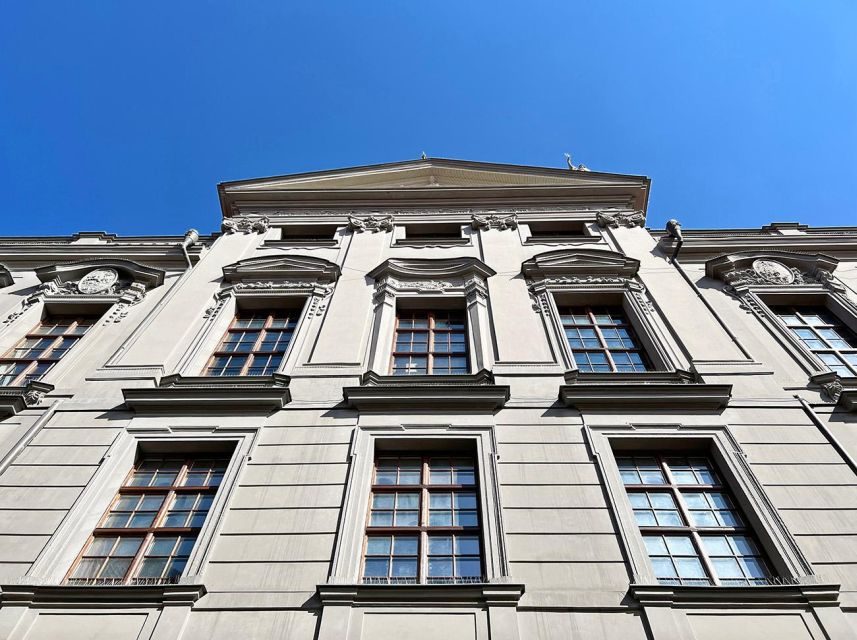
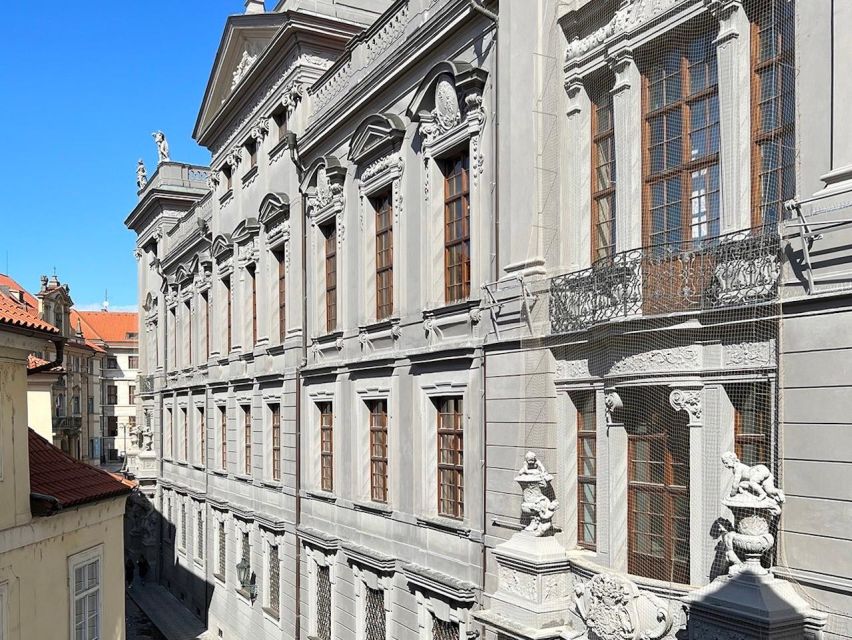
Clam-Gallas Palace gives you a rare look at Prague’s Baroque high life, packed into a grand building on a tight Old Town site. Built from 1713 to 1718, it combines sweeping staircases, theatrical halls, sculpted decoration, and clever later changes made for noble comfort.
I like the freedom to set your own pace, and I like the audio guide’s extra detail without having to follow a live group. The $8 price is easy to justify for a major central palace, though the interiors may feel sparse if you expect every room to be filled with furniture and displays.
Key points
- Carlo Carlone’s artwork: Look up and around for paintings by Carlo Carlone and work from the workshop of Matyáš Bernard Braun.
- A grand ceremonial staircase: The climb to the second floor reveals how Johann Bernard Fischer von Erlach worked within Prague’s crowded Old Town buildings.
- Restored reception rooms: The Golden Hall, Turquoise Hall, Marble Hall, and Chinese Lounge show off tiles, lamps, door fittings, stucco, and painted decoration.
- Self-guided audio tour: Download the guide to your phone, or borrow a kit and rent headphones at the palace.
- Former winter garden: Two rooms in the north wing were adapted as a conservatory in the early 19th century.
- Quiet timing can help: One recent February visit had very few people, making the self-guided format especially pleasant.
Why Clam-Gallas Palace deserves a place in your Old Town day
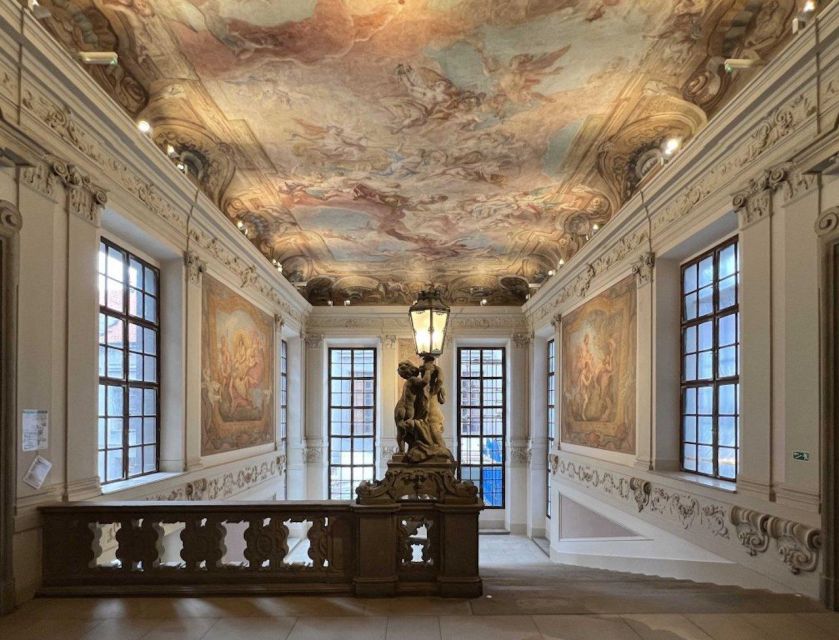
Prague has no shortage of grand churches and palace exteriors, but Clam-Gallas Palace gives you a focused look at aristocratic Baroque interiors. It is not simply a pretty facade. The route takes you through the noble floor, ceremonial spaces, later family rooms, and a former winter garden, so you can see how a working palace changed over time.
The building was commissioned and completed in the early 18th century according to the design of Johann Bernard Fischer von Erlach. Its decoration came from major artists of the period, including Carlo Carlone and the workshop of Matyáš Bernard Braun. That matters because the palace is not just a home with expensive fittings. It was designed as a showpiece, where architecture, sculpture, stucco, and painting all worked together.
I find the setting especially interesting. Fischer von Erlach had to fit this imposing residence into the cramped fabric of Prague’s Old Town. The ceremonial staircase makes that challenge clear. As you climb, look at the way the building creates a sense of scale inside a dense historic quarter.
The route is best for people who enjoy architecture, decorative arts, and rooms that reward a slow look. If your main goal is a huge collection of paintings or lavishly furnished chambers, keep your expectations in check. One recent rating described the palace as having too little to see and called it bare. That reaction is possible, especially if you move quickly or prefer rooms crowded with objects.
A few more Prague trips to weigh up
- Prague: Staropramem Brewery Self-Guided Tour with Tasting
★ 3.7 · 2,106 reviews - From Prague: Terezin Concentration Camp Guided Tour w/ Audio
★ 4.5 · 1,959 reviews - Prague: Jewish Quarter Ticket with optional Audio Guide
★ 4.4 · 1,107 reviews
Starting with the grand staircase
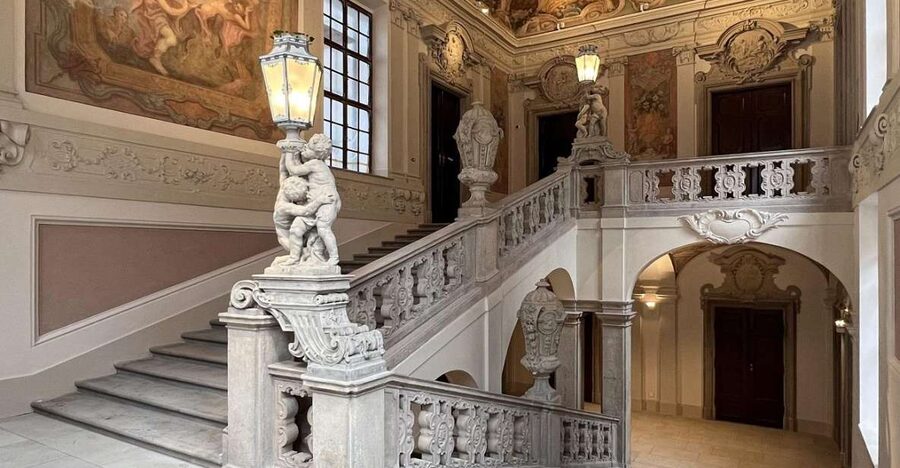
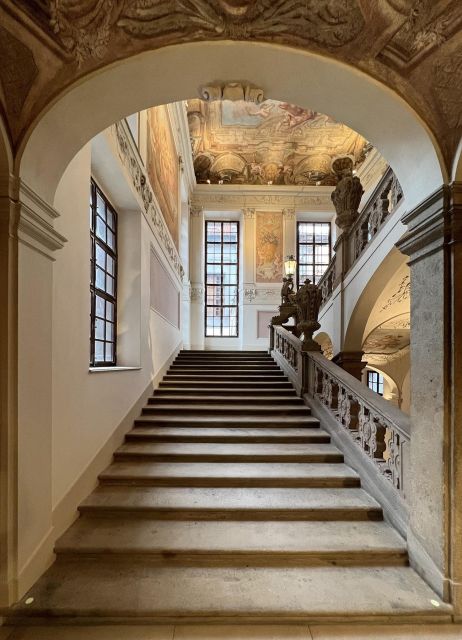
The sightseeing route leads you toward the palace’s representative rooms, with the ceremonial staircase providing one of the first major impressions. This is not a minor bit of circulation space. It was built to make an arrival feel important.
The staircase also gives you a useful lesson in palace design. A noble residence needed to impress people before they reached the main rooms, and the stairway uses sculpture, stucco, and painted work to build that effect. You can also study the practical problem of fitting a grand route into an old urban block.
The climb reaches the second floor, where the piano nobile is located in the west wing. In European palace design, this noble floor held the main reception rooms, above the less formal and service areas. Here, the height and decoration helped separate aristocratic life from the ordinary business of the building.
You should take this part slowly. The audio guide can explain more than the basic route, but the visual details work even without constant listening. Pause to notice the relationship between the staircase, ceiling decoration, sculptural elements, and the rooms ahead.
The palace is not presented as a live-guided performance. You move independently, which means you can spend more time on the staircase if it interests you, then move on when you are ready.
The antecamera and its theatrical second life
The piano nobile tour begins in the antecamera, or anteroom. This space was later adapted for the palace theater in the early 19th century, giving it a different role from the one it had when the palace was first built.
That change is one of the more valuable parts of the visit. Historic buildings are rarely frozen at the moment of their first completion. Families altered rooms to suit new tastes and new forms of entertainment, and the antecamera lets you see one such adjustment.
The room also prepares you for the more decorative halls that follow. The route moves from an arrival and waiting space into rooms designed to make a stronger impression. The audio guide is useful here because it can explain why the room changed and how the palace continued to function after the Baroque period.
If you like a clear historical sequence, this is a good moment to listen carefully. If you prefer to look rather than read or listen, the room still works as a transition between the staircase and the main reception spaces.
Golden and Turquoise Halls
The adjoining Golden and Turquoise Halls are among the main visual rewards of the route. Their appeal comes from the combination of restored decoration and smaller objects that make the interiors feel finished.
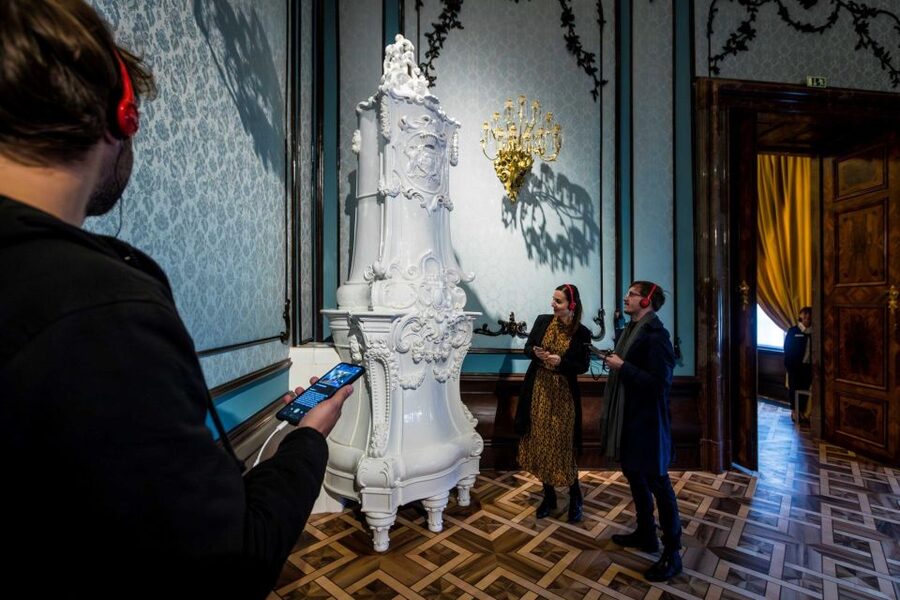
Look for the tiled stoves, hanging lamps, and strong door fittings. These are practical details, but in a palace they also carried a decorative purpose. A tiled stove provided heat while contributing color and pattern. A lamp helped light the room while adding to its formal appearance. Door hardware could turn an ordinary threshold into part of the room’s design.
The restored elements help you imagine how the rooms were meant to work. These were not museum galleries in the modern sense. They were rooms for receiving people, displaying taste, and moving through a carefully ordered social world.
The names of the rooms may suggest a simple color scheme, but do not reduce them to that. Pay attention to the full interior: the surfaces, fittings, ceiling work, and the way one hall leads to the next. The audio guide can add context without forcing you to follow a fixed group schedule.
A recent high rating gave particular credit to the audio guide for being informative. That matches the main strength of this format: you can look first, then listen when you want the background. You are not dependent on catching every word from a guide speaking to a group.
Same country, a completely different kind of day:
- Prague: 50-Minute Sightseeing Evening Cruise
★ 4.2 · 33,780 reviews - Prague: Medieval Dinner with Unlimited Drinks
★ 4.4 · 19,847 reviews - Prague: Skip-the-line Castle Ticket and Optional AudioGuide
★ 4.3 · 11,121 reviews - Prague: Castle Tour with Local Guide and Entry Ticket
★ 4.6 · 10,422 reviews
The Marble Hall and Chinese Lounge
The Marble Hall changes the mood. It is described as airy and white, which gives it a lighter effect than the more strongly decorated rooms nearby. The space also has an element of surprise, so do not rush through it expecting the route to follow a single visual formula.
Its whiteness is part of the point. Palace interiors often use contrast to control movement and mood. A darker or more patterned room can make a pale hall feel even more open, while a more formal hall prepares you to notice the difference.
The adjacent Chinese Lounge adds another shift in style. The supplied information gives no detailed inventory of its objects, so I would not promise a room packed with exotic pieces. Instead, treat it as part of the palace’s changing decorative language and as a companion to the Marble Hall.
This section will suit you if you enjoy comparing rooms rather than searching for one famous object. The visit is about the design of the whole interior, including the transitions between spaces.
It is also where the palace’s limitations may become more noticeable. Some rooms have been restored rather than filled with a large collection of original furnishings. If you want a dense display at every turn, the palace may seem underfilled. If you care about structure, decoration, and room design, the open quality gives you more space to study what remains.
The north wing conservatory and winter garden
Near the end, the route reaches two rooms adapted as a winter garden in the first third of the 19th century. These rooms are in the north wing and show how the noble family modified the palace for comfort and leisure.
The conservatory is a useful counterpoint to the formal halls. Earlier rooms were built to receive and impress. A winter garden suggests a more relaxed use of the house, with the interior modified to bring a different kind of atmosphere into palace life.
The experience is not described as a botanical display, so do not arrive expecting a greenhouse full of plants. The point is the architectural adaptation. You are seeing how an 18th-century palace continued to change as the family’s needs and tastes shifted.
In good weather, the route ends in the courtyard. This gives you a final chance to understand the scale of the complex from outside the decorated rooms. The courtyard can help you connect the grand interiors with the palace’s broader footprint, especially after seeing how tightly it fits into the Old Town.
How the audio guide changes the visit
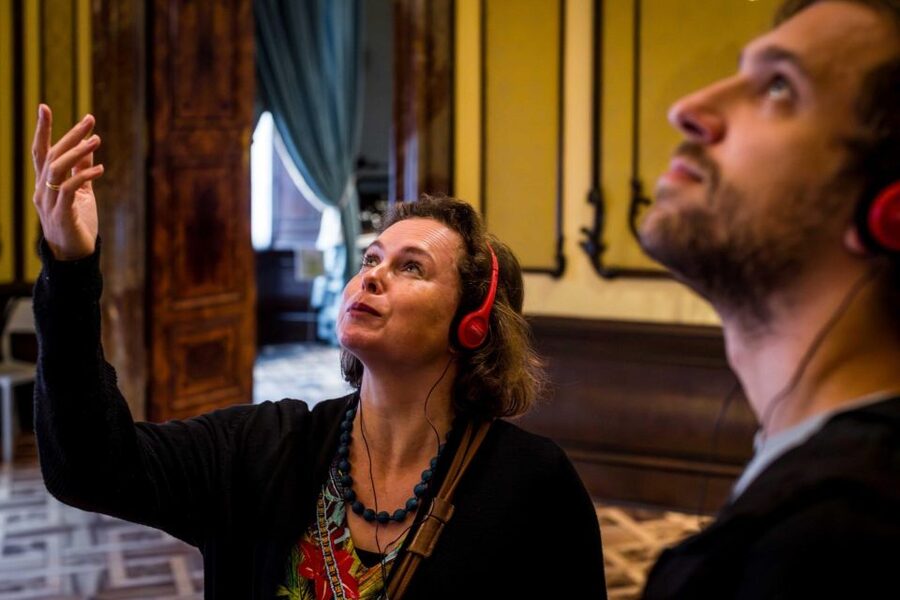
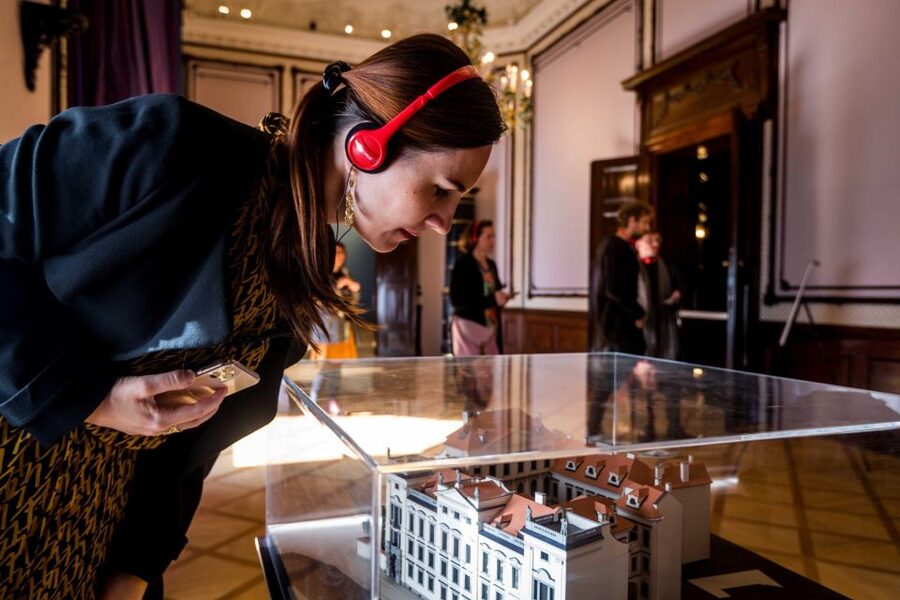
The audio guide is included, and you can download it to your smartphone inside the palace. If using your own phone is not convenient, staff can lend you an audio-guide kit, and headphones are available to rent on-site.
That flexibility is important. You do not need to commit to carrying a separate device all day, but you also do not need to rely on a phone if you would rather use a provided kit. The audio is offered in English and Czech. The booking host or greeter is listed as English-speaking.
There is no live guide included. For some people, that is a drawback. A live guide can answer questions, point out small details, and adjust the pace to the group. Here, you get privacy and control instead. You can replay information, skip sections, or pause in a room without holding anyone up.
I would use the audio guide selectively. Listen carefully in the antecamera, on the ceremonial staircase, and in the reception rooms where the history of later changes adds value. In rooms with strong visual decoration, put the phone down for a moment and look around.
The guide also makes the $8 admission more useful. Without it, you might finish quickly and feel that the palace has limited content. With it, the structure and room changes become easier to understand.
Price, timing, and who gets the best value
At $8 per person, this is a modest-cost cultural stop in central Prague. The value depends on how you visit. A quick walk through the rooms may not feel like enough, particularly if you prefer palaces with large furniture collections. A slower visit with the audio guide gives you much more for the price.
The ticket is valid for one day, with starting times selected according to availability. The experience itself is self-paced, so you are not tied to a fixed tour lasting a certain number of minutes. That makes it easy to fit into an Old Town itinerary.
A quiet time can improve the visit. A February entry had few people in the palace, which is ideal for a self-guided route. You can stop in the halls, listen without background noise, and take in the details without feeling pushed along.
The overall rating is 4.6 from 115 reviews, with especially strong praise for the audio guide and the general experience. The range is worth noting: some people consider it an excellent Prague stop, while at least one recent visitor found the palace too bare and would not repeat it.
I would book it if you enjoy:
- Baroque architecture and decorative interiors
- Short, flexible museum visits
- Audio guides rather than group tours
- Seeing how a noble residence changed across two centuries
- Affordable attractions close to Prague’s central sights
I would think twice if you want:
- A live guide
- A large art collection
- Rooms filled with original furniture and objects
- Easy access for a wheelchair or anyone with limited mobility
The palace is not suitable for wheelchair users or people with mobility impairments. Baby strollers are not allowed, so families with very young children should plan accordingly.
Practical ways to get more from the palace
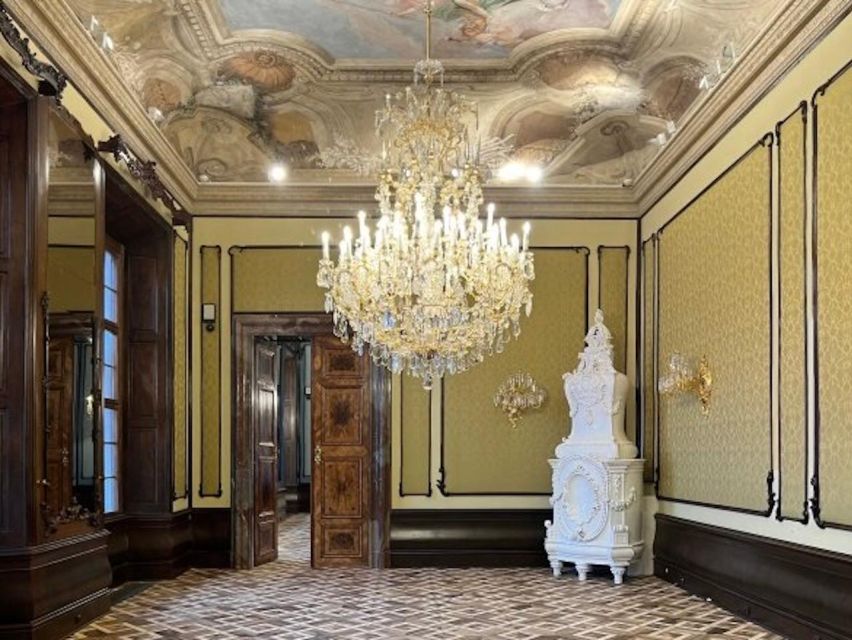
Give yourself enough time to look up. Baroque decoration often rewards attention above eye level, and the palace’s paintings, stucco, and sculptural work are part of the main experience.
Start with the building rather than the individual rooms. Notice how the staircase handles movement, how the piano nobile is arranged, and how the old urban setting shaped Fischer von Erlach’s design.
Use the audio guide as a tool, not a soundtrack that must play without pause. Stop it when you want to inspect a door fitting or tiled stove. Resume it when you reach a room where the historical explanation matters more.
Keep the later alterations in mind. The theater adaptation and winter garden are not side notes. They show that the Clam-Gallas family adjusted the palace for changing forms of leisure and comfort.
Finally, allow a little extra attention to the courtyard if the weather is fine. The interior rooms can make the palace feel like a series of grand chambers. The courtyard helps you grasp the size and organization of the whole residence.
Should you book Clam-Gallas Palace?
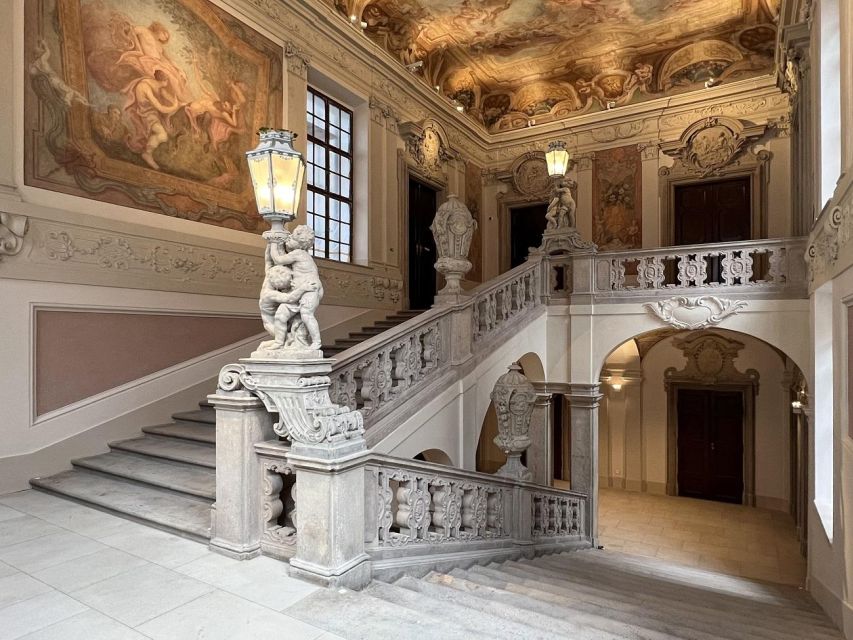
Book this entry if you want an inexpensive, independent look at one of Prague’s best-preserved Baroque palaces, especially if restored rooms and architectural detail interest you. The ceremonial staircase, Golden and Turquoise Halls, Marble Hall, Chinese Lounge, and former winter garden provide a clear route with plenty to notice.
Skip it if you need a live guide, broad museum collections, or heavily furnished rooms at every stop. The palace has a quieter, more architectural character. For $8, the audio guide makes it a sensible addition to a central Prague day, and visiting at a less crowded time gives you the best chance to enjoy it at your own pace.
FAQ
Where is Clam-Gallas Palace located?
Clam-Gallas Palace is in Prague, in the Central Bohemian Region of the Czech Republic.
How much does admission cost?
The entry ticket costs $8 per person.
How long is the ticket valid?
The ticket is valid for one day. You should check availability for the available starting times.
Is an audio guide included?
Yes. An individual audio guide is included with the palace entry ticket.
Which languages are available for the audio guide?
The audio guide is available in English and Czech.
Can I use my own smartphone for the audio guide?
Yes. You can download the audio guide to your smartphone inside the palace.
What if I cannot use my smartphone?
A kit can be lent to you at the palace. Headphones can also be rented on-site.
Is there a live guide?
No. A live guide is not included. The visit uses an individual audio guide instead.
What rooms are included on the sightseeing route?
The route includes the piano nobile in the west wing, the conservatory in the north wing, the antecamera, Golden Hall, Turquoise Hall, Marble Hall, Chinese Lounge, and two rooms adapted as a winter garden.
Is the palace accessible to wheelchair users?
No. The experience is not suitable for wheelchair users or people with mobility impairments. Baby strollers are also not allowed.
Just added around Prague
- WWII and Communism History in Prague’s Old Town Private Tour★ 5.0 · 4 reviews
- Prague: Historical Walking Tour with Focus on World War 2★ 4.3 · 12 reviews
- World War II 4WD Tour from Prague with Lunch★ 4.4 · 3 reviews
- Ultimate Unlimited Beer Pong with Czech Beer★ 4.6 · 5 reviews
- Walking tour of Prague in French : Nové Město★ 4.9 · 16 reviews
- Walking tour of Prague in french: Old Town & Charles Bridge★ 4.9 · 62 reviews
- Prague Sightseeing Tour with Lunch★ 5.0 · 5 reviews
- Prague: Modern Private Spa with Jacuzzi and Sauna★ 4.8 · 62 reviews
Audio Tours, compared.
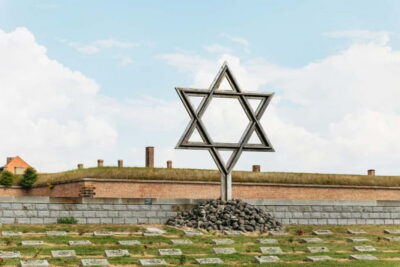
Terezin Concentration Camp Guided Tour w/ Audio
Read our review →
Jewish Quarter Ticket with optional Audio Guide
Read our review →
Astronomical Clock Tower Entry Ticket & Audio Guide
Read our review →