
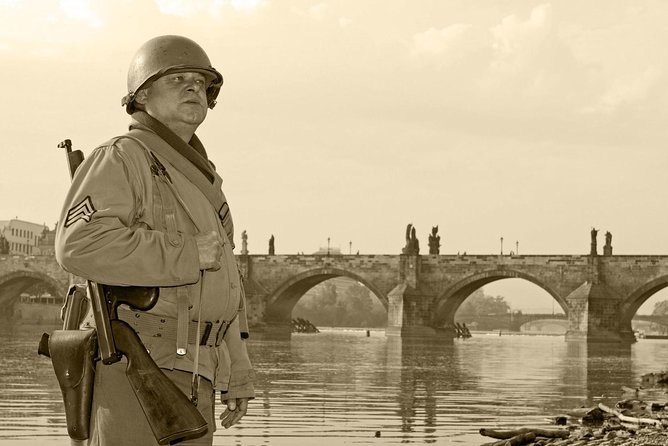
Reviewed · WALKING TOURS
Prague Communism and World War II Walking Tour
Prague’s 20th-century story is not confined to a museum. It is written across Wenceslas Square, on the walls of the National Museum, and along the streets where students faced police in 1989. This two-hour walk links Nazi occupation, Soviet control, everyday communist life, and the Velvet Revolution in one clear route through central Prague.
I like the way the tour gives you a useful city orientation while explaining the past, and I like the chance to hear personal memories from local guides such as Tomas, Martin, Maria, and Dominick. The main consideration is focus: this is a street-based history walk, not a detailed visit to wartime tunnels, parachutist hideouts, or the Jewish Quarter.
Key points to know before booking
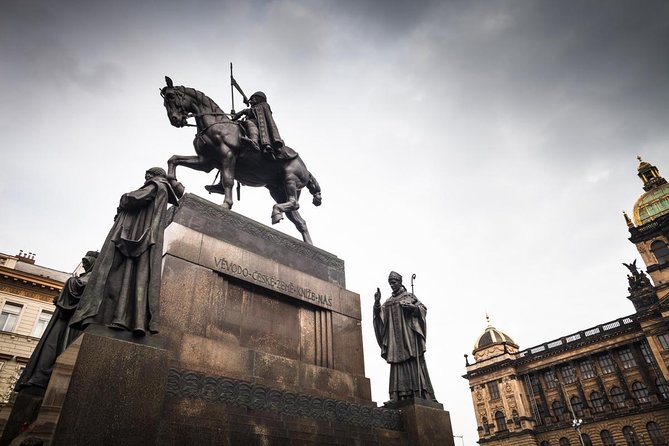
- A clear 20th-century timeline: The walk moves from the end of the Austrian monarchy through Nazi rule, the communist takeover, Prague Spring, and the Velvet Revolution.
- Personal local perspective: Guides have shared family memories of communist-era childhood, civil defense drills, life behind the Iron Curtain, and, in one case, direct experience as a student demonstrator in 1989.
- A central Prague route: You begin near the Charles Bridge and finish in the city center, passing through New Town and Wenceslas Square.
- Strong guide-led discussion: The best part is the opportunity to ask questions and connect political events with ordinary life.
- Good value for history fans: At $30.12, the price is modest for roughly two hours with a professional English-speaking guide.
- Wear comfortable shoes: The route involves a fair amount of walking, and some tours have run well beyond the advertised two hours.
Starting at Křižovnické náměstí beside the Charles Bridge
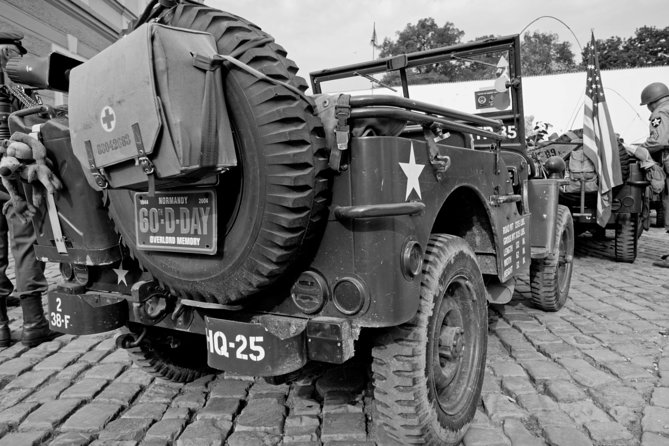
The tour begins at Křižovnické náměstí, near the Old Town Bridge Tower. This is a handy meeting point in central Prague, close to public transportation and easy to combine with a walk across Charles Bridge.
Before the tour moves on, you get a view toward Prague Castle, the traditional seat of Czech rulers and presidents. That view opens the door to a surprising piece of communist-era history: the enormous statue of Joseph Stalin that once towered over Letná. Your guide uses the scene to show how power was displayed in public spaces, and how the communist regime tried to reshape the city’s identity.
This opening is short, about 15 minutes, but it gives the walk a useful frame. Prague is often presented as a medieval city of churches, bridges, and palace roofs. This first stop reminds you that the city also became a stage for modern political theater.
The meeting point is in a heavily visited part of Prague, so arrive with enough time to locate the guide. The start time is 10:00 a.m. Your confirmation arrives when you book, and the tour uses a mobile ticket.
A few more Prague trips to weigh up
- Prague: 3-Hour Walking Tour of Old Town & Prague Castle
★ 4.7 · 5,696 reviews - Prague: Ghost Walking Tour Where Legends Come To Life
★ 4.4 · 5,253 reviews - Prague: Jewish Quarter Walking Tour with Admission Tickets
★ 4.7 · 3,729 reviews
New Town and the road to Nazi occupation
The second part moves into New Town, where the guide explains how the Czech lands shifted from the Austrian monarchy to an independent Czechoslovak state after World War I. This matters because the tour is not simply a list of wartime tragedies. It first explains the democratic country that existed before the Nazi occupation and the communist takeover.
You learn about Czechoslovakia as one of the strongest economies in its time and the last functioning democracy in Central and Eastern Europe after 1933. That background helps you understand what was lost when Nazi Germany established the Protectorate of Bohemia and Moravia during World War II.
The guide then turns to the experience of occupation. Expect discussion of political repression, the pressure placed on Czech society, and the struggle to preserve national identity under Nazi rule. The tour also introduces Operation Anthropoid, the assassination plot against Reinhard Heydrich, a senior Nazi official and one of the most powerful figures in occupied Europe.
Operation Anthropoid is a key part of Prague’s wartime story. The tour presents it as the only successful assassination of a senior Nazi leader during World War II. If this subject is your main reason for booking, pay attention to the route description and ask the guide what specific locations will be covered. This walk discusses the operation, but it is not advertised as a dedicated tour of the parachutists’ church, tunnels, or hideouts.
That distinction is important. Some history-focused visitors expect a highly detailed Anthropoid route and may find this broader city walk too general. If you want a wide political overview, the balance works well. If you want exact wartime sites, you may need a separate visit or a different specialist tour.
From liberation to communist dictatorship
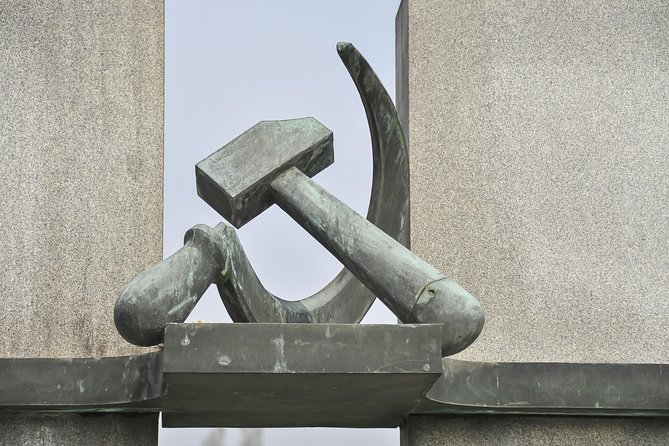
The route then moves from the end of World War II to the Soviet-backed political order that followed. Your guide explains how a formerly democratic state came under communist control and how the influence of the USSR shaped public life, government, and personal freedom.
This is where a good guide makes a real difference. A timeline in a book can tell you when the communist regime took power. A local guide can explain what that change meant in daily life: what children were taught, how people handled official ideology, and why many families learned to be careful about what they said.
Several guides have brought personal material to this part of the walk. Tomas has connected political events with his family background and life in Prague during the 1970s and later. Martin has discussed childhood experiences such as atomic drills at school and the practical reality of growing up behind the Iron Curtain. These details give the politics a human scale without turning the tour into a personal memoir.
The quality of the experience depends heavily on the guide. The available guide roster has included young university-level guides as well as older locals with direct memories of the period. That range can work in your favor. One young guide was praised for answering detailed questions with ease, while another guide who took part in the Velvet Revolution provided a first-hand account of the events.
At the same time, you should expect some variation in storytelling style. The tour is designed around a guide’s explanation and conversation, not a fixed audio script. If you enjoy asking questions, this is a plus. If you prefer a tightly scripted tour with the same exact content every time, the format may feel less predictable.
Wenceslas Square and the shocks of 1968
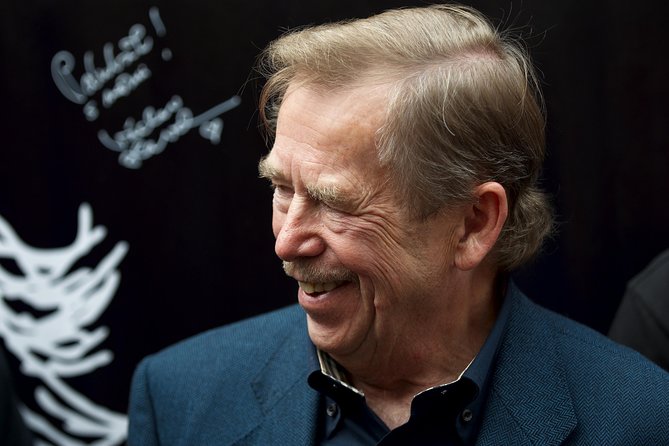
The longest stop is Wenceslas Square, where the guide spends about an hour. This is the emotional center of the walk and the place where the political story becomes visible in the surrounding buildings.
You hear about the Prague Spring of 1968, when reform-minded communist leader Alexander Dubček attempted to create a more open form of socialism. The experiment ended when Soviet-led forces invaded Czechoslovakia. Tanks entered Prague, and troops fired at the National Museum building on Wenceslas Square.
Look closely at the museum façade as your guide explains the damage and the confusion of those days. The square is not just a shopping street. It has repeatedly served as a public gathering place for celebration, protest, mourning, and political change.
The guide also discusses Jan Palach and Jan Zajíc, young students who set themselves on fire in 1969 in protest against the occupation and the loss of reform. The subject is painful, but it is central to understanding the mood of the period. The tour treats these acts as part of a wider effort to wake the country from resignation and unite people against Soviet control.
From there, the story moves through the 1970s and 1980s. You learn about the Brezhnev Doctrine, the methods used to maintain communist rule, and the slow growth of opposition. This section can be especially useful if your knowledge of Czechoslovakia jumps from the 1968 invasion straight to 1989. The walk fills in the long years between those two events.
Same country, a completely different kind of day:
- Prague: 50-Minute Sightseeing Evening Cruise
★ 4.2 · 33,780 reviews - Prague: Medieval Dinner with Unlimited Drinks
★ 4.4 · 19,847 reviews - Prague: Skip-the-line Castle Ticket and Optional AudioGuide
★ 4.3 · 11,121 reviews - Prague: Castle Tour with Local Guide and Entry Ticket
★ 4.6 · 10,422 reviews
Narodní třída and the Velvet Revolution
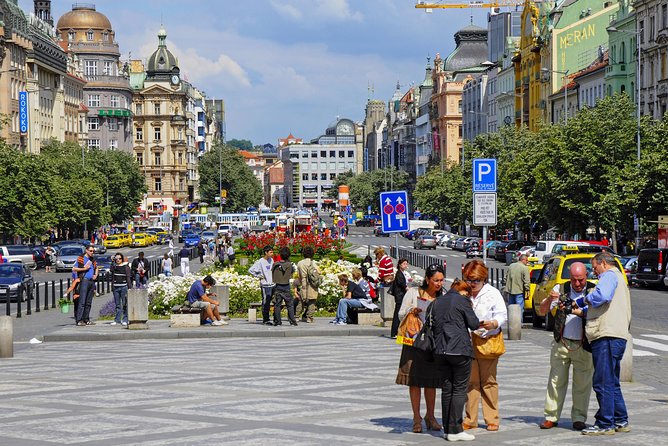
The final political chapter concerns the Velvet Revolution of 1989. Your guide explains the role of Václav Havel, student protesters, police forces, and the clashes on Národní třída.
The title Velvet Revolution can make the change sound smooth. The walk helps correct that impression. The movement was peaceful in its aims, but police violence and uncertainty shaped the early demonstrations. Students and other protesters had to judge how far the government might go to retain power.
A guide with direct experience of the demonstrations can make this part particularly gripping. One guide has described being a student demonstrator at the time, giving you a first-hand sense of what the events felt like on the ground. That kind of account cannot replace formal historical context, but it adds immediacy to the streets you are walking through.
The tour also includes lighter and more unusual stories about the early years of freedom after communism. That touch of humor matters. Czech conversations about the past are not always solemn, and a few odd stories can show how quickly daily life changed after 1989.
The advertised finish is in central Prague. Exact endings may vary with the guide and the walking route, but the walk is designed to leave you in a useful part of the city rather than far outside the center.
What the walking format adds
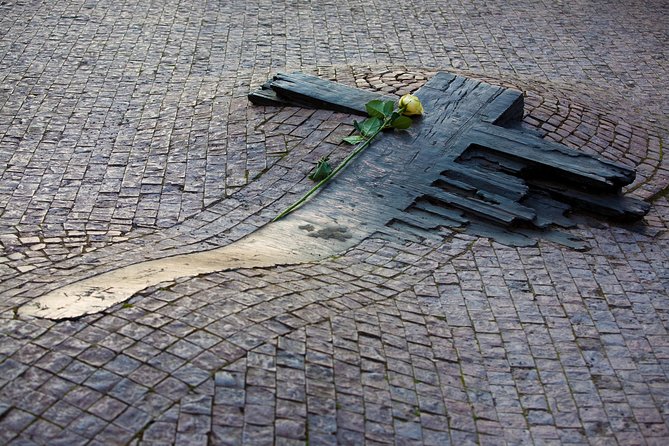
I like this tour because the locations do some of the teaching. You are not only hearing that Wenceslas Square was a center of protest. You are standing there, looking at the National Museum, and seeing how the scale of the square helped turn political events into public theater.
The walk also gets you away from the most concentrated crowds around the Old Town sights. One guide has taken participants through less obvious streets and pointed out plaques and monuments that are easy to miss when you are sightseeing alone.
Do not expect a strenuous hike, but do plan for steady walking. One account describes the route as manageable and very walkable, while another gives the more useful warning to wear comfortable shoes. Some tours have lasted two and a half or even more than three hours when the guide and group had time for questions.
The route has also been adapted in some cases. Guides have met participants near their hotel, bought tram tickets, or altered the path to suit the group. Those arrangements should not be treated as guaranteed inclusions. The official meeting point is Křižovnické náměstí, and food and drinks are not included.
Guide quality and the value of a small group
The tour allows up to 25 people, but it can be much smaller. Several departures have ended up with only two participants, creating something close to a private history discussion. That is a major benefit if you like to ask questions or want to explore a topic in detail.
The strongest guide feedback centers on clear explanations, warmth, and the ability to handle questions. Tomas has been described as articulate and engaging, Martin as pleasant and well prepared, Maria as especially strong on the era, and Dominick as able to keep up with a participant who already knew a great deal of history.
Those names do not guarantee who will lead your departure. Still, they show the kind of experience the operator can provide: a local voice, a chronological structure, and room for conversation.
I would book this early if your dates are fixed. It is booked, on average, 28 days ahead, which suggests that popular departures can fill before a Prague trip begins. The group limit keeps the tour from becoming unwieldy, but a smaller group is not promised.
Is $30.12 a fair price?
At $30.12 per person, this is a fair price for a two-hour guided walk in central Prague. You are paying for a professional English-speaking guide, a carefully connected subject, and the chance to ask questions rather than simply follow a flag through the Old Town.
The value is strongest if you care about modern European history or want more than Prague’s standard medieval sightseeing circuit. The tour can also help you make sense of later visits to places such as the Museum of Communism, which one guide specifically recommended as a useful follow-up.
The value is weaker if you want interior visits, included transport, food, or a narrow focus on World War II sites. Admission tickets are not needed for the listed stops, but the tour does not include meals or drinks. You are mainly buying interpretation and local context.
For me, that is a sensible use of a morning in Prague. A good guide can point out details you would otherwise walk past and give you a framework for the rest of your stay.
Who should book this Prague history walk?
I would recommend it to:
- First-time visitors who want a quick orientation beyond the usual castle and bridge circuit
- History fans interested in Nazi occupation, Soviet influence, communism, and 1989
- Visitors who enjoy conversation and questions rather than a silent march between landmarks
- Adults and families with children, provided children are accompanied by an adult
- People planning to visit the Museum of Communism or other modern-history sites afterward
I would think twice if your main goal is the Jewish Quarter. The walk passes near that area but may give it only brief attention. One participant found that disappointing after expecting more explanation of Jewish history.
I would also look elsewhere if Operation Anthropoid is your sole priority. You will hear about the assassination and its place in wartime Prague, but this is a broad political walk, not a dedicated hideout and church tour.
The tour is recommended by 93 percent of participants and carries a 4.7 rating from 28 reviews. That is a strong result, though the sample is not large. The only clearly negative experience focused on the tour being too general, which is a useful warning rather than a flaw for everyone.
Final verdict: book it for context, not for a specialist route
Book this tour if you want Prague’s streets to explain the last century. The route connects the Nazi Protectorate, Operation Anthropoid, the communist seizure of power, Prague Spring, Soviet tanks, Jan Palach, Václav Havel, and the Velvet Revolution without requiring a full day.
I especially like it as an early-trip activity. It gives you an orientation to central Prague, introduces the city’s modern political story, and can lead you toward better choices for the rest of your visit. Ask questions, wear good shoes, and confirm what your guide plans to cover if you want detailed wartime locations.
Skip it if you want extensive Jewish Quarter interpretation, museum entry, or a specialist tour of the Anthropoid sites. For a broad, human-scale look at how Prague lived through dictatorship and regained democracy, $30.12 is a solid buy.
FAQ
How long does the Prague Communism and World War II Walking Tour last?
The advertised duration is approximately two hours. Some departures have lasted two and a half or more than three hours when the group had time for extended questions and discussion.
Where does the tour start?
The listed starting point is Křižovnické náměstí, near the Old Town Bridge Tower in central Prague. The address is Křižovnické náměstí, 110 00 Praha 1-Staré Město, Czechia.
Where does the tour end?
The tour ends in Prague city center. The exact finishing point can depend on the walking route used by the guide.
What language is the tour offered in?
The experience is offered in English and includes a professional guide.
What subjects does the tour cover?
The walk covers the transition from the Austrian monarchy to independent Czechoslovakia, Nazi occupation during World War II, Operation Anthropoid, the communist takeover, Soviet influence, Prague Spring, the 1968 invasion, Jan Palach, the Velvet Revolution, Václav Havel, and the events on Národní třída.
Is food or drink included?
No. Food and drinks are not included in the tour price.
Can I cancel for a full refund?
Yes, if you cancel at least 24 hours before the experience start time. Cancellations made less than 24 hours in advance are not refunded, and changes within that period are not accepted.
Just added around Prague
- WWII and Communism History in Prague’s Old Town Private Tour★ 5.0 · 4 reviews
- Prague: Historical Walking Tour with Focus on World War 2★ 4.3 · 12 reviews
- World War II 4WD Tour from Prague with Lunch★ 4.4 · 3 reviews
- Ultimate Unlimited Beer Pong with Czech Beer★ 4.6 · 5 reviews
- Walking tour of Prague in French : Nové Město★ 4.9 · 16 reviews
- Walking tour of Prague in french: Old Town & Charles Bridge★ 4.9 · 62 reviews
- Prague Sightseeing Tour with Lunch★ 5.0 · 5 reviews
- Prague: Modern Private Spa with Jacuzzi and Sauna★ 4.8 · 62 reviews
Walking Tours, compared.
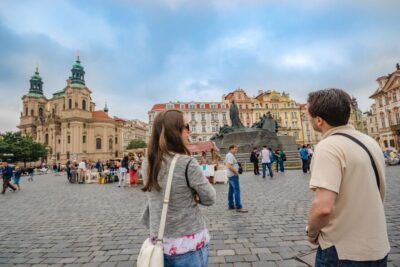
3-Hour Walking Tour of Old Town & Prague Castle
Read our review →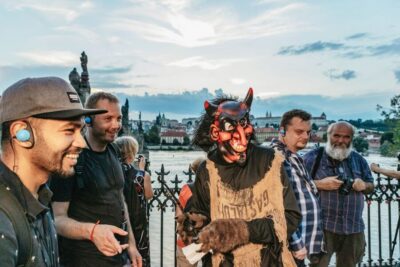
Ghost Walking Tour Where Legends Come To Life
Read our review →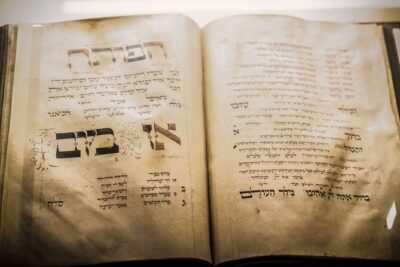
Jewish Quarter Walking Tour with Admission Tickets
Read our review →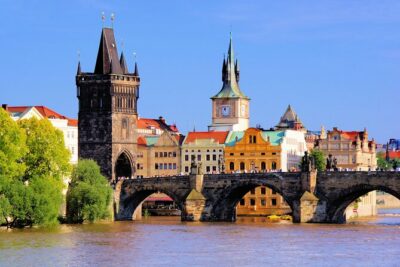
Prague Guided Walking Tour and Cruise with Authentic Czech Lunch
Read our review →
Old Town and Jewish Quarter Guided Walking Tour
Read our review →
Prague Ghost and Legend of Old Town Walking Tour
Read our review →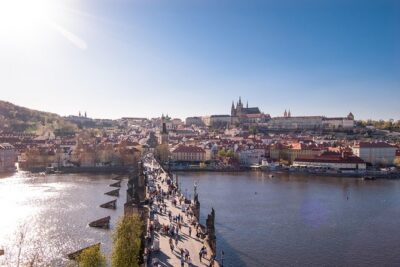
Prague 3-hour Afternoon Walking Tour including Prague Castle
Read our review →
Ghosts and Legends Nighttime Guided Walking Tour
Read our review →Browse the lists this tour appears in