
Reviewed · HISTORICAL TOURS
Prague Communism History and Nuclear Bunker Tour
Prague’s communist past feels most real when you leave the postcard center and enter a nuclear bunker four floors underground. This tour connects the city’s 1968 Soviet invasion and 1989 Velvet Revolution with a bunker packed with Cold War objects, mannequins, and survival displays.
I like the mix of outdoor history and one genuinely unusual site. I also like the personal accounts from guides such as Stan, Pavel, Lada, and Ladislav, several of whom grew up under communism or experienced its restrictions directly. The main drawback is pace: the transport to the bunker can take a large part of the tour, and the quality depends heavily on your guide.
Key points before you book
- A four-floor descent into Cold War Prague: The bunker visit lasts about an hour and includes many stairs and ramps.
- Personal stories make the politics human: Guides may discuss growing up under communism, escaping, or living through the Velvet Revolution.
- A city walk with specific historic stops: You visit the former secret police building, Národní třída, Wenceslas Square, and a workers’ district with socialist architecture.
- Transport is included: The tour provides transport to and from the bunker, with tram travel forming part of the experience.
- A serious, sometimes bleak subject: This is not a light sightseeing walk, and it is unsuitable for people with claustrophobia or significant mobility problems.
- Best for history-minded visitors: You will get more from it if you already want to understand Czechoslovakia during the Cold War.
Why this tour adds a different Prague to your trip
Prague is often presented through its medieval lanes, baroque churches, and castle views. Those sights matter, but they can leave you with a thin understanding of the Czech Republic’s recent past. This tour shifts the focus to the years when Czechoslovakia lived under a communist government aligned with the Soviet Union.
You begin in the Old Town, then move through places linked to state control, protest, invasion, and political change. The final stop is underground, where the fear of nuclear war becomes physical. You are not just looking at a plaque in a square. You are walking into the kind of shelter built for a crisis that thankfully never arrived.
The tour lasts about 2 hours 20 minutes, though the exact length can vary by 10 or 15 minutes depending on group size. It is capped at 26 people, which is a useful limit for a walking tour that depends on hearing the guide clearly.
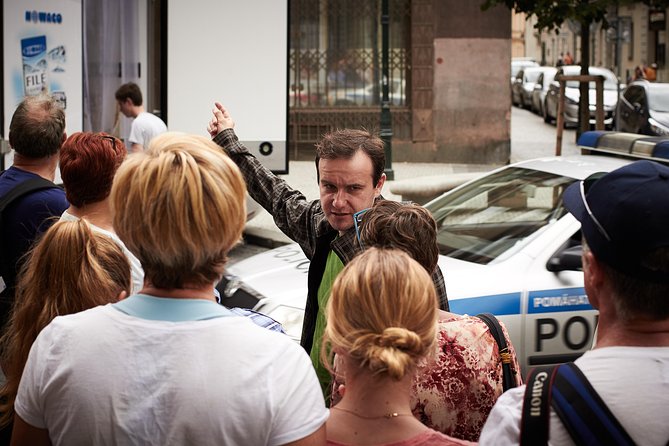
The strongest part is often the guide. Stan is praised for combining facts, humor, personal experience, and comments on current events. Lada, Pavel, Ladislav, Karl, Tom, and other guides are also described as lively and sincere. You cannot select a particular guide from the information provided, so treat the excellent guide reports as a sign of what is possible, not a guarantee.
A few more Prague trips to weigh up
- Prague: Oldtown, Medieval Underground & Dungeon History Tour
★ 4.2 · 8,244 reviews - Prague Old Town, Medieval Underground and Dungeon Historical Tour
★ 4.5 · 3,227 reviews - Prague: Communism History and Nuclear Bunker Guided Tour
★ 4.7 · 2,417 reviews
Starting in Old Town, then facing the secret police
The meeting point is easy to miss. Go to Malé Náměstí 459/11, near Hotel U Prince, and enter the passage about 20 meters to the right of the hotel. The tour office is inside the passage, not simply out on the square.
The first gathering takes about 10 minutes. Use it to arrive early, locate the office, and settle in. Online tickets can be booked as late as 30 minutes before departure, but once the group leaves, joining is not guaranteed. I would not cut this close in Prague’s busy central streets.
The first major stop is the former StB holding-cell building. StB was the communist-era state security service, and this site introduces the machinery of surveillance and detention. The stop also connects with the story of Václav Havel, the playwright, dissident, and later president.
Ten minutes is not long. You should expect a focused explanation rather than a full museum visit. Still, the stop is useful because it gives the tour a human face. Communism was not only about statues, slogans, and government buildings. It also involved interrogations, pressure, informers, and the policing of speech.
Národní třída and the Velvet Revolution
The tour then reaches the Velvet Revolution Memorial, followed by Národní třída. These stops explain the peaceful uprising of 1989, when demonstrations helped bring communist rule to an end.
Národní třída is especially important because it links ordinary street space with a major political turning point. The events here are part of the bridge between the older communist period and the Czech Republic’s modern political life. A good guide will help you connect the location to the wider mood of 1989, rather than treating it as just another stop for a quick photograph.
This is where personal storytelling can make a real difference. Several guides are praised for explaining what it felt like to grow up in the system, rather than simply reciting dates. If you get a guide who lived through that period, the difference between textbook history and lived memory can be striking.
The tour’s format also means you should expect commentary while walking, not long indoor presentations. Stay close enough to hear, and do not assume every stop will have a formal exhibit or memorial room.
Wenceslas Square and the shock of August 1968
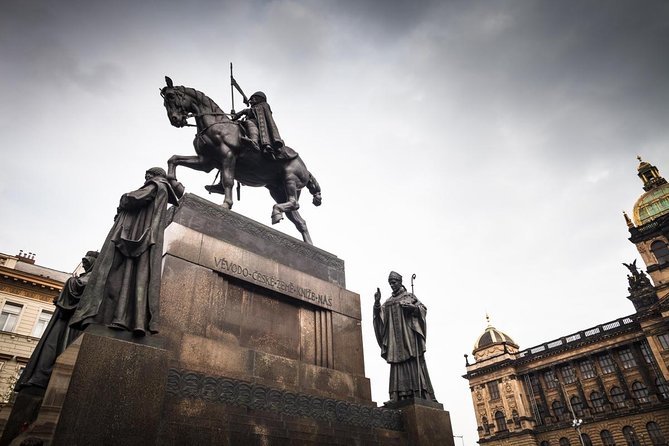
Wenceslas Square provides the setting for the story of the Soviet-led invasion in August 1968 and the reform communist Alexander Dubček. The square is one of Prague’s major public spaces, so it helps you picture how national political events unfolded in places used for everyday life.
The 1968 invasion ended the period known as the Prague Spring, when Dubček attempted to introduce reforms within the communist system. The tour uses the square to discuss that political experiment, the military response, and the impact on Czechoslovak society.
Again, the value depends on explanation. Some guides give a clear account of the key events. One negative account found the presentation too narrow and repetitive, with too little context about how ordinary people managed daily life under communism. That is a fair concern. If you want a careful political analysis of policy, economics, and social contradictions, this tour may feel brisk.
If you want a guided introduction to the major turning points, the square works well. You will leave with a better sense of why the invasion remained such a powerful memory and why 1989 was not an isolated event.
Same country, a completely different kind of day:
- Prague: 50-Minute Sightseeing Evening Cruise
★ 4.2 · 33,780 reviews - Prague: Medieval Dinner with Unlimited Drinks
★ 4.4 · 19,847 reviews - Prague: Skip-the-line Castle Ticket and Optional AudioGuide
★ 4.3 · 11,121 reviews - Prague: Castle Tour with Local Guide and Entry Ticket
★ 4.6 · 10,422 reviews
Olšanské náměstí and Prague’s socialist architecture
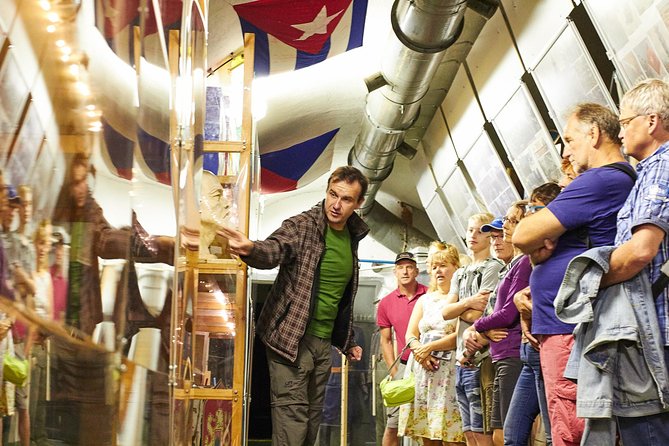
Olšanské náměstí lies in what was once a workers’ district. Here, the focus shifts from famous political events to the built environment of the socialist period.
The area still has examples of concrete architecture and original buildings from the 1970s. This is a useful change of subject. Political history can become abstract, but buildings show how a government’s priorities affected daily surroundings. Large-scale housing and functional concrete construction were part of the visual language of the period.
Do not expect a grand monument or a beautifully restored historic quarter. The appeal is precisely that this stop is less polished. You see a part of Prague that many independent sightseeing routes skip, and you get a reminder that communist history is not confined to memorials.
The route has been described as a walking tour with live commentary, and comfortable shoes are important. The total walking may not sound demanding on paper, but the mix of city streets, ramps, bunker corridors, and steps adds up.
The tram ride to the bunker
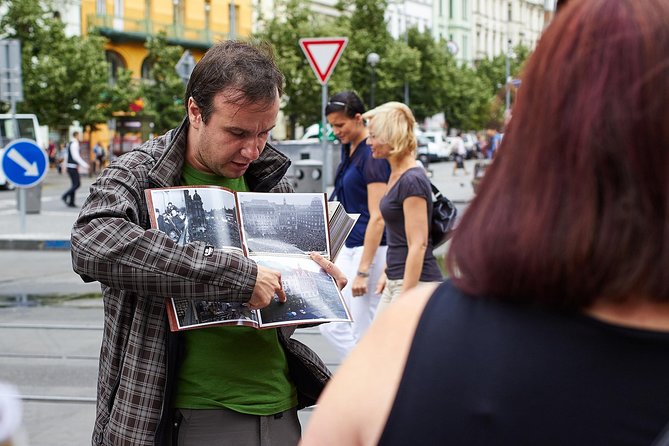
Transport to and from the bunker is included. The journey is part of the tour, but it also explains some of the mixed reactions to the length. One critical account felt that nearly 45 minutes of the advertised time went to tram travel, making the paid tour feel shorter than expected.
I would treat this as a practical tradeoff rather than an automatic flaw. The bunker is not beside the Old Town meeting point, and transport saves you from finding it alone. It also lets the guide continue the story while you move through modern Prague.
Still, if you want two hours of constant site visits, this may disappoint you. Some people find the tram ride fun, especially when the guide makes it part of the experience. Others see it as travel time that should be separated from the main tour. Your view will depend on how much you value having the transport arranged.
Inside the Prague Nuclear Bunker Museum
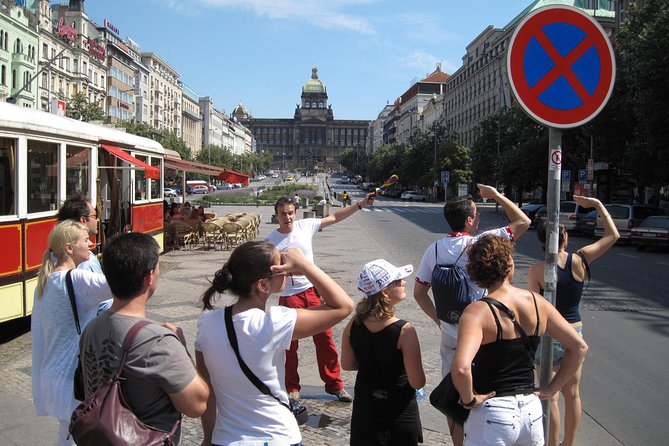
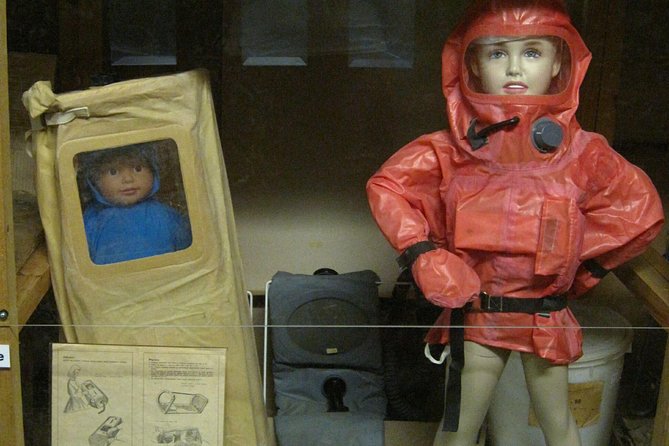
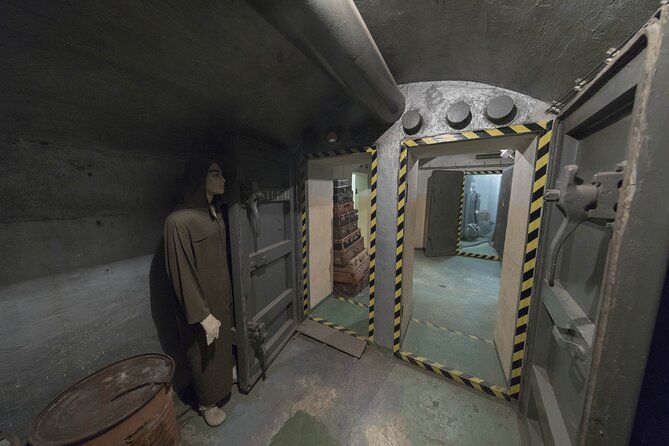
The bunker visit takes about one hour and is the centerpiece of the experience. You descend four floors underground into a former nuclear shelter associated with Prague’s Cold War fears.
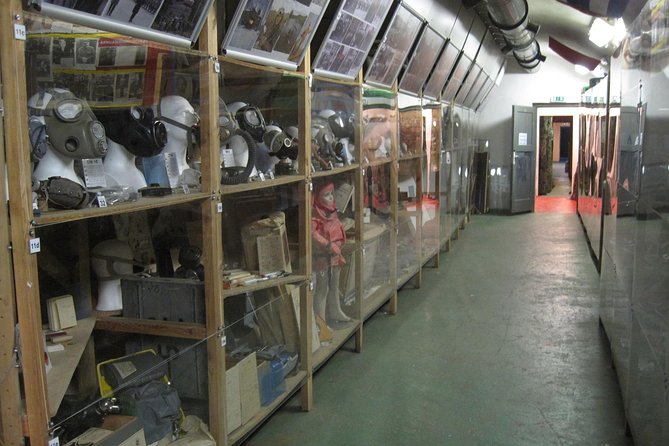
The displays include Cold War equipment, mannequins, survival material, and 1980s objects. You receive a photo booklet and bunker survival guide, which add context and give you something to refer back to later. Photography is allowed, but video recording requires special permission.
The bunker is described as no-frills rather than a polished, large-scale museum. One critical account found the displays mixed and wanted more local historical context. That criticism is worth taking seriously. A bunker can show how people prepared for nuclear war, but it cannot by itself explain the full experience of living under communist rule.
I see the bunker as a strong physical conclusion, not a complete museum of Czechoslovak communism. Its narrow passages, underground setting, and practical survival displays make the Cold War threat easier to picture. You may find the mannequins and memorabilia more atmospheric than academically detailed.
Expect stairs and ramps. The bunker is not suitable for anyone with a walking disability or serious mobility issue. It is also not recommended for people with claustrophobia, serious heart problems, or similar conditions. The information specifically advises against bringing the smallest preschool-age children, and the subject matter may be too grim for young children even if they meet the age requirement.
The guides are the biggest variable
This tour has a clear pattern: the best experiences come from guides who combine historical facts with personal stories. Stan is described as funny, charismatic, and passionate. Pavel is praised for being friendly and well prepared. Lada is remembered for making the subject feel authentic, while Ladislav is noted for bringing his own story into the presentation.
Several people especially valued hearing from someone who had actually grown up under the communist regime. That sort of account can explain small details that a standard museum label cannot, such as the emotional weight of official propaganda, restrictions, fear, and the habits people developed to get through daily life.
But the guide can also be the weak link. One poor experience involved repeated points, irrelevant discussion, and a confrontational manner. Another criticism was that the guide reduced the subject to a single message, communism was bad, without enough explanation of policies or ordinary life.
That matters because the tour is built around spoken commentary. You are not receiving a thick audio guide or a large museum collection. If the guide is focused and engaging, the walk can be powerful. If not, the short stops and transport time may feel thin.
The tour requires you to speak the selected language. Translation into other languages during the tour is not permitted, and participants are asked not to disrupt the group. The listed format is a live guide in a fixed language, so choose the language you can follow comfortably.
Is the $45.16 price fair?
At $45.16 per person, this is not the cheapest way to hear about Prague’s communist period. You are paying for a guided city walk, live historical commentary, admission to the bunker museum, transport in both directions, and the two printed guides.
The value is strongest if you would not comfortably find the former secret police building, Velvet Revolution sites, Olšanské náměstí, and the bunker on your own. The guide also supplies the connection between those places, which is the main reason to book rather than simply visit a museum.
The value is weaker if your main goal is a large, detailed collection of communist-era artifacts. The bunker is no-frills, and part of the total time goes to transport. You should also remember that the quality of the spoken presentation can vary.
A 4.8 rating from 1,742 reviews and a 95 percent recommendation rate suggest that the overall experience works very well for many people. I would still read the practical details more closely than the score. This is a focused history tour, not a general introduction to Prague, and it asks you to walk, listen, descend stairs, and engage with a difficult period.
Who should book it?
I would choose this tour if you enjoy recent European history, Cold War politics, personal accounts, or unusual city sites. It is also a good option if you want more than Prague Castle and the Old Town and prefer a guide to organize the historical pieces for you.
Families with older children may enjoy it, particularly if they can handle a serious subject and lots of walking. The experience is not aimed at very young children, and the bunker may be uncomfortable for anyone who dislikes confined spaces.
You may want another option if you need step-free access, dislike group walking tours, or expect a museum with extensive written interpretation. You should also think twice if you want a balanced academic treatment of communist policy. The tour appears strongest as a personal, atmospheric introduction, not as a university lecture.
Practical details that matter
Meet inside the passage at Malé Náměstí 459/11, about 20 meters to the right of Hotel U Prince. The tour returns to the same address.
Wear comfortable walking shoes. The route includes city walking, public transport, stairs, and ramps. The group can have up to 26 people, and the duration may shift by 10 or 15 minutes.
Free cancellation is available if you cancel at least 24 hours before the start time. Cancellations or changes made within 24 hours are not refunded or accepted. The tour also requires sober, respectful behavior, with no smoking, pets, disruptive conduct, costumed groups, or bachelor-party groups.
Should you book the Prague Communism History and Nuclear Bunker Tour?
Book it if you want a guided look at Prague’s Cold War past that ends in a real underground bunker. The combination of Národní třída, Wenceslas Square, the former StB building, socialist architecture, and personal guide stories gives you a useful route through the city’s recent history.
Go in with the right expectations. The bunker is atmospheric and unusual, but it is not a full museum of everyday communist life. The tram ride takes time, and your experience will depend greatly on your guide.
For history fans who can manage stairs and confined spaces, I think the tour is worth considering at $45.16. If you prefer detailed exhibits, independent pacing, or a strictly academic account, spend your money elsewhere. If you want Prague’s recent past explained by someone who may have lived it, this is one of the more memorable ways to approach the subject.
FAQ
Where does the Prague Communism History and Nuclear Bunker Tour start?
It starts inside the passage at Malé Náměstí 459/11 in Prague 1, about 20 meters to the right of Hotel U Prince.
Where does the tour finish?
The tour finishes at the same address on Malé Náměstí 459/11.
How long does the tour last?
The tour lasts approximately 2 hours 20 minutes. The duration can vary by about 10 or 15 minutes depending on group size.
Is transport to the nuclear bunker included?
Yes. Transport to and from the bunker is included, and the journey may involve a tram ride.
What is included in the ticket?
The ticket includes entrance to the Nuclear Bunker Museum, an English live guide, a photo booklet, a bunker survival guide, and transport in both directions.
How many people can join the tour?
The maximum group size is 26 travelers.
Is the tour suitable for people with mobility issues?
No. The tour is not possible for people with walking disabilities or mobility issues. The bunker includes many stairs and ramps.
Is the tour suitable for people with claustrophobia?
No. It is not recommended for people with claustrophobia, serious heart issues, or similar conditions.
Can I cancel for a full refund?
Yes, if you cancel at least 24 hours before the experience starts. Cancellations or changes made less than 24 hours before the start time are not refunded or accepted.
Just added around Prague
- WWII and Communism History in Prague’s Old Town Private Tour★ 5.0 · 4 reviews
- Prague: Historical Walking Tour with Focus on World War 2★ 4.3 · 12 reviews
- World War II 4WD Tour from Prague with Lunch★ 4.4 · 3 reviews
- Ultimate Unlimited Beer Pong with Czech Beer★ 4.6 · 5 reviews
- Walking tour of Prague in French : Nové Město★ 4.9 · 16 reviews
- Walking tour of Prague in french: Old Town & Charles Bridge★ 4.9 · 62 reviews
- Prague: Modern Private Spa with Jacuzzi and Sauna★ 4.8 · 62 reviews
- Prague Sightseeing Tour with Lunch★ 5.0 · 5 reviews
Historical Tours, compared.
Oldtown, Medieval Underground & Dungeon History Tour
Read our review →
Prague Old Town, Medieval Underground and Dungeon Historical Tour
Read our review →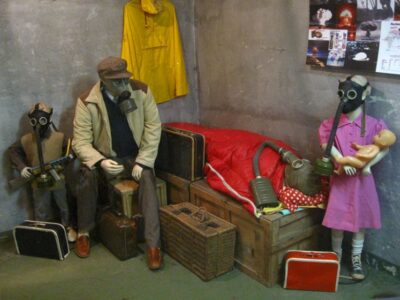
Communism History and Nuclear Bunker Guided Tour
Read our review →
Historic City Center Bus Tour with Top Sights
Read our review →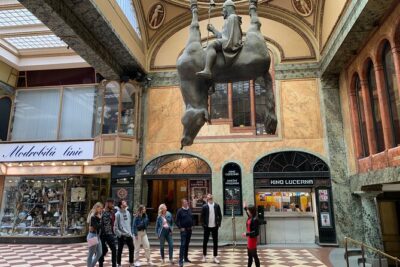
Prague Historic Pub Tour with Drinks Included
Read our review →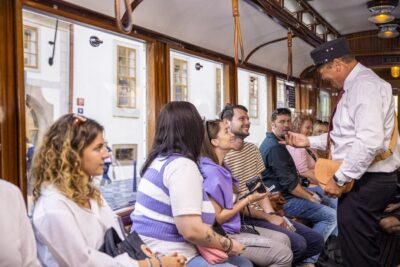
Hop-on Hop-Off Historical Tram Ticket for Line 42
Read our review →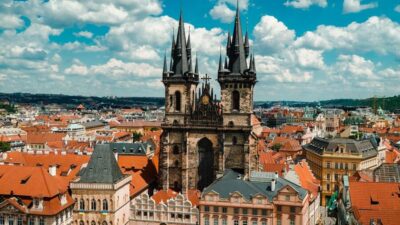
Top Sights and Historic Center Introduction Tour
Read our review →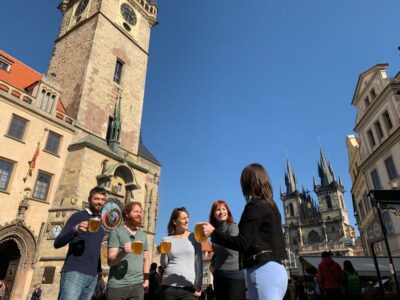
Browse the lists this tour appears in