
Reviewed · MUSEUMS
Prague Communism tour with visit of Communism museum
Prague’s communist era comes into focus when you connect the museum displays with the actual streets where power, protest, and political change unfolded. This private tour pairs the Museum of Communism with Wenceslas Square, Národní třída, and the Jan Palach Memorial, giving you both background and place.
I like the personal angle, especially with guide Lenka, who grew up under communist rule and brings family stories into the discussion. I also like the private format: your group gets the guide’s full attention, rather than trying to follow a lecture in a crowd.
The main drawback is cost. At $114.39 per person, plus the €15 museum ticket, this is not a cheap orientation walk. The value depends on how much you want guided historical context, and on whether your group is large enough to benefit from the private setup.
Key points to know before booking
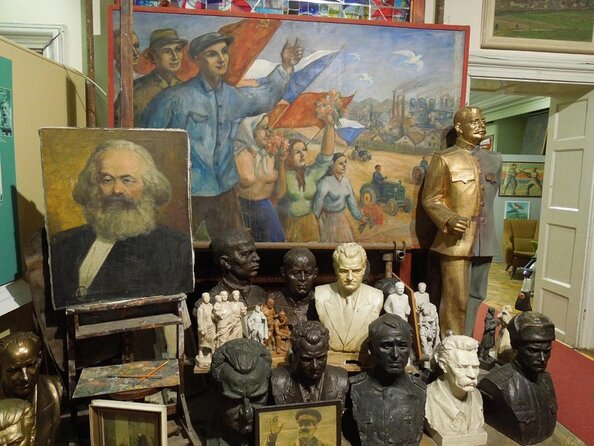
- Museum first, street history second: The 90-minute museum visit gives you the political and social background before you walk through central Prague.
- Lenka adds firsthand context: Her family stories make an otherwise distant period more personal and easier to understand.
- Three important central Prague sites: You visit Wenceslas Square, Národní třída, and the Jan Palach Memorial.
- The museum ticket costs extra: Allow €15 per person in addition to the tour price.
- Private English-language experience: Only your group participates, with a local guide leading the tour.
- It ends in the city center: The tour finishes on Národní třída, useful if you plan to continue sightseeing nearby.
Why this tour helps explain modern Prague
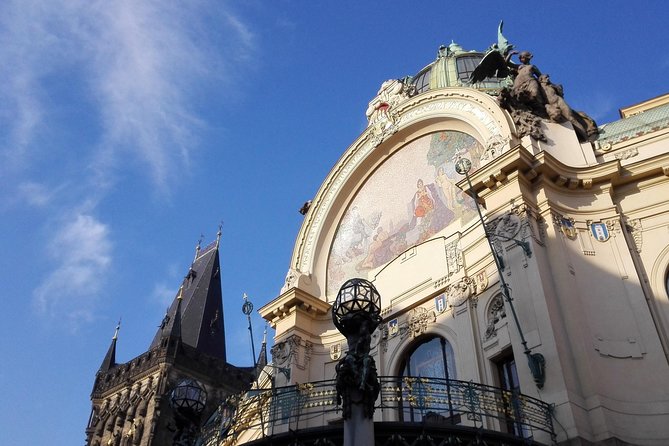
Prague can look like a city of castles, church towers, elegant cafés, and grand squares. That picture is incomplete. The decades after the Communist Party took power in 1948 shaped daily life, public speech, education, work, travel, and family choices across Czechoslovakia.
A standard sightseeing walk may point out architecture and famous political buildings, but it can leave the communist period as a few dates in a timeline. This experience gives that period a physical setting. You see where major demonstrations occurred and where the Velvet Revolution began to gather force.
I find that combination useful because a museum alone can feel removed from the city. A street walk alone can leave you wondering what the events meant. Here, the two parts support each other.
The private format matters most if you have detailed questions or want the guide to adjust the pace. You can ask about ordinary life, political repression, protest, or the way the regime affected families. Since the tour is offered in English and only your group takes part, it should feel more like a conversation than a fixed public lecture.
A few more Prague trips to weigh up
- Prague: Museum of Fantastic Illusions Entry Ticket
★ 4.3 · 4,337 reviews - IAM Illusion Art Museum Entry Ticket
★ 4.2 · 1,664 reviews - Prague: Museum of Senses Admission Ticket
★ 4.0 · 1,445 reviews
Starting at the Museum of Communism
The tour begins at 4, V Celnici, in Prague’s Nové Město district, and includes about 90 minutes at the Museum of Communism. The museum admission is not included, so you pay the €15 entrance fee separately.
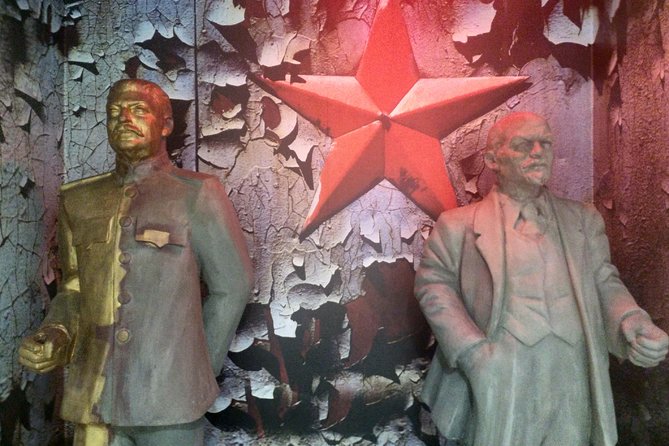
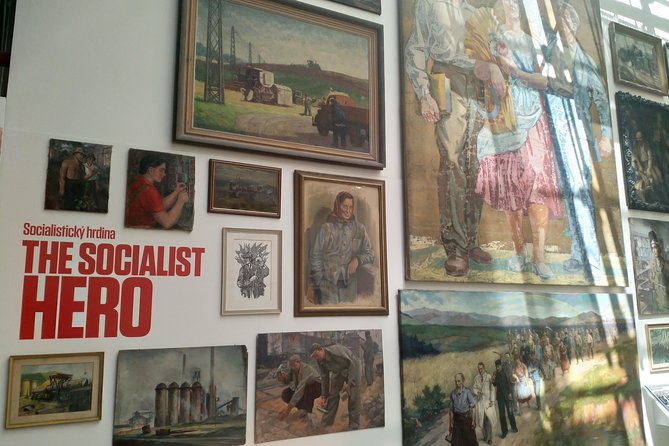
This is the longest part of the experience, and it does much of the serious explanatory work. You can expect displays focused on life under communist rule and the events that eventually led to the end of the regime. The museum gives you a base for understanding the sites you see later.
A guide can make a major difference here. Lenka’s connection to the period is especially useful because she can explain how political decisions reached into ordinary homes. Her personal stories about family and friends help turn broad terms such as censorship, state control, and repression into human matters.
You should also expect some time to continue through the museum independently. The guide provides context, then you have room to look more closely at the exhibits that interest you. That arrangement is a strength for people who like to read and reflect, though it means the tour is not a nonstop guided talk for the full 90 minutes.
The museum portion may feel heavy. That is appropriate to the subject, but it is worth knowing before you book. This is not a light historical stroll with a few amusing anecdotes. The experience deals with oppression, fear, protest, and the cost of political control.
Wenceslas Square and the public face of power
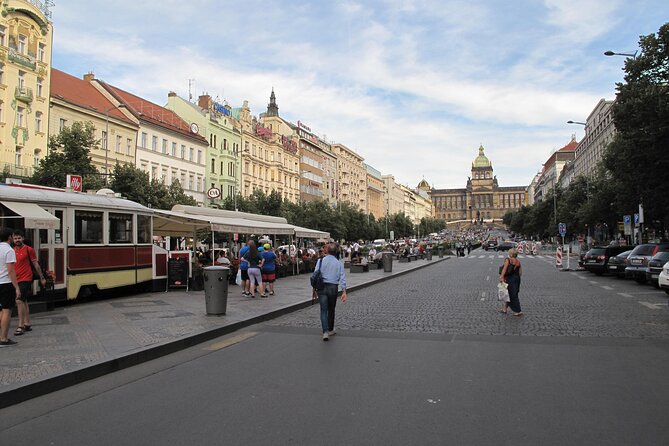
The next stop is Wenceslas Square, with about 20 minutes to discuss its role in Prague’s political life. Despite its name, this is a long urban boulevard rather than a traditional enclosed square. It has often served as a gathering place for public events and demonstrations.
A short stop here works best when the guide explains what you are looking at and why the space mattered. The square helps you picture how political messages reached large crowds and how public gatherings could shift from official ceremony to popular protest.
Do not expect a long architectural tour of every building around the square. The focus is the communist period and the events tied to public resistance. The site is also busy and open to ordinary city traffic, so this is a place for listening and looking rather than quiet contemplation.
I like this stop because it shows that history is not always preserved behind museum glass. A major civic space can carry political meaning even while shops, trams, offices, and daily routines continue around it.
Národní třída and the beginning of the Velvet Revolution
The tour then moves to Národní třída, also called National Avenue, for about 20 minutes. This is where the events that sparked the Velvet Revolution took place.
The Velvet Revolution brought the end of communist rule in Czechoslovakia in 1989. On this street, the guide can help you understand how protest became a decisive challenge to the existing government. The value of the stop comes from standing at the location rather than treating 1989 as a remote date in a textbook.
This part of the walk is likely to be especially meaningful if you have already seen the museum exhibits. You can connect the broader story of state control with the public action that helped bring change.
The stop is free, but the tour price is paying for interpretation, not admission. Without a guide, Národní třída may look like another central Prague street. With context, it becomes a place linked to one of the country’s most important political turning points.
The time allotted is short, so keep your expectations realistic. You are getting a focused explanation, not a full seminar on the Velvet Revolution. If the subject interests you, use the private format to ask questions while you are there.
Same country, a completely different kind of day:
- Prague: 50-Minute Sightseeing Evening Cruise
★ 4.2 · 33,780 reviews - Prague: Medieval Dinner with Unlimited Drinks
★ 4.4 · 19,847 reviews - Prague: Skip-the-line Castle Ticket and Optional AudioGuide
★ 4.3 · 11,121 reviews - Prague: Castle Tour with Local Guide and Entry Ticket
★ 4.6 · 10,422 reviews
The Jan Palach Memorial and the human cost of protest
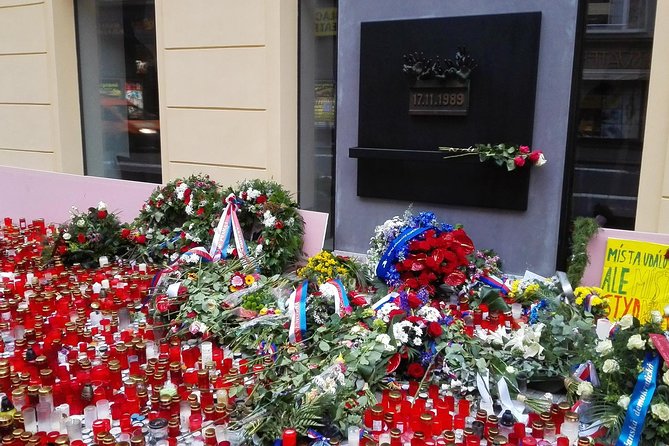
The final listed stop is the Jan Palach Memorial, with about 20 minutes in the center. Jan Palach became a symbol of protest after setting himself on fire in 1969 in opposition to the Soviet-led suppression of reform in Czechoslovakia.
The memorial gives the tour a more personal and painful focus. Political history can become a list of governments and dates. Palach’s story shows the extreme choices one person may make when peaceful political change appears blocked.
The experience also connects this memorial with other reminders of loss and oppression in central Prague. The guide may point out commemorative plaques and public artworks that preserve memories of people affected by political violence and persecution. This makes the walk feel broader than a simple sequence of named landmarks.
The memorial is not an entertainment stop. Give it the attention it deserves, and be prepared for a sober discussion. If you want only cheerful sightseeing, this tour may not suit your mood. If you want to understand the moral and emotional cost of the period, this is one of the most important parts.
How the private format changes the experience
This is a private activity, so only your group participates. That gives you more control than a standard group walk. You can ask for clarification, spend a little longer on a subject, or move along when the group is ready.
The private setup is particularly helpful with a topic that can be politically sensitive or personally painful. You do not have to worry about keeping up with strangers or waiting while a large group gathers around a guide.
It also makes the guide’s personal connection more useful. Lenka’s stories about growing up under communism and the way the era affected people around her add a human voice to the museum displays and memorials.
There is one practical question to consider: value per person. The stated price is $114.39 per person, and the museum ticket adds €15. If you are traveling alone or as a couple, the total may feel high for roughly three hours. A larger private group can spread the cost while still benefiting from personal attention.
The tour is offered in English. Confirmation arrives at booking, and it runs in all weather, so wear suitable clothing and shoes. The meeting point is near public transportation, and most people can participate. Service animals are allowed.
Timing, walking, and the end of the route
The full experience lasts about three hours. The museum portion takes roughly 90 minutes, followed by about 20 minutes at each of the three outdoor stops. You should allow for walking and transitions between locations, even though the listed stop times do not account for every minute of movement.
The route remains in central Prague and finishes on Národní třída. That is convenient if you want to continue exploring the city center afterward. You can plan a meal, more sightseeing, or a return trip from the ending area without needing a long transfer to a distant neighborhood.
Because the tour continues outdoors in all weather, the day’s conditions matter. Rain, cold, or strong sun can affect how comfortable the street portions feel. Bring appropriate clothing, since the experience does not switch to an indoor alternative simply because the weather is poor.
The museum gives you indoor time, but the three central stops require standing and walking. If your group includes someone who needs a slower pace, use the private format to discuss that with the guide at the start.
The price and what you are really paying for
The $114.39 price covers the local guide and private experience, but not the museum admission. Add €15 per person for the museum.
The price makes more sense if you place a high value on interpretation. You are not simply buying access to a museum and a few central landmarks. You are paying for a guide who can connect them, answer questions, and add personal context.
For a history-focused visitor, that can be worthwhile. The museum may give you information, but the walk shows where the political story played out. The walk may show you locations, but the museum explains what those locations meant. The two parts work better together than separately.
For a visitor on a tight budget, you may decide to visit the outdoor sites independently and pay only for museum entry. That will cost less, but you will give up the private guide and Lenka’s firsthand stories. The right choice depends on whether you prefer saving money or having the period explained as you go.
Group discounts are available, which may improve the value for a larger party. Since the tour is private, a group can share one guide rather than joining a general public outing.
Who will get the most from this experience
I would choose this tour if you want more than Prague’s usual royal and artistic highlights. It suits adults, students, families with older children, and anyone interested in how political systems affect ordinary people.
It is also a good match if you prefer questions and conversation. The private structure gives you room to ask about family life, protest, censorship, and the change from communist rule to a freer society.
The tour may be less suitable if you want a relaxed, purely scenic walk. The subject is serious, and the memorials and museum displays can be emotionally difficult. It also may not be the best value for someone who has already studied Prague’s communist period in detail and prefers independent sightseeing.
I would schedule it early in your Prague stay if the subject is central to your visit. The museum and street locations can provide useful context for other places you see in the city.
Should you book the Prague Communism tour?
Book it if you want a clear, human explanation of Prague’s communist past, especially if you value a private guide and plan to ask questions. Lenka’s personal connection, the Museum of Communism, and the walk to Národní třída give the experience more depth than a list of dates and monuments.
Think twice if the price feels high for three hours, since the €15 museum fee is extra. You should also be ready for a serious subject and outdoor walking in any weather.
For history-minded visitors, I think the strongest reason to book is the way the tour joins museum evidence with real locations. You leave with a better sense of how political power shaped daily life, how people resisted it, and why central Prague still carries those memories.
FAQ
How long does the Prague Communism tour last?
The experience lasts approximately three hours.
Is the Museum of Communism admission included?
No. The museum ticket costs €15 per person and is paid separately.
Is the tour private?
Yes. Only your group participates in the private tour or activity.
What language is the tour offered in?
The tour is offered in English.
Where does the tour start?
It starts at 4, V Celnici 1031, Nové Město, 110 00 Prague 1, Czech Republic.
Where does the tour end?
The tour ends on Národní třída in central Prague.
Can I cancel for a full refund?
Yes, if you cancel at least 24 hours before the experience start time. Cancellations made less than 24 hours before the start time are not refunded, and changes within that period are not accepted.
Just added around Prague
- WWII and Communism History in Prague’s Old Town Private Tour★ 5.0 · 4 reviews
- Prague: Historical Walking Tour with Focus on World War 2★ 4.3 · 12 reviews
- World War II 4WD Tour from Prague with Lunch★ 4.4 · 3 reviews
- Ultimate Unlimited Beer Pong with Czech Beer★ 4.6 · 5 reviews
- Walking tour of Prague in French : Nové Město★ 4.9 · 16 reviews
- Walking tour of Prague in french: Old Town & Charles Bridge★ 4.9 · 62 reviews
- Prague Sightseeing Tour with Lunch★ 5.0 · 5 reviews
- Prague: Modern Private Spa with Jacuzzi and Sauna★ 4.8 · 62 reviews
Museums, compared.
IAM Illusion Art Museum Prague Fast Pass Ticket
Read our review →

Ticket to Audiovisual Light Art at Lumia Gallery
Read our review →
Browse the lists this tour appears in