Reviewed · TICKETS
Prague: House at the Golden Ring Entry Ticket
Prague’s House at the Golden Ring turns city history into something you can see moving, changing, and taking shape. You’ll watch medieval Prague grow under Charles IV, study models of Prague Castle and Vyšehrad, then meet Rudolf II’s city through a nine-metre animated view. The visual displays do much of the teaching, so you are not stuck reading wall panels from start to finish.
I like the excellent value and the mix of objects, models, videos, and 3D displays. I also like that the exhibitions connect famous buildings with ordinary urban life, from town administration to bridge building and daily work. The main drawback is that the experience may feel slow or dull if you have little interest in history, and the available dialogue is in English rather than French.
Key points to know before you go
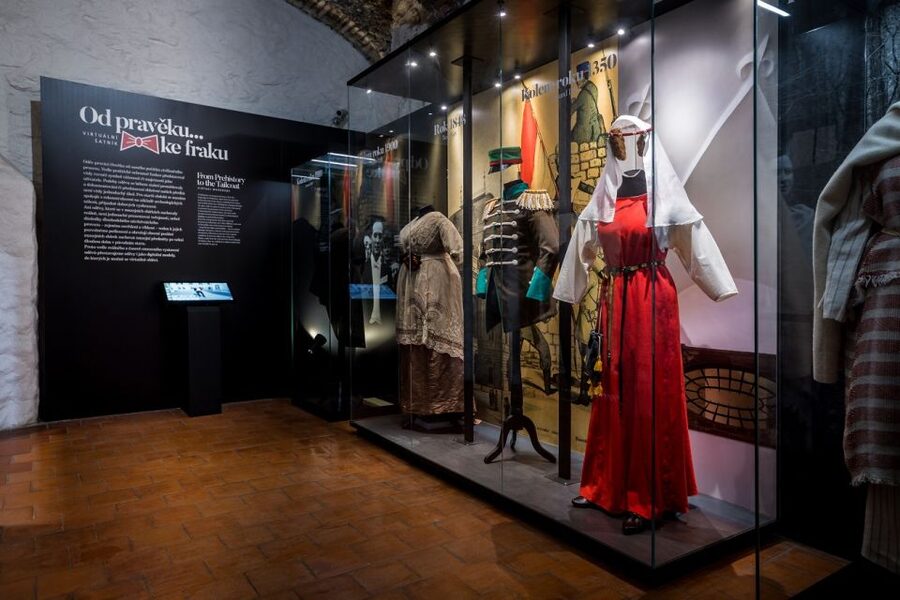
- Three exhibitions in one ticket: The Medieval Town, Multimedia View of Prague During the Rule of Rudolf II, and From Prehistory to the Tailcoat are included.
- Charles IV takes center stage: See models and presentations about Prague’s growth, including the bridge, Charles Square, Prague Castle, Vyšehrad, and St Vitus Cathedral.
- A nine-metre animated city view: Rudolf II’s Prague appears as a busy urban scene filled with people, activity, and historical detail.
- Plan on 1.5 to 2 hours: The displays reward a steady visit, especially if you stop for the films and interactive sections.
- English-language experience: The instructor and exhibition dialogue are in English, with no French dialogue noted.
- Strong value at $8: This is one of the cheaper history-focused stops in central Prague, with enough material for several hours if the subject catches you.
Entering Prague’s House at the Golden Ring
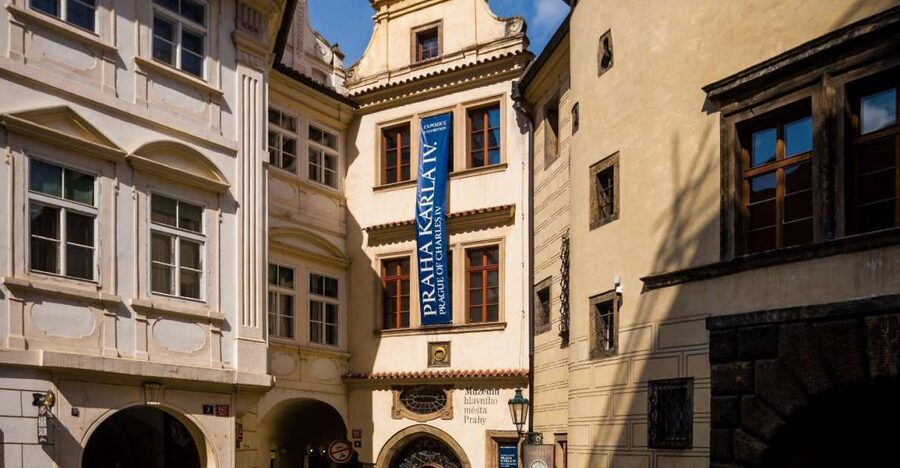
The House at the Golden Ring gives you three history exhibits for one modest admission price. At $8 per person, this is not a major budget decision, but it is still worth knowing what kind of museum you are buying.
You are not signing up for a guided walking tour or a formal lecture. Instead, you move through displays that combine original objects with scale models, video presentations, animation, and interactive digital material. The teaching style is visual and theatrical. That makes the museum easier to approach than a room filled only with dates and labels.
I would allow at least 1.5 hours. If you watch the presentations carefully and read the supporting information, two hours is reasonable. One visitor spent about two hours and still found plenty to see. The valid period is one day, but that does not mean you need an entire day inside. Most people will get the most from a focused visit of two hours.
The instructor language is English. The information provided does not identify a specific guide by name, and this is primarily a self-directed museum experience rather than a tour led continuously by a named person.
A few more Prague trips to weigh up
- Prague: Skip-the-line Castle Ticket and Optional AudioGuide
★ 4.3 · 11,121 reviews - Prague: Castle Tour with Local Guide and Entry Ticket
★ 4.6 · 10,422 reviews - Prague Castle 2.5-Hour Tour Including Admission Ticket
★ 4.7 · 8,927 reviews
Charles IV and the making of medieval Prague
The Medieval Town exhibition is the main reason to come if you want to understand how Prague changed in the 14th century. Charles IV did not simply add one attractive building at a time. His rule altered the scale and purpose of the city, and the exhibition helps you see that process through models and projected images.
Look for the virtual and physical models of buildings founded or developed during his rule. They include the stone bridge and other structures that show how the metropolis changed under Charles IV and later rulers from the House of Luxembourg.
The model of Prague Castle is especially useful because it links religious and state power. St Vitus Cathedral and Vyšehrad receive similar attention. In Charles IV’s Prague, these were not just scenic places for photographs. They had major religious and political roles, and the exhibition presents them in that wider setting.
A model can do something a paragraph cannot. It lets you compare the positions of important buildings and understand how the city worked as an urban area. You can see the relationship between the central settlement, its surrounding development, and the larger agglomeration that was taking shape.
Virtual Prague, from coronation to burial
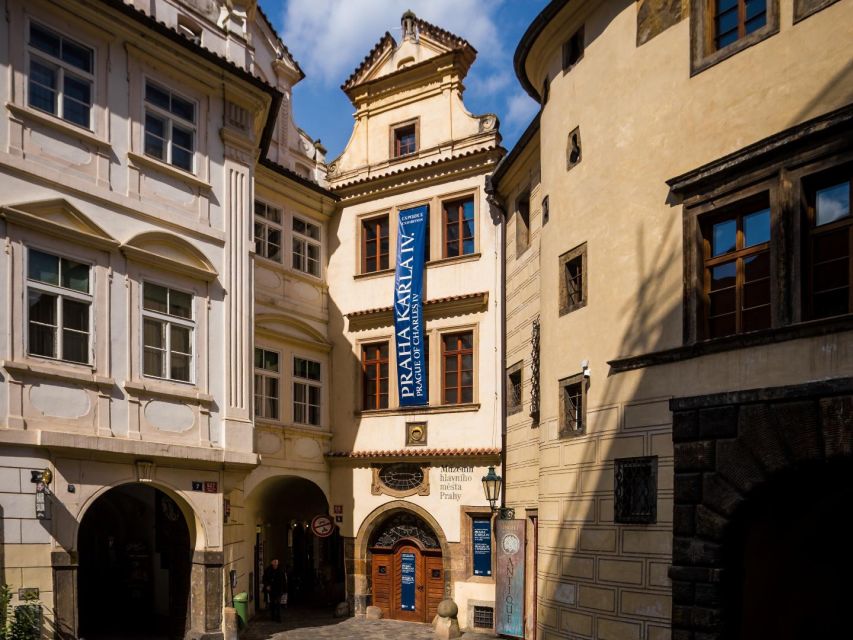
The exhibition does not treat Charles IV as a distant name on a timeline. Dramatic presentations recreate key moments connected with his life and rule, including his birth, his arrival in Prague in 1333, his coronation, and his burial.
These stops give the displays an emotional rhythm. You move from construction and administration to major public events. That matters because medieval cities were not only made of stone. They were shaped by ceremonies, power, religion, and the people who filled their streets.
One of the most useful presentations covers town administration. It gives you a sense of how the medieval city was managed rather than showing only grand churches and royal buildings. Another presentation explains medieval bridge construction, turning an engineering problem into part of Prague’s story.
I like this practical focus. The stone bridge is easy to admire from the riverbank, but learning how such a structure was built helps you see it as a demanding piece of medieval technology. The same is true of urban administration. A city needed rules, officials, and systems to function, even when royal architecture took most of the attention.
Video mapping around Charles Square
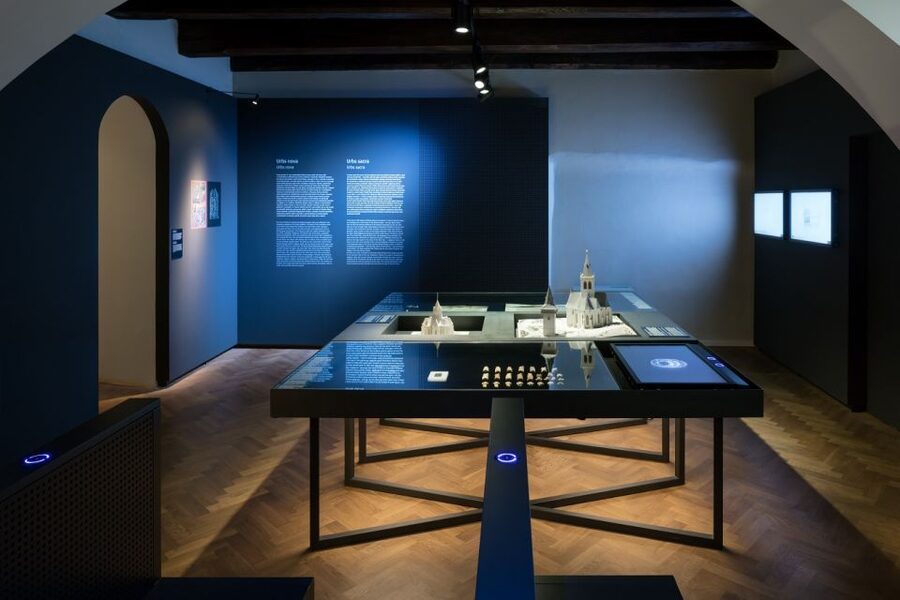
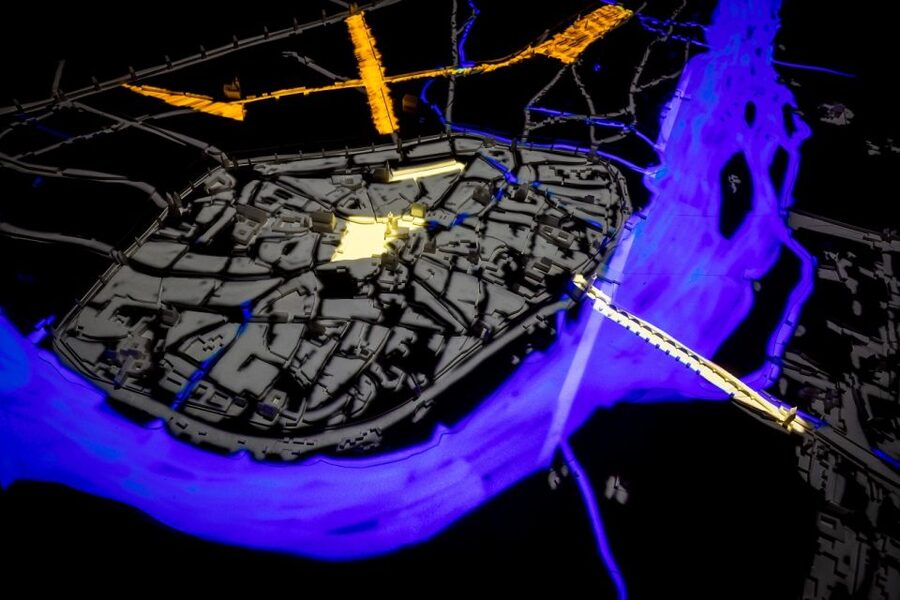
A video mapping presentation focuses on the Prague conurbation model and the area around Charles Square. It shows how the town developed during the 14th century, giving you a moving picture of urban change rather than a single frozen plan.
This is one of the better sections for anyone who has already walked Prague but struggles to place its older districts in time. The projection helps show how streets, buildings, and settlement patterns developed together.
Do not rush this part. The value comes from watching the sequence and comparing the different stages of growth. If you only glance at the model, you will miss the point. The display is less about one famous monument and more about how a whole city expands.
Same country, a completely different kind of day:
- Prague: 50-Minute Sightseeing Evening Cruise
★ 4.2 · 33,780 reviews - Prague: Medieval Dinner with Unlimited Drinks
★ 4.4 · 19,847 reviews - Prague: Oldtown, Medieval Underground & Dungeon History Tour
★ 4.2 · 8,244 reviews - Prague: Vltava River Night Cruise with Buffet
★ 4.3 · 7,338 reviews
Archaeology and everyday life in Prague
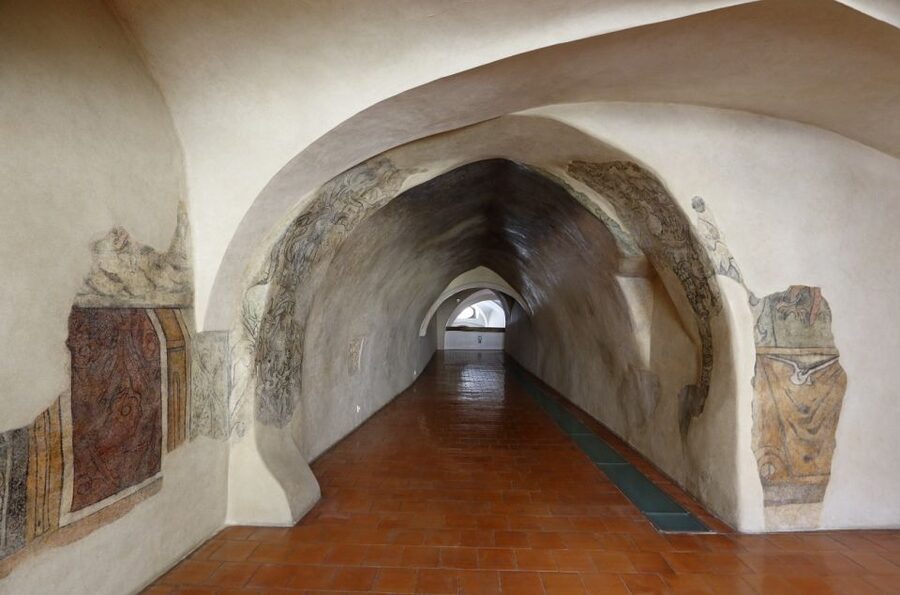
The museum also presents archaeological finds and original objects from the collections of the Prague City Museum, the National Heritage Institute’s regional office in Prague, and other institutions. These objects bring the grand city models down to street level.
You might find this section quieter than the video displays, but it supplies an important balance. Royal building projects and cathedral models explain power from above. Archaeological objects show the material world of the people who lived within that city.
The exhibition uses these pieces to illustrate everyday life during the rule of the Luxembourgs. The available information does not provide a full object-by-object list, so you should expect a selection rather than a complete account of medieval domestic life.
For me, this combination is one of the museum’s strengths. You can look at Charles IV’s Prague as a project of kings, bishops, and builders, then consider the residents who used its streets and homes. That wider view makes the city feel less like a collection of monuments and more like a place where people worked, traded, worshipped, and raised families.
Rudolf II’s Prague in nine metres
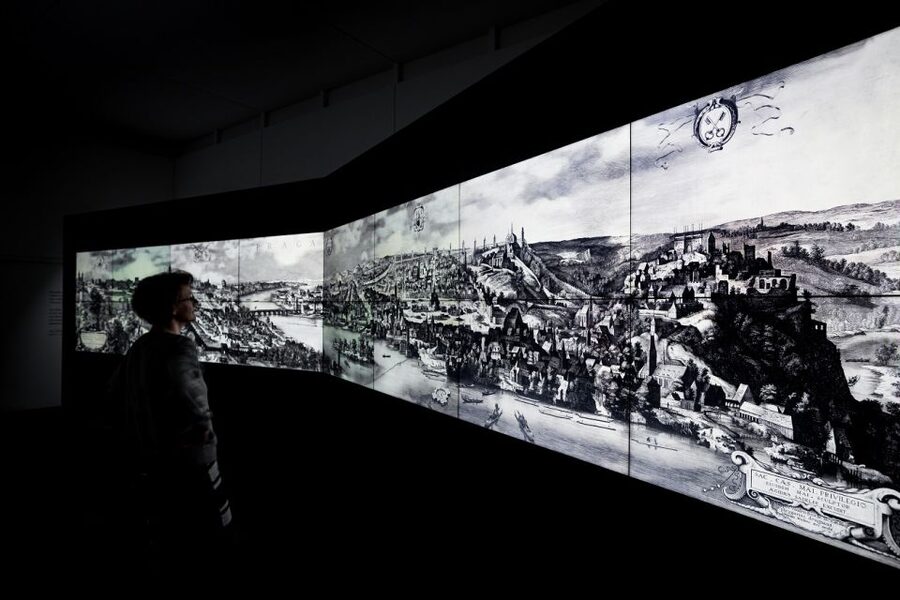
The Multimedia View of Prague During the Rule of Rudolf II shifts the focus forward to the Rudolfine era. Its main feature is a nine-metre animation that presents Prague as a populated city full of movement, pleasures, problems, and daily concerns.
This is not simply another architectural model. The animation gives you a sense of the city as a living setting. People matter as much as buildings, and the scene aims to show Prague as it appeared during the rule of Rudolf II.
The new Sadeler Prospect is central to this presentation. It was created through cooperation between historians and modern technology specialists, using an image of Prague that can be explored through animation and projection.
I would set aside time for this section even if medieval Prague is your main interest. It provides a useful comparison between two periods of urban development. Charles IV’s exhibition emphasizes the creation and expansion of the city. Rudolf II’s view emphasizes life within an already established metropolis.
The visual scale is the draw here. A nine-metre animation is hard to duplicate in a book or ordinary display case. If you prefer traditional museum rooms with original objects and detailed labels, this may feel too showy. If you learn best through images and motion, it will probably be one of the strongest parts of the visit.
From prehistory to the tailcoat
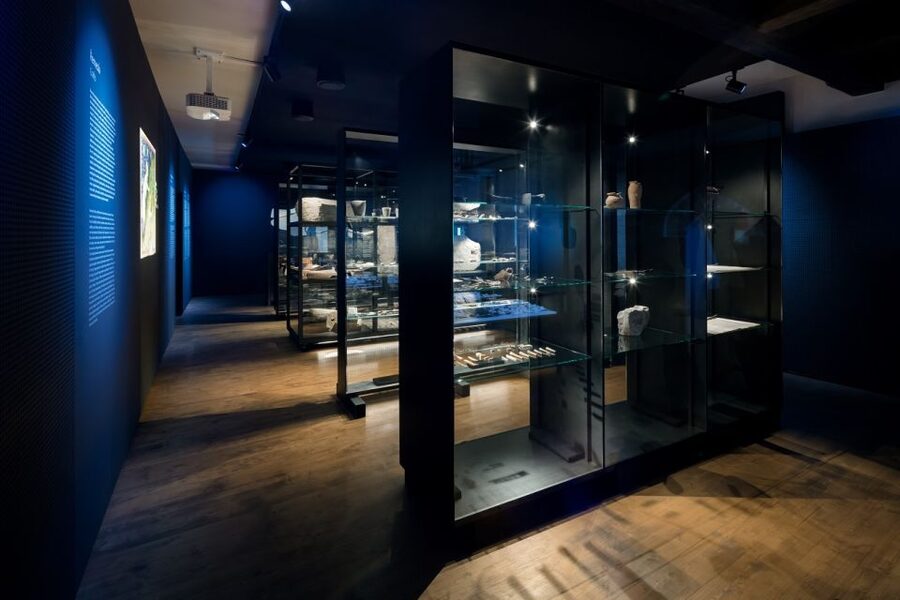
The ticket also includes From Prehistory to the Tailcoat. The supplied information gives this exhibition its title but does not describe each gallery in detail, so I would treat it as an additional part of the visit rather than the main reason to book.
Its broad time span suggests a long view of clothing and society, with the digital costume exhibition adding an interactive element. You can expect the museum to use different forms of media rather than relying only on cases of garments or written explanations.
This section may appeal most to families and visitors who enjoy design, clothing, and visual displays. It also gives you a break from the political and architectural focus of Charles IV and Rudolf II.
Because the available details are limited, I would not choose the ticket solely for this exhibit. Think of it as part of a wider museum visit that adds variety to the two better-described Prague history presentations.
How the displays affect your visit
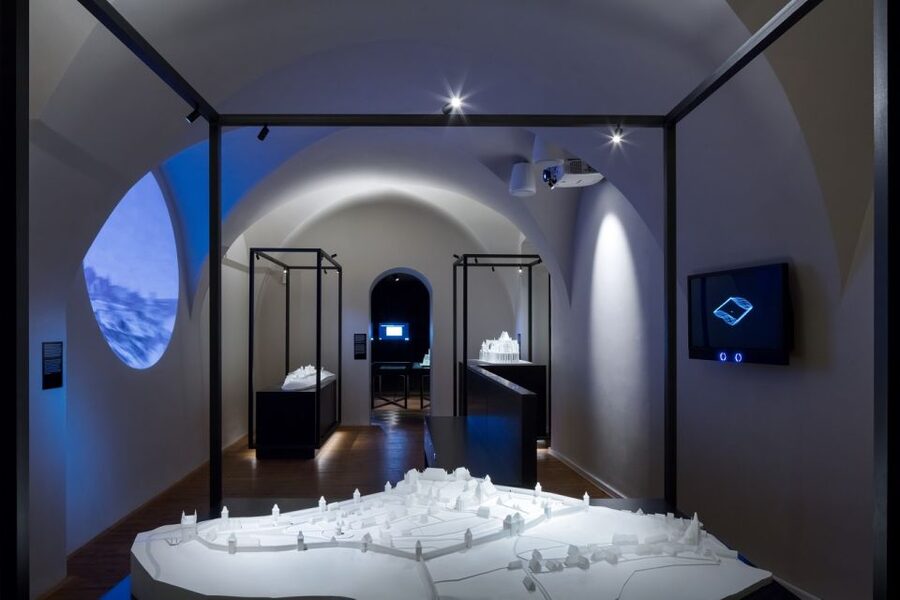
The House at the Golden Ring is strongest when you let the formats work together. Models establish the city’s shape. Video mapping shows change over time. Original objects provide physical evidence. Animations and digital displays make major events and street life easier to picture.
That variety explains why some people can spend two hours here without feeling short of material. You can move quickly through familiar sections, then slow down for a model or presentation that catches your attention.
It also explains the mixed response this kind of museum can produce. If you want a conventional museum with long, detailed labels and a large collection of objects, parts of the visit may seem thin. If you want a clear visual introduction to Prague’s development, the approach is far more effective.
The museum is not only for specialists. Still, you need at least a basic interest in Prague’s past to get the most from it. The technology is a tool, not the whole point. The displays ask you to connect rulers, buildings, engineering, public ceremonies, and ordinary residents.
Is the $8 admission good value?
Yes, for most people interested in Prague’s past. The price is low enough that the museum can fit into a day of sightseeing without demanding a major change to your budget. You receive access to three exhibitions, not just one room focused on a single building.
The value improves if you stay for the films, video mapping, and animated displays. A quick walk through the rooms may leave you thinking the museum is small or limited. Give it 1.5 to 2 hours and the admission feels much more generous.
The price is less compelling if you dislike digital presentations or have little patience for historical context. One critical response described the visit as boring, while other assessments praised the amount to see and the low cost. Both reactions make sense. This is a museum where your interest in the subject matters.
At $8, I would recommend taking the chance if you are already in central Prague and want a break from churches, towers, and outdoor sightseeing. The financial risk is small, and the material is broad enough to suit different ages.
Who should book this museum visit?
I would recommend it to families because the videos, models, and interactive displays offer more variety than a museum made up only of text. It also suits first-time visitors who want a short, organized explanation of how Prague grew under Charles IV and changed under Rudolf II.
History enthusiasts will find the most detail in the urban development, administration, archaeology, and construction sections. Architecture fans should pay close attention to the models of Prague Castle, Vyšehrad, St Vitus Cathedral, the stone bridge, and Charles Square.
You may want to skip it if your Prague schedule is already packed with museums and you do not enjoy city history. The experience is not designed as light entertainment from beginning to end. It asks you to pay attention, especially during the presentations.
English speakers have a clear advantage because the instructor language and dialogue are in English. If you need French, note that French dialogue is not available according to the information provided.
Free cancellation is available up to 24 hours before the visit for a full refund, and you can reserve now while paying later. Check the available starting times when booking, since the ticket is valid for one day rather than tied to a stated fixed duration.
Should you book the House at the Golden Ring?
Book it if you want an inexpensive, visual introduction to Prague’s urban past. The best reasons are the city models, the Charles IV presentations, the archaeological material, and the nine-metre animated view of Rudolf II’s Prague.
I would plan for two hours, use the English presentations, and avoid rushing through the models. At $8, this is a sensible choice for families, first-time visitors, and anyone who wants context before or after seeing Prague’s famous buildings in person.
Skip it only if your interest in history is very low or if you prefer museums built around large collections of original objects. For everyone else, the price gives you a fair chance to see how Prague was built, governed, and lived in across several important periods.
FAQ
Where is the House at the Golden Ring experience located?
It is located in the Central Bohemian Region of the Czech Republic.
How much does admission cost?
The listed price is $8 per person.
How long is the ticket valid?
The ticket is valid for one day.
How long should I allow for the visit?
Plan on about 1.5 to 2 hours. The visit can take longer if you watch the presentations carefully and spend time with the displays.
What exhibitions are included?
Admission includes The Medieval Town, Multimedia View of Prague During the Rule of Rudolf II, and From Prehistory to the Tailcoat.
Is the experience available in English?
Yes. English is the stated instructor and exhibition language.
Is French dialogue available?
No French dialogue is noted. The available information states that the dialogue is in English.
What can I see about Charles IV?
You can see models and presentations about medieval Prague, including Prague Castle, Vyšehrad, St Vitus Cathedral, the stone bridge, Charles Square, town administration, bridge construction, and major events in Charles IV’s life.
What is the Rudolf II multimedia exhibition?
It is a presentation featuring a nine-metre animation of Prague during the rule of Rudolf II, including the Sadeler Prospect and scenes of city life.
Can I cancel for a refund?
Yes. You can cancel up to 24 hours in advance for a full refund. You can also reserve now and pay later.
Just added around Prague
- WWII and Communism History in Prague’s Old Town Private Tour★ 5.0 · 4 reviews
- Prague: Historical Walking Tour with Focus on World War 2★ 4.3 · 12 reviews
- World War II 4WD Tour from Prague with Lunch★ 4.4 · 3 reviews
- Ultimate Unlimited Beer Pong with Czech Beer★ 4.6 · 5 reviews
- Walking tour of Prague in French : Nové Město★ 4.9 · 16 reviews
- Walking tour of Prague in french: Old Town & Charles Bridge★ 4.9 · 62 reviews
- Prague Sightseeing Tour with Lunch★ 5.0 · 5 reviews
- Prague: Modern Private Spa with Jacuzzi and Sauna★ 4.8 · 62 reviews
Tickets, compared.
Skip-the-line Castle Ticket and Optional AudioGuide
Read our review →
Castle Tour with Local Guide and Entry Ticket
Read our review →
Prague Castle 2.5-Hour Tour Including Admission Ticket
Read our review →
Entry ticket to Ice Pub Prague with Nightclub Option
Read our review →
Prague Castle and Lobkowicz Palace Entry Tickets
Read our review →
Entry Ticket Classical Concert at the Mirror Chapel
Read our review →