
Reviewed · PRAGUE JEWISH QUARTER TOURS
Prague Jewish Quarter Private Half-Day Walking Tour
Prague’s Jewish Quarter gives you some of the city’s most powerful sights in a compact area: an ancient working synagogue, a cemetery layered with graves, and museum buildings that tell the story of a community nearly destroyed in World War II. This private walk with Eva Prague Tours also connects the quarter to Franz Kafka and the old legend of the Golem.
I like the private format, since Eva can adjust the pace, stop for questions, and point out less touristy places to eat afterward. I also like the mix of buildings and ideas: you are not just admiring Moorish arches or Baroque interiors, you are learning how Prague’s Jewish community lived, worshipped, buried its dead, and endured persecution.
The main consideration is cost. At $192.04 per person, plus the €25 Jewish Museum admission, this is a serious outlay for a four-hour walk. It makes the most sense for couples, families, or small groups who want a personal guide rather than a cheaper group visit.
Key points before you book
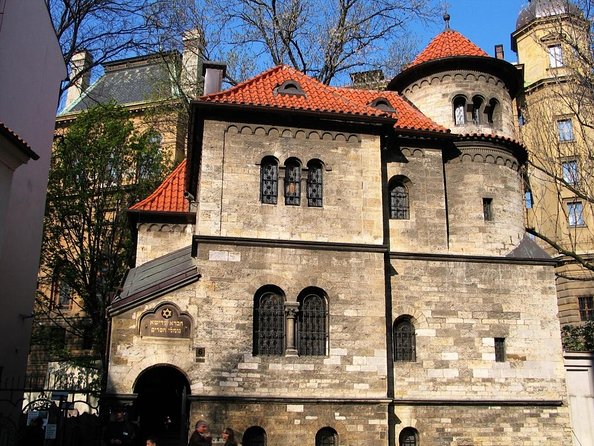
- Old-New Synagogue: Enter one of Europe’s oldest surviving synagogues, dating to about 1270, and learn how it still functions as an Orthodox place of worship.
- Buried layers of the cemetery: See the Old Jewish Cemetery, where more than 100,000 people were buried in tightly stacked layers because space was scarce.
- Five museum buildings plus the cemetery: The route includes the Old-New, Spanish, Klausen, Pinkas, and Maisel Synagogues, along with the Ceremonial Hall.
- A guide who adapts to you: Eva has been praised for adjusting the pace, arranging rest breaks, and helping when long lines became difficult.
- A personal look at Prague: The walk includes Kafka connections, the Golem legend, and suggestions for local food and quieter places to visit.
- Admission costs extra: Budget €25 per person for entry to the Jewish Museum sites. The guide and private walk are included, but the entrance ticket is not.
Why Prague’s Jewish Quarter deserves a half-day
The Jewish Quarter, known in Czech as Josefov, is easy to underestimate. Its grand streets and polished façades can make it look like just another handsome central Prague district. Underneath that appearance is a long and often painful story, shaped by medieval restrictions, religious life, crowded burial grounds, reform, Nazi persecution, and the survival of a few major buildings.
A private walk helps you connect those pieces. You can ask why the cemetery is so crowded, how an old synagogue still works today, or what happened to Czech Jewish families during the Shoah. The subject is serious, but the route is not presented as a dry lecture. Eva is described as warm, lively, and able to make a large amount of information easy to follow.
The tour lasts about four hours and is conducted in English. It is a walking experience, so comfortable shoes matter. The route is near public transportation, and pickup can be arranged from a hotel, Airbnb, or hostel if you provide the exact address. The listed meeting point is the Prague Marriott Hotel on V Celnici, though the provider also offers pickup.
Because this is a private activity, only your group takes part. That changes the feel of the visit. You can spend more time at a particular inscription, ask about your own family or religious interests, or move on when a display does not hold your attention.
More Prague Jewish Quarter Tours in Prague:
- Prague: Jewish Quarter Walking Tour with Admission Tickets
★ 4.7 · 3,729 reviews - Prague: Old Town and Jewish Quarter Guided Tour in German
★ 4.8 · 3,143 reviews - Prague: Old Town and Jewish Quarter Guided Walking Tour
★ 4.6 · 2,847 reviews
Starting at the Old-New Synagogue
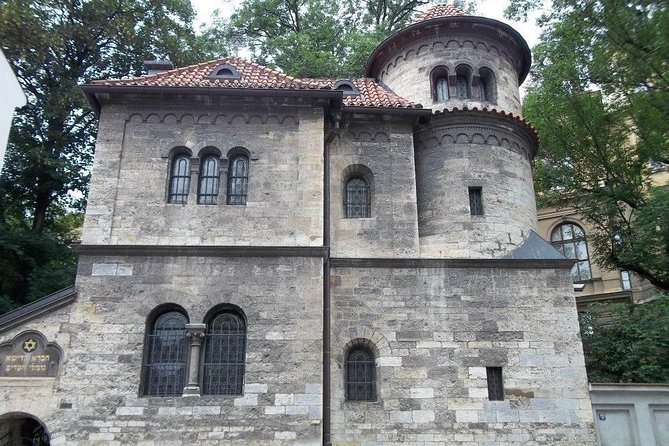
The Old-New Synagogue is the natural anchor for this walk. Built around 1270, it is described as the oldest synagogue in Europe and the oldest synagogue outside Israel still in use. That is not simply an architectural claim. Services continue here, giving the building a purpose beyond its age.
The synagogue follows Orthodox practice. Men and women sit separately, with women in a different hall where they can hear some of the service. Eva can explain how this arrangement works and place it in the context of Jewish religious custom. If you are unfamiliar with Orthodox worship, this is a useful chance to ask questions respectfully rather than trying to interpret the layout on your own.
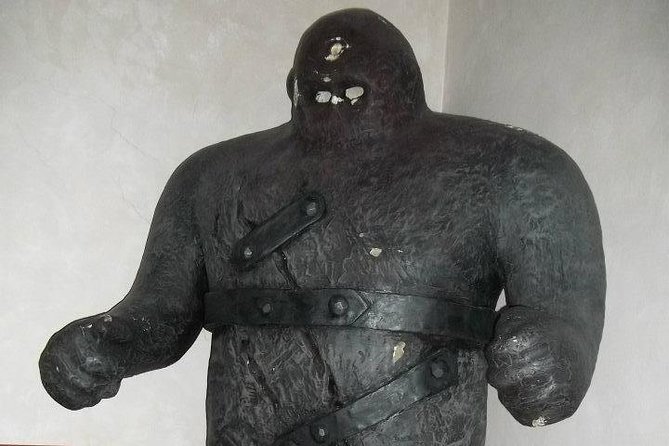
The famous Golem story is also tied to Prague’s Jewish Quarter. The Golem, a figure said to have been created from clay by Rabbi Judah Loew to protect the community, belongs to legend rather than documented fact. Still, the story adds a memorable layer to the old walls and gives you a sense of how Prague’s Jewish past has lived in both records and folklore.
Allow about 30 minutes here. Admission is not included in the tour price, so you will need the Jewish Museum ticket to enter the relevant sites.
Reading the Old Jewish Cemetery
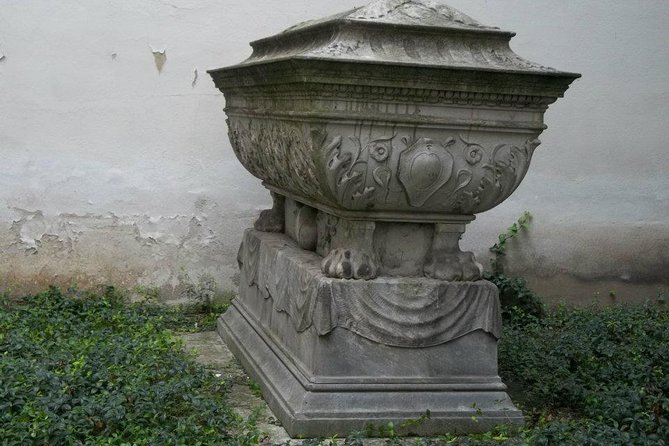
The Old Jewish Cemetery is one of the most striking stops in Prague, not because of grand monuments, but because of its crowded ground and leaning stones. It is the oldest preserved Jewish cemetery in Prague, with burials dating from 1439.
More than 100,000 people were buried here. Since the community had little room for expansion, graves were placed on top of older graves. The result is a tightly packed field of stones and earth, a physical record of the limits placed on the Jewish population inside the former ghetto.
The cemetery was closed in 1787 under Emperor Joseph II. That date matters because it marks a change in the site’s use, while the grave markers still preserve names, symbols, and memories from earlier centuries. Eva can help you read the cemetery as more than a picturesque stop. Look closely at the carved symbols and the density of the stones. The space asks for quiet attention.
You are allotted about 30 minutes here. The cemetery may be especially meaningful if you want to understand how daily life and death were managed in a confined community. It can also feel solemn and visually crowded, so this is not a place to rush through with a camera in hand.
Spanish Synagogue and the changing face of worship
The Spanish Synagogue was built in 1868 to replace an earlier synagogue dating from the twelfth century. Its Moorish design is the visual surprise of the route. Inside, the arches and ornament recall the Alhambra in Spain, which explains the name.
This building shows how Jewish religious life in Prague changed during the nineteenth century. The architecture is not a medieval survival like the Old-New Synagogue. It reflects a later period, when Jewish communities were building new identities and public spaces while still carrying older traditions.
The Spanish Synagogue also functions as a concert hall, with classical music performances held inside. That can affect your visit, since a performance or building work may change access. The supplied tour information notes a planned closure beginning in May 2019 for two years, so you should confirm the current opening status before booking if this synagogue is especially important to you.
Plan around 30 minutes here. The ornate interior is likely to appeal to you if architecture is a main reason for visiting the Jewish Quarter. If your main interest is social history, ask Eva to explain the building’s role alongside the older synagogues.
A few more Prague trips to weigh up
- Prague: 3-Hour Walking Tour of Old Town & Prague Castle
★ 4.7 · 5,696 reviews - Prague: Ghost Walking Tour Where Legends Come To Life
★ 4.4 · 5,253 reviews - Prague Guided Walking Tour and Cruise with Authentic Czech Lunch
★ 5.0 · 3,627 reviews - Prague Ghost and Legend of Old Town Walking Tour
★ 4.5 · 2,630 reviews
Klausen Synagogue and the former ghetto
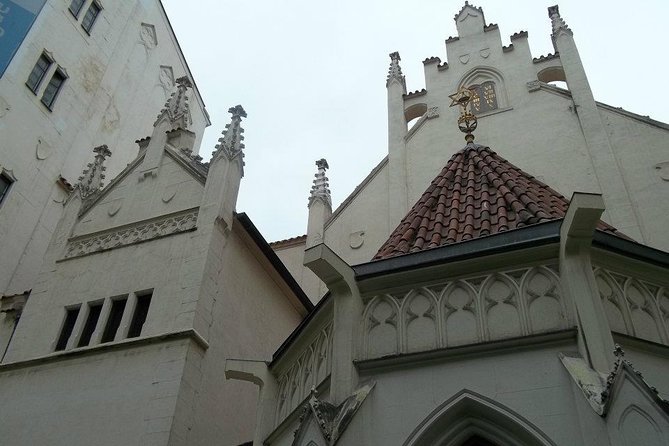
The Klausen Synagogue is the largest synagogue in the former Prague Jewish Ghetto. It is also the area’s only example of an early Baroque synagogue, giving the route another architectural period to compare with the Old-New Synagogue and the Spanish Synagogue.
The building is now part of the Jewish Museum in Prague. That means the experience is not limited to looking at the exterior. Displays inside help explain Jewish customs and community life, although the exact exhibits can change.
The word ghetto should not be treated as a quaint old district label. Prague’s Jewish population faced legal and physical restrictions, and the quarter’s crowded boundaries were part of that system. A good guide helps you see the Baroque building in that setting rather than treating it as a pretty church-like interior with a different name.
You have about 30 minutes here. The private setting is useful because Baroque decoration, religious objects, and historical context can blur together when you visit alone. Eva can keep the focus on what matters to you.
Pinkas Synagogue and the names of the Shoah
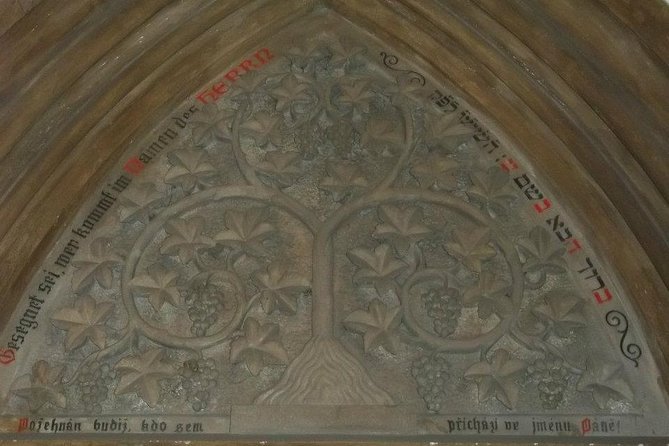
The Pinkas Synagogue is the second-oldest surviving synagogue in Prague. Its origins are linked to the Horowitz family, a prominent Jewish family in the city.
Today, the building is best known as a memorial to approximately 79,000 Czech Jewish victims of the Shoah. The scale of that number becomes more personal inside the synagogue, where names and remembrance replace the usual mood of a historic worship space.
This is likely the most emotionally difficult stop. Give yourself time to look and think. The building does not need dramatic commentary, and a private guide can judge when to speak and when to allow silence. If you are visiting with children or anyone sensitive to Holocaust memorials, you may want to discuss the tone of this stop before the tour begins.
The scheduled visit lasts about 30 minutes. I consider it essential for understanding that the Jewish Quarter is not only about medieval Prague. Its story reaches into the twentieth century and the destruction of Czech Jewish communities.
Maisel Synagogue, from Renaissance wealth to Neo-Gothic form
The Maisel Synagogue began in 1592, after Emperor Rudolf II granted a privilege to Mordecai Maisel, mayor of Prague’s Jewish Town. Its original Renaissance design had three naves, an unusual arrangement for its time.
Fire and rebuilding changed the building repeatedly. It was damaged in the ghetto fire of 1689 and later rebuilt. Its current Neo-Gothic appearance dates from work carried out between 1893 and 1905.
That sequence makes Maisel a useful lesson in how old buildings change. What you see is not one untouched monument from the sixteenth century. It is a building shaped by wealth, fire, changing taste, and the practical need to keep a community space in use.
The planned time here is about 45 minutes, the longest stop on the route. That extra time suggests a fuller museum visit and a chance to place Prague’s Jewish community within the city’s wider political and architectural story. If you enjoy buildings, dates, and the way cities rebuild themselves, this may be one of your favorite stops.
Ceremonial Hall and the work of mourning
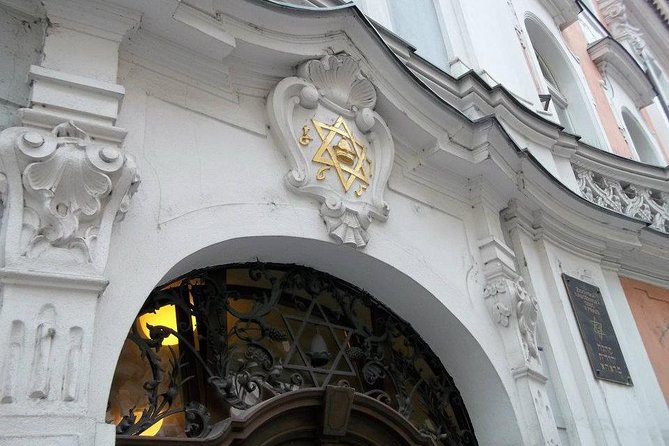
The Ceremonial Hall sits beside the Old Jewish Cemetery. Built between 1906 and 1908 in a Neo-Romanesque style, it once belonged to the Prague Burial Society, also known as the Hevrah Kaddisha.
The first floor held a room for the ritual washing of the dead. The second floor served as the burial society’s club room. The building remained in its original use until after World War I, then became part of the Jewish Museum in 1926.
This is a small but important stop because it shows the organized work behind Jewish burial customs. The cemetery can seem like a field of stones from the outside. The Ceremonial Hall explains part of the community structure that cared for the dead and prepared them for burial.
You spend about 30 minutes here. It is a quiet counterpoint to the ornate Spanish Synagogue and the memorial writing in the Pinkas Synagogue.
Kafka, the Golem, and the walk between buildings
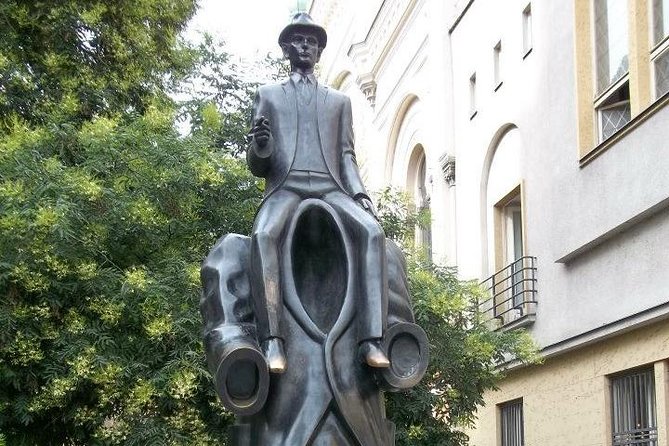
The tour also follows in the steps of Franz Kafka and points out the links between the Jewish Quarter and Prague’s literary life. Kafka’s connection gives you another way to view the district, as a place shaped not only by religious institutions but also by writers, families, and the pressures of modern city life.
The exact Kafka sights are not detailed, so you should not book this as a dedicated Kafka tour. Instead, think of Kafka as one thread in a wider walk through the district.
The Golem legend works in a similar way. It is part of Prague’s cultural memory, but the tour’s main weight falls on real buildings, dates, customs, and the history of the Jewish community from medieval times through World War II. That balance is a strength. You get the memorable story without losing sight of the people and events behind the legend.
What the private guide adds
Eva is the named guide associated with this experience. Her English is described as very good, and her approach appears to combine clear explanations with a lively personality. That matters in a four-hour walk covering several synagogues, a cemetery, a memorial, architecture, religious practice, and wartime history.
The most useful feature is the ability to set the pace. Eva has adjusted the route for a visitor with mobility issues, arranged rest breaks, and helped when lines were too long for someone to stand comfortably. This does not make the tour fully accessible by default, but it shows why you should tell the provider about your needs before the start.
She also offers practical Prague advice. After the tour, you may receive suggestions for local food and places that feel less aimed at the tourist center. Those recommendations are not part of the formal itinerary, but they can make a private guide more valuable than an audio guide or self-guided museum visit.
Do not expect a silent stroll. There is a lot to discuss, and four hours can pass quickly. If you prefer to move at your own pace with little explanation, a museum ticket alone may suit you better.
Is $192.04 per person a fair price?
The listed price is $192.04 per person, with an additional €25 Jewish Museum admission fee per person. That puts the total well above the cost of visiting the quarter independently.
You are paying for private attention, hotel or accommodation pickup when arranged, an English-speaking local guide, and help making sense of several buildings that can otherwise feel disconnected. For two people, the cost is substantial. For a family or small group, the private format may offer better value because the guide fee is tied to a personal group experience rather than a large shared outing.
The price makes the most sense if you care about context and questions. It is less convincing if you only want to see the interiors quickly. You should also confirm current admission details and the Spanish Synagogue’s opening status before committing, since the supplied information includes an old closure notice.
The cancellation terms are reasonable: you can receive a full refund if you cancel at least 24 hours before the start time. Changes or cancellations inside that window are not accepted for a refund.
Who should book this walk?
I would choose this tour if you want a serious introduction to Jewish Prague but prefer a person beside you to explain what you are seeing. It suits first-time visitors, families with questions, couples, and anyone who values a flexible pace.
It is also a good choice if you want to connect the district’s major sights in one morning or afternoon. The route saves you from working out which synagogue belongs to which period and why the cemetery, memorial, and ceremonial building matter together.
You should think twice if your budget is tight, if you dislike guided sightseeing, or if you want a slower visit to every museum display. The route covers a lot in four hours. A private guide can adjust the pace, but the schedule still asks you to keep moving.
Final verdict: book it for context, not just entry
Book this private Jewish Quarter walk if you want Prague’s synagogues and cemetery to form one clear story. Eva’s personal approach, strong English, humor, and attention to rest breaks add real value, especially for people who want to ask questions along the way.
Skip it if you mainly want the lowest-cost museum visit. With the $192.04 price and separate €25 admission, this is not a bargain ticket. It is a guide-led history experience, and for the right small group, the personal attention can make the extra cost worthwhile.
FAQ
How long does the Prague Jewish Quarter tour last?
The walking tour lasts approximately four hours.
What language is the tour offered in?
The tour is offered in English.
Is the tour private?
Yes. Only your group participates in the activity.
Is hotel pickup available?
Yes. Pickup can be arranged from your hotel, Airbnb, hostel, or another accommodation. You need to provide the exact address and name of the accommodation.
Where is the listed meeting point?
The listed starting point is the Prague Marriott Hotel at V Celnici 8, Nové Město, Prague 1.
Does the tour include Jewish Museum admission?
No. Entrance to the Jewish Museum costs €25 per person and is paid separately.
Which synagogues are included?
The route includes the Old-New Synagogue, Spanish Synagogue, Klausen Synagogue, Pinkas Synagogue, and Maisel Synagogue.
Does the tour visit the Old Jewish Cemetery?
Yes. The Old Jewish Cemetery is scheduled as one of the stops and receives about 30 minutes.
Does the tour include the Ceremonial Hall?
Yes. The Ceremonial Hall, part of the Jewish Museum in Prague, is included in the route and receives about 30 minutes.
What is the cancellation policy?
You can cancel for a full refund up to 24 hours before the experience start time. Cancellations or changes made less than 24 hours before the start time are not accepted for a refund.
More Half-Day in Prague
- From Prague: Half-Day Coach Tour to Kutná Hora
★ 4.4 · 372 reviews - Small-Group Half-Day Prague Walking Tour
★ 4.5 · 99 reviews - Private Half-Day Tour From Prague To Terezín Concentration Camp
★ 5.0 · 78 reviews - Half-Day WWII Prague Walking Tour
★ 5.0 · 68 reviews
Just added around Prague
- WWII and Communism History in Prague’s Old Town Private Tour★ 5.0 · 4 reviews
- Prague: Historical Walking Tour with Focus on World War 2★ 4.3 · 12 reviews
- World War II 4WD Tour from Prague with Lunch★ 4.4 · 3 reviews
- Ultimate Unlimited Beer Pong with Czech Beer★ 4.6 · 5 reviews
- Walking tour of Prague in French : Nové Město★ 4.9 · 16 reviews
- Walking tour of Prague in french: Old Town & Charles Bridge★ 4.9 · 62 reviews
- Prague Sightseeing Tour with Lunch★ 5.0 · 5 reviews
- Prague: Modern Private Spa with Jacuzzi and Sauna★ 4.8 · 62 reviews
Prague Jewish Quarter Tours, compared.
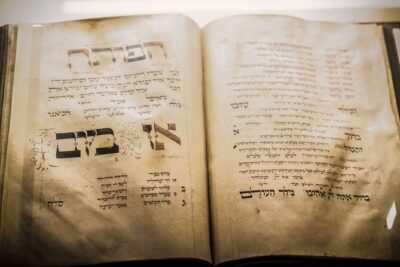
Jewish Quarter Walking Tour with Admission Tickets
Read our review →
Old Town and Jewish Quarter Guided Tour in German
Read our review →
Old Town and Jewish Quarter Guided Walking Tour
Read our review →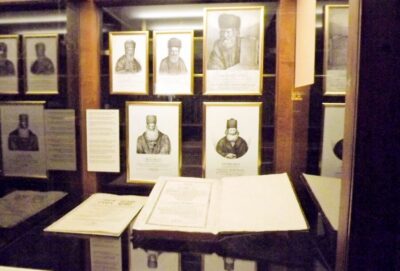
Jewish Quarter Ticket with optional Audio Guide
Read our review →
Prague’s TOP Sights – Old Town, Jewish Quarter, Charles Bridge (Tip-based tour)
Read our review →
Prague Old Town New Town and Jewish Quarter Morning Tour
Read our review →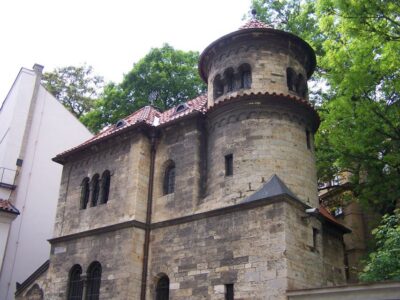
Old Town, Jewish Quarter & Astro Clock Walking Tour
Read our review →
Prague Essential Tour Old Town and Jewish Quarter
Read our review →Browse the lists this tour appears in