
Reviewed · WALKING TOURS
Prague Renaissance & Baroque Gardens Walking Tour
Prague’s grandest sights often come with crowds, but its historic gardens offer a quieter way to understand the city. This three-hour walk links royal grounds, noble courtyards, fountains, statues, and a small Baroque garden with some of Prague’s finest views.
I like the small group of no more than eight, which gives your guide room to explain details and follow your interests. I also like the focus on meaning: the statues are not just decoration, and the guide explains how Greek and Roman myths served political purposes. The main drawback is practical: Vrtba Garden requires steep stair climbing, and the admission details need checking because the supplied information lists some garden fees differently.
Key things to know before you book
- You ride tram 22 together from Malostranská toward the Prague Castle gardens.
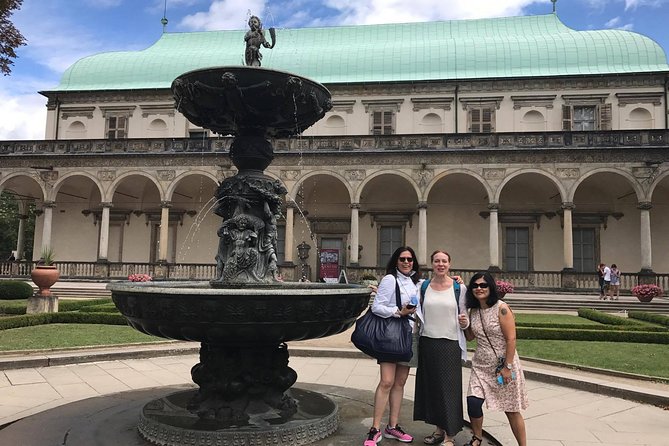
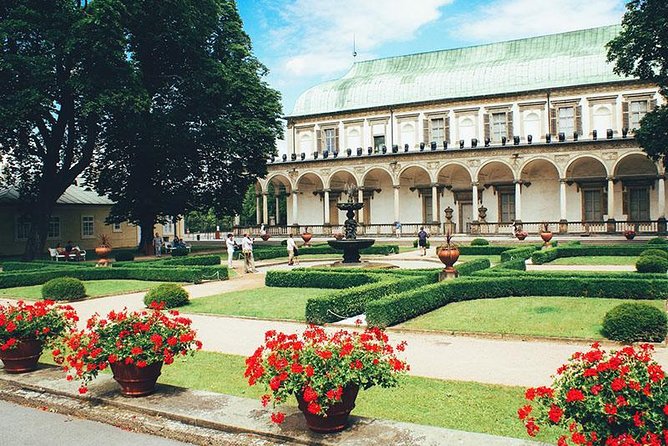
- Queen Anne’s Summer Palace is a highlight of Renaissance architecture, with mythological, hunting, and military reliefs.
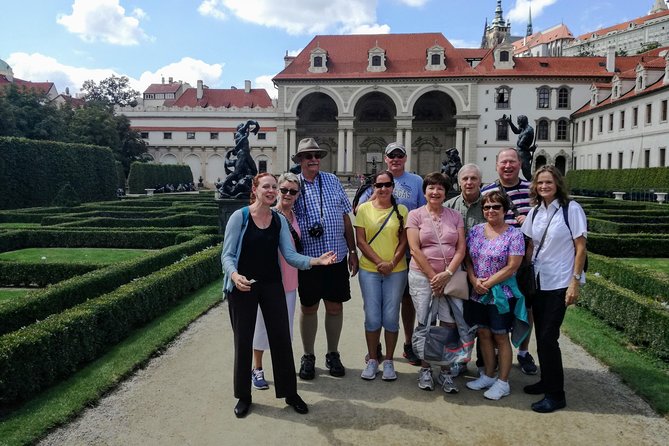
- Wallenstein Garden combines an artificial grotto, an aviary, mythological sculpture, and a fountain by Adrian de Vries.
- Vrtba Garden offers the best city views, but reaching its highest terrace involves steep stairs.
- The tour runs at 10am or 2pm, and lasts about three hours.
- Budget for possible entrance fees, including CZK 130 for Vrtba Garden and CZK 90 for the gardens under Prague Castle, unless your booking confirmation says they are included.
Why Prague’s gardens deserve a dedicated walk
Prague’s gardens are easy to overlook. You may pass palace walls on the way to the Castle or hurry through Malá Strana toward Charles Bridge without realizing that some of the city’s most telling art is behind those walls.
This tour gives you a clear theme. Renaissance gardens reflect an interest in order, science, rare plants, and classical ideals. Baroque gardens add theater, movement, symbolism, and political messaging. Once your guide points this out, a statue of a god or hero becomes more than a handsome object beside a path.
That is the tour’s real value. You are not simply walking among flowers and clipped greenery. You are learning how rulers and noble families used gardens to display wealth, education, power, and taste.
The group size matters here. With a maximum of eight people, you should have a better chance to hear explanations in courtyards and beside fountains than you would on a large city tour. Bonita is one of the guides associated with the experience, and Vadim also leads tours. Bonita is described as a strong storyteller with a particular interest in art, mythology, and Prague’s overlooked corners.
A few more Prague trips to weigh up
- Prague: 3-Hour Walking Tour of Old Town & Prague Castle
★ 4.7 · 5,696 reviews - Prague: Ghost Walking Tour Where Legends Come To Life
★ 4.4 · 5,253 reviews - Prague: Jewish Quarter Walking Tour with Admission Tickets
★ 4.7 · 3,729 reviews
Starting at Malostranská and taking tram 22
The meeting point is Bagel Lounge Malostranská at Letenská 118/1, near Malostranská Metro station. You meet your guide and group there before taking tram 22 together to the Castle gardens.
This shared tram ride is a useful part of the plan, not just a way to save walking time. Prague Castle sits above the Lesser Town, and the tram helps you reach the gardens without spending the first part of the tour on a long uphill climb. It also gives your guide a chance to set the scene before the walking begins.
Choose the departure time that fits your day. The tour is offered at 10am and 2pm. The morning departure leaves more time afterward for Prague Castle, St. Vitus Cathedral, or the Lesser Town. The afternoon option works well if you want a slower start or plan to combine the tour with morning sightseeing elsewhere.
You should wear comfortable shoes. The walk is not described as strenuous overall, but Vrtba Garden includes steep stairs. Moderate physical fitness is recommended.
The Royal Garden and the Renaissance court
The Castle gardens begin with the Royal Garden, established in the 1500s on land that had previously held medieval vineyards. It later became known for unusual plants and specimens brought from distant places.
That detail gives the garden a wider story. Renaissance rulers were fascinated by botany, geography, and imported plants. A garden was a place for pleasure, but also a display of curiosity and reach. Figs, almonds, oranges, and lemons were among the plants grown here or associated with the estate, remarkable choices for central Europe at the time.
The tour also touches on the history of tulips in Prague. Your guide connects the plant to the movement of new botanical specimens across Europe, showing how even a familiar flower can point to trade, diplomacy, and changing tastes.
You will pass the Fig House and Orangery, structures tied to the care of heat-loving plants. Do not expect a full greenhouse visit or a long botanical stop. The value is in seeing how the royal garden supported plants that could not normally thrive in Prague’s climate.
Queen Anne’s Summer Palace and the pure Renaissance style
Queen Anne’s Summer Palace is one of the tour’s most important architectural stops. Finished in the middle of the 16th century, it is described as one of the purest Renaissance buildings outside Italy.
The building is wrapped in an ornamental frieze, and the arcade pillars have decorated Tuscan capitals. Reliefs show scenes from mythology, hunting, and warfare. One particularly telling image shows Ferdinand I wearing the Order of the Golden Fleece and offering Queen Anna a fig blossom.
You only spend about five minutes at this stop, so the guide’s interpretation is essential. This is not an interior tour of the palace. Instead, you pause to read the exterior, understand its Italian influence, and see how the decoration linked the royal family to classical culture and dynastic power.
I like this approach because it keeps the walk moving while giving you a key reference point. If you have little interest in architecture, the stories and images make the building easier to appreciate. If you already know Prague Castle, the focus on Renaissance detail may give you a fresh reason to look closely.
Same country, a completely different kind of day:
- Prague: 50-Minute Sightseeing Evening Cruise
★ 4.2 · 33,780 reviews - Prague: Medieval Dinner with Unlimited Drinks
★ 4.4 · 19,847 reviews - Prague: Skip-the-line Castle Ticket and Optional AudioGuide
★ 4.3 · 11,121 reviews - Prague: Castle Tour with Local Guide and Entry Ticket
★ 4.6 · 10,422 reviews
The Ball Game Hall above the Stag Moat
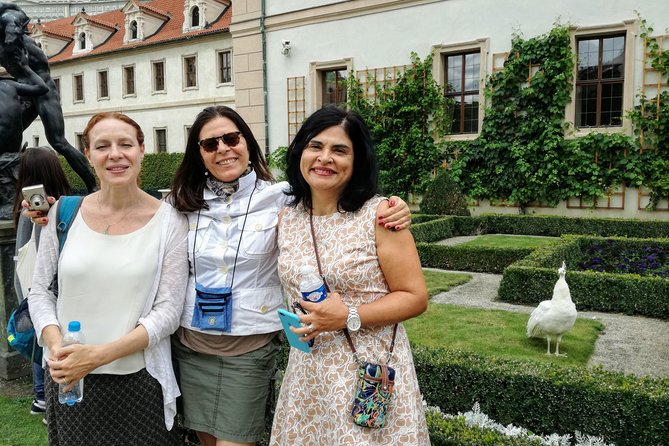
The Ball Game Hall sits on the south side of the Royal Garden, directly above the Stag Moat. Built in the mid-1500s, it first served as a hall for ball games and later as a riding school and stables.
This is another brief stop, lasting about five minutes. Its importance comes from the change in use. Royal buildings often had practical lives beyond their formal design, and this one shows how court spaces could be adapted over time.
The building also helps you understand the scale of the Castle complex. Prague Castle is not one palace with a single entrance. It is a collection of gardens, halls, courtyards, churches, and service areas shaped across centuries.
Wallenstein Garden’s statues, grotto, and peacocks
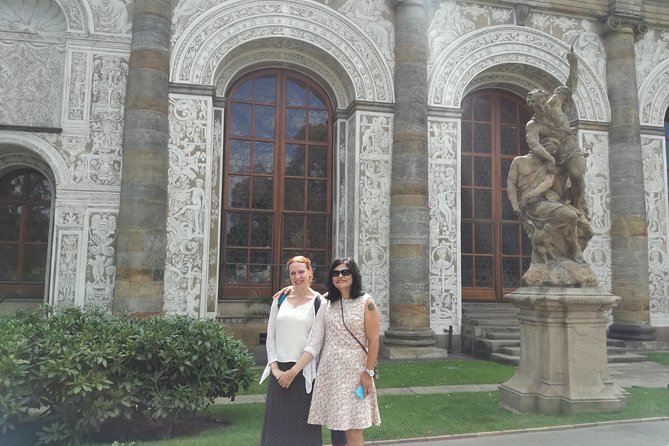
Wallenstein Garden brings you back down toward the Lesser Town and shifts the style from Renaissance order to Baroque drama. The garden belongs to Wallenstein Palace, built in the 1600s and now used by the Senate of the Czech Republic.
The Italian-style garden includes an aviary, an artificial grotto, a gallery of mythological heroes, and a fountain by Adrian de Vries. The sculpture is central to the stop. Figures from Greek and Roman mythology were selected carefully, and their placement helped communicate the ambitions of the palace’s owner.
This is where the tour’s art and history focus pays off. Your guide can explain why a particular god, hero, or allegorical figure appears in a garden and what that choice suggested to people who entered the palace grounds.
The artificial grotto is a playful Baroque touch, while the fountain adds movement and sound. Peacocks may also be roaming the grounds, bringing a bit of living color to an otherwise formal setting. They are not the reason to book the tour, but they add a pleasant surprise.
Wallenstein Garden can feel like a welcome pause in a busy Prague day. Even at a popular time of year, the gardens may offer a calmer setting than the streets outside. Keep in mind that access can depend on opening arrangements for the Senate grounds, so the guide’s timing matters.
Vrtba Garden and Prague’s finest terrace views
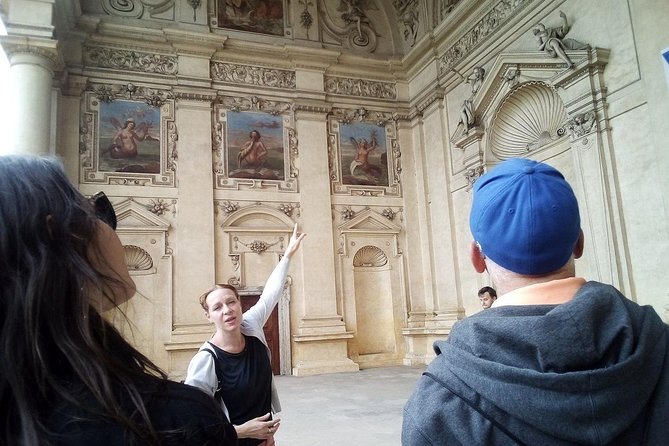
Vrtba Garden, also written as Vrtbovská Garden, is the most intimate stop. Created as a walled Baroque garden around 1720, it rises in terraces above Malá Strana.
The design is compact rather than expansive. You move upward through carefully arranged levels, passing original statues and sculptural decoration from the early 1700s. The garden’s symbolism is part of its appeal, and the guide explains how its classical imagery fits the Baroque taste for allegory and spectacle.
The reward comes at the upper terraces, where you can look across Prague toward the Castle and the city. This is one of the strongest photography stops on the walk, but the view is only part of the experience. The garden shows how a small urban space could be shaped into a private world for a noble household.
There is one clear physical issue. The route includes steep stairs to reach the highest terrace. If you have difficulty climbing, you can wait on the second terrace while the group continues, then rejoin them after about ten minutes. A private tour can modify this part for your own group.
Vrtba admission is listed as an additional cost, at CZK 130 for an individual ticket or CZK 100 for students and seniors. Since the provided tour details also describe the Castle garden admission in conflicting ways, check the current confirmation before you arrive.
What the guide adds beyond a normal garden stroll

A garden tour can easily become a list of names and dates. This one is designed to go further, especially if you enjoy art, architecture, and political symbolism.
The most praised feature is the guide’s ability to turn sculpture into storytelling. Bonita’s background in Greek and Roman mythology helps connect the statues to the people who commissioned them. A fountain or hero becomes part of a message about power, virtue, military success, or royal legitimacy.
The format also suits repeat visitors to Prague. You do not need to be a first-time sightseer to benefit. The walk reaches places you may have passed before without understanding, and its pace leaves room for questions.
At the same time, this is not the best choice if you want a fast photo walk with minimal commentary. The tour is built around explanation. You should expect focused talks at the gardens and buildings, not just a guide pointing out the prettiest corners.
Is $126.03 a good value?
At $126.03 per person, this is not a budget walking tour. The price makes more sense if you value a small group and a specialist guide rather than simply wanting access to gardens.
You are paying for about three hours of guided interpretation, transport coordination by tram, and visits to several sites with different periods and styles. A group capped at eight also gives the experience a more personal feel than a standard large walking tour.
Admission costs need attention. The overview says garden admission is included except for Vrtba Garden, but the detailed information also lists Castle garden admission as an additional charge. The stated fees are CZK 130 for Vrtba and CZK 90 for the Castle gardens, with reduced rates of CZK 100 and CZK 60 for students and seniors. Confirm what your booking includes so the final cost is clear.
For someone with only one day in Prague, the price may be hard to justify if you prefer independent sightseeing. For a repeat visitor, a garden lover, or anyone who wants serious context for the city’s art and architecture, the small group and expert focus can make the expense worthwhile.
Timing, meeting details, and small practical concerns
The tour is offered in English and accepts mobile tickets. Confirmation is sent at booking, and the meeting point is close to public transportation.
The listed ending information says the activity finishes back at the meeting point, while the walking description says the guide leaves you at Vrtba Garden to continue your day. Because those details do not match, ask the operator to confirm the ending arrangement before booking around a restaurant reservation or Castle visit.
Free cancellation is available if you cancel at least 24 hours before the local start time. Changes or cancellations made inside that window are not accepted for a refund.
Plan around the garden season and opening arrangements. One guide response refers to waiting for the gardens to reopen, so access is not something to assume year-round. The tour needs the gardens to be open, and schedules can affect the exact order.
Who will enjoy this tour most?
I would choose this tour for you if you like:
- Art explained through stories and symbolism
- Renaissance and Baroque architecture
- Quiet corners of Prague rather than only headline sights
- Small groups and time for questions
- City views paired with cultural context
- Returning to familiar places and seeing them differently
It is less suitable if you have limited mobility, dislike stairs, or want a relaxed walk with little historical discussion. The option to wait on Vrtba’s second terrace helps, but it does not remove the need to manage uneven and steep sections.
The 10am departure suits a full sightseeing day. The 2pm option is better if you want to combine the walk with morning plans, though you should check how the garden schedule affects the route.
Should you book the Prague gardens walk?
Book it if you want Prague’s gardens to make sense, not just look pretty. The combination of Royal Garden botany, Queen Anne’s Renaissance design, Wallenstein’s theatrical sculpture, and Vrtba’s high terraces gives you a well-shaped three-hour introduction to the city’s courtly side.
I especially recommend it to repeat visitors and curious first-timers who enjoy art history. Just confirm which admissions are included, ask about the final meeting point, and be ready for steep stairs at Vrtba Garden. If those details suit you, this is a thoughtful way to see Prague from behind its palace walls.
FAQ
How long does the Prague Renaissance and Baroque Gardens Walking Tour last?
The guided walk lasts approximately three hours.
Where does the tour begin?
It begins at Bagel Lounge Malostranská, Letenská 118/1, near Malostranská Metro station in Prague’s Malá Strana district.
What language is the tour offered in?
The tour is offered in English.
How many people can join the group?
The group has a maximum of eight travelers.
Are garden admission fees included?
The tour information says Vrtba Garden admission is not included. It also lists admission for the gardens under Prague Castle as an additional fee, although another section says garden admission is included except for Vrtba. Confirm the current inclusions before booking.
Is the tour physically demanding?
You need a moderate level of physical fitness. Vrtba Garden includes steep stairs to the highest terrace, but you can wait on the second terrace if climbing is difficult.
What happens if I need to cancel?
You can receive a full refund if you cancel at least 24 hours before the experience begins. Cancellations or changes made less than 24 hours before the start time are not accepted for a refund.
Just added around Prague
- WWII and Communism History in Prague’s Old Town Private Tour★ 5.0 · 4 reviews
- Prague: Historical Walking Tour with Focus on World War 2★ 4.3 · 12 reviews
- World War II 4WD Tour from Prague with Lunch★ 4.4 · 3 reviews
- Ultimate Unlimited Beer Pong with Czech Beer★ 4.6 · 5 reviews
- Walking tour of Prague in French : Nové Město★ 4.9 · 16 reviews
- Walking tour of Prague in french: Old Town & Charles Bridge★ 4.9 · 62 reviews
- Prague Sightseeing Tour with Lunch★ 5.0 · 5 reviews
- Prague: Modern Private Spa with Jacuzzi and Sauna★ 4.8 · 62 reviews
Walking Tours, compared.

3-Hour Walking Tour of Old Town & Prague Castle
Read our review →
Ghost Walking Tour Where Legends Come To Life
Read our review →
Jewish Quarter Walking Tour with Admission Tickets
Read our review →
Prague Guided Walking Tour and Cruise with Authentic Czech Lunch
Read our review →
Old Town and Jewish Quarter Guided Walking Tour
Read our review →
Prague Ghost and Legend of Old Town Walking Tour
Read our review →
Prague 3-hour Afternoon Walking Tour including Prague Castle
Read our review →
Ghosts and Legends Nighttime Guided Walking Tour
Read our review →Browse the lists this tour appears in