
Reviewed · WALKING TOURS
Private Prague Cold War Walking Tour
Prague’s Cold War story is easiest to grasp when you see the places where power was displayed and challenged. This private tour links a former communist mausoleum, locked nuclear-shelter doors, the John Lennon Wall, and Wenceslas Square, where Soviet tanks and later peaceful crowds changed the country’s course.
I like the private format, since your guide can adjust the pace and answer questions instead of delivering a fixed speech. I also like the personal touch offered by guides such as Alzbeta and Vadim, who connect political events with ordinary family life and invite students and adults into the discussion.
The main drawback is the steep 20-minute climb up Vitkov Hill. The views are excellent, but you should ask to skip this section if hills or uneven walking are difficult for you.
Key points to know before booking
- Klement Gottwald’s former mausoleum: See the old laboratory and temperature-control rooms built to preserve the communist leader’s embalmed body.
- A real Cold War shelter clue: Walk through the Karlin-Zizkov pedestrian tunnel and look for locked doors to maintained nuclear-bomb-shelter corridors.
- Prague’s best political crossroads: Wenceslas Square brings together the 1968 Prague Spring, Warsaw Pact occupation, and 1989 Velvet Revolution.
- Private attention from a historian: The tour is for your group alone, with guides including Alzbeta and Vadim.
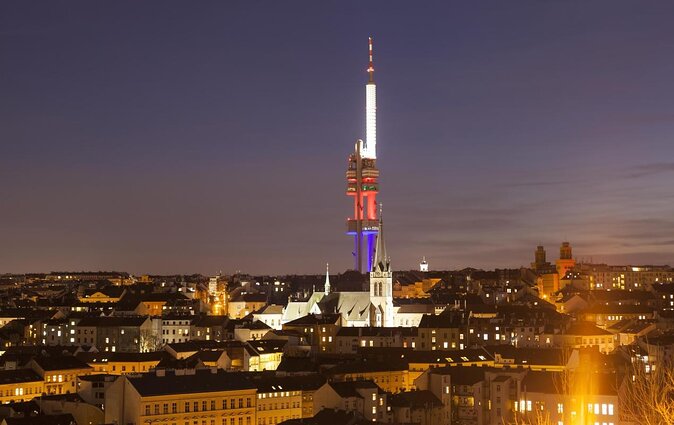
- A worthwhile hilltop payoff: Vitkov offers broad views toward Prague’s Old Town and the Žižkov Television Tower.
- Good value for a small group: The $390.37 price is per group, with pricing based on six people or fewer, rather than a separate charge for each person.
Prague’s Cold War story begins with power on display
This is not a general sightseeing walk with a few communist-era facts added at the end. It focuses on how Czechoslovakia lived under communist rule from 1948 to 1989, and it uses specific places to make that period easier to understand.
You will hear about the state’s control of public life, the limits placed on speech and the press, and the way Soviet power was presented through monuments, military presence, and political ritual. You will also see the other side of that story: protest messages, public demonstrations, and the quiet memory of people who resisted.
The private setup matters here. Cold War history can raise difficult questions, especially for anyone with family ties to Central or Eastern Europe. A guide such as Vadim can explain the political setting, then connect it to daily life. Alzbeta is also praised for linking buildings and events with personal family experiences, which gives the tour a human scale.
A few more Prague trips to weigh up
- Prague: 3-Hour Walking Tour of Old Town & Prague Castle
★ 4.7 · 5,696 reviews - Prague: Ghost Walking Tour Where Legends Come To Life
★ 4.4 · 5,253 reviews - Prague: Jewish Quarter Walking Tour with Admission Tickets
★ 4.7 · 3,729 reviews
The Karlin-Zizkov tunnel and its locked shelter doors
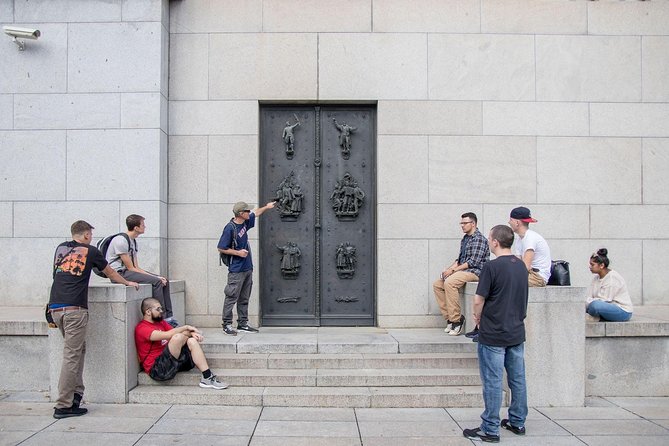
The first stop is the pedestrian tunnel between Karlin and Žižkov. You walk through it for about 10 minutes and see locked doors leading to corridors built as nuclear-bomb shelters during the Cold War.
You do not enter the shelter system, so this is a brief stop rather than a full underground visit. Still, those plain doors make the threat of nuclear war feel less abstract. They point to a network designed for a crisis that most people hoped would never come.
I like this opening because it avoids starting with a grand statue or a famous square. Instead, you get an understated reminder of how Cold War planning shaped the city beneath street level. Your guide can use the site to explain the fear and preparation that formed part of life behind the Iron Curtain.
Vitkov Hill and the former Gottwald mausoleum
The tour then heads to the National Monument at Vitkov. Allow about 30 minutes at the monument itself, plus time for the steep climb. The walk uphill takes around 20 minutes, and that is the most demanding part of the tour.
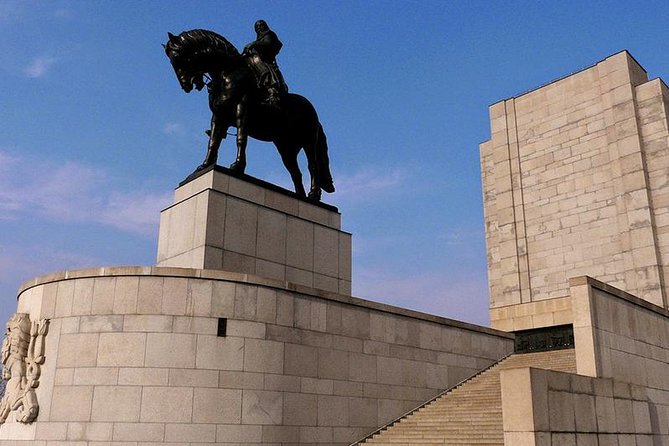
The monument has several layers of Czech and Slovak history. It commemorates warriors of the First World War, includes the Hall of the Red Army, and features a huge bronze statue of Jan Žižka on horseback. The equestrian statue is described as the third-largest bronze equestrian statue in the world, so it is hard to miss.
The Cold War focus comes into sharp view inside the former mausoleum of Klement Gottwald. Gottwald served as Czechoslovakia’s president from 1948 to 1953 and was also general secretary and chairman of the Communist Party. His embalmed body was once displayed here in a carefully controlled political shrine.
You can look into the laboratory and temperature-control center where staff worked to preserve the body. These rooms are especially revealing because they show the technical effort behind a political spectacle. The goal was not simply to bury a leader, but to present him as a lasting symbol of the new communist state.
This stop also shows how older national symbols were placed beside Soviet ones. The National Monument’s original purpose and its later Red Army associations tell you something about the changing story the authorities wanted Prague to tell.
At the top, the city opens below you. You can see toward the Old Town and spot the Žižkov Television Tower on the horizon. One guide-led departure has included a sunset from Vitkov, so an afternoon booking may offer a particularly pleasant view, although the tour does not promise a specific sunset time.
If you have mobility concerns, tell the company in advance. The hill can be left out, with more time spent on other Cold War sites. That option makes the tour more useful for people who cannot manage a sustained uphill walk.
The Žižkov Television Tower from Vitkov
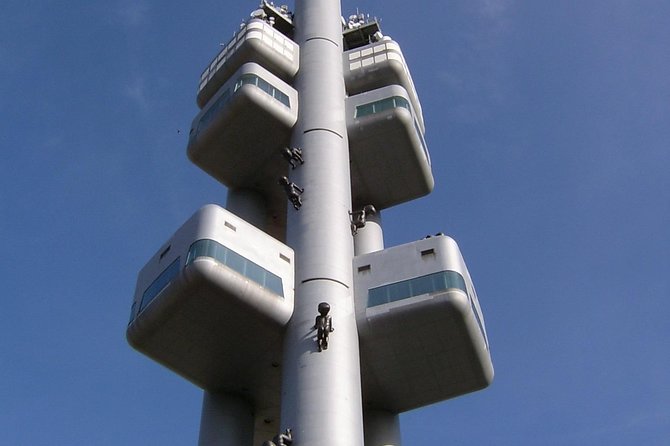
The tour includes a short stop to view the Žižkov Television Tower from the best angle available on this route. Admission is free because you are not visiting the tower’s interior.
Its Brutalist design is a sharp contrast to Prague’s Gothic towers, Baroque churches, and historic apartment blocks. The tower helps show how the communist period left its mark on the city’s appearance, even when the building itself was not created as a Cold War monument.
This is a five-minute viewing stop, not a major attraction on its own. Think of it as a useful visual pause and a chance to connect the city’s modern architecture with the wider political story.
Same country, a completely different kind of day:
- Prague: 50-Minute Sightseeing Evening Cruise
★ 4.2 · 33,780 reviews - Prague: Medieval Dinner with Unlimited Drinks
★ 4.4 · 19,847 reviews - Prague: Skip-the-line Castle Ticket and Optional AudioGuide
★ 4.3 · 11,121 reviews - Prague: Castle Tour with Local Guide and Entry Ticket
★ 4.6 · 10,422 reviews
Wenceslas Square, from tanks to peaceful crowds
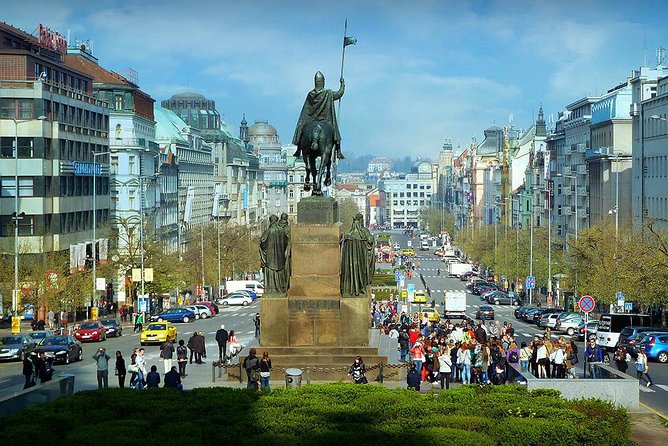
Wenceslas Square is the tour’s strongest public-history stop. You walk through the long central boulevard and consider its past, from its founding in the 14th century through military parades, occupation, protest, and political change.
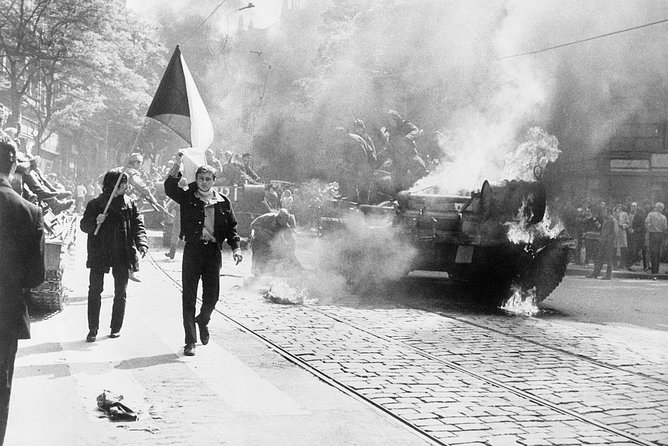
The square became a major scene during the Prague Spring of 1968. For eight months, freedom of speech and an independent press were allowed to grow under a reform-minded communist government. Warsaw Pact tanks then entered Czechoslovakia and crushed the experiment.
Your guide explains how the square figured in those events and points out memorials to Czech protestors. The discussion is not limited to high politics. You also learn how the square functioned as a public stage, where ordinary people could gather, watch military power pass by, or show opposition.
The square mattered again in 1989 during the Velvet Revolution. Large crowds gathered here as communist rule began to collapse. The contrast is powerful: in 1968, tanks came to end a period of reform, while in 1989, mass public gatherings helped bring a peaceful political transition.
I find this part especially useful if you have read about the Prague Spring but still struggle to picture it. Wenceslas Square gives the events a clear physical setting. You can stand where power was displayed, where people protested, and where a new era was publicly celebrated.
The John Lennon Wall and protest in plain sight
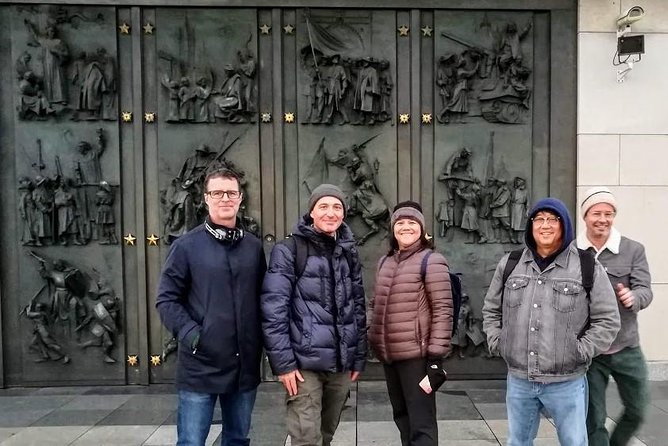
The John Lennon Wall adds a more informal side to the tour. During the communist period, people painted messages of hope, peace, and Western-style freedom on the wall. The authorities treated the graffiti as a problem, but the writing kept returning.
This stop is valuable because it shows opposition outside formal politics. Not everyone could publish an article, organize a legal protest, or speak openly on television. A painted wall offered another way to express ideas that the state tried to control.
The wall is also a good reminder that the Cold War was not only about presidents, armies, and party officials. It was about music, speech, personal courage, and the desire to choose how you lived. Your guide can place the graffiti within the wider atmosphere of censorship and surveillance.
The tour’s route includes several public places where meaning changed over time. The John Lennon Wall represents unofficial expression, while Wenceslas Square represents mass political action. Vitkov represents official ceremony and state power. Together, these sites give the tour a useful range.
An ironic modern stop near Wenceslas Square
The final listed stop is the upside-down statue of King Wenceslas riding a dead horse. It takes about five minutes and offers a pointed contrast to the formal monuments seen earlier.
The sculpture uses irony to comment on contemporary Central European politics and on the image of national leadership. Your guide can help place it within Prague’s habit of using humor and absurdity to question authority.
This is a quick stop, but it suits the tour’s theme. Prague’s political memory is not preserved only in solemn memorials. It also appears in satire, visual jokes, and public art that asks you to reconsider familiar symbols.
How the private format changes the experience
The tour lasts about three hours and is offered in the morning or afternoon. You meet a historian guide in central Prague, and tram tickets are included, which helps connect the hilltop monument with the city-center stops without making you arrange local transport yourself.
The group is private, so only your party participates. That is a major advantage if you want to ask about family memories, communist architecture, the Soviet Union, the 1968 invasion, or the Velvet Revolution without worrying about slowing down a large group.
Vadim has been especially effective with American study-abroad students because he asks questions and relates the places to the topics being discussed. That approach is useful for adults, too. You are not simply walking behind someone who points at a building. You get room for conversation and clarification.
Alzbeta brings another strength: connecting locations and historical events with family experiences. If personal testimony matters to you, request a guide who can provide that kind of context when booking, though guide assignment is subject to availability.
The company also offers restaurant and bar suggestions after the tour. Those recommendations are not part of the paid sightseeing program, but they can be a helpful bonus if you want practical local advice.
What the $390.37 group price really means
The listed cost is $390.37 per group of up to 10, with the pricing described as based on six people or fewer. That makes the value strongest for a small private party that can share the cost.
For two people, it is a costly history walk. For four to six people, the per-person price becomes more reasonable, especially since you get a private historian rather than joining a large scheduled group. A group of up to 10 should confirm the exact pricing terms before booking, since the price information is specifically based on six or fewer.
The tour includes the historian guide and tram tickets. Food, drinks, and hotel pickup and drop-off are not included. Pickup can be arranged in some cases, but unless that has been set up, you should meet the guide at Kostel Svaty Josef at Náměstí Republiky 15 minutes before departure.
The central meeting point is convenient for starting the day, but the tour ends in Prague rather than returning you to a hotel. Plan your next stop accordingly.
Who will get the most from this tour
I would choose this tour if you want political history tied to actual streets, monuments, and public spaces. It suits adults with a strong interest in 20th-century Europe, students, and anyone whose family story touches Czechoslovakia or the wider Soviet bloc.
It also works well as a private introduction before exploring Prague on your own. After three hours, you will understand why a square, statue, wall, or Brutalist tower matters instead of seeing it as scenery without context.
You should think twice if you want a relaxed, flat walk through Prague’s prettiest historic lanes. This tour is serious in subject and includes a demanding hill. It also concentrates on communist-era history rather than Prague Castle, Old Town architecture, or traditional cultural sights.
Wear comfortable shoes and allow for the uphill stretch. If that climb is not suitable, contact the provider so the Vitkov section can be removed.
Should you book the Private Prague Cold War Walking Tour?
Book it if you want a focused, discussion-based look at Prague between 1948 and 1989, especially if you are sharing the $390.37 cost with several people. The former Gottwald mausoleum, shelter doors, John Lennon Wall, and Wenceslas Square give the tour a strong mix of official power and personal resistance.
I would be less inclined to book it for a small party on a tight budget or for anyone seeking a broad first tour of Prague’s famous sights. For the right audience, though, this is a thoughtful way to understand how occupation, censorship, protest, and public courage shaped the city you see today.
FAQ
How long does the tour last?
The walking tour lasts approximately three hours.
Is the tour private?
Yes. Only your group participates in the activity.
How many people can join the group?
The tour is offered for groups of up to 10 people. The price information is based on six people or fewer, so larger groups should confirm the applicable rate.
Is the tour offered in English?
Yes. The tour is offered in English.
Are morning and afternoon departures available?
Yes. You can choose a morning or afternoon departure.
Where does the tour start?
Unless hotel pickup has been arranged, meet at Kostel Svaty Josef, Náměstí Republiky 1077/2, Prague 1. You should arrive 15 minutes before the start time.
Is hotel pickup included?
Hotel pickup and drop-off are not included in the standard tour. Pickup may be arranged separately.
Are tram tickets included?
Yes. Tram tickets are included in the tour price.
Does the tour enter the nuclear shelters?
No. At the Karlin-Zizkov pedestrian tunnel, you see the locked doors leading to Cold War nuclear-bomb-shelter corridors. The listed stop does not include entry into the corridors.
Is the Vitkov Hill climb optional?
The route includes a steep climb of about 20 minutes, but the provider can leave out Vitkov Hill if you have mobility issues. You should notify them in advance.
What happens if I need to cancel?
You can receive a full refund if you cancel at least 24 hours before the local start time. Cancellations or changes made less than 24 hours before the start are not accepted for a refund.
Just added around Prague
- WWII and Communism History in Prague’s Old Town Private Tour★ 5.0 · 4 reviews
- Prague: Historical Walking Tour with Focus on World War 2★ 4.3 · 12 reviews
- World War II 4WD Tour from Prague with Lunch★ 4.4 · 3 reviews
- Ultimate Unlimited Beer Pong with Czech Beer★ 4.6 · 5 reviews
- Walking tour of Prague in French : Nové Město★ 4.9 · 16 reviews
- Walking tour of Prague in french: Old Town & Charles Bridge★ 4.9 · 62 reviews
- Prague Sightseeing Tour with Lunch★ 5.0 · 5 reviews
- Prague: Modern Private Spa with Jacuzzi and Sauna★ 4.8 · 62 reviews
Walking Tours, compared.
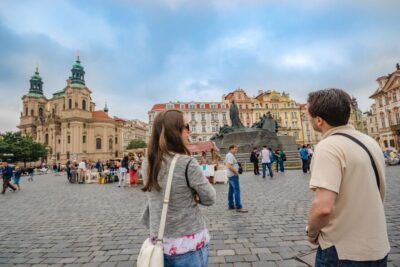
3-Hour Walking Tour of Old Town & Prague Castle
Read our review →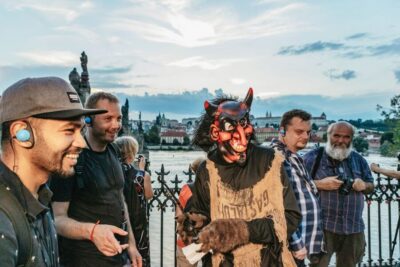
Ghost Walking Tour Where Legends Come To Life
Read our review →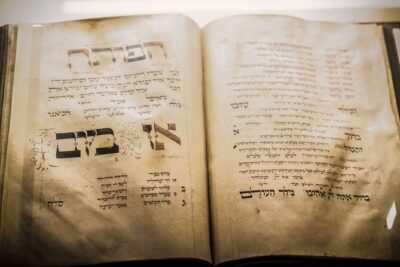
Jewish Quarter Walking Tour with Admission Tickets
Read our review →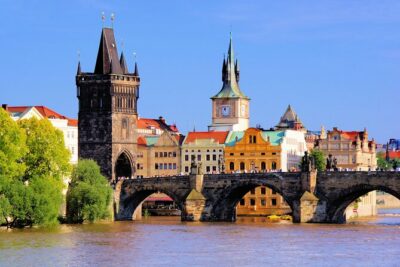
Prague Guided Walking Tour and Cruise with Authentic Czech Lunch
Read our review →
Old Town and Jewish Quarter Guided Walking Tour
Read our review →
Prague Ghost and Legend of Old Town Walking Tour
Read our review →
Prague 3-hour Afternoon Walking Tour including Prague Castle
Read our review →
Ghosts and Legends Nighttime Guided Walking Tour
Read our review →Browse the lists this tour appears in