Reviewed · TOURS
Small-Group World War 2 & Operation Anthropoid Tour in Prague
The most powerful part of this Prague walk comes at the end, in the crypt of St. Cyril and Methodius Cathedral. This is where Czech paratroopers hid after killing Reinhard Heydrich, Nazi security chief for the Protectorate of Bohemia and Moravia. The visit gives the story a real place, not just a page in a guidebook.
I like the clear three-hour route and the way it links politics, ordinary life, resistance work, betrayal, and revenge. I also like the guides’ strong command of the subject. Allen, Daniel, Dana, Martin, Richard, Robin, Pablo, and Rafek are among the guides praised for their storytelling, English, patience, and grasp of Czech history.
The main consideration is pace. You walk and stand for much of the afternoon, while some stops involve a long explanation beside an ordinary building. If you prefer a fast-moving sightseeing tour, this may feel slow. If you want the full story, including the difficult context before and after the war, the detail is the point.
Key points to know before booking
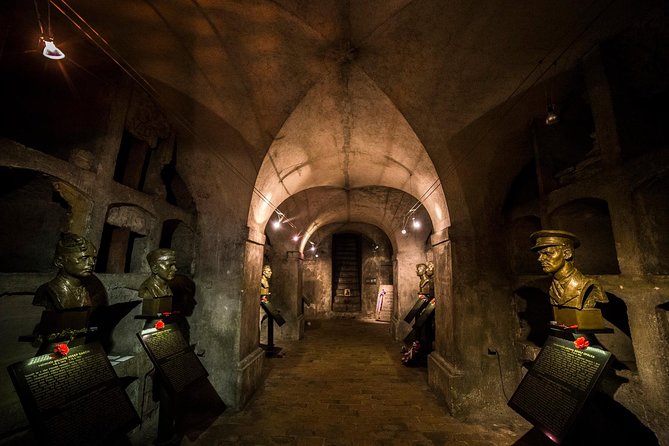
- The crypt is the emotional high point: You visit the underground refuge where the resistance fighters made their last stand.
- The tour begins in Old Town and ends in New Town: Wear comfortable shoes and allow time to return to your hotel afterward.
- The story starts after World War I: You learn how the Treaty of Versailles, economic crisis, nationalism, and Hitler’s rise shaped the road to occupation.
- The route uses real Prague locations: Safehouses, Gestapo headquarters, damaged buildings, hotels, streets, and public squares become part of the story.
- The group can include up to 30 people: A small group is promised, but the maximum is not intimate by walking-tour standards.
- This is serious history: The material includes executions, torture, betrayal, concentration camps, and the destruction of Lidice.
Why Operation Anthropoid matters in Prague
Operation Anthropoid was the code name for the 1942 attempt to kill Reinhard Heydrich. Heydrich was one of the most feared Nazi officials in occupied Europe, and his appointment in September 1941 changed life in the Protectorate of Bohemia and Moravia.
The operation was carried out by Czech and Slovak paratroopers sent from the government in exile in London. Their mission was dangerous from the start. The tour explains the planning, the earlier resistance efforts, the safehouses, and the people who took enormous risks to shelter the fighters.
That preparation matters. Without it, the assassination can sound like an isolated act of bravery. Here, you follow the chain of events that led to it, then see the terrible German response.
The story also reaches beyond the soldiers. You hear about people who hid resistance members, passed messages, offered rooms, or helped vulnerable neighbors. The strongest guides, including Allen and Daniel, appear to make these personal choices as important as the military action itself.
Other Prague days worth booking alongside this:
- Prague: 50-Minute Sightseeing Evening Cruise
★ 4.2 · 33,780 reviews - Prague: Medieval Dinner with Unlimited Drinks
★ 4.4 · 19,847 reviews - Prague: Skip-the-line Castle Ticket and Optional AudioGuide
★ 4.3 · 11,121 reviews
Starting beside Týnská 627/7
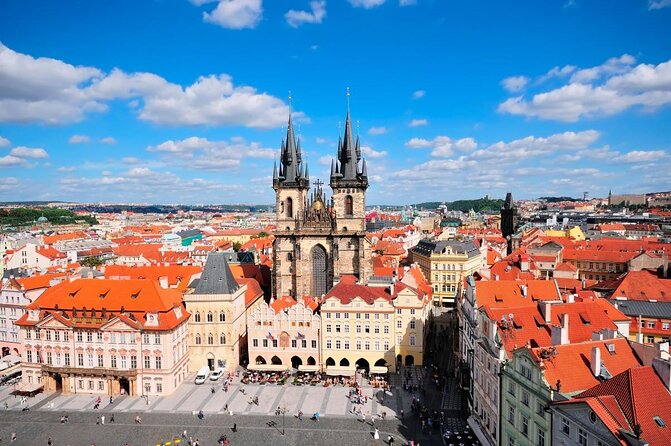
Meet the guide at Týnská 627/7 in Prague 1, in front of McGee’s Trips & Tickets. The meeting point is in central Old Town, but do not assume you should wait inside the shop. The gathering takes place outside the building.
The scheduled start is 1:30 pm. Arrive early, especially if you are unfamiliar with Prague’s Old Town lanes. One person who missed the tour had trouble finding the meeting point, so check the address and map carefully before setting out. The guide cannot hold the group indefinitely, and the usual waiting period is limited.
From here, the walk begins with the political setting that shaped Czechoslovakia’s wartime fate.
From the Treaty of Versailles to the Munich Agreement
At U Budovce, the guide sets up the larger European story. You hear about the consequences of World War I, the Treaty of Versailles, the creation of new states such as Poland, Austria, and Czechoslovakia, and the economic shocks that followed.
Runaway inflation, the Great Depression, and widespread economic trouble helped nationalist movements gain ground. The point is not to excuse Nazi rule. It is to show how instability and fear created room for Hitler’s message to spread.
This opening section is mostly explanation rather than sightseeing. You may be looking at a normal Prague street while the guide uses photographs and facts to reconstruct events that happened decades ago. That style works well for history lovers, but you should know that the visual setting alone will not always reveal what happened there.
At the Stone Bell House, the focus shifts to the Sudeten German Party, the Munich Agreement, and the creation of the Protectorate of Bohemia and Moravia. The Gothic church nearby provides one of the Old Town’s familiar views, but the guide redirects your attention from medieval Prague to the political surrender that left Czechoslovakia exposed.
Old Town Hall and the Prague Uprising
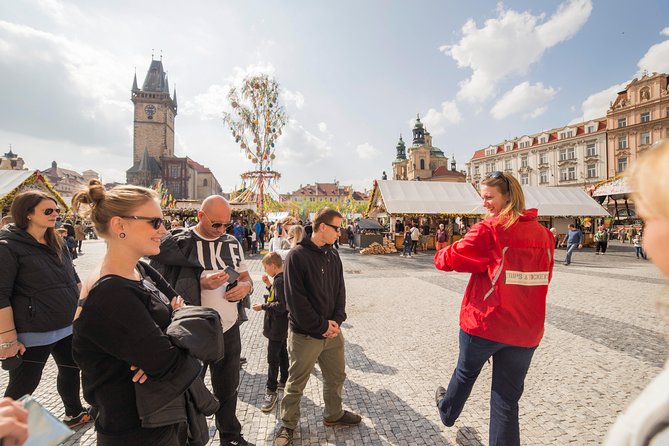
At Staroměstská radnice, you see the section of the Old Town Hall damaged during the Prague Uprising of May 1945. The uprising helped bring the occupation to an end, and the guide explains the barricades, street fighting, and improvisation used by people trying to regain control of the city.
This is one of the better examples of how the tour connects a famous Prague sight with a less familiar chapter. Many people photograph the Old Town Hall for its clock and Gothic details. You also learn that part of the building carries the marks of the final days of Nazi rule.
The discussion includes daily life under occupation. That can mean shortages, fear, restrictions, censorship, and the constant pressure of German control. The tour does not treat Prague only as a stage for soldiers and officials. It gives you some idea of what the occupation meant for people trying to work, eat, study, and survive.
Same country, a completely different kind of day:
- Prague: Castle Tour with Local Guide and Entry Ticket
★ 4.6 · 10,422 reviews - Prague Castle 2.5-Hour Tour Including Admission Ticket
★ 4.7 · 8,927 reviews - Prague: Oldtown, Medieval Underground & Dungeon History Tour
★ 4.2 · 8,244 reviews - Prague: Vltava River Night Cruise with Buffet
★ 4.3 · 7,338 reviews
Celetná Street and the tightening occupation
On Celetná Street, the story turns to November 17, 1939. Czech students were executed, universities were closed, and the country was placed under increasingly severe German control.
You also learn about Konstantin von Neurath and the appointment of Heydrich on September 27, 1941. His arrival was a turning point. The regime wanted to crush resistance, increase production, and impose order through terror.
This stop helps explain why Heydrich became such a central target. He was not simply another German official stationed in Prague. His role represented the wider Nazi system of repression, and his methods made the resistance more urgent and more dangerous.
Melantrichova and a resistance safehouse
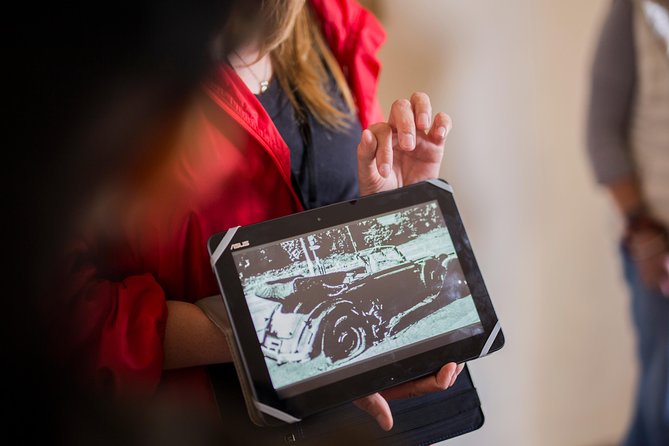
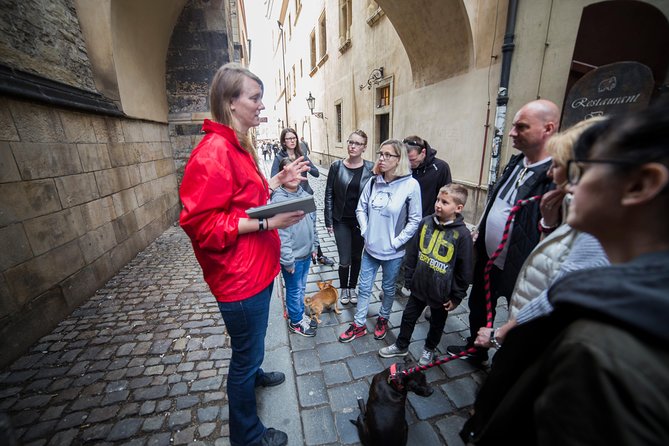
Melantrichova brings the story closer to the people who made Operation Anthropoid possible. The guide explains the exiled government in London and earlier missions known as Operation Benjamin, Silver A, and Silver B.
You also see the building connected with the apartment of Josef and Marie Svatoš. It served as one of the resistance hideouts. From the street, it may look like just another Prague building. That contrast is part of the lesson: resistance work often took place behind ordinary doors, in rooms that had to remain invisible to the authorities.
This is where photographs help. Several guides use period images to show the people and locations involved. The result is useful because much of the wartime Prague story is not marked by large monuments or dramatic ruins.
The assassination and the Bat’a department store
At the Bat’a department store, the guide discusses the attack on Heydrich. The building was later used to display objects found at the assassination scene.
The stop is brief, but it gives you a physical point for the event. The operation was daring and chaotic, not a neat action from a war film. The guide fills in the details that the street itself cannot show, including the role of the paratroopers and the unfolding search for those responsible.
Some of the route’s buildings are ordinary commercial or civic places. That is a strength if you enjoy historical detective work. It is a drawback if you expect a preserved battlefield or a large museum at every stop.
Wenceslas Square and the destruction of Lidice
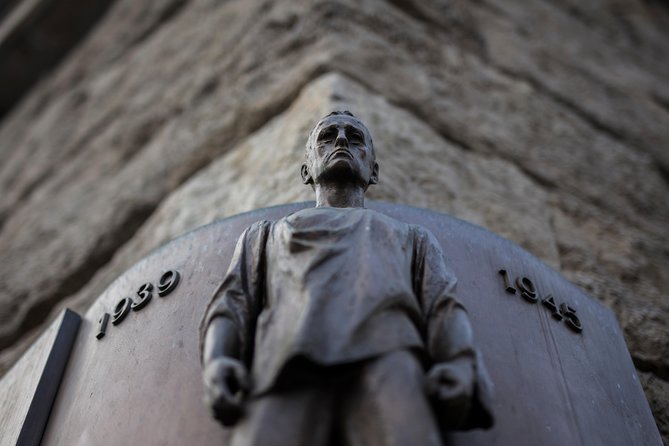
At Wenceslas Square, you hear about Lidice, the village destroyed after the assassination. On June 10, 1942, the men were executed and the women were sent to concentration camps. Lidice ceased to exist as a community.
This is one of the tour’s hardest sections. The guide connects the reprisals to the Nazi search for Heydrich’s killers and explains how collective punishment reached far beyond the resistance fighters themselves.
The stop is not a visit to Lidice. You remain in central Prague and receive the historical context here. If you want to explore the village memorial separately, you would need to arrange that on your own.
Nazi Prague at the Esplanade Hotel
The Esplanade Hotel was a favorite of Nazi officials during the occupation. The building provides another reminder that the occupation was woven into the city’s ordinary institutions.
This is a short stop, only a few minutes, and its value depends on the guide’s explanation. There may not be much to see from the pavement. A strong storyteller makes the location useful by explaining who used such places and how the German presence shaped public life.
This pattern repeats on the walk. You are not moving from museum to museum. You are reading the city through addresses, photographs, stories, and the guide’s account of what happened there.
Petschek Palace and Karel Čurda’s betrayal
Petschek Palace is among the most sobering locations. It served as a Gestapo headquarters where Czechoslovaks were interrogated, tortured, and killed.
The guide also tells you about Karel Čurda, who entered the building on June 16, 1942, and betrayed his comrades. His decision became a turning point in the hunt for the men responsible for Heydrich’s assassination.
This section adds an important complication to the story. Courage and sacrifice were not the only forces at work. Fear, pressure, self-preservation, and betrayal also shaped what happened next.
The palace is near the National Museum, one of Prague’s major buildings. You pass this impressive institution while the guide continues the wartime story. The museum itself is not part of the tour, so do not plan on an interior visit during the walk.
New Town, failed missions, and wartime bombing
In Vodičkova, you hear about two unsuccessful covert operations, Tin and Bioscop. These missions broaden the picture beyond Anthropoid and show that resistance work involved repeated attempts, failures, and danger.
At Karlovo náměstí, the guide discusses the bombing of Prague in 1945. The city did not experience the same scale of destruction as some European capitals, and that can shape your expectations. This is not a tour of vast wartime ruins or former battlefields.
Instead, you get a history of occupation, repression, resistance, and the final uprising, told across a city whose historic center remains largely intact. One part of the value is learning to notice what is absent as well as what survives.
St. Cyril and Methodius Cathedral
The tour’s final destination is St. Cyril and Methodius Cathedral on Resslova Street. Admission is included, and the guide enters the church with you.
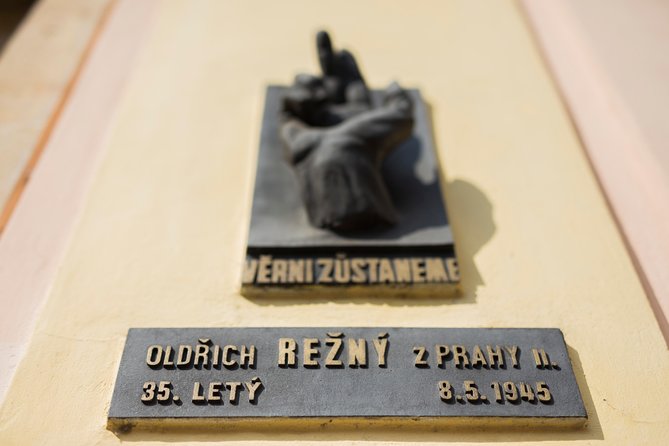
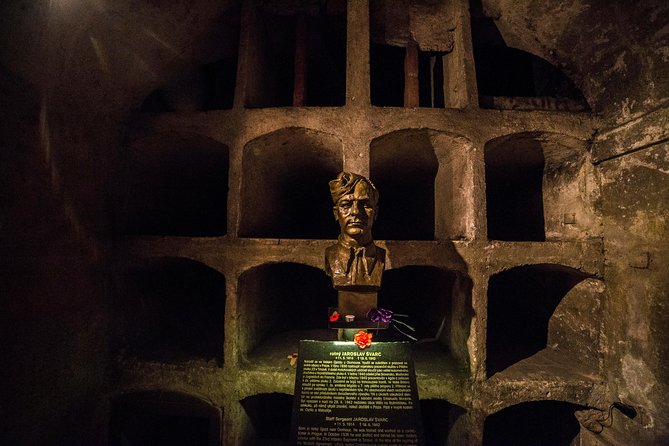
The cathedral is tied directly to the last phase of Operation Anthropoid. After the assassination, the paratroopers and their supporters hid here. The church became the scene of a desperate German assault and the final resistance of the men inside.
The building carries a weight that the earlier street stops cannot quite match. You are no longer looking at a modern storefront or a hotel facade. You are inside the place connected to the final days of the operation.
The crypt and the National Memorial
The National Memorial to the Heroes of the Heydrich Terror is located at the cathedral. You visit the crypt where the Czech paratroopers paid the ultimate price.
Allow about 20 minutes for this final memorial visit, in addition to roughly 15 minutes inside the cathedral itself. The crypt is atmospheric and intimate. It gives you time to absorb the story after several hours of names, dates, operations, and reprisals.
This is also the place where the tour’s central idea becomes clear. Operation Anthropoid was not only an attack on a Nazi official. It was a network of people who accepted personal danger, and a story of resistance that ended with enormous human cost.
The tour finishes here, not back at the Old Town starting point. The end point is Resslova 9a in Prague’s New Town, near public transportation. Plan your next appointment from this side of the center rather than assuming you will finish near the Old Town Square.
Price, group size, and practical value
At $33.88 per person, the tour offers about three hours with an English-speaking local guide, plus entry to the cathedral and memorial. That is a fair price if you want a structured account of Czech World War II history and would otherwise struggle to connect scattered locations.
The route includes many free outdoor stops, so the price is mainly paying for the guide’s research, narration, route planning, and access to the final church and crypt. You are also paying for context that is difficult to find by simply walking past the buildings.
The maximum group size is 30. That is manageable for a city walk, but it may not feel truly personal if the tour fills. In poor weather, a smaller group can make the experience easier, while rain or snow can make three hours of walking and standing feel long.
You need a moderate level of fitness. Food, drinks, hotel pickup, and hotel drop-off are not included. Children up to age six go free, but the subject matter is not recommended for small children.
The tour has a 4.8 rating from 231 ratings, with 95 percent recommending it. Those numbers match the main strength of the experience: the guides generally bring serious subject knowledge and clear enthusiasm. Allen, Daniel, and Dana receive especially strong praise for explaining the story in accessible terms, while Richard’s English and storytelling are also singled out.
Guide quality can still vary by style. One person left early after finding the opening explanation too slow and fact-heavy. That is a fair warning. The tour depends heavily on the guide’s delivery, and the first part includes plenty of background before you reach the resistance sites.
Who should book this Prague WWII walk?
I would choose this tour if you are interested in 20th-century history, resistance movements, Nazi occupation, or the film and book history surrounding Operation Anthropoid. It also suits you if you like seeing places that you might otherwise pass without noticing.
You do not need to be a history specialist. The tour begins with World War I and explains the political steps leading to World War II, so you receive the necessary background. The guides are used to answering questions, and some adapt the pace when timing allows.
I would think twice if you want a tour built around grand architecture, museums, or battlefield remains. Much of the route involves listening beside everyday city buildings. You should also avoid scheduling a tight appointment immediately afterward, since the tour can run close to three hours and ends across the center.
Book at least a little ahead if your dates are fixed. The tour is often reserved about 27 days in advance, and it requires a minimum number of participants. If the operator cancels because that minimum is not reached, you receive a different date or experience, or a full refund.
Free cancellation is available up to 24 hours before the 1:30 pm start time. Changes or cancellations made later are not accepted for a refund.
Should you book the Operation Anthropoid tour?
Book it if you want Prague’s wartime story told through real streets, resistance safehouses, Gestapo offices, and the cathedral crypt where the operation ended. The price is modest for a three-hour guided walk, and the final memorial gives the tour a strong, memorable finish.
Skip it if you dislike long explanations, serious subject matter, or walking between places that may look ordinary today. For the right audience, though, this is one of the more meaningful ways to understand Prague beyond its castles, clocks, and pretty squares.
FAQ
Where does the tour begin?
The tour begins in front of McGee’s Trips & Tickets at Týnská 627/7 in Prague 1, in central Old Town.
What time does the tour start?
The scheduled start time is 1:30 pm.
Where does the tour end?
It ends at the Orthodox Cathedral of Saints Cyril and Methodius, at Resslova 9a in Prague’s New Town.
How long does the experience last?
The walking tour lasts approximately three hours.
Is the tour offered in English?
Yes. The experience is offered in English.
What is included in the price?
The price includes a local guide and visits to St. Cyril and Methodius Cathedral and the National Memorial to the Heroes of the Heydrich Terror.
Are food and drinks included?
No. Food and drinks are not included.
Is hotel pickup available?
No. Hotel pickup and drop-off are not included.
Is the tour suitable for young children?
The experience is not recommended for small children because it covers serious World War II subjects. Children up to six years old are free, and children must be accompanied by an adult.
Can I cancel for a refund?
Yes. You can cancel up to 24 hours before the experience starts for a full refund. Cancellations or changes made less than 24 hours before the start time are not accepted for a refund.
Just added around Prague
- WWII and Communism History in Prague’s Old Town Private Tour★ 5.0 · 4 reviews
- Prague: Historical Walking Tour with Focus on World War 2★ 4.3 · 12 reviews
- World War II 4WD Tour from Prague with Lunch★ 4.4 · 3 reviews
- Ultimate Unlimited Beer Pong with Czech Beer★ 4.6 · 5 reviews
- Walking tour of Prague in French : Nové Město★ 4.9 · 16 reviews
- Walking tour of Prague in french: Old Town & Charles Bridge★ 4.9 · 62 reviews
- Prague Sightseeing Tour with Lunch★ 5.0 · 5 reviews
- Prague: Modern Private Spa with Jacuzzi and Sauna★ 4.8 · 62 reviews
Tours, compared.
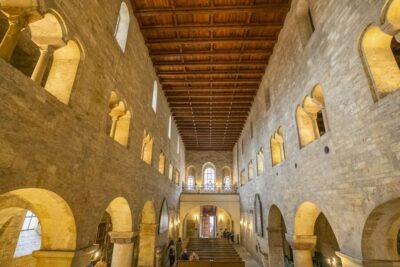
Castle Tour with Local Guide and Entry Ticket
Read our review →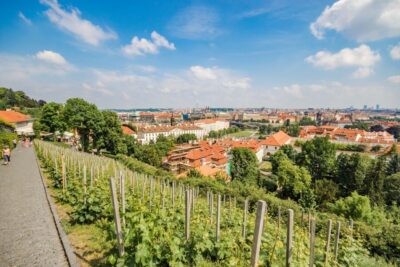
Prague Castle 2.5-Hour Tour Including Admission Ticket
Read our review →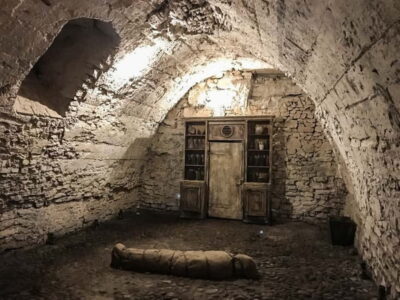
Oldtown, Medieval Underground & Dungeon History Tour
Read our review →
3-Hour Walking Tour of Old Town & Prague Castle
Read our review →
3-Hour Old Town and Prague Castle Tour in German
Read our review →
Ghost Walking Tour Where Legends Come To Life
Read our review →
Ghosts, Legends, Medieval Underground & Dungeon Tour
Read our review →