Reviewed · PRAGUE TOURS
The Plague Doctor of Prague
Prague’s plague years come alive through a costumed guide playing Alexander Schamsky, a plague doctor linked to the city’s 1715 epidemic. You move from the Golden Well to Old Town Square, the Jewish Quarter, an old hospital, and St. Agnes Convent while learning how fear, faith, medicine, and social class shaped daily life.
I like the small-group format, capped at 10 people, and the way the walk links medical history to real places. I also like the mix of serious research and dry, spooky humor. Guides including Thomas, David, Oscar, Oskar, and Maddie have been singled out for strong delivery and audience care.
The main drawback is that this is a theatrical history walk, not a traditional architecture tour. It also needs good weather, and one person found the costume smelled a little tired, so you should know that atmosphere and performance matter as much here as the historical detail.
Key points to know before you book
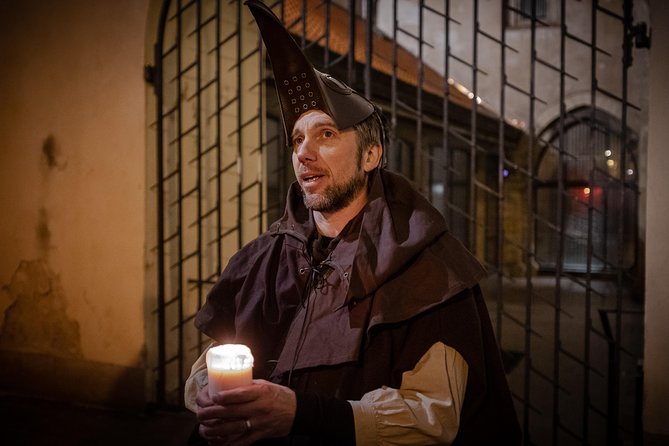
- A plague doctor leads the walk: The character of Alexander Schamsky takes you back to Prague in 1715, with a costume and performance that give the subject a human face.
- Six central Prague stops: The route connects Aurus Hotel, New Town Hall, Old Town Square, the Franz Kafka Statue, St. Simon and Jude, and St. Agnes Convent.
- History goes beyond the disease: You learn about quarantine, social class, Jewish communities, merchants, religious beliefs, and medical care.
- Good for mixed ages: Families with children, teenagers, adults, and people interested in medicine or public health can all find something here.
- A short, manageable evening walk: The tour lasts about 90 minutes and includes a group photo at the end.
- Strong value at $26.61: For a small-group walk with a costumed guide and several major Prague sights, the price is fair, especially if you want something different from a standard city tour.
Why this plague walk feels different from a standard Prague tour
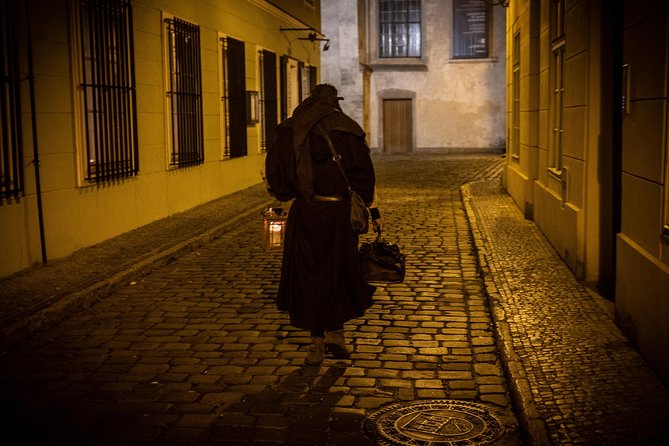
Many Prague walks focus on kings, churches, grand facades, and famous composers. This one uses the city as a stage for a more intimate subject: how ordinary people tried to make sense of a deadly disease.
You are not simply shown a building and given its construction date. At each stop, the guide connects the place to a question people once faced. Was the plague caused by bad air, sin, poisonous vapors, divine punishment, or contact with the sick? Why could wealthy residents flee while poorer people stayed behind? What happened when a household was placed under quarantine?
That approach gives you a better feel for life during an epidemic. The subject is grim, but the presentation is not relentlessly bleak. The guides play their roles with humor, and the best moments balance creepy details with clear explanations.
The experience has been recognized by the New York Times, Vogue, and Forbes, but its real appeal is more practical. It gives you a focused way to see central Prague after dark while learning about a period that shaped public health, religion, medicine, and city life.
Other Prague days worth booking alongside this:
- Prague: 50-Minute Sightseeing Evening Cruise
★ 4.2 · 33,780 reviews - Prague: Medieval Dinner with Unlimited Drinks
★ 4.4 · 19,847 reviews - Prague: Skip-the-line Castle Ticket and Optional AudioGuide
★ 4.3 · 11,121 reviews
Starting at Aurus Hotel and the House of the Golden Well
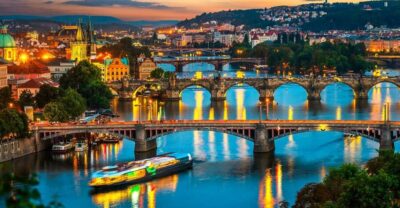
The tour begins at Aurus Hotel Prague on Karlova 3 in Staré Město. This places you in the heart of Prague’s Old Town, close to the Charles Bridge area and the historic streets around Karlova.
The opening sets the time and tone. Your plague doctor introduces Alexander Schamsky and takes you back to 1715, when Prague faced a serious outbreak. You also hear about the building known as the House of the Golden Well and the plague saints St. Sebastian and St. Rochus.
This first section is useful because it explains how people understood disease before modern germ theory. The beliefs may sound strange now, but they were not random to the people who held them. Religious faith, old medical theories, poor sanitation, trade, travel, and fear all shaped their response.
You also get a preview of the walk and its central subjects. Expect the guide to establish a character rather than simply hand you a timeline. Guides such as Thomas and David have been praised for using humor and clear storytelling, while Oscar, Oskar, and Maddie have also led versions of the experience.
The first stop lasts about 10 minutes. Admission to the places visited is included because the tour is conducted from public streets and exterior locations rather than as a series of indoor museum visits.
New Town Hall and the hard facts of quarantine
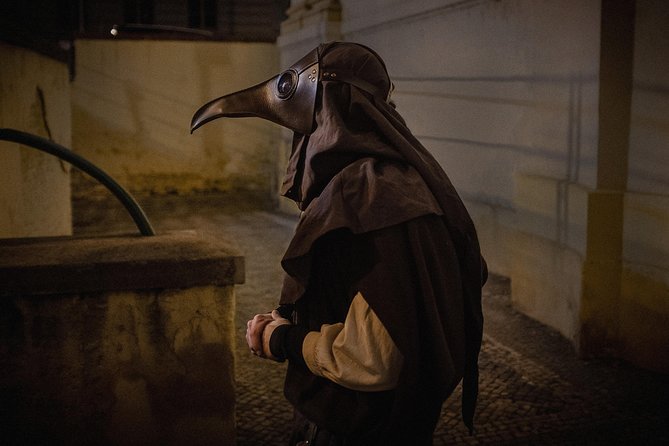
The second stop covers the New Town Hall area, with attention also given to the old monastery Klementinum and its library. The discussion turns from beliefs to the different forms of plague and the way the disease affected rich and poor people in very different ways.
This is one of the most useful sections for putting the epidemic into social context. A wealthy household might have had more room to isolate, better access to food, and the means to leave the city. A working family often had none of those options.
Quarantine is treated as a lived experience rather than a modern buzzword. You learn what isolation could mean for a household and how restrictions affected movement and survival. That connection can make the subject feel surprisingly current without turning the tour into a comparison with modern pandemics.
The stop lasts about 10 minutes. You should expect explanation and storytelling, not a long interior visit to the Klementinum library or New Town Hall. If your main interest is Prague architecture, this part may feel brief. If you want to understand how public health controls affected people, it carries more weight.
Old Town Square, merchants, and a city at war
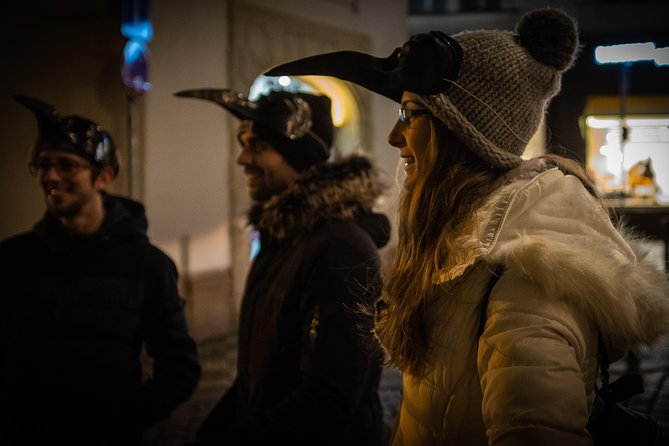
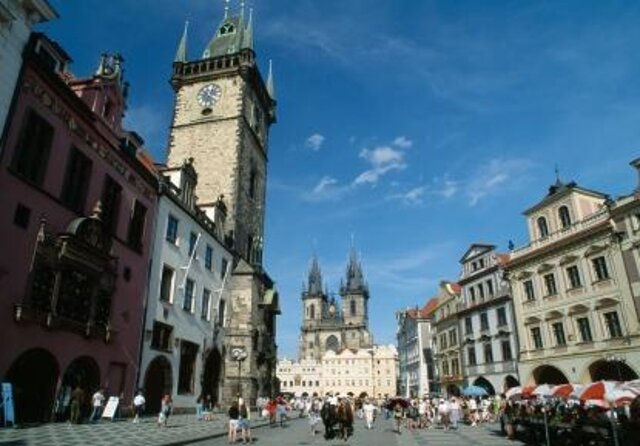
At Staroměstské náměstí, the route opens into Prague’s large market square. The guide introduces the Hussite Church, Týn Church, and Old Town Hall while explaining how merchants worked during plague times.
The square is a good setting for this subject. Markets brought people, goods, animals, and information together, but they also created fear during an outbreak. Merchants had to balance trade with the risk of contact, while city authorities faced pressure to control movement without stopping economic life entirely.
The tour also reaches back to the Thirty Years’ War. That wider setting matters because disease did not exist in isolation. War, poverty, hunger, displacement, and weak medical care could reinforce one another. The result was a Europe where a town might face several disasters at once.
This is also one of the more atmospheric portions of the walk. Old Town Square can be busy, so it may not feel quiet or theatrical at every moment. Still, its churches and civic buildings give the guide a strong backdrop for discussing merchants, public authority, and religious life.
Allow about 10 minutes here. The stop provides a compact introduction to several major Prague sights, but it does not attempt to give each building a full architectural history.
Same country, a completely different kind of day:
- Prague: Castle Tour with Local Guide and Entry Ticket
★ 4.6 · 10,422 reviews - Prague Castle 2.5-Hour Tour Including Admission Ticket
★ 4.7 · 8,927 reviews - Prague: Oldtown, Medieval Underground & Dungeon History Tour
★ 4.2 · 8,244 reviews - Prague: Vltava River Night Cruise with Buffet
★ 4.3 · 7,338 reviews
Franz Kafka and the Jewish Quarter
Near the Franz Kafka Statue, the guide gives a short introduction to Kafka before turning to Jewish life during the plague years in Prague and across Europe. The group then enters the Jewish Quarter.
This is an important part of the route, and it keeps the tour from treating the plague as only a medical event. During epidemics, Jewish communities in Europe were often blamed and persecuted. The tour addresses that social history and shows how disease could fuel old prejudices and political violence.
The Kafka reference gives the section a literary link, while Albert Camus’s novel La Peste adds another way to think about epidemic fear and moral choices. The stop itself lasts about five minutes, so it is an introduction rather than a full tour of the Jewish Museum or its synagogues.
You should not book this walk expecting entry into Jewish Quarter attractions. Instead, you get context while moving through the streets. For many people, this will be one of the most meaningful parts of the experience because it shows how a health crisis could reshape relations between communities.
St. Simon and Jude and the old hospital at Na Františku
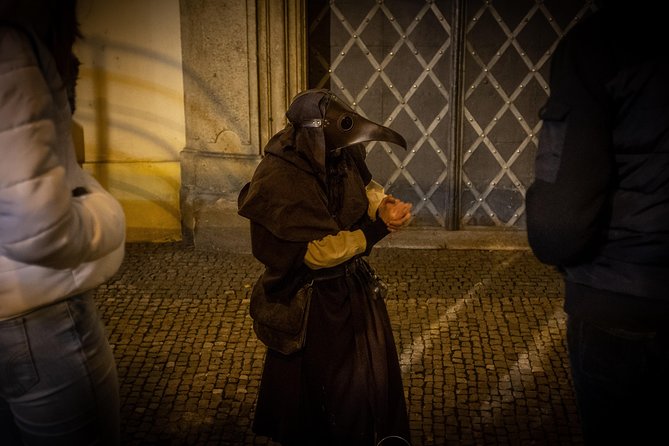
The longest stop is at the Church of Saint Simon and Jude, where the guide introduces the old hospital Na Františku. This section lasts about 15 minutes and focuses on treatment, medical practice, and the people who cared for the sick.
The medical material is a major reason to choose this tour. You hear about healing methods from the period and the limited tools available to doctors. The guide also shares information about the disease that killed an estimated 200 million people worldwide, placing Prague’s experience within a much larger story.
The tour gives attention to lesser-known medical workers who served at the hospital. That is a welcome choice. Plague history often centers on death counts and famous physicians, but the daily work of treating, feeding, cleaning, and comforting sick people was just as important.
This is where the costumed performance can help. A guide who stays in character can make old medical ideas easier to remember, while a guide with strong preparation can answer questions beyond the basic story. David has been praised for explaining the subject clearly and for drawing on research involving bacteriologists and epidemic doctors.
The tone remains accessible. Families with children as young as 10 have found the material enjoyable, while adults with interests in medicine, epidemics, or public health can take more from the detail. Some stories are creepy, but the presentation also includes jokes, so the mood is dark rather than grim.
St. Agnes Convent and the closing photograph
The final stop is the National Gallery’s Convent of St. Agnes, a quieter and more secluded-feeling place than the busy Old Town Square. The guide introduces St. Agnes of Bohemia, her life, and her work before drawing together the main points about plague in Prague and Europe.
This ending gives the tour a useful change of pace. After markets, churches, streets, and medical subjects, the convent offers a reflective setting for the closing discussion. You also hear about the disease’s present status, which brings the story into the modern world.
The tour ends with a group photograph taken alongside the plague doctor. It is a small feature, but it gives families and friends a keepsake that matches the unusual nature of the evening.
The end point is different from the start, so plan your evening with that in mind. The walk does not return you to Aurus Hotel. The supplied details identify the final stop as the Convent of St. Agnes, so you should check the exact end instructions when booking.
What the guides do best
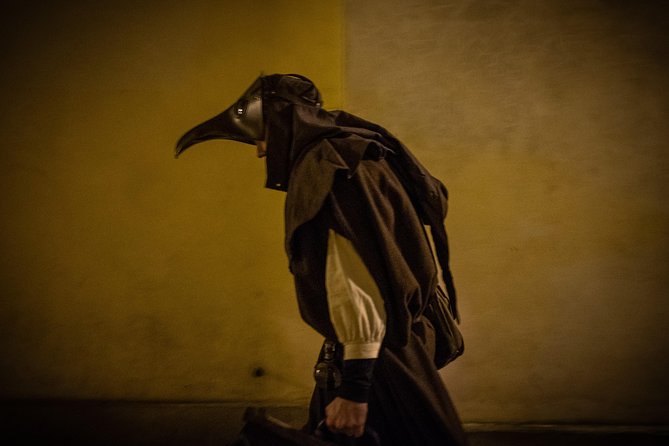
The guide makes or breaks this experience. The strongest reports describe an actor-like performance paired with solid historical preparation. Thomas is often praised for making people feel part of the period, involving the entire group, and speaking clearly. David is described as articulate, funny, and well prepared.
Oscar and Oskar have also led engaging versions, with an emphasis on medical and social history. Maddie has been praised for making the subject personal and accessible. Since guide assignments can vary, you should think of these names as examples of the team rather than a promise that one specific person will lead your date.
The best guides do three things well:
- They keep the plague doctor character alive without allowing theater to replace facts.
- They explain difficult material in plain language.
- They adjust their delivery to children, teenagers, and adults in the same group.
That last point matters. The walk is not aimed only at specialists. A family can enjoy the costume and spooky stories, while someone working in medicine can pay closer attention to quarantine, treatment, and public health.
One person felt the historical narrative needed more content, despite enjoying the guide’s humor and personality. That is a fair caution. The tour covers a large subject in 90 minutes, so it offers a strong introduction rather than an academic course.
Price, group size, and practical value
At $26.61 per person, the tour is reasonably priced for a 90-minute guided walk in central Prague. You are paying for a costumed performance, an English-speaking guide, a small group, a planned route, historical preparation, and a group photo.
The maximum group size is 10 people. That is a real advantage on narrow streets and at busy sights. You should have a better chance of hearing the guide and asking questions than you would on a large city walk.
The tour is offered in English and includes a mobile ticket. Most people can take part, service animals are allowed, and the route is near public transportation. The walk is described as manageable for almost all fitness levels, with one person calling it a good length after a full day of sightseeing.
Book about two weeks ahead if your schedule is fixed. The experience averages 16 days of advance booking, which suggests that last-minute spaces may not always be available.
The tour requires good weather and a minimum number of participants. If poor weather or low enrollment cancels the experience, you are offered another date or a full refund. You can also cancel for a full refund up to 24 hours before the start time. Inside that window, no refund is available, and changes are not accepted.
Who should take this tour
I would choose this walk if you want a different view of Prague, especially if you have already seen the main castle and Old Town sights. It works well as an evening activity because it adds atmosphere without requiring a long or demanding walk.
It is particularly suitable for:
- People interested in the Black Death, epidemics, medicine, or public health
- Families with children and teenagers who enjoy spooky stories
- Visitors who prefer storytelling to a standard lecture
- Anyone curious about Jewish history and the social effects of disease
- Repeat visitors looking for a fresh subject in familiar parts of Prague
- People who want a short walk with several major central sights along the route
You may want another type of tour if your priority is detailed architecture, the interiors of Prague’s churches, or a complete chronological history of the city. The buildings provide the setting, but the plague remains the main subject.
The subject also includes death, fear, persecution, and old medical practices. The humor keeps it approachable, but it does not remove the darker material. Parents should use their judgment for younger children, even though families with children and teenagers have enjoyed the experience.
Should you book the Plague Doctor of Prague?
I would book it if you like history with a theatrical edge and want to understand how disease affected real communities. The route is short, the group is small, the price is fair, and the subject reaches beyond horror-story effects into quarantine, medicine, trade, religion, class, and Jewish life.
The strongest reason to go is the combination of place and story. You walk through central Prague while the guide explains why a market square, hospital, church, or Jewish neighborhood mattered during plague times. Guides such as Thomas and David appear especially strong at adding humor without losing the educational side.
Skip it if you want a conventional sightseeing walk or a full architectural tour. For everyone else, this is a memorable way to spend 90 minutes, especially on a clear evening when you can enjoy the streets and the dark atmosphere. The final photo with the plague doctor is a fitting souvenir from a tour that is both informative and unusual.
FAQ
Where does the Plague Doctor of Prague tour begin?
It begins at Aurus Hotel Prague, Karlova 3, 110 00 Praha 1-Staré Město, Czechia.
Where does the tour end?
The activity ends at a different location from the starting point, at the National Gallery Prague, Convent of St. Agnes.
How long does the tour last?
The tour lasts approximately 1 hour and 30 minutes.
What language is the tour offered in?
The tour is offered in English.
How many people can join the group?
The activity has a maximum of 10 travelers.
Can I cancel for a full refund?
Yes. You can cancel at least 24 hours before the experience start time for a full refund. Cancellations or changes made less than 24 hours before the start time are not accepted for a refund.
Just added around Prague
- WWII and Communism History in Prague’s Old Town Private Tour★ 5.0 · 4 reviews
- Prague: Historical Walking Tour with Focus on World War 2★ 4.3 · 12 reviews
- World War II 4WD Tour from Prague with Lunch★ 4.4 · 3 reviews
- Ultimate Unlimited Beer Pong with Czech Beer★ 4.6 · 5 reviews
- Walking tour of Prague in French : Nové Město★ 4.9 · 16 reviews
- Walking tour of Prague in french: Old Town & Charles Bridge★ 4.9 · 62 reviews
- Prague Sightseeing Tour with Lunch★ 5.0 · 5 reviews
- Prague: Modern Private Spa with Jacuzzi and Sauna★ 4.8 · 62 reviews
Prague Tours, compared.
Skip-the-line Castle Ticket and Optional AudioGuide
Read our review →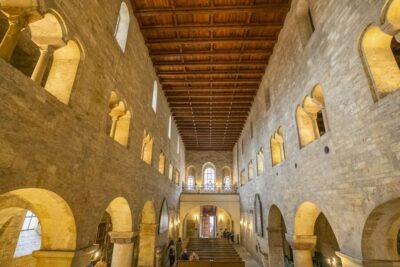
Castle Tour with Local Guide and Entry Ticket
Read our review →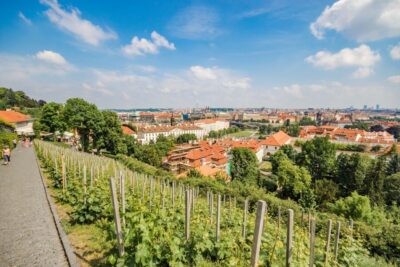
Prague Castle 2.5-Hour Tour Including Admission Ticket
Read our review →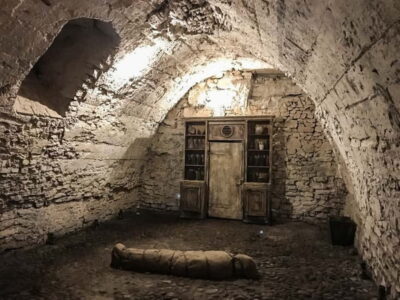
Oldtown, Medieval Underground & Dungeon History Tour
Read our review →