
Reviewed · WALKING TOURS
Wars and Totality Private Walking Tour in Prague
Prague’s 20th-century story is not tucked away in a single museum. It unfolds across the city’s squares, offices, monuments, and streets. This private walking tour connects the declaration of Czechoslovak independence, the Nazi occupation, the Gestapo, Soviet rule, resistance, and the 1989 end of communist power in one focused outing.
I like the private format, since your guide can answer questions and adjust the commentary to your interests. I also like the route’s emphasis on real places, including Petschek Palace, once a Gestapo headquarters, and Wenceslas Square, where major moments of modern Czech history played out. The main drawback is the pace: fitting nearly a century into about three hours can mean a long walk and lengthy talks while standing outdoors.
Key points to know
- The tour links five major central Prague sites with stories from independence, Nazi occupation, communist rule, and the 1989 revolution.
- A private English-speaking guide gives your group personal attention rather than following a large scheduled crowd.
- Petschek Palace offers one of the tour’s darkest stops, tied to the Gestapo and Czech resistance.
- Wenceslas Square and Národní show how public spaces became political stages, first for communist power and later for peaceful change.
- Museum of Communism access needs confirming, since the description includes a visit but one reported experience did not reach the museum.
- Plan for a serious walking tour, with public transport possible when needed at your own cost.
Prague’s 20th century, told from the pavement
This tour gives you a useful way to read central Prague. Instead of treating World War I, World War II, and communism as separate textbook chapters, it shows how each period left a mark on the same streets.
Your guide begins with the story of Czechoslovakia and its place in central Europe. The country repeatedly came under the control of larger powers, and the tour focuses on that pattern during the 20th century. You move from the creation of an independent Czechoslovak state to Nazi occupation, then through four decades of communist rule after 1948 and the return to independence in 1989.
I find this approach especially helpful if you are new to Czech history. The sights are familiar city-center landmarks, but the guide gives them political weight. A grand square is not only a place for photographs. It may also be where a government was announced, a protest was crushed, or public hopes gathered.
The tone is serious, but the focus is not only on oppression. Stories of Czech courage, resistance, and endurance form a major part of the tour. That balance matters. You learn about the Nazi and Soviet regimes, but also about the people who opposed them and the hopes that finally brought change.
A few more Prague trips to weigh up
- Prague: 3-Hour Walking Tour of Old Town & Prague Castle
★ 4.7 · 5,696 reviews - Prague: Ghost Walking Tour Where Legends Come To Life
★ 4.4 · 5,253 reviews - Prague: Jewish Quarter Walking Tour with Admission Tickets
★ 4.7 · 3,729 reviews
Municipal House and Republic Square: the birth of a state
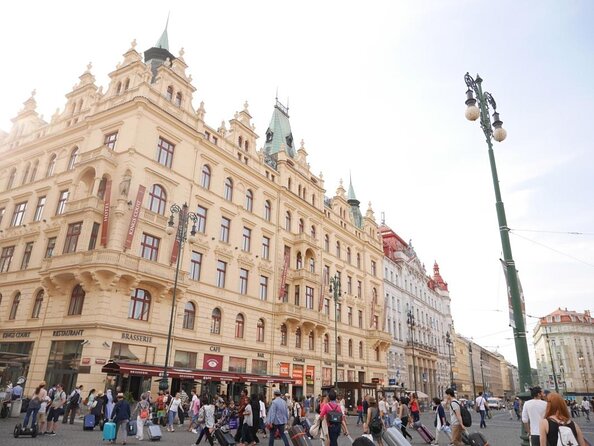
The tour begins near Na Příkopě, with pickup available from Prague hotels and residences. The first stops are around the Modernista Art Shop and Municipal House, followed by Republic Square.
Municipal House is tied to the declaration of Czechoslovak independence, making it a strong opening point. The building itself is one of central Prague’s important civic landmarks, but here the focus is political rather than architectural. Your guide uses the site to explain the symbolic beginning of modern Czech history.
Republic Square adds another layer. With Municipal House nearby, it helps establish the setting for the country’s early modern public life. These opening stops take about 10 minutes each, so do not expect a long interior visit or a full architectural tour. Their value comes from the explanation that connects the buildings to national independence.
This is also where a private guide can help most. If you already know the basic dates, you can ask about the political meaning of Czechoslovak independence. If the subject is new to you, the guide can lay out the timeline before the darker sections begin.
Petschek Palace and the cost of resistance
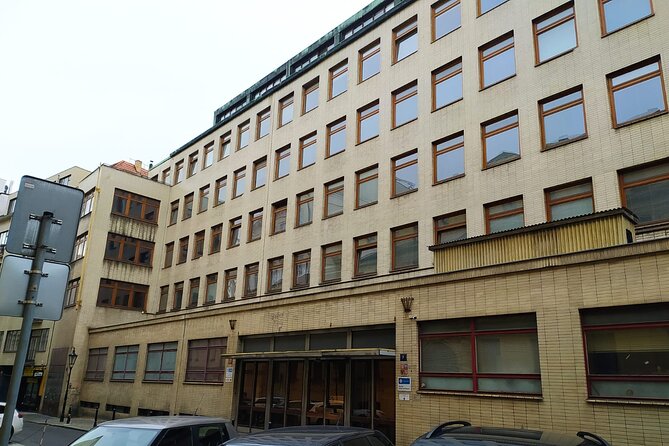
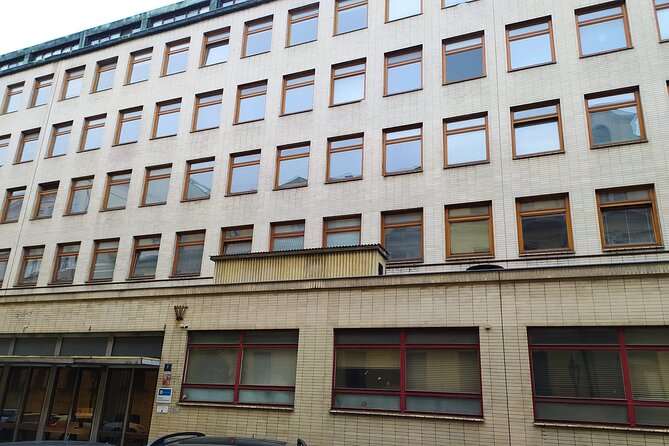
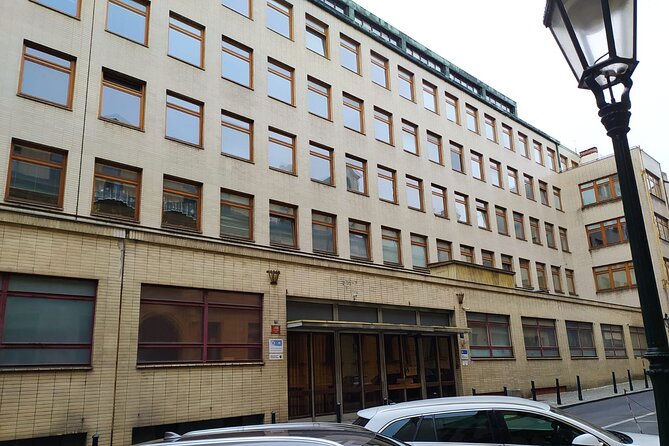
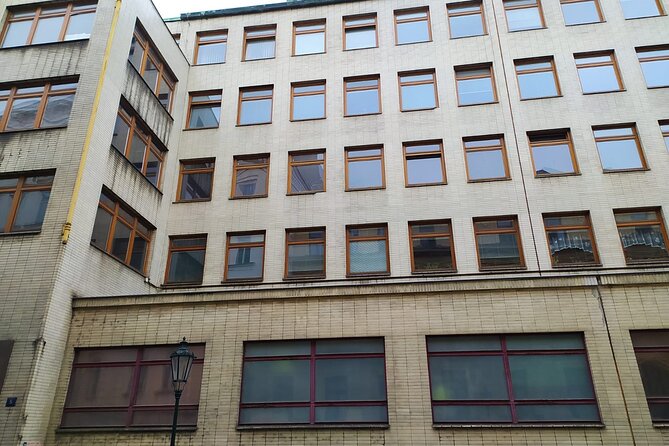
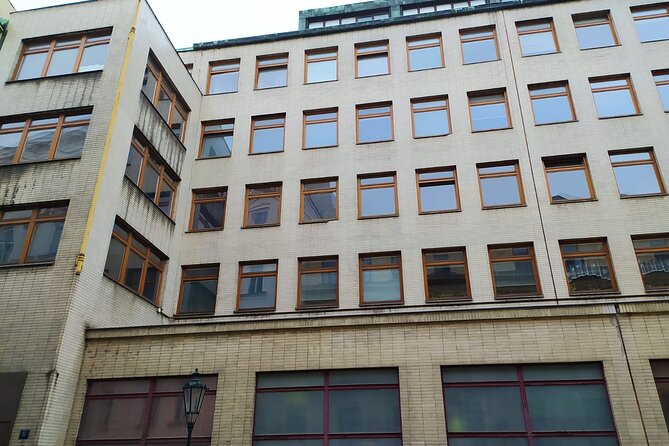
Petschek Palace is a short stop, listed at about five minutes, but it carries some of the heaviest subject matter. The building was formerly used by the Gestapo, and the tour connects it with the Nazi occupation and Czech resistance.
Do not judge this stop by its short duration. A place associated with interrogation and repression does not need a long sightseeing pause to make its point. The guide’s commentary is the main reason to be here, and this is one of the moments when a history-focused guide adds far more than a map or audio guide.
You will hear about the risks taken by people who resisted Nazi control and about the wider experience of Prague during World War II. The emphasis on Czech bravery is one of the strongest parts of the experience. It keeps the tour from becoming a simple list of foreign powers controlling the country.
The practical issue is that this is an outdoor walking tour. You may spend time listening on a pavement near a busy city street, with no guaranteed place to sit. Wear shoes that can handle several hours on foot and be ready to remain attentive while standing.
Wenceslas Square: hopes, fear, and public power
The Wenceslas Monument and Wenceslas Square receive about 15 minutes. This is a key stop because the square witnessed many of the defining events of modern Czech life.
The tour presents Wenceslas Square as a place of both hope and despair. That description fits its role in the story: political announcements, public gatherings, fear under authoritarian rule, and demands for change all belong here. The square’s broad urban setting helps you understand why it became such an important stage for national events.
Your guide will use the monument and surrounding square to explain several periods rather than just one. This makes the stop useful for seeing how political power changed hands and how ordinary people responded. The same public place could carry one message under Nazi occupation, another under communist control, and a very different one during the movement toward freedom.
This is also one of the longer stops, so the guide may speak for a while before moving on. One practical criticism of this format is that you may be standing on a sidewalk for 10 or 20 minutes at a time. If you need a bench, shade, or shelter from rain, ask early. Do not assume the group will stop automatically.
Same country, a completely different kind of day:
- Prague: 50-Minute Sightseeing Evening Cruise
★ 4.2 · 33,780 reviews - Prague: Medieval Dinner with Unlimited Drinks
★ 4.4 · 19,847 reviews - Prague: Skip-the-line Castle Ticket and Optional AudioGuide
★ 4.3 · 11,121 reviews - Prague: Castle Tour with Local Guide and Entry Ticket
★ 4.6 · 10,422 reviews
Národní and the end of communist rule
The stop at Národní takes about 15 minutes and marks the symbolic end of the communist era. The tour explains how the hopes and frustrations of the Czech people eventually led to the events of 1989.
Národní is valuable because it shifts the story from the machinery of totalitarian control to the public demand for change. After hearing about Soviet influence and everyday life under communism, you reach the point where the old system began to collapse.
The tour’s communist section covers the 40 years after 1948. Expect discussion of how Soviet-backed rule affected daily life, not only political leaders and official institutions. That human scale is important. It helps you think about what a political system meant for people living, working, studying, and raising families in Prague.
The stop also gives the itinerary a clear arc. You begin with the creation of a state, pass through occupation and dictatorship, and finish with the return of independence in 1989. The conclusion takes place in central Prague, making it easy to continue sightseeing or return to your hotel afterward.
The Museum of Communism question
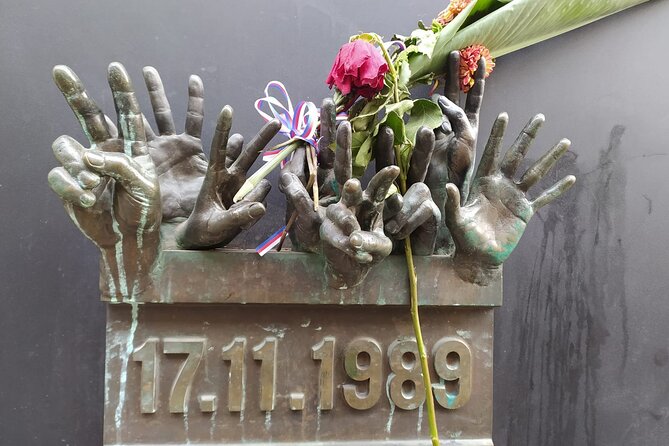
The experience description includes a visit to the Museum of Communism. Its exhibits are meant to show the realities of communist control from 1948 and explain why the regime eventually collapsed.
For many people, this would be a useful complement to the outdoor stops. A museum can provide photographs, objects, and displays that help fill in the details of everyday life. It also offers a break from standing outside and gives you a chance to process the heavier material at your own pace.
There is one point you should settle before booking or at the start of the tour. The written information says the museum is part of the experience, but one reported outing did not include a museum visit. The inclusion details also clearly list a professional guide, private tour, and hotel pickup, but do not spell out museum admission as a separate included item.
I would ask two direct questions: Is the Museum of Communism definitely on my route, and is admission included in the price? If the museum is important to you, get a clear answer before the tour begins. This is the biggest detail to verify.
How much walking and standing should you expect?
The tour is advertised as approximately three hours, while the detailed description refers to about three and a half hours. That difference is small, but it matters when you are planning a busy Prague day.
The route is mainly on foot. Public transport may be used when needed, but that cost is not included. Since the tour starts in central Prague and ends there, much of the route is designed around central landmarks rather than distant suburbs.
The walk itself is not the only physical issue. You may spend long stretches listening outdoors. One experience involved standing on a street corner for extended explanations, followed by getting wet during a rain shower while waiting under a tree. That is a useful warning, especially for anyone with knee, back, or balance concerns.
Bring comfortable shoes and check the weather. A small umbrella or rain jacket is sensible. In warm weather, water and sun protection will help. If you prefer frequent sitting breaks, tell the guide at the beginning. Since the tour is private, your request has a better chance of being accommodated than it would on a large group outing.
A private guide changes the experience
The private setup is the tour’s main advantage. Only your group participates, and the guide can focus on your questions rather than delivering a fixed speech to strangers with different interests.
If you are fascinated by resistance movements, you can ask for more detail about that subject. If you are trying to understand how communism shaped daily life, you can steer the conversation in that direction. A private guide can also clarify Czech names, dates, and political terms that may otherwise blur together.
The tour is offered in English, and a professional guide is included. No individual guide names are provided, so the person leading your outing will vary. You should think of this as a guide-led history walk, not a self-guided route with a few facts added along the way.
There is a tradeoff. A guide trying to cover almost 100 years in three hours may keep a brisk pace and protect the schedule closely. The provider’s response to the pacing concern points out that guides often have another tour afterward. That means you should not expect an open-ended conversation or unlimited time at every stop.
Is $51.06 per person a fair price?
At $51.06 per person, this is not the cheapest way to see central Prague. You are paying for a private guide, hotel pickup, a focused historical route, and the ability to ask questions throughout the outing.
The value improves if you are traveling with several people. Group discounts are offered, and a private tour can become reasonably priced when the cost is shared among family or friends. It also saves you from building your own route through several sites and trying to connect the history yourself.
The value is weaker if you want a relaxed stroll, extensive museum time, or a broad introduction to Prague’s art and architecture. This is a narrow subject tour. You are paying for 20th-century political history, not a general city orientation.
At this price, I would also want clarity about the museum. If museum admission is not included, budget for it separately. If the museum is skipped, the tour becomes almost entirely an outdoor walking and commentary experience.
The high overall rating and 93 percent recommendation figure suggest that the format works well for many people, especially those who want serious historical explanation. Still, the two practical concerns are clear: pace and museum access. Those details should shape your decision more than the headline rating.
Who should book this Prague history walk?
I would recommend it to you if you want to understand Prague beyond its medieval streets and castle views. It suits anyone interested in Nazi occupation, resistance, Soviet rule, the Cold War period, or the 1989 return to freedom.
It is also a good choice early in your stay if you want a political map of the city. Once you know what happened at Municipal House, Wenceslas Square, Národní, and Petschek Palace, later walks through central Prague can feel more meaningful.
The tour may suit families with older children or teenagers who can handle difficult subjects and several hours on foot. The private format lets you ask the guide to explain events at the right level, but the material includes Gestapo terror, repression, and totalitarian rule.
I would be cautious about booking it if you need a slow pace, regular seating, or a fully indoor experience. I would also reconsider it if your main interest is Prague’s medieval architecture, food, music, or art. Those subjects are outside the tour’s main purpose.
Booking details worth knowing
Hotel and residence pickup is offered throughout Prague, with the guide providing the pickup. The listed meeting point is Na Příkopě 864/28 in Nové Město, Prague 1, so confirm the exact meeting arrangement after booking.
Morning and afternoon departure times are available, and operating hours are listed from 8:00 AM to 8:00 PM daily. Confirmation is received at booking. Service animals are allowed, and the tour is near public transportation.
Most people can participate, but the walking and standing deserve attention. If you cancel at least 24 hours before the local start time, you can receive a full refund. Cancellations or changes made less than 24 hours ahead are not accepted for a refund.
Should you book it?
Book this tour if you want a personal, serious explanation of Prague’s wartime and communist past, especially if resistance stories matter to you. The route is well chosen, the private format is useful, and the city itself becomes the classroom.
Before paying, confirm the exact duration, public transport costs, and Museum of Communism access. Ask for sitting or shade breaks if needed. If you do that, the tour can give you a clear, human-scale understanding of why Prague’s modern history is written across its public squares.
FAQ
How long does the Wars and Totality Private Walking Tour last?
The tour is described as approximately three hours, while the detailed expectations refer to about three and a half hours. Confirm the expected timing when you book.
Is this a private tour?
Yes. Only your group participates, and a private professional guide provides the commentary.
Is hotel pickup available in Prague?
Yes. Pickup is offered from hotels and residences throughout Prague. The guide provides the pickup.
What language is the tour offered in?
The tour is offered in English.
Is transportation included?
The tour is mainly on foot. Public transportation may be used when needed, but transportation costs are not included and are paid by you.
Does the tour visit the Museum of Communism?
The experience description says the tour visits the museum, but one reported outing did not include a museum visit. Confirm museum access before the tour, especially if it is important to you.
What places does the walking route include?
The route includes the area around Municipal House and Republic Square, Petschek Palace, the Wenceslas Monument and Wenceslas Square, and Národní.
Can I cancel for a full refund?
Yes, if you cancel at least 24 hours before the experience start time. Cancellations or changes made less than 24 hours before the start are not accepted for a refund.
Just added around Prague
- WWII and Communism History in Prague’s Old Town Private Tour★ 5.0 · 4 reviews
- Prague: Historical Walking Tour with Focus on World War 2★ 4.3 · 12 reviews
- World War II 4WD Tour from Prague with Lunch★ 4.4 · 3 reviews
- Ultimate Unlimited Beer Pong with Czech Beer★ 4.6 · 5 reviews
- Walking tour of Prague in French : Nové Město★ 4.9 · 16 reviews
- Walking tour of Prague in french: Old Town & Charles Bridge★ 4.9 · 62 reviews
- Prague: Modern Private Spa with Jacuzzi and Sauna★ 4.8 · 62 reviews
- Prague Sightseeing Tour with Lunch★ 5.0 · 5 reviews
Walking Tours, compared.
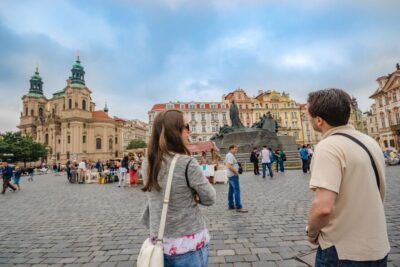
3-Hour Walking Tour of Old Town & Prague Castle
Read our review →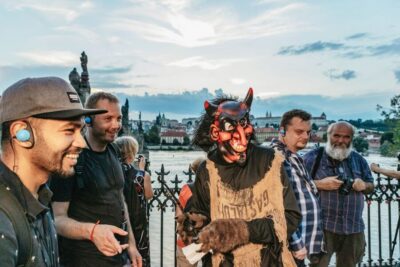
Ghost Walking Tour Where Legends Come To Life
Read our review →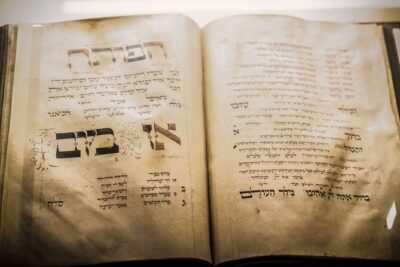
Jewish Quarter Walking Tour with Admission Tickets
Read our review →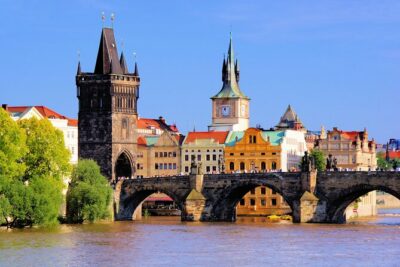
Prague Guided Walking Tour and Cruise with Authentic Czech Lunch
Read our review →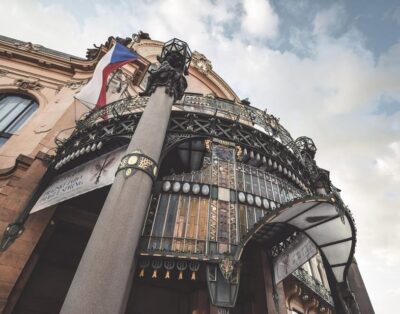
Old Town and Jewish Quarter Guided Walking Tour
Read our review →
Prague Ghost and Legend of Old Town Walking Tour
Read our review →
Prague 3-hour Afternoon Walking Tour including Prague Castle
Read our review →
Ghosts and Legends Nighttime Guided Walking Tour
Read our review →Browse the lists this tour appears in