
Reviewed · HISTORICAL TOURS
Prague: World War II and Communist History Tour
Prague’s prettiest streets carry some of its darkest stories. On this 2.5-hour walk, you follow the city through Nazi occupation, Czech resistance, the Communist coup, the crushed Prague Spring, and the Velvet Revolution of 1989. The most gripping thread is the assassination of Reinhard Heydrich, the Nazi security chief, and the desperate resistance that followed.
I like the clear story line, which links the end of World War II to Communist rule instead of treating each event as a separate history lesson. I also like the guides’ reported gift for storytelling. Adam, Tony, Zach, Daren, and others have been praised for making difficult subjects understandable and keeping the pace lively.
The main drawback is that this is a walking and storytelling tour, not a parade of indoor attractions. You will see important places, but some sites offer little to look at today, so the guide’s explanation matters more than the building itself.
Key points to know before you book
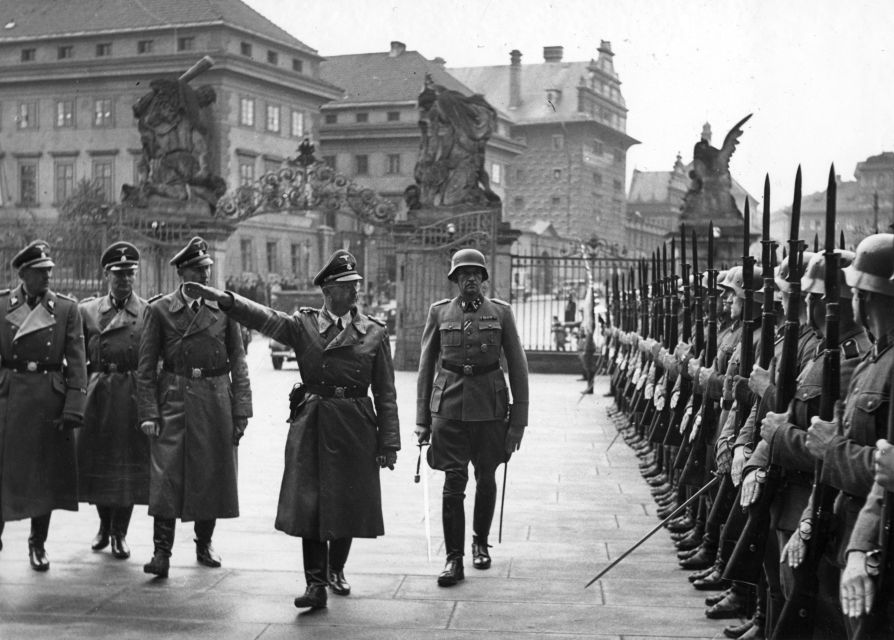
- Operation Anthropoid gives the tour its most powerful wartime focus: You learn where the Nazi head of security was targeted and what happened to the Czech resistance afterward.
- The tour connects two major periods: Nazi occupation flows into the Communist coup, Prague Spring, Warsaw Pact invasion, Normalization, and the Velvet Revolution.
- Several central Prague landmarks become history lessons: Stops include the Municipal House, Jewish Quarter, Dancing House, and Wenceslas Square.
- Guides are the heart of the experience: Previous departures have featured Adam, Tony, Zach, Daren, Sean, Amanda, and others, with strong praise for humor, clarity, and storytelling.
- Expect a brisk 150-minute walk: One departure used a tram ticket to save time, and another ran longer than advertised, so avoid scheduling a tight appointment afterward.
- It is especially good for repeat visitors: If you have already seen Prague Castle and the Old Town sights, this adds the modern political story many standard tours leave out.
Why Prague’s recent past changes the way you see the city
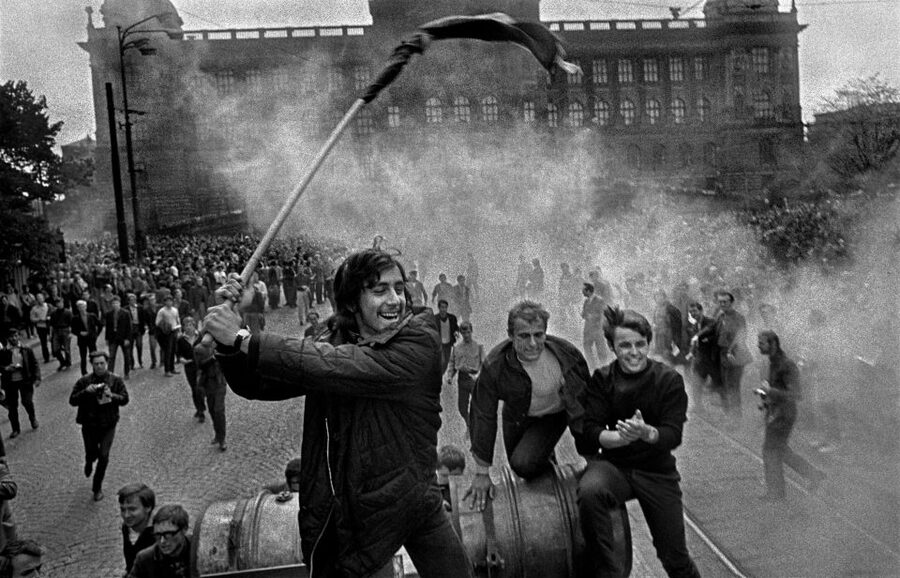
Most first visits to Prague focus on medieval lanes, Baroque churches, and the castle. That is sensible, but it can leave out the period that shaped modern Czech life. This tour shifts your attention to the 20th century, when Prague moved through occupation, resistance, dictatorship, reform, invasion, censorship, and peaceful revolution.
I find that useful because the city’s recent past is not always obvious from its streets. A square may look calm today, yet it was once filled with tanks, protestors, party officials, or crowds demanding political freedom. The tour gives those ordinary-looking places a human meaning.
The guide presents the events from a Czech point of view, including the hard parts. You hear about Nazi terror, resistance, collaboration, Communist promises, political persecution, and the compromises forced on people during the years of Normalization. The tone is serious, but past guides have used humor and vivid personal stories to keep the walk from becoming a lecture.
This is not a general introduction to every period of Czech history. It is a focused look at the years from World War II through 1989. If that period interests you, the concentration is a strength. If you want architecture, royal history, or detailed Jewish heritage, you should pair it with another tour.
A few more Prague trips to weigh up
- Prague: Oldtown, Medieval Underground & Dungeon History Tour
★ 4.2 · 8,244 reviews - Prague Old Town, Medieval Underground and Dungeon Historical Tour
★ 4.5 · 3,227 reviews - Prague: Communism History and Nuclear Bunker Guided Tour
★ 4.7 · 2,417 reviews
Starting in the Old Town near Týnská Street
The meeting point is at Týnská 639/4 in Staré Město, Prague 1. That places you in the Old Town, close to the Old Town Square and the Church of Our Lady before Týn. You begin among some of Prague’s most photographed streets, then move toward places that tell a less polished story.
The location is handy if you are staying in central Prague or already planning to visit the Old Town. Give yourself enough time to find the exact address, since the surrounding lanes can be busy with pedestrians and similar-looking entrances.
The opening section sets up the Nazi occupation and explains how the occupation transformed Czechoslovakia. The country had been one of Europe’s more industrialized and progressive states, yet Nazi rule brought fear, restrictions, arrests, and violence.
You are not simply given dates. The guide builds a sequence of events and shows how political decisions affected daily life. That approach was one of the most praised features of guides such as Zach, Tony, and Amanda. They were described as animated storytellers who made the past easier to follow as the group moved through the city.
The Municipal House and the collapse of normal life
The Municipal House is one of Prague’s grand civic buildings, better known for Art Nouveau decoration and concerts than for wartime history. Here, its setting helps explain the contrast between public ceremony and political control.
The tour uses locations such as this to show how Nazi rule took hold in a city that had been confident and modern. The point is not that the building itself contains a major museum about the occupation. Rather, it becomes a place to discuss the shift from ordinary civic life to a controlled society.
This is an important distinction. You should not book the tour expecting every stop to offer an exhibit, plaque, or preserved room. At several points, the guide is the main source of information. One past participant felt there were fewer visible landmarks than expected, while still finding the explanation strong.
That makes the tour particularly dependent on the individual guide. Names recorded on earlier departures include Tony, Zach, Adam, Sean, Kevin, Amanda, and Daren. Their approaches varied, but the consistent strength was an ability to explain events in plain English and answer questions along the way.
The Jewish Quarter and the human cost of occupation
The route skirts Prague’s old Jewish area, connecting the wartime story with the persecution of Jewish communities under Nazi rule. The Jewish Quarter already has its own museums, synagogues, and cemetery, so this walk does not replace a dedicated Jewish heritage visit.
What it does offer is a broader political frame. You hear how occupation affected the city and how Nazi power was enforced. The stop works best if you have already seen, or plan to see, the Jewish Museum sites separately.
I like this part because it prevents World War II from becoming only a story of military operations. The tour keeps returning to people, fear, choices, and consequences. That local angle also helps explain why the later Communist period cannot be treated as an unrelated chapter. Czech society was dealing with the damage and moral confusion left by the war.
Same country, a completely different kind of day:
- Prague: 50-Minute Sightseeing Evening Cruise
★ 4.2 · 33,780 reviews - Prague: Medieval Dinner with Unlimited Drinks
★ 4.4 · 19,847 reviews - Prague: Skip-the-line Castle Ticket and Optional AudioGuide
★ 4.3 · 11,121 reviews - Prague: Castle Tour with Local Guide and Entry Ticket
★ 4.6 · 10,422 reviews
Operation Anthropoid and the assassination plot
The wartime centerpiece is the story of Operation Anthropoid, the Czech plot to assassinate Reinhard Heydrich, a senior Nazi official and head of the Reich Security Main Office. The supplied description refers to him as the Nazi head of the security services, and the tour explains where the attack was planned and carried out.
This section is especially valuable if you know the broad outline but not the Prague locations. The streets become part of the story. You learn about the Czech resistance, the attack, and the brutal Nazi retaliation that followed.
The Church of Saints Cyril and Methodius is closely associated with the resistance soldiers who later hid in its crypt. Past participants have described visiting the church and crypt as a poignant moment. One guide, Adam, was praised for bringing the events to life there, while another participant specifically recommended the film Anthropoid after the tour.
That film tip is worth noting. Watching Anthropoid or Munich afterward can help you place the tour’s events in a larger setting. You may get more from the walk if you watch one beforehand, but it is not required. The guide supplies the basic story and adds the local details.
The subject is grim. Expect discussion of reprisals and the treatment of civilians. It is not a light sightseeing stop, but it is the part most likely to stay with you.
From the Communist coup to the Prague Spring
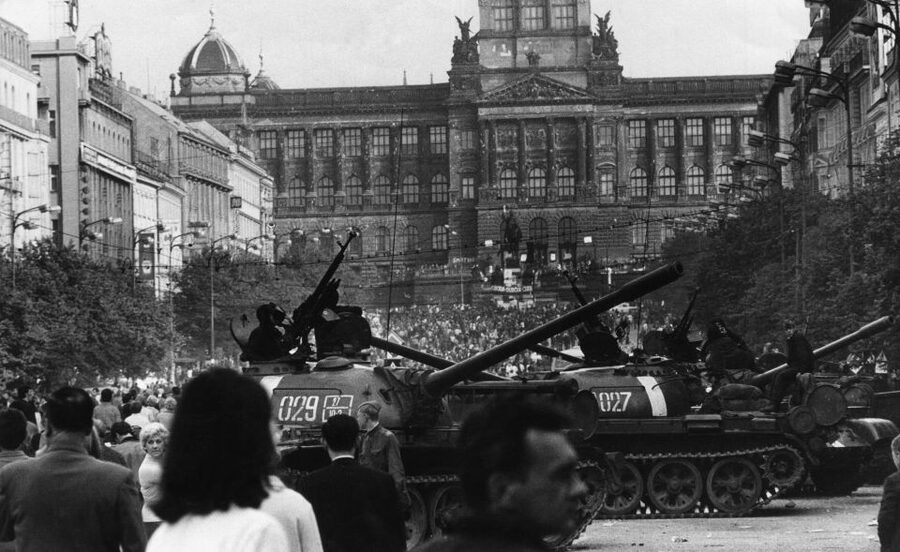
After the war, the tour follows Czechoslovakia into Communist rule. You learn how the Communist coup changed political life and how early hopes gave way to disappointment and tighter control.
Wenceslas Square is central to this portion of the story. It is a broad urban space used for demonstrations, public announcements, celebrations, and political theater. The same square later became one of the defining settings of the Velvet Revolution.
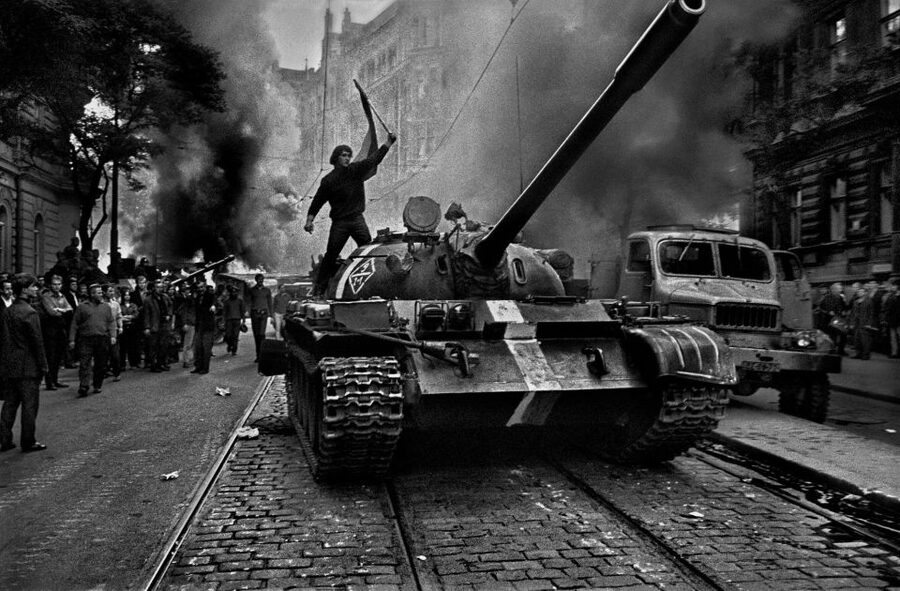
The guide explains the Prague Spring of 1968, a period of attempted reform and greater openness, followed by the Warsaw Pact invasion. For you, the value of this stop is the physical scale of the place. It is easier to imagine the square filled with people, speeches, military vehicles, and uncertainty when you are standing in it rather than reading a paragraph in a guidebook.
The tour then moves into the years of Normalization, when the government reversed reform and restored strict political control. You hear about censorship, pressure at work, and the personal costs of refusing to conform.
This section requires concentration because several political changes happen in a short period. The strongest guides build the story step by step. Zach was praised for gradually explaining the emergence of the Czech state, World War II, and life under Communism, while Tony was praised for covering a large amount of material without making the walk feel dull.
Music, dissent, and Charta 77
The tour does not stop with party leaders and military events. It also explains how musicians, writers, and other dissidents challenged the system.
The persecution of the Plastic People of the Universe shows how a nontraditional rock band became part of a larger fight over personal freedom. Their treatment helped push dissidents toward organized opposition and contributed to the atmosphere that produced Charta 77.
This is one of the more human parts of the route. You begin to see resistance not only as secret military action or dramatic public protest, but also as the decision to make music, publish ideas, or refuse official rules.
The guide also introduces Václav Havel and the wider group of dissidents who helped bring about the Velvet Revolution. Havel’s rise from playwright and opposition figure to president gives the final part of the tour a strong sense of movement, but the focus is not only on one famous man. You hear about the eclectic group around him and the public energy that swept the old system away.
Dancing House and the Velvet Revolution’s final chapter
Dancing House gives the route a change of scenery and a useful reminder that Prague’s modern identity did not end in 1989. The building is a striking piece of contemporary architecture beside the Vltava, far removed in appearance from the Old Town’s medieval streets.
Its inclusion helps link the political story to the city you see today. The tour uses modern Prague as a final setting for discussing the collapse of Communist rule and the changes that followed.
The exact order of stops can vary, and the guide may adjust the route to fit the group. One past departure included a tram ticket to save walking time, while the published duration is 150 minutes. Another ran longer than the stated time, so I would leave a buffer afterward.
That flexibility can be useful, especially on a hot day or in poor weather. A past group completed the tour in pouring rain and still found the guide’s enthusiasm carried it through. Even so, wear shoes suited to two and a half hours on city streets and bring protection from rain or sun.
What the $34 price buys you
At $34 per person, this is a reasonable price for a 150-minute guided walk, particularly because the subject covers several distinct eras and a wide section of central Prague. You are paying mainly for the guide’s research, structure, and ability to connect places that would otherwise seem unrelated.
The value is strongest for people who want interpretation rather than admission-heavy sightseeing. The tour includes the walk itself, but it does not list broad museum entry as part of the standard package. One past departure did go into a museum, but you should not assume that every departure includes the same indoor stop.
A small group can make the price feel even better. A past participant enjoyed having room to ask questions, and another described the group as small enough to feel almost private. Group size is not specified as a fixed feature, so conditions may vary.
The tour also offers free cancellation up to 24 hours before the start, plus a reserve-now, pay-later option. Those policies are useful if your Prague schedule is still shifting. The guide language is English, and no other language is listed.
Who will get the most from this walk
I would choose this tour if you have already seen Prague’s main medieval sights and want to understand the city’s modern political character. It also suits history students, film fans interested in Operation Anthropoid, and anyone who prefers stories about people and choices over a list of architectural facts.
It works well as a second Prague tour. One past participant used it after a general Old Prague and castle walk, along with a self-guided visit to the Jewish Quarter. That order makes sense: first learn the city’s basic layout, then use this tour to add the 20th-century events.
You should think twice if you dislike long periods of standing and walking, or if you need a tour filled with interiors and physical exhibits. The route includes important sites, but some of the impact comes from listening and imagining rather than looking at preserved objects.
The subject also includes persecution, invasion, political repression, and Nazi reprisals. The guide may use humor to keep the presentation moving, but the material itself is serious.
Practical ways to prepare
Read a short overview of Czech history before you arrive, especially the terms Prague Spring, Warsaw Pact, Normalization, Charta 77, and Velvet Revolution. You do not need specialist knowledge, but knowing the basic sequence will help you keep up.
If Operation Anthropoid interests you, watch Anthropoid afterward. One past participant also followed up with Munich. These films are not part of the tour, but they can extend the experience once you understand the Prague locations.
Arrive at Týnská 639/4 with a little extra time. The meeting point is in central Old Town, where navigation can be slower than the map suggests. Plan nothing urgent immediately afterward because the walk may run beyond 150 minutes.
Finally, bring questions. The strongest departures have been praised for answering them patiently, and this is a subject where a short question about one person or event can clarify the whole sequence.
Should you book the Prague World War II and Communist History Tour?
Book it if you want Prague to make sense beyond its castles and picture-perfect squares. The walk is strongest when the guide turns ordinary streets into the setting for occupation, resistance, political fear, cultural dissent, and revolution.
At $34, it offers solid value for a focused English-language history tour, especially if you find a small group and an engaging guide such as Adam, Tony, Zach, or Daren. Just keep your expectations realistic: the guide’s words carry more weight than the number of monuments you enter.
I would make this a priority for repeat visitors, history-minded first-timers, and anyone interested in Operation Anthropoid or the Velvet Revolution. If your main aim is Prague’s medieval art and architecture, choose a general city tour first, then add this one when you are ready for the city’s harder, more revealing story.
FAQ
How long is the World War II and Communist History Tour?
The stated duration is 150 minutes, or 2.5 hours. One past departure lasted longer, so avoid arranging a tight appointment immediately afterward.
Where does the tour meet?
The meeting point is Týnská 639/4, Staré Město, 110 00 Prague 1, Czechia.
What language is the tour conducted in?
The tour is conducted in English. English is the only language listed for this activity.
What historical periods does the tour cover?
It covers the Nazi occupation, Czech resistance, the Communist coup, the Prague Spring, the Warsaw Pact invasion, Normalization, the Plastic People of the Universe, Charta 77, and the Velvet Revolution of 1989.
Does the tour include Operation Anthropoid?
Yes. The tour explains the assassination plot against Reinhard Heydrich and visits locations connected with the Czech resistance. The Church of Saints Cyril and Methodius and its crypt have been part of the experience described by past participants.
Which Prague landmarks are included?
The route includes or relates to the Municipal House, Jewish Quarter, Dancing House, and Wenceslas Square. The exact order may vary.
How much does the tour cost?
The listed price is $34 per person.
Can I cancel or pay later?
You can cancel up to 24 hours in advance for a full refund. The activity also offers reserve now and pay later, so you do not have to pay at the time of booking.
Just added around Prague
- WWII and Communism History in Prague’s Old Town Private Tour★ 5.0 · 4 reviews
- Prague: Historical Walking Tour with Focus on World War 2★ 4.3 · 12 reviews
- World War II 4WD Tour from Prague with Lunch★ 4.4 · 3 reviews
- Ultimate Unlimited Beer Pong with Czech Beer★ 4.6 · 5 reviews
- Walking tour of Prague in French : Nové Město★ 4.9 · 16 reviews
- Walking tour of Prague in french: Old Town & Charles Bridge★ 4.9 · 62 reviews
- Prague Sightseeing Tour with Lunch★ 5.0 · 5 reviews
- Prague: Modern Private Spa with Jacuzzi and Sauna★ 4.8 · 62 reviews
Historical Tours, compared.
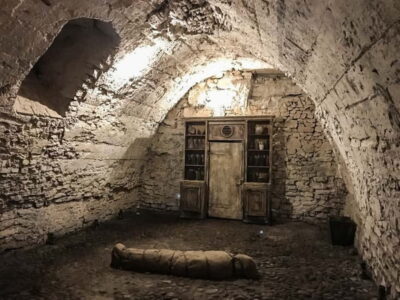
Oldtown, Medieval Underground & Dungeon History Tour
Read our review →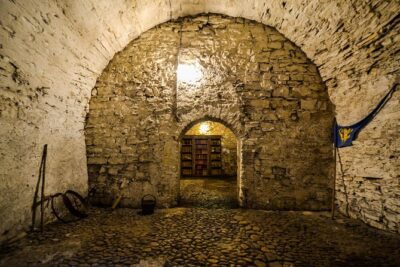
Prague Old Town, Medieval Underground and Dungeon Historical Tour
Read our review →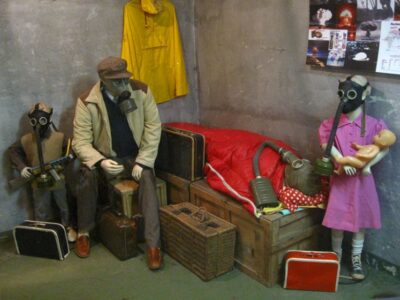
Communism History and Nuclear Bunker Guided Tour
Read our review →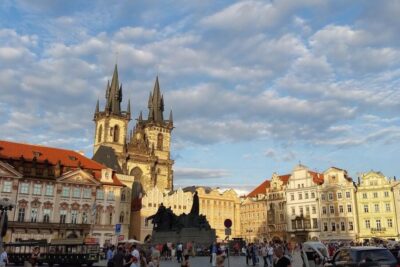
Historic City Center Bus Tour with Top Sights
Read our review →
Prague Historic Pub Tour with Drinks Included
Read our review →
Prague Communism History and Nuclear Bunker Tour
Read our review →
Hop-on Hop-Off Historical Tram Ticket for Line 42
Read our review →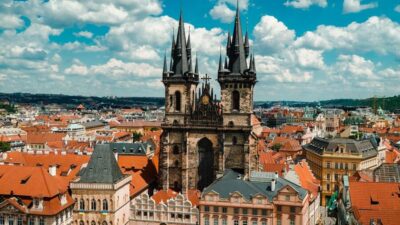
Top Sights and Historic Center Introduction Tour
Read our review →Browse the lists this tour appears in