
Reviewed · PRAGUE ART NOUVEAU AND CUBISM TOURS
Prague Art Nouveau and Cubism Walking Tour
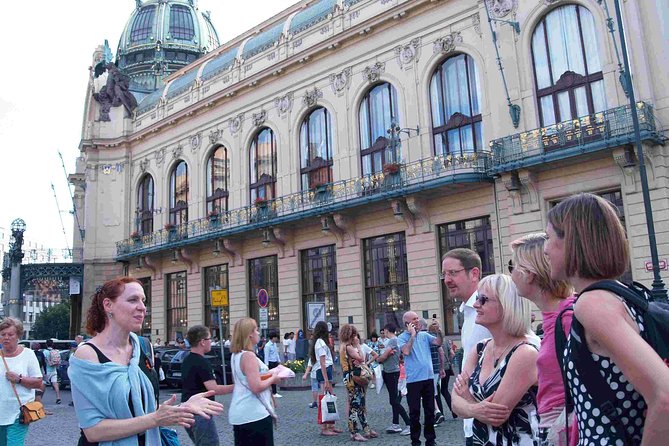
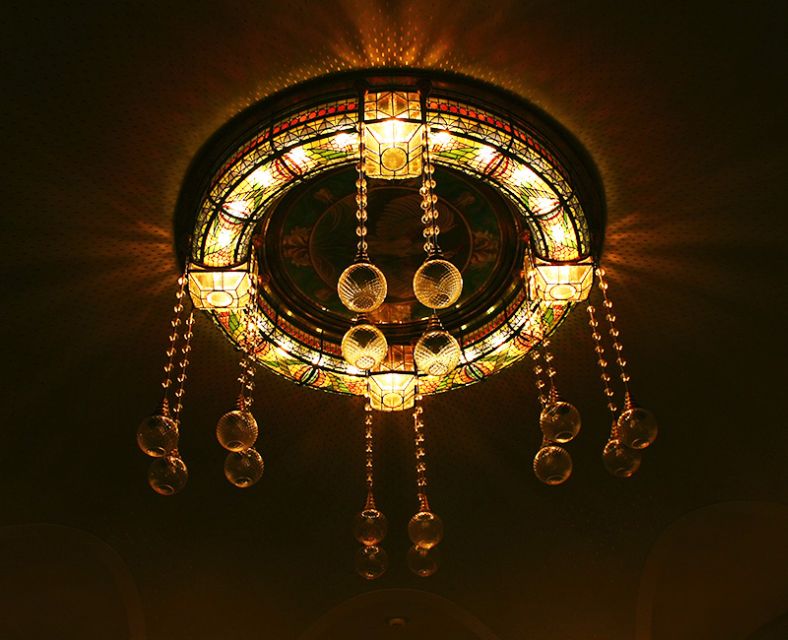
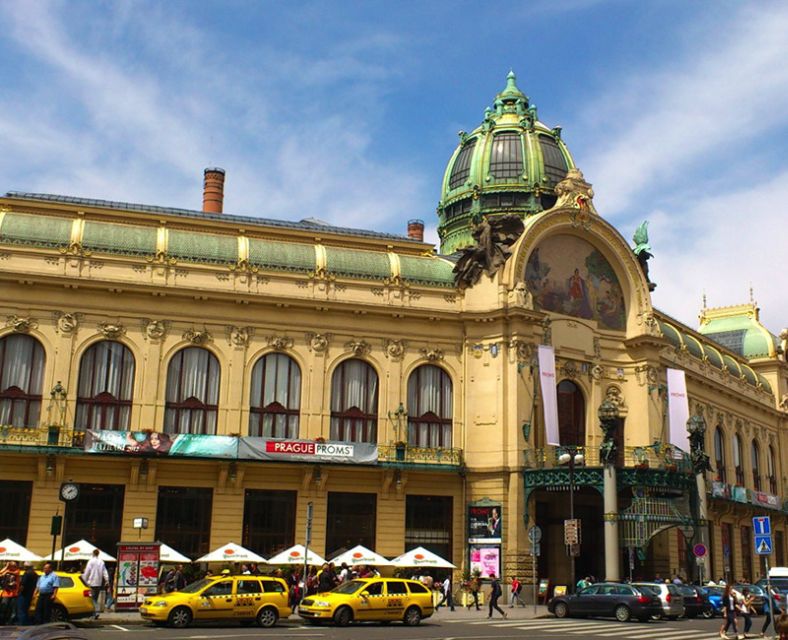
Prague’s Art Nouveau buildings are not just pretty façades. They reveal a city eager to look modern, worldly, and proudly Czech before the First World War changed everything. This three-hour walk teaches you to spot the ginkgo leaves, curved lines, colored glass, elaborate lamps, and other details that are easy to miss when you walk alone.
I like the way the tour connects architecture with the cafés, hotels, restaurants, and railway stations of the pre-war social elite. I also like that it puts Art Nouveau beside Prague’s more unusual Cubist and Rondo-Cubist buildings, including the House of the Black Madonna and the Bank of the Legions. The main consideration is pace: you keep moving, so photographers may need to ask for an extra moment at certain façades.
Key points at a glance
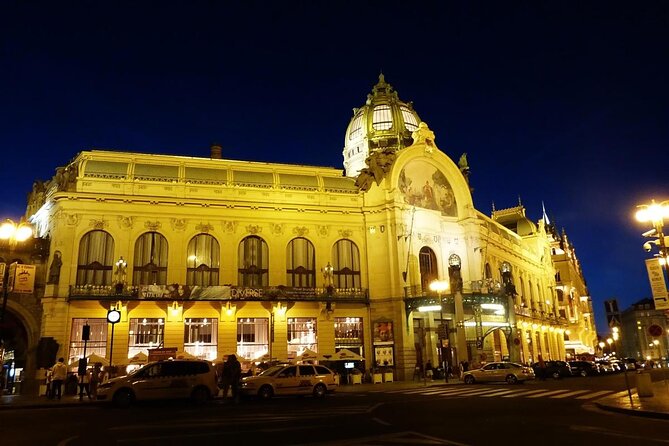
- See Prague through changing styles: The walk links Gothic, Art Nouveau, Cubist, and Rondo-Cubist design rather than treating each building as an isolated sight.
- Go inside notable interiors: Lucerna bar and Grand Hotel Europa add warmth and detail beyond street-level façades.
- Learn to read the details: Ginkgo biloba leaves, oriental influences, ornate lighting, and decorative lines become clues you can use for the rest of your Prague visit.
- Expect an academic guide: Guides include professors, doctoral students, historians, journalists, art critics, and published authors. Robert, Vadim Erent, and Bonita are among the named guides associated with the experience.
- Look beyond the obvious route: The walk can include passages, courtyards, cafés, a university grand hall, Roman ruins, and a chapel, depending on the guide and access that day.
- Best for curious architecture fans: The tour suits visitors who want context, stories, and interiors, not just a checklist of famous buildings.
Why Prague’s Art Nouveau deserves a closer look
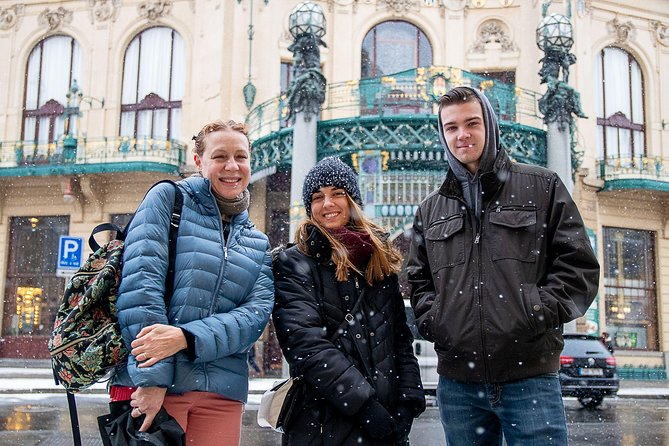
Art Nouveau appeared across Europe near the end of the 19th century. Prague adopted it with enthusiasm, and the style remains one of the clearest signs of the city’s early 20th-century confidence.
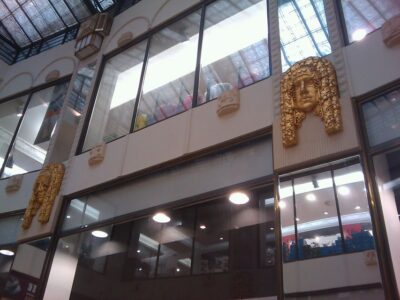
You will learn to recognize its flowing shapes and plant motifs. Ginkgo biloba leaves are especially useful clues, since they point to the period’s interest in Japanese and other oriental influences. Curving façades, decorative figures, colored surfaces, and elaborate light fixtures all help identify the style.
This is more useful than memorizing the name Art Nouveau. Once you know what to look for, ordinary walks through Prague become more rewarding. A doorway, balcony, or lamp can tell you when a building was made and what kind of public life it once supported.
The social setting matters just as much. Many Art Nouveau buildings were hotels, cafés, restaurants, and stations. These were places for people benefiting from new industry, easier transport, and international travel. The tour explains how Prague’s early 20th-century social elite used such spaces, and why the architecture had to look polished, modern, and cosmopolitan.
That context keeps the walk from becoming a parade of decorative surfaces. You see the buildings as signs of a city trying to define itself.
More Prague Art Nouveau and Cubism Tours in Prague:
- Prague Art Nouveau and Cubism Walking Tour
★ 5.0 · 77 reviews - Private Prague Art Nouveau and Cubism Walking Tour
★ 5.0 · 30 reviews - Prague: Private Cubism & Art Nouveau Walking Tour
★ 5.0 · 15 reviews
Starting at the House of the Black Madonna
The meeting point is at the House of the Black Madonna, beside the front doors of Grand Café Orient on Ovocný 19 in Prague 1. This is an excellent starting place because the building itself introduces the tour’s comparison between Art Nouveau and Cubism.
The House of the Black Madonna is one of Prague’s key Cubist buildings. Its name comes from the black Madonna sculpture associated with the structure, while the architecture uses sharper, more geometric forms than the softer curves of Art Nouveau.
From the first stop, you begin to see that Prague’s architecture was not following one simple path. Designers were testing new ways to express modern life. Some used curling plants, women’s faces, and ornamental lines. Others used angles, crystalline forms, and strong geometric patterns.
Grand Café Orient also helps set the mood. The café is part of the building and gives you a sense of how architecture, dining, and public life were connected. The tour begins at the front doors downstairs, on the square, so arrive with enough time to find the exact meeting point.
Lucerna bar and the pleasure of seeing interiors
A major strength of this experience is its attention to interiors. Street façades give you only half the story, especially in Prague, where decorative halls, staircases, lamps, and wall treatments can be just as important as the outside of a building.
Lucerna bar is one of the featured stops. Its atmosphere helps you understand why Art Nouveau was so popular in places built for leisure and display. The style was meant to surround people, not simply greet them from the street. Light fixtures, fittings, curves, and ornamental details all worked together to create a fashionable setting.
Interior access can make a big difference on a walking tour. On a cold day, it offers a welcome break from the pavement. One group touring in December was able to go indoors for detailed looks and short warm-ups, which is a useful point for anyone visiting Prague in winter.
Still, access to working cafés and public interiors can vary. The information provided does not promise a private visit or a guaranteed amount of time inside every building. Think of Lucerna as an important stop within a moving tour, not as a long seated café visit.
Grand Hotel Europa and Prague’s pre-war style
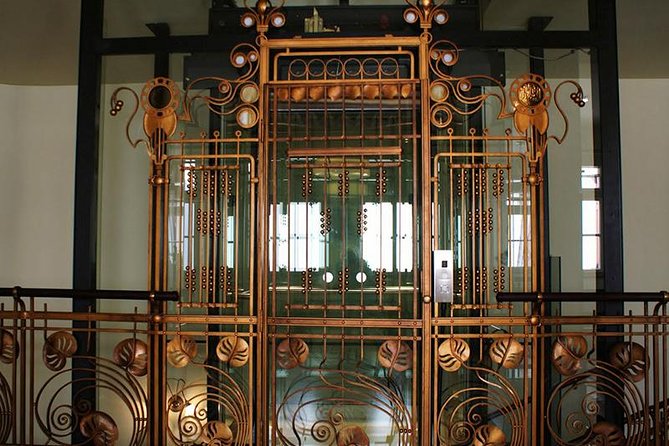
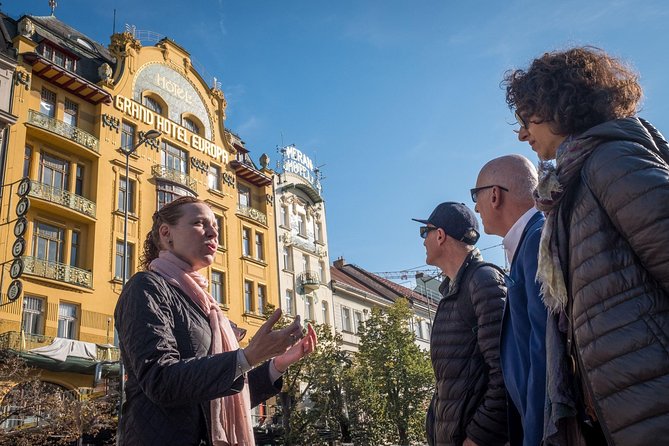
Grand Hotel Europa gives the tour another look at Art Nouveau’s public face. Hotels were built to impress people arriving from elsewhere, and their design often aimed to signal comfort, wealth, and modern taste.
Here, the guide can explain why the city’s most decorative buildings are often tied to hospitality. The early 20th-century hotel was more than a place to sleep. It was a social stage for dining, meeting, and being seen.
This is where the tour’s social story becomes especially useful. You are not only learning that a façade is Art Nouveau. You are considering who paid for it, who used it, and what message it sent about Prague.
The hotel also helps explain the tension in the style. Art Nouveau looked forward with new materials, travel, and technology, but it often borrowed natural forms and historic references. The result is both modern and ornamental, a combination that gives Prague much of its visual character.
A few more Prague trips to weigh up
- Prague: 3-Hour Walking Tour of Old Town & Prague Castle
★ 4.7 · 5,696 reviews - Prague: Ghost Walking Tour Where Legends Come To Life
★ 4.4 · 5,253 reviews - Prague: Jewish Quarter Walking Tour with Admission Tickets
★ 4.7 · 3,729 reviews - Prague Guided Walking Tour and Cruise with Authentic Czech Lunch
★ 5.0 · 3,627 reviews
Cubism beside Art Nouveau
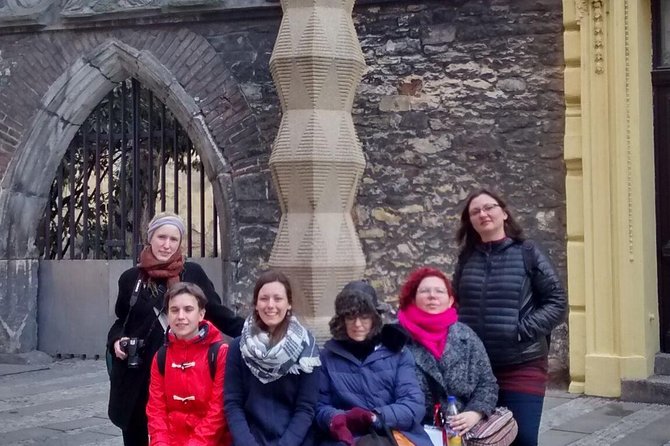
The comparison with Cubism is one of the best reasons to choose this walk. If you only tour Art Nouveau landmarks, you may assume Prague’s modern architecture was all about vines, curves, and decoration. The city’s Cubist buildings show a much sharper alternative.
The House of the Black Madonna is the clearest example named in the route. The Bank of the Legions adds another important comparison. Together, these buildings show how Czech architects adapted Cubist ideas into a local architectural language.
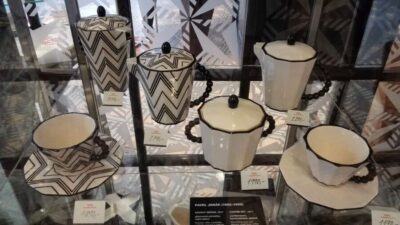
Prague’s Cubism is especially interesting because it was not simply a copy of French painting. Architects used angular forms in façades, windows, furniture, and interiors. Rondo-Cubism later softened some of those hard edges with rounded shapes and decorative patterns.
The guide’s job here is to draw the links. Art Nouveau and Cubism were not random styles placed next to each other. Both expressed a desire to break from stale convention. Both were connected to modern sophistication. In Prague, they also became part of a growing national identity.
That national element gives the route extra weight. Czech designers were working in a city shaped by larger empires and competing cultural influences. New architecture offered a way to say that Prague belonged in the modern European world and had its own voice.
A wider walk through Prague’s older layers
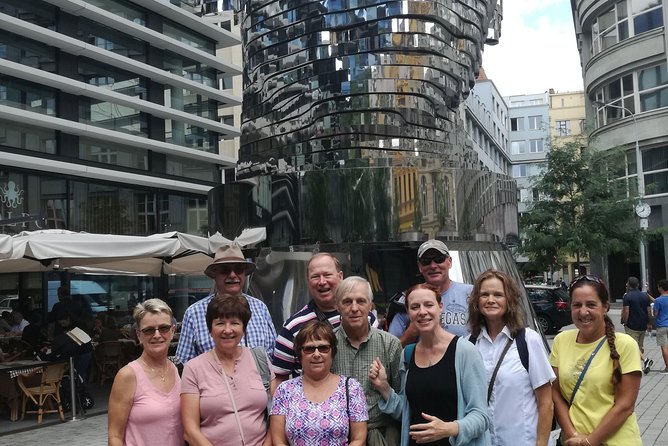
The tour is not limited to two architectural labels. Guides place Art Nouveau and Cubism alongside the older city, including Gothic examples and other earlier periods.
Robert, one of the named guides, has been praised for organizing the walk around changes from Gothic through Art Nouveau. That structure is valuable because styles make more sense when you see what came before them.
The route can also include less obvious places such as passages, courtyards, a university grand hall, an underground chapel, a student café in a backyard, Roman ruins, and frescoes. These details are not listed as fixed stops for every departure, so you should treat them as possible additions shaped by access, timing, and the guide.
That flexibility is part of the appeal of a private or small-group walk. You may get more time for questions and a route adjusted to your interests. It also means the exact experience can differ between guides. Robert, Vadim Erent, and Bonita each bring different backgrounds and personalities to the subject.
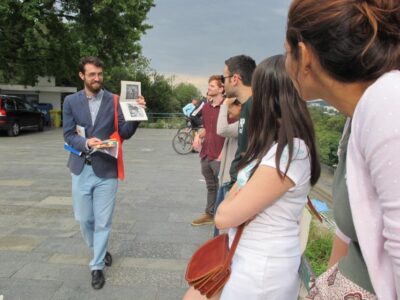
The strongest feedback points to guides who explain clearly, use humor, and keep the group involved. Vadim is associated with an especially broad approach, linking architecture to Prague’s social and political story. Robert is described as a lively storyteller who keeps the group moving. Bonita has led the tour with a strong local connection after living in Prague for many years.
A three-hour pace with plenty to notice
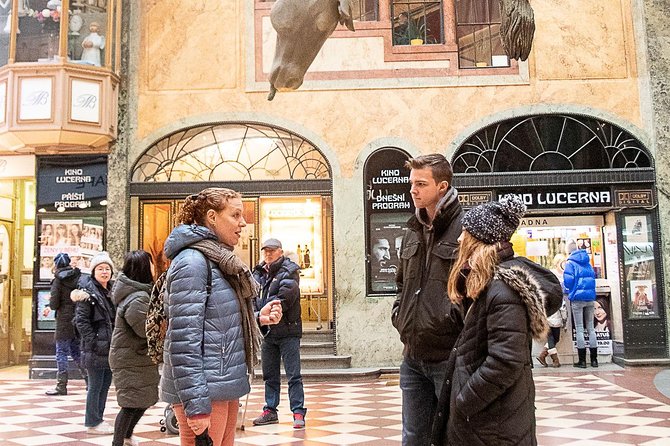
Three hours is a good length for this subject. You have enough time to compare buildings and hear the larger story, but the walk does not consume an entire day.
Do not expect long periods of standing in one place. The tour generally keeps moving, stopping for explanations and interior views along the way. That can make the experience less tiring than a route built around lengthy lectures at every corner.
For photographers, the pace has one clear drawback. You may need to take quick shots, especially when the group is moving through busy central streets or shared interiors. If you want a careful architectural study of every doorway, tell the guide early and ask for a few extra seconds when possible.
The tour is offered in English, with private or small-group options available. That matters here because the subject benefits from questions. You can ask why one building is Cubist, how a decorative motif relates to the period, or what changed after the war.
The guides are described as professors, doctoral students, historians, journalists, art critics, and published authors. That is a useful sign for anyone who wants more than basic sightseeing facts, but it also means the experience may feel more like a serious cultural walk than a light entertainment tour.
Is $123 good value?
At $123 per person, this is not a budget stroll. The value depends heavily on what you want from Prague.
If you are happy taking photos of famous façades and reading a guidebook later, the price may feel high. You can see many Art Nouveau exteriors without booking a private or small-group tour.
I see stronger value if you want access to interiors, a connected explanation of several styles, and direct time with a specialist. The tour covers more than a list of buildings. It explains why hotels, bars, cafés, and stations became showpieces, and how architecture reflected a changing Czech identity.
Private and small-group arrangements also change the calculation. A group of six, for example, can make the cost easier to justify if everyone is interested in design and wants room for questions. For a solo visitor who is only mildly interested in architecture, the price may be harder to defend.
The flexible booking terms help reduce the risk. You can reserve now and pay later, and cancellation is free up to 24 hours before the tour for a full refund. Check the available starting time before booking, since the experience lasts three hours and the tour schedule is not fixed in the supplied details.
Who will get the most from this walk?
I would choose this for you if you enjoy understanding how a city works rather than simply collecting postcard views. It is a strong fit for architecture fans, design students, photographers who can work at a steady pace, and repeat visitors who want a fresh angle on central Prague.
It is also useful early in a visit. Once you know the visual clues, you can spot Art Nouveau and Cubist details during later walks on your own.
The tour may be less suitable if you need a slow route with long sitting breaks, want a narrowly focused list of only the most famous buildings, or have no interest in architecture. The guide keeps moving, and the material reaches into social history, national identity, and several periods of design.
Winter visitors should appreciate the chance to enter buildings along the route, though you should still dress for a walking tour. Summer visitors may prefer the longer daylight and easier photography, but the central streets and interiors can still require a quick eye.
Practical details before you book
The meeting point is the House of the Black Madonna and Grand Café Orient, downstairs at the front doors on Ovocný 19, Prague 1. The address is in the central city, and the exact meeting point is on the square.
The tour lasts three hours and is conducted in English. Private and small-group formats are available, but the information does not specify a standard maximum group size.
Named guides include Robert, Vadim Erent, and Bonita. You should not assume you will receive a particular guide unless the booking confirms it. Each has been associated with a thoughtful, well-informed approach, but the tone and route may vary.
Bring comfortable shoes and a camera. You will be walking between buildings, and the tour’s moving pace is part of its design. If photography is a priority, say so at the start.
Should you book the Prague Art Nouveau and Cubism Walking Tour?
Book it if you want Prague’s buildings to make more sense after you see them. The best feature is the link between visual details and public life: cafés, hotels, bars, stations, wealthy patrons, modern travel, and Czech national confidence.
I especially like the combination of Lucerna bar, Grand Hotel Europa, the House of the Black Madonna, and the Bank of the Legions. It gives you curved Art Nouveau decoration, polished interiors, and angular Cubist design within one focused walk.
The $123 price calls for genuine interest, and the pace may test photographers who want long pauses. But for a small group seeking an expert guide, unusual interiors, and a clear explanation of Prague’s changing architecture, this is a strong use of three hours.
FAQ
How long is the Prague Art Nouveau and Cubism Walking Tour?
The tour lasts three hours.
What language is the tour offered in?
The tour is offered in English.
Where does the tour meet?
It meets at the House of the Black Madonna and Grand Café Orient, downstairs at the front doors on the square at Ovocný 19, Prague 1.
Which buildings are included?
The named highlights include Lucerna bar, Grand Hotel Europa, the House of the Black Madonna, and the Bank of the Legions. Additional places may include passages, courtyards, a university grand hall, an underground chapel, cafés, Roman ruins, and frescoes.
Is the tour private or shared?
Private or small-group options are available.
Who leads the tour?
Guides include professors, doctoral students, historians, journalists, art critics, and published authors. Named guides associated with the experience include Robert, Vadim Erent, and Bonita.
Can I cancel for a full refund?
Yes. You can cancel up to 24 hours in advance for a full refund. You can also reserve now and pay later.
Just added around Prague
- WWII and Communism History in Prague’s Old Town Private Tour★ 5.0 · 4 reviews
- Prague: Historical Walking Tour with Focus on World War 2★ 4.3 · 12 reviews
- World War II 4WD Tour from Prague with Lunch★ 4.4 · 3 reviews
- Ultimate Unlimited Beer Pong with Czech Beer★ 4.6 · 5 reviews
- Walking tour of Prague in French : Nové Město★ 4.9 · 16 reviews
- Walking tour of Prague in french: Old Town & Charles Bridge★ 4.9 · 62 reviews
- Prague Sightseeing Tour with Lunch★ 5.0 · 5 reviews
- Prague: Modern Private Spa with Jacuzzi and Sauna★ 4.8 · 62 reviews
Prague Art Nouveau and Cubism Tours, compared.
Browse the lists this tour appears in