
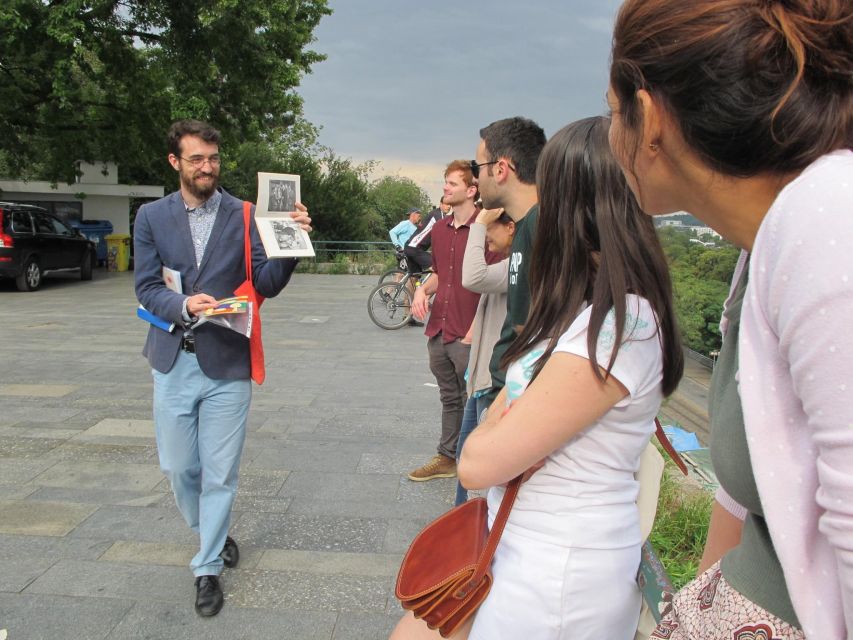
Reviewed · PRAGUE ART NOUVEAU AND CUBISM TOURS
Prague: Private Prague Art Nouveau and Cubism Tour
Prague’s most revealing architecture is not always found at the castle or Old Town Square. This private walk connects the 1909 Central Station, Jubilee Synagogue, Municipal House, Wenceslas Square, and bold Cubist buildings near Vyšehrad, showing how Prague entered the modern age. I like the local, detail-focused route and the way it explains Art Nouveau as a break from older 19th-century styles. The ride to the quieter Vyšehrad area is another smart touch, since it puts some of the city’s most daring Cubist work within reach.
The guides bring strong art and history knowledge to the walk. Max has led the tour in both English and polished German, while Eva is praised for explaining several architectural styles clearly. My main caution is the length: at about three and a half hours, the final section may feel long if your feet are tired or you prefer a quick city walk.
Key points at a glance
- Start on Platform 1 at Prague Central Station: Meet the guide in the middle of the platform, looking for a red folder.
- See the 1909 station before the crowds: The tour begins with a close look at an important modernist landmark.
- Compare Art Nouveau with Czech Cubism: You learn why Cubism pushed back against the softer, decorative style of Art Nouveau.
- Cover major sights and quieter streets: Municipal House and Wenceslas Square share the route with lesser-known buildings.
- Ride public transport to Vyšehrad: Tram tickets for the outward and return journeys are included.
- Plan for a serious architecture walk: Comfortable shoes matter, and the tour is not suitable for children under 12.
Why this Prague architecture walk is different
Many first visits to Prague focus on medieval towers, Baroque churches, and the Charles Bridge. Those sights deserve their fame, but they can leave out the city’s fascinating early 20th-century chapter. This tour looks at Prague when architects were testing new ideas, reacting to industrial change, and trying to define a modern Czech identity.
You follow that story through buildings rather than a museum display. Your guide points out curves, ornament, façades, geometric shapes, and structural choices that are easy to miss when you are simply walking from one attraction to another. The result is a more alert way to see the city. Afterward, an ordinary doorway or apartment façade may no longer look ordinary.
I especially like the private format. You are not trying to hear a guide over a large crowd, and you can ask questions as the ideas become more complex. Max and Eva are both named as guides for this experience, and the strongest feedback centers on their clear explanations, friendly manner, and ability to answer questions.
The subject also has a useful historical arc. Art Nouveau grew from the styles of the 19th century and introduced a new taste for flowing lines, plant-like decoration, and integrated design. Cubism then challenged the popular Art Nouveau look with sharper forms and more fractured geometry. Both styles faced a changed world after World War I, which gives the walk a clear beginning, middle, and end.
More Prague Art Nouveau and Cubism Tours in Prague:
- Prague Art Nouveau and Cubism Walking Tour
★ 5.0 · 77 reviews - Private Prague Art Nouveau and Cubism Walking Tour
★ 5.0 · 30 reviews - Prague Art Nouveau and Cubism Walking Tour
★ 5.0 · 29 reviews
Starting at Central Station and the 1909 modern age
The meeting point is in the middle of Platform 1 at Prague’s Central Train Station. Look for the guide carrying a red folder. The tour begins at the recently reconstructed station, built in 1909, so your first stop is also a useful lesson in how Prague greeted the modern era.
Allow yourself time to find the platform before the start. A railway station is not the most relaxed place to meet a guide, and the meeting instructions are specific. Once everyone is together, expect about 15 minutes of guided attention at the station before setting off on foot.
This opening works well because it gives you a clear reference point. You are not starting with a vague definition of Art Nouveau. You are looking at a real building from the period and hearing how the style developed from earlier 19th-century traditions. Your guide can then show you what made the newer approach different and why it mattered.
The station also introduces one of the tour’s larger ideas: modern buildings did not erase Prague’s older character. Instead, architects worked within a city already packed with historic structures. Their buildings helped preserve the older urban setting by adding a new chapter rather than replacing the whole book.
Jubilee Synagogue and the early New Town stops
From the station, the group walks roughly five minutes to the Jubilee Synagogue. The sightseeing stop is brief, about five minutes, but it gives the route another strong example of the city’s turn-of-the-century architecture.
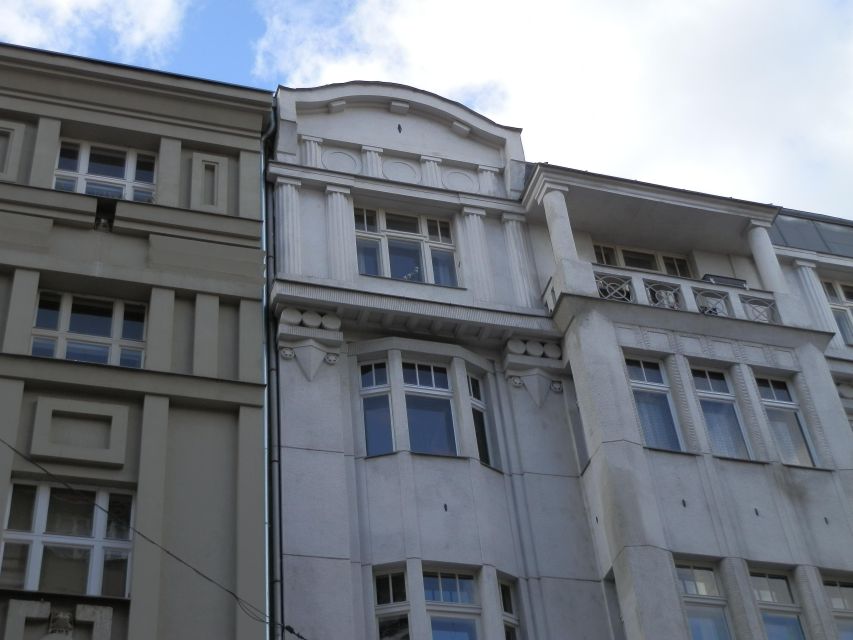
You then continue through New Town with several short stops at buildings described as lesser-known locations. These pauses are not designed as long interior visits. Their value is in learning how to read what is outside: decoration, proportion, materials, and the way each building fits its street.
The short walking links, usually three to five minutes, keep the route moving. You are not stuck in one square listening to a long lecture. At the same time, the number of stops means the tour asks you to keep changing focus. If you enjoy spotting details, that rhythm should suit you. If you prefer plenty of time for photographs at each place, you may find some stops brief.
This is where a private guide makes the biggest difference. You can ask why one façade feels more decorative while another seems more severe, or how local architects adapted a wider European style. The walk is not just a list of buildings. It shows how one architectural movement took on local forms in Prague.
Municipal House and the decorative high point
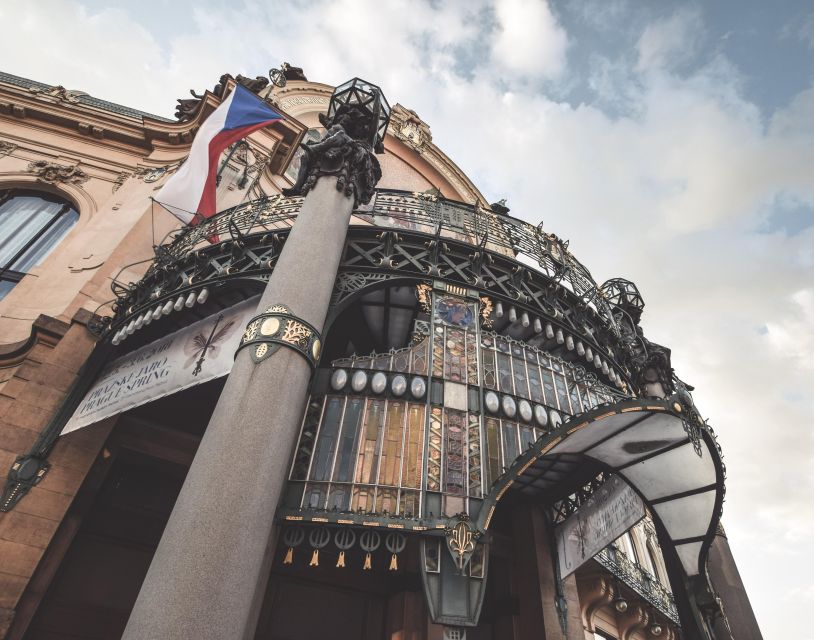
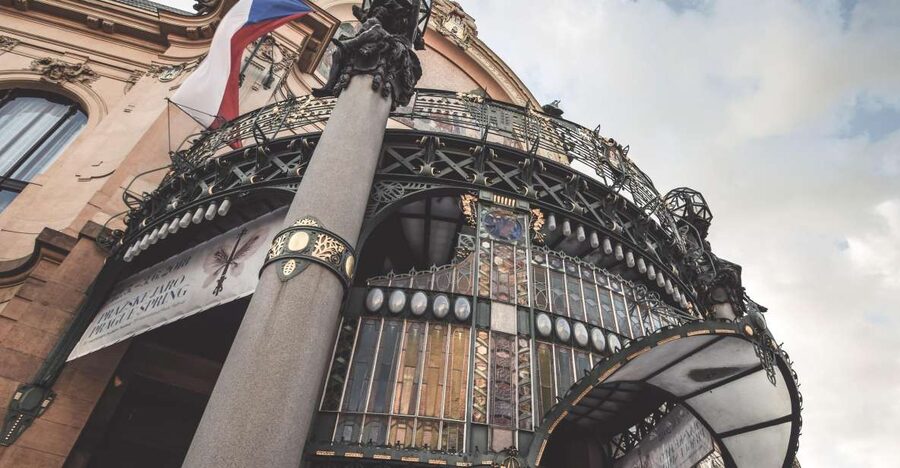
The Municipal House receives about 10 minutes of sightseeing time, longer than several of the smaller stops. That makes sense. It is one of the route’s major Art Nouveau landmarks and offers a fuller look at the style’s decorative side.
Here, you can expect your guide to explain how Art Nouveau brought together architecture, ornament, and design. The important point is not just that the building is pretty. Art Nouveau aimed for a fresh visual language, breaking from the strict historical copying that had shaped much 19th-century design.
I like having the Municipal House placed early in the walk because it gives you a strong visual example before the tour turns toward Cubism. Once you have seen the flowing and decorative character of Art Nouveau, the later geometric buildings make more sense. You can compare the styles rather than study each one in isolation.
The stop is still only about 10 minutes, so do not expect a full interior tour or a long visit inside. The experience is primarily an outdoor architectural walk. It is best for understanding the building’s place in Prague’s artistic development, not for exploring every room.
A few more Prague trips to weigh up
- Prague Old Town: Private Tour
★ 5.0 · 1,223 reviews - Prague Airport Private Arrival Transfer
★ 4.5 · 991 reviews - Prague Airport Private Departure Transfer
★ 4.5 · 780 reviews - Discover Prague Private Tour – 3 hours
★ 5.0 · 705 reviews
House of the Black Madonna and Prague Cubism
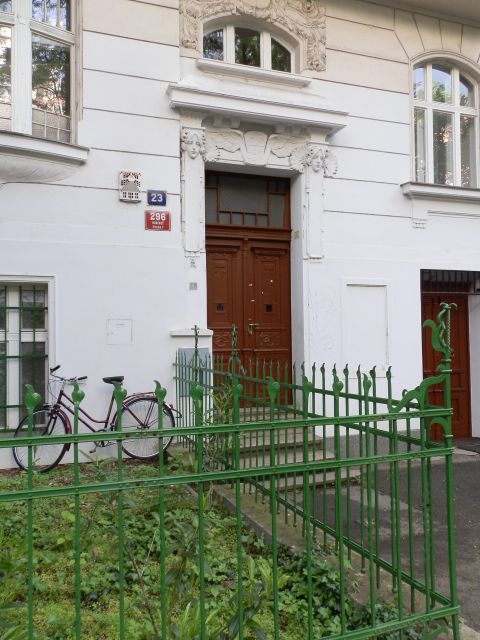
The route then moves a few minutes on foot to the House of the Black Madonna, with about 10 minutes set aside for sightseeing. This is the key Cubist stop in the central part of the route and one of the places where Prague’s architectural story becomes especially distinctive.
Your guide explains Cubism as a reaction against the popular Art Nouveau style. In broad terms, the softer curves and decorative lines give way to stronger angles and a more fractured visual language. Prague’s Cubist buildings are important because the style was adapted to architecture in a way that feels particularly local.
This is a good place to slow down mentally, even if the walking pace remains brisk. Look at the shapes rather than only the building’s overall color or size. Cubism can be easy to label and then walk past. The guide’s explanation helps you see the design choices that make the building part of a wider argument about what modern architecture should be.
Another short stop follows, then the route reaches Wenceslas Square for about 20 minutes. This is the longest sightseeing pause on the walking portion. The square lets your guide place the buildings in a wider urban and political setting, while giving you time to connect architecture with the 20th-century changes discussed throughout the tour.
Wenceslas Square and the city’s changing identity
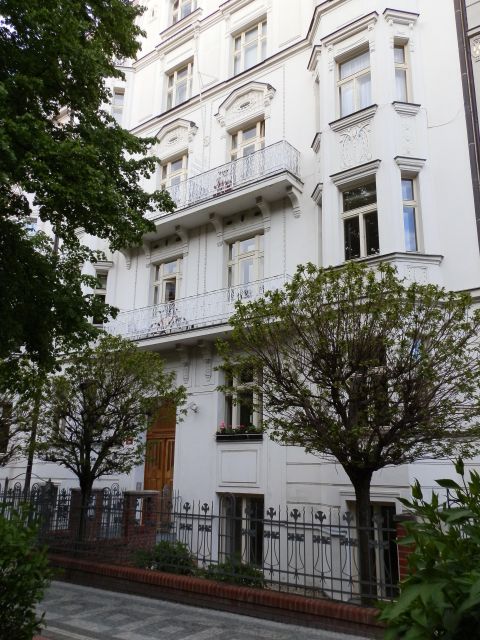
Wenceslas Square is not treated simply as a photo stop. Its broad scale and central role make it useful for understanding how modern Prague developed. Here, the tour can connect architecture to public life, changing tastes, and the cultural shifts that shaped the city during the Belle Epoque and after.
The phrase Belle Epoque refers to the period before World War I, when new technologies, artistic movements, and urban growth helped create a sense of possibility across Europe. Prague’s Art Nouveau buildings belong to that mood, but the tour also explains its limits. War changed the conditions that had allowed these styles to flourish.
I value this historical context because it keeps the walk from becoming a parade of façades. You learn not only what a building looks like, but why a certain style appeared when it did and why it later lost ground. That makes the architecture easier to remember.
After another short stop, the route leaves the central area by tram. The tram ride takes about five minutes, followed by another short tram journey and a walk. Public transport tickets are included, so you do not need to arrange separate fares for this part of the route or the return ride. You should still wear comfortable shoes, since the transport break does not turn this into a sitting tour.
Vyšehrad’s sharper, quieter Cubist buildings
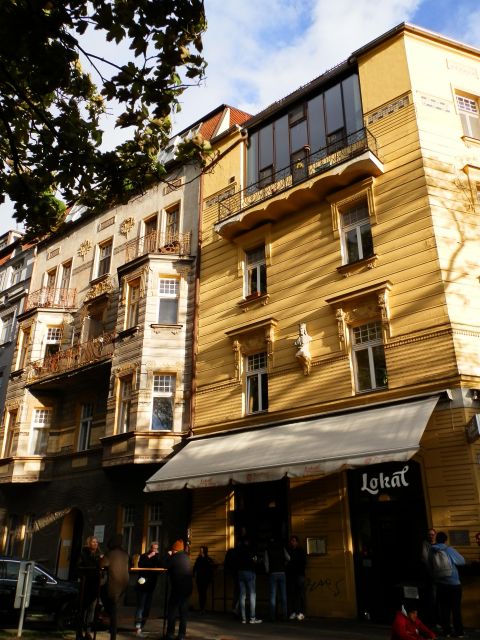
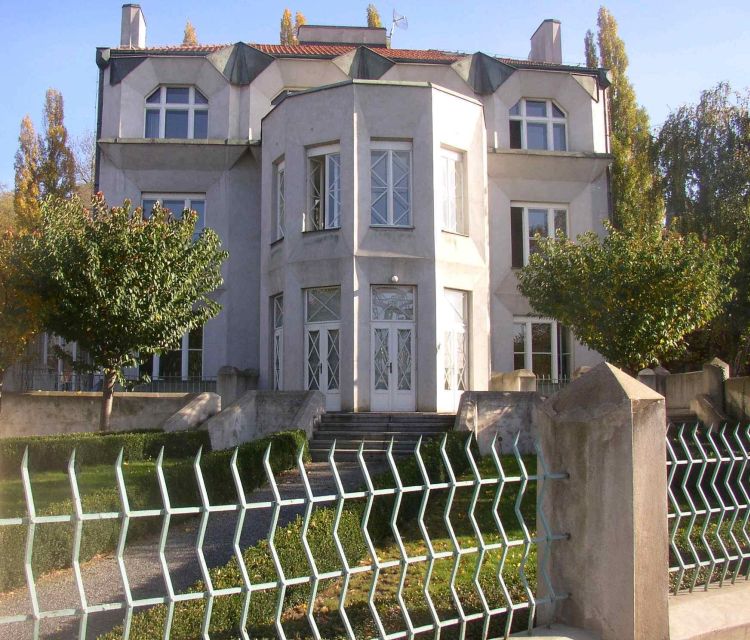
The final section moves to the area under the Vyšehrad fortress, away from the busiest central sights. This is where the tour presents its most daring Cubist examples, including the Three Cubist Houses, Kovařovicova vila, and Cubist House Vyšehrad number 98.
Each of these stops is listed at about five minutes, with short walks between them. The schedule suggests a concentrated architectural circuit rather than a long visit inside each building. You will see how Cubist ideas were applied to homes and residential structures, not just to a famous central landmark.
This quieter district changes the feel of the experience. Earlier, you are moving through major central streets and familiar landmarks. Near Vyšehrad, the focus becomes more specialized. You are looking for unusual forms in an area you might not otherwise reach during a standard Prague sightseeing day.
Kovařovicova vila is an especially useful stop because a villa allows Cubist design to be considered at a more personal scale. The Three Cubist Houses and house number 98 add further examples, letting you compare how architects handled related ideas in different buildings.
I would not book this tour expecting grand interiors or long periods inside private properties. The reward is the outside detail and the explanation that connects these buildings to the larger movement. The route ends near a tram stop, making it simple to return toward downtown after the final stop.
What the guide adds to the buildings
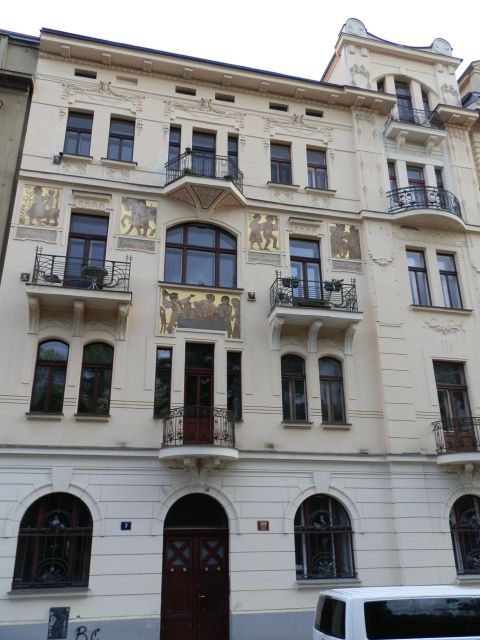
The strongest part of this experience is the interpretation. A city architecture walk can easily become a sequence of names and dates. Here, the subject is presented as a story about changing taste, cultural identity, and the shock of World War I.
Max has guided the walk in German, answering questions and explaining the styles in a warm, accessible way. Eva is praised for making the different architectural movements easy to understand while covering a large number of buildings. The tour is offered in English and German, so choose the language in which you are most comfortable discussing art and history.
You should also use the private format to ask direct questions. For example, you might ask how Art Nouveau grew out of 19th-century design, why Cubism pushed against it, or how newer buildings helped protect Prague’s older architectural character. Those questions are part of the value of booking privately.
The tour is aimed at people aged 12 and older. That age limit is sensible, since the experience involves a sustained explanation of art, architecture, and 20th-century history rather than a child-focused activity. Wheelchair access is listed, though the route includes walking, public transport, and several street-level stops, so you should confirm any specific mobility needs when booking.
Is $84 a fair price for a private tour?
At $84 per person, this is not the cheapest way to see Prague’s architecture. The price makes more sense if you are booking with companions and want a private guide who can adapt explanations to your interests. It also includes the public transportation tickets used during the route, which removes one small extra cost.
You are paying for more than a central walking tour. The route lasts about three and a half hours, covers New Town and Wenceslas Square, then reaches the Cubist buildings under Vyšehrad. That wider range is important because the final buildings are one of the experience’s main reasons to book.
The value depends on your sightseeing style. If you want a short introduction to Prague’s most famous buildings, this tour is probably too specialized and too long. If you have already seen the standard sights, or you have a week in Prague and want to understand the city beyond its postcard views, the price is easier to justify.
The main cost is time rather than money. One person found the final portion unnecessary and felt that two and a half to three hours would be enough. I would treat that as a useful warning for anyone with limited stamina. The route offers a lot, but you should not expect a quick stroll.
Practical details before you book
Meet on Platform 1 at Prague’s Central Train Station, in the middle of the platform. The guide carries a red folder, so arrive with enough time to orient yourself in the station.
Wear comfortable shoes. The walk includes many short sections on foot, several sightseeing stops, and public transport transfers. There is no need to bring transport tickets because those used for the tour are included.
The experience is a private group activity and is offered in English or German. It is valid for one day, with starting times depending on availability. You can cancel up to 24 hours before the start for a full refund, and the reserve-now, pay-later option allows you to hold a place without paying immediately.
The tour is wheelchair accessible according to the activity details, but the mixed format of walking and trams means it is wise to discuss particular access requirements in advance. Children under 12 are not accepted.
Who should book this Prague Art Nouveau and Cubism tour?
Book it if you have already covered Prague Castle, Charles Bridge, and the Old Town, and now want to understand the city through its newer architecture. It also suits anyone who enjoys art, urban design, or the small details that most people pass without noticing.
I would especially recommend it to visitors with several days in Prague. You get the major landmarks of Municipal House and Wenceslas Square, then move into less familiar areas and finish with Cubist buildings near Vyšehrad. That mix gives you both orientation and discovery.
Think twice if you dislike walking tours longer than three hours, or if you want lots of free time at each stop. The route is packed with short visits, and the final section may feel like more architecture than you need.
Should you book it?
Yes, if you want a private, idea-filled look at Prague’s Art Nouveau and Cubist buildings, especially after seeing the city’s usual highlights. The guides, including Max and Eva, bring strong subject knowledge, and the included tram rides make the move to Vyšehrad practical.
Choose a shorter architecture walk instead if you have limited time or prefer a lighter schedule. For the right person, though, this tour changes how you see Prague. The city’s grand old streets remain, but you begin to notice the sharp corners, flowing ornament, and modern ambitions tucked between them.
FAQ
Where does the Prague Art Nouveau and Cubism tour start?
The meeting point is in the middle of Platform 1 at Prague Central Train Station. Look for the guide carrying a red folder.
How long does the tour last?
The experience lasts about three and a half hours, although one part of the route may feel long if you prefer a shorter walk.
Which languages are available?
The tour is offered in English and German.
Is this a private tour?
Yes. The activity is arranged for a private group.
Are public transportation tickets included?
Yes. Tickets for the public transportation used during the tour, including the rides to and from the Vyšehrad area, are included.
Is the tour wheelchair accessible?
Yes, the activity is listed as wheelchair accessible.
Can children join the tour?
No. The experience is not suitable for children under 12.
Just added around Prague
- WWII and Communism History in Prague’s Old Town Private Tour★ 5.0 · 4 reviews
- Prague: Historical Walking Tour with Focus on World War 2★ 4.3 · 12 reviews
- World War II 4WD Tour from Prague with Lunch★ 4.4 · 3 reviews
- Ultimate Unlimited Beer Pong with Czech Beer★ 4.6 · 5 reviews
- Walking tour of Prague in French : Nové Město★ 4.9 · 16 reviews
- Walking tour of Prague in french: Old Town & Charles Bridge★ 4.9 · 62 reviews
- Prague Sightseeing Tour with Lunch★ 5.0 · 5 reviews
- Prague: Modern Private Spa with Jacuzzi and Sauna★ 4.8 · 62 reviews
Prague Art Nouveau and Cubism Tours, compared.
Browse the lists this tour appears in